Artwork
The Sea near Staberhuk
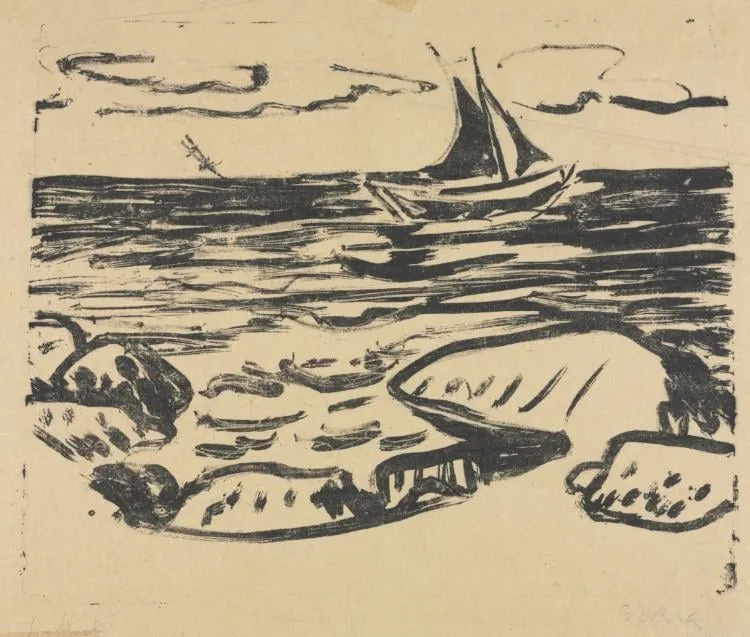
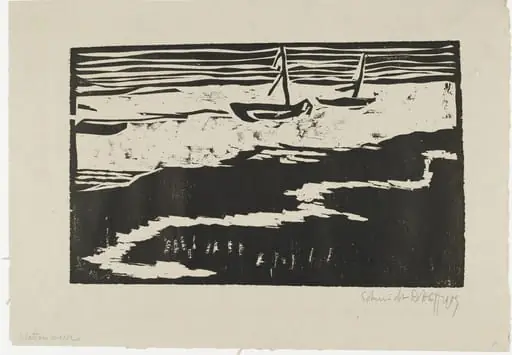
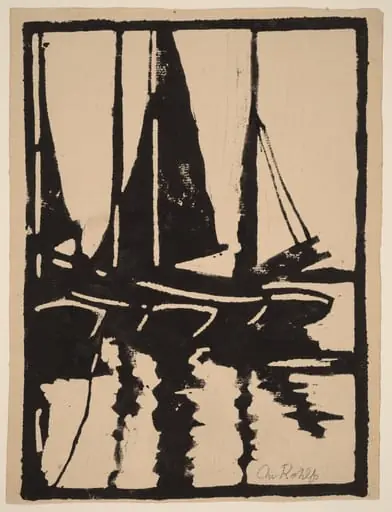
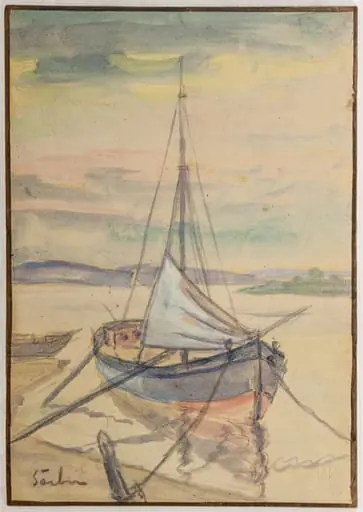
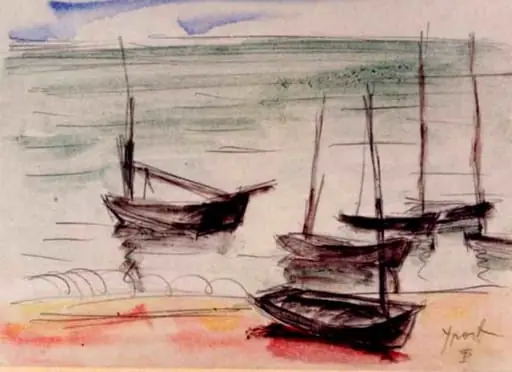
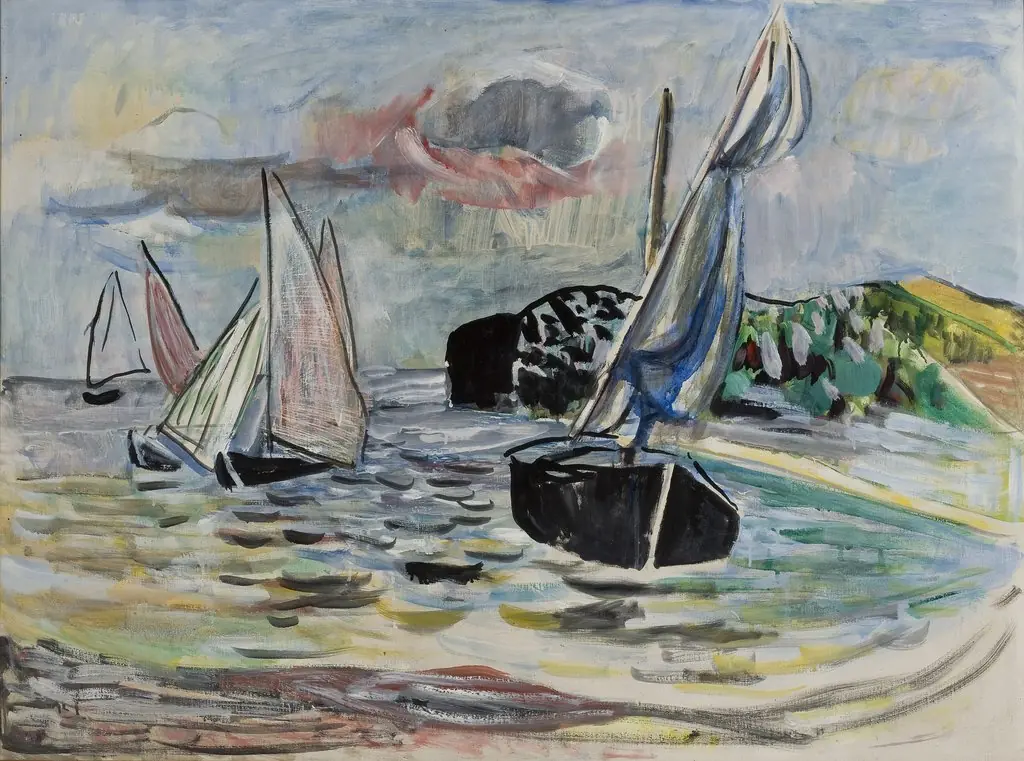
The Sea near Staberhuk is a print by Ernst Ludwig Kirchner. It dates from 1908 and is held in the collection of the Cleveland Museum of Art.
About this work
Overview
Created in the first year Ernst Ludwig Kirchner practiced lithography, this print reflects his deliberate departure from traditional techniques.
Created in the first year Ernst Ludwig Kirchner practiced lithography, this print reflects his deliberate departure from traditional techniques. Rather than treating the stone as a surface for refined drawing, he embraced its physical limits, allowing the composition to terminate abruptly at the stone’s irregular edges. The result challenges the expectation that prints should mimic hand-drawn lines, instead highlighting the medium’s material presence.
Subject & Meaning
The scene depicts a turbulent stretch of sea near the rocky coast of Staberhuk, rendered with energetic, gestural marks that evoke wind and wave motion. The subject is not idealized but captured in its raw, transient state. Kirchner’s focus on the sea’s force aligns with his broader interest in expressing emotional and natural authenticity, rejecting polished aesthetics in favor of visceral immediacy.
Technique & Style
Kirchner applied lithographic wash directly to the stone’s edges, leaving no margin for framing or refinement. The inked borders emphasize the stone’s physical form, making the print’s production process visible. His rapid, unpolished strokes mimic the unpredictability of the sea, rejecting conventional draftsmanship to assert lithography’s unique capacity for spontaneity and material expression.
History & Provenance
This print originated during Kirchner’s early experimentation with lithography, a period when he was actively redefining printmaking boundaries. It entered the collection of the Cleveland Museum of Art, where it remains as part of a broader group of works demonstrating his innovative approach to graphic media in the early 20th century.
Context
In the early 1900s, German Expressionists sought to break from academic norms, favoring emotional intensity over technical polish. Kirchner’s treatment of lithography as a raw, unmediated medium aligned with this movement’s ethos. His choice to foreground the stone’s edge reflected a wider interest in revealing the artist’s hand and the object’s physicality, countering industrial reproduction ideals.
Legacy
This print contributed to a redefinition of lithography as a medium capable of expressive rawness rather than reproductive precision. Kirchner’s approach influenced later artists who explored the material limits of printmaking, establishing a precedent for treating the print’s surface and process as integral to its meaning.
Artist & collection
Artist
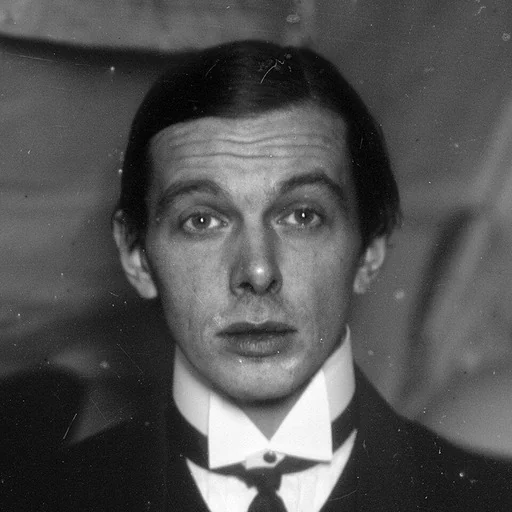
Ernst Ludwig Kirchner (6 May 1880 – 15 June 1938) was a German expressionist painter and printmaker.

![Dance Hall Bellevue [obverse], by Ernst Ludwig Kirchner](https://artifactworldgallery.com/img/ernst-ludwig-kirchner--dance-hall-bellevue-obverse--d1e14aac4297c69e-w320.webp)
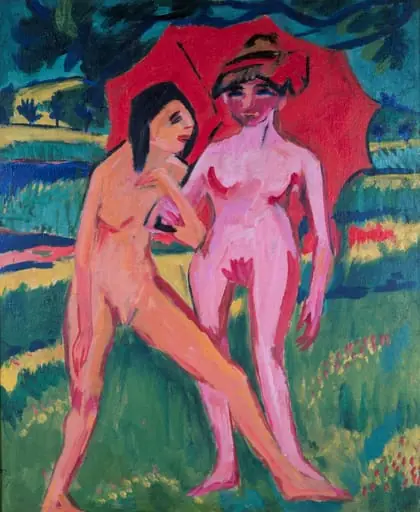
![Nude Figure [reverse], by Ernst Ludwig Kirchner](https://artifactworldgallery.com/img/ernst-ludwig-kirchner--nude-figure-reverse--4b135f0364753e98-w320.webp)
![Two Nudes [obverse], by Ernst Ludwig Kirchner](https://artifactworldgallery.com/img/ernst-ludwig-kirchner--two-nudes-obverse--eb3914183f0bc96d-w320.webp)
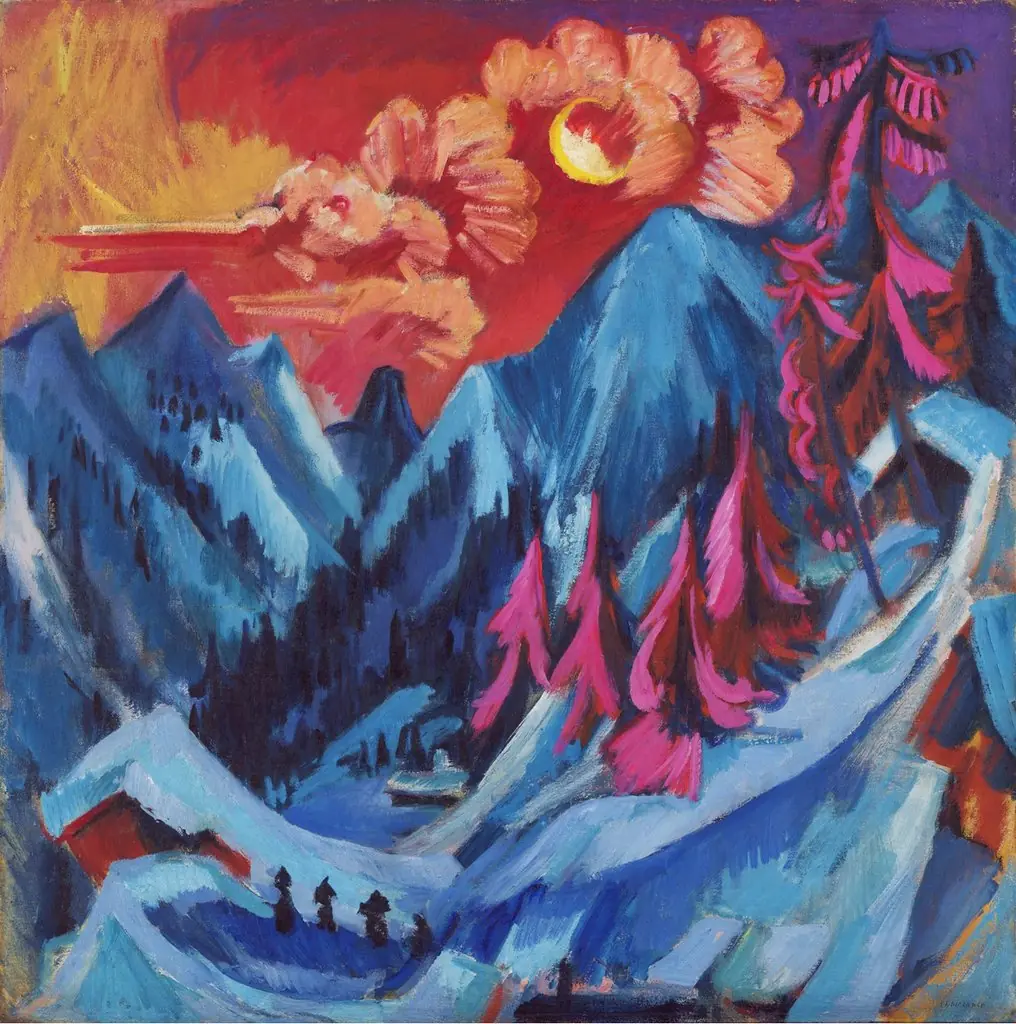
![Dancing Couple in the Snow [reverse], by Ernst Ludwig Kirchner](https://artifactworldgallery.com/img/ernst-ludwig-kirchner--dancing-couple-in-the-snow-reverse--87ca007d7c05b553-w320.webp)