Artwork
Barcaz la mal
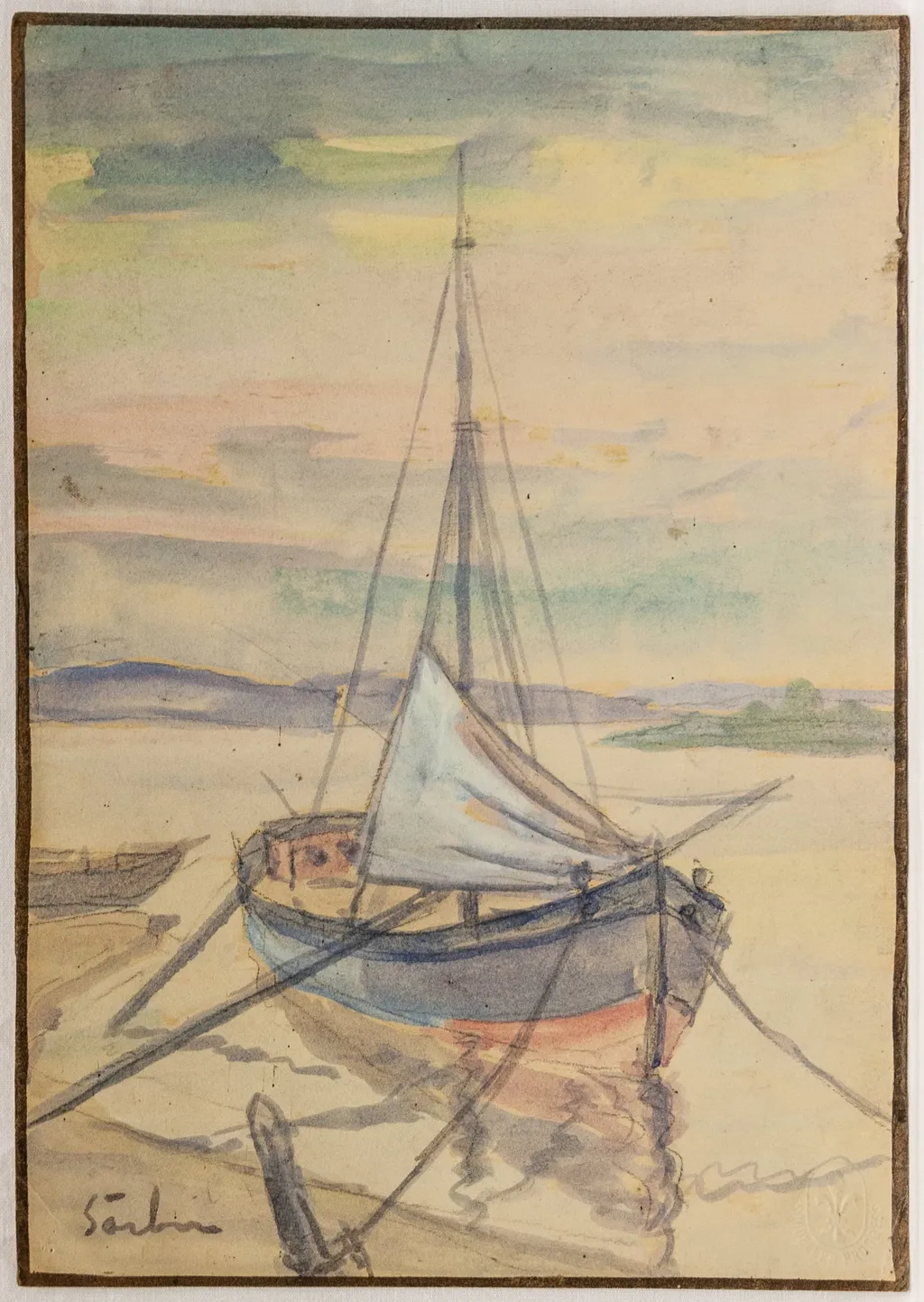
Barcaz la mal is a print by Gheorghe Sârbu. It dates from 1950 and is held in the collection of the Gavrila Simion Eco-Museum Research Institute Tulcea.
About this work
Overview
The work is held in the collection of the Museum of Ethnography, where it is valued for its quiet observation rather than formal finish.
Barcaz la mal is a small, informal sketch by Romanian artist Gheorghe Sârbu, dated around 1950. Executed in ink or watercolor, it captures a single moment by the water: a boat resting on a shore. The work is held in the collection of the Museum of Ethnography, where it is valued for its quiet observation rather than formal finish. Its modest scale and spontaneous quality reflect a personal, on-site study rather than a polished composition.
Subject & Meaning
The scene depicts a modest fishing vessel beached on a sandy shore, its sail slack and hull darkened with a hint of red interior detail. The absence of figures or activity suggests solitude or pause, perhaps after a day’s work. The quiet stillness of the boat against the soft horizon implies a rhythm of daily life along the Danube or Black Sea coast, evoking the quiet persistence of rural labor without overt narrative.
Technique & Style
Sârbu employed loose, rapid brushwork, suggesting immediacy and direct observation. Colors are muted—pale blue sky, faint green land—applied with minimal layering. The boat’s form is suggested rather than meticulously rendered, with the sail rendered as a flat white shape and the hull in a single dark wash. The signature 'Sârbu' in the corner confirms authorship but underscores the work’s sketch-like, unpretentious character.
History & Provenance
The work entered the Museum of Ethnography’s collection after Sârbu’s lifetime, likely through donation or acquisition of personal papers. No documentation exists regarding its creation context or prior ownership. Its preservation as part of a broader ethnographic archive suggests it was valued for its representation of local life, even if its artistic origins remain understudied.
Context
Created in the early 1950s, the sketch reflects a period when Romanian artists often turned to everyday scenes under state-promoted realism. Yet Sârbu’s approach diverges from official styles—his work avoids propaganda, focusing instead on quiet, unembellished observation. This piece aligns with a quieter tradition of regional artists documenting rural environments outside institutional mandates.
Legacy
Barcaz la mal remains one of few documented works by Sârbu, offering insight into his personal visual language. It contributes to understanding how Romanian artists engaged with their surroundings beyond public commissions. While not widely exhibited, it serves as a quiet reference point for those studying informal, postwar Romanian drawing practices.
Artist & collection
Museum
Gavrila Simion Eco-Museum Research Institute Tulcea
Continue through works from the same source collection.
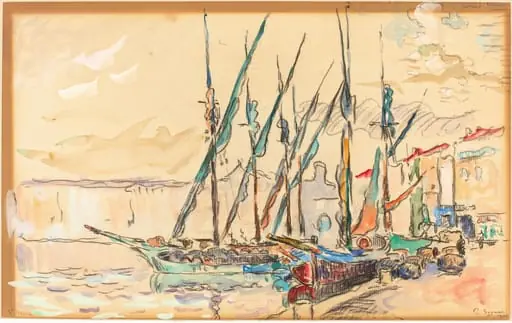 St Tropez
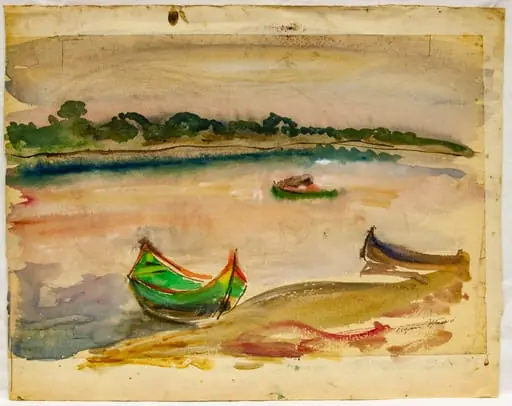 Peisaj din Deltă
 Fog Rising from the Sea. Study from Lofoten
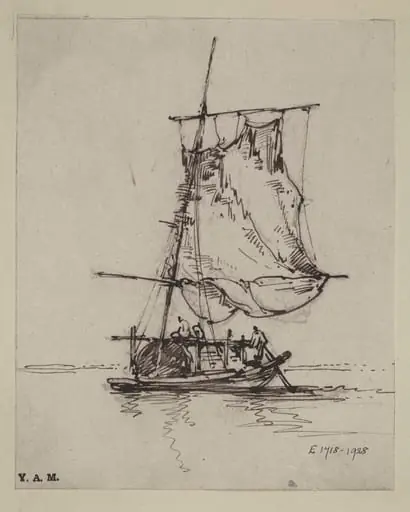 A drawing by George Chinnery of a Tanka boat with a large sail or net raised
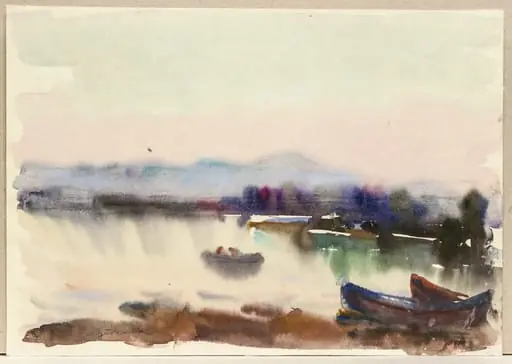 Lacul Razelm
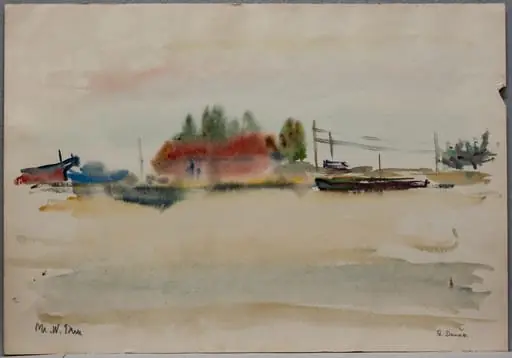 D 3 - Peisaj pe Dunăre (Mal de Dunăre cu casă roșie)
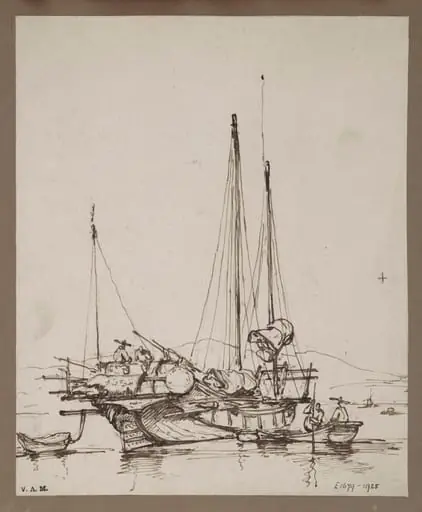 A drawing by George Chinnery of aA Chinese junk, with figures aboard and small craft alongside
 The Deck of a Dutch Yacht
 Boat in Port
 Two small junks at anchor, Macau