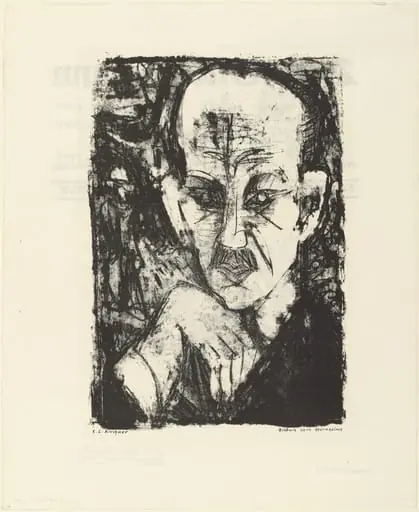
Artwork
Untitled
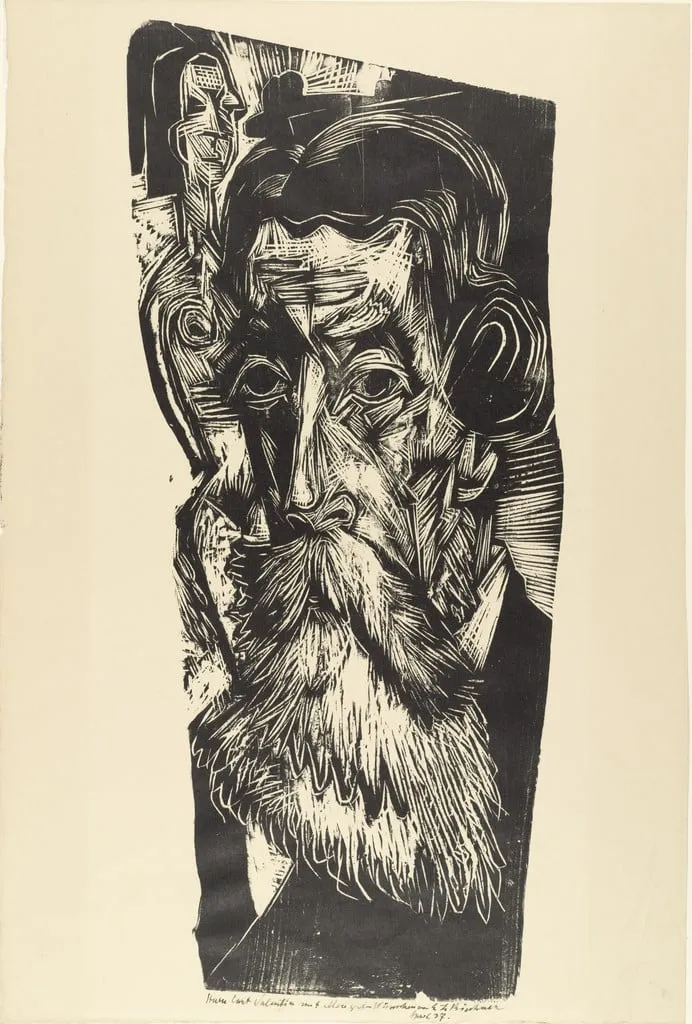
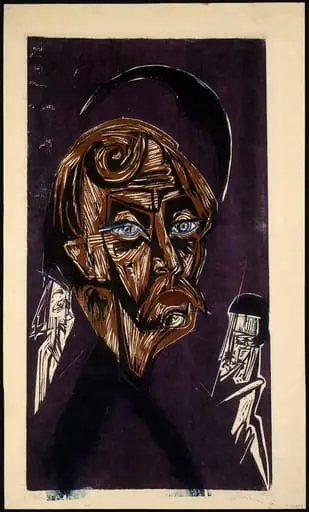
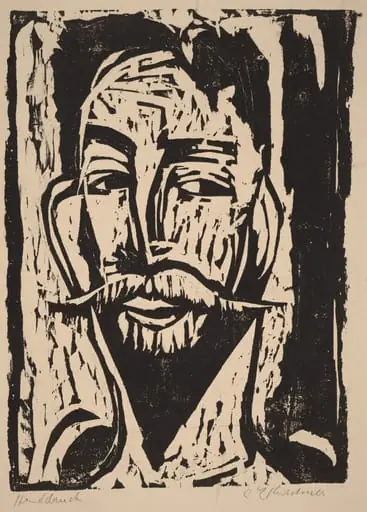
Untitled is an ink print by Ernst Ludwig Kirchner. It dates from 1918 and is held in the collection of the Museum of Modern Art.
About this work
Overview
Created in 1918, this woodcut by Ernst Ludwig Kirchner is a stark black-and-white portrait of a bearded man. Executed during a time of personal and societal turmoil, the work reflects Kirchner’s engagement with the expressive potential of printmaking. The medium’s inherent roughness aligns with the emotional gravity of the subject, emphasizing texture over refinement.
Subject & Meaning
The figure, rendered with intense gaze and unruly hair, conveys psychological depth rather than physical realism. His expression is withdrawn, almost burdened, suggesting inner strain. The indistinct background hints at urban or social environments, but their ambiguity reinforces isolation. The portrait resists narrative clarity, inviting interpretation through mood rather than detail.
Technique & Style
Kirchner employed the woodcut process, carving directly into the woodblock to create bold, jagged lines. The resulting print features high contrast and uneven edges, amplifying the sense of urgency. The roughness of the carving is preserved in the final impression, rejecting smoothness in favor of tactile immediacy—a hallmark of Die Brücke’s aesthetic.
History & Provenance
Made during Kirchner’s recovery from wartime trauma and prior to his later persecution by the Nazis, this print belongs to a body of work produced in relative isolation. Though its specific provenance is undocumented, it aligns with his broader output from this period, where personal anguish and artistic experimentation converged in printed form.
Context
In 1918, Germany was reeling from war, revolution, and economic collapse. Kirchner, once central to the avant-garde Die Brücke group, had withdrawn from Berlin’s art scene. His woodcuts from this time reflect a retreat from public expression, turning inward to explore identity and psychological states through simplified, forceful imagery.
Legacy
This work exemplifies how woodcut became a vehicle for emotional expression in early 20th-century German art. Kirchner’s approach influenced later printmakers who valued rawness over polish. Though not widely exhibited during his lifetime, such prints now stand as critical documents of Expressionism’s preoccupation with inner experience.
Artist & collection
Artist
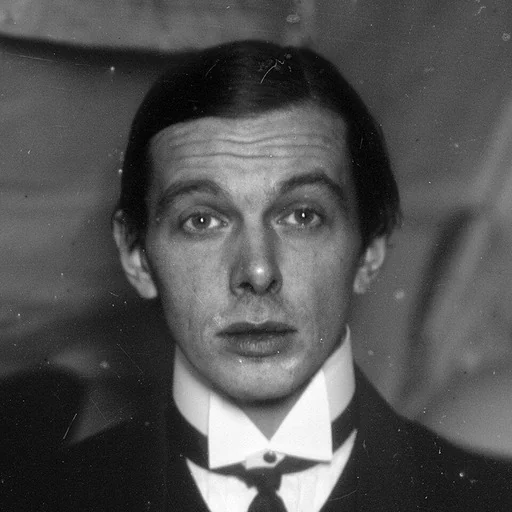
Ernst Ludwig Kirchner (6 May 1880 – 15 June 1938) was a German expressionist painter and printmaker.

![Dance Hall Bellevue [obverse], by Ernst Ludwig Kirchner](https://artifactworldgallery.com/img/ernst-ludwig-kirchner--dance-hall-bellevue-obverse--d1e14aac4297c69e-w320.webp)
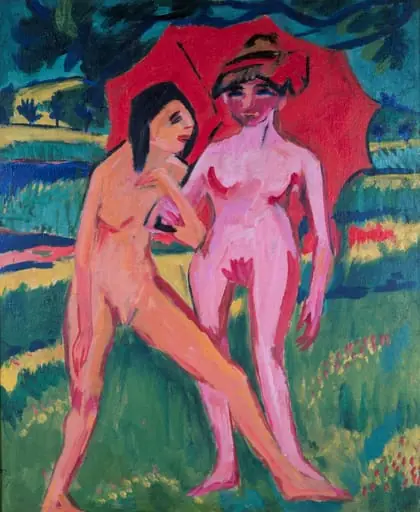
![Nude Figure [reverse], by Ernst Ludwig Kirchner](https://artifactworldgallery.com/img/ernst-ludwig-kirchner--nude-figure-reverse--4b135f0364753e98-w320.webp)
![Two Nudes [obverse], by Ernst Ludwig Kirchner](https://artifactworldgallery.com/img/ernst-ludwig-kirchner--two-nudes-obverse--eb3914183f0bc96d-w320.webp)
![Dancing Couple in the Snow [reverse], by Ernst Ludwig Kirchner](https://artifactworldgallery.com/img/ernst-ludwig-kirchner--dancing-couple-in-the-snow-reverse--87ca007d7c05b553-w320.webp)