Artwork
Untitled
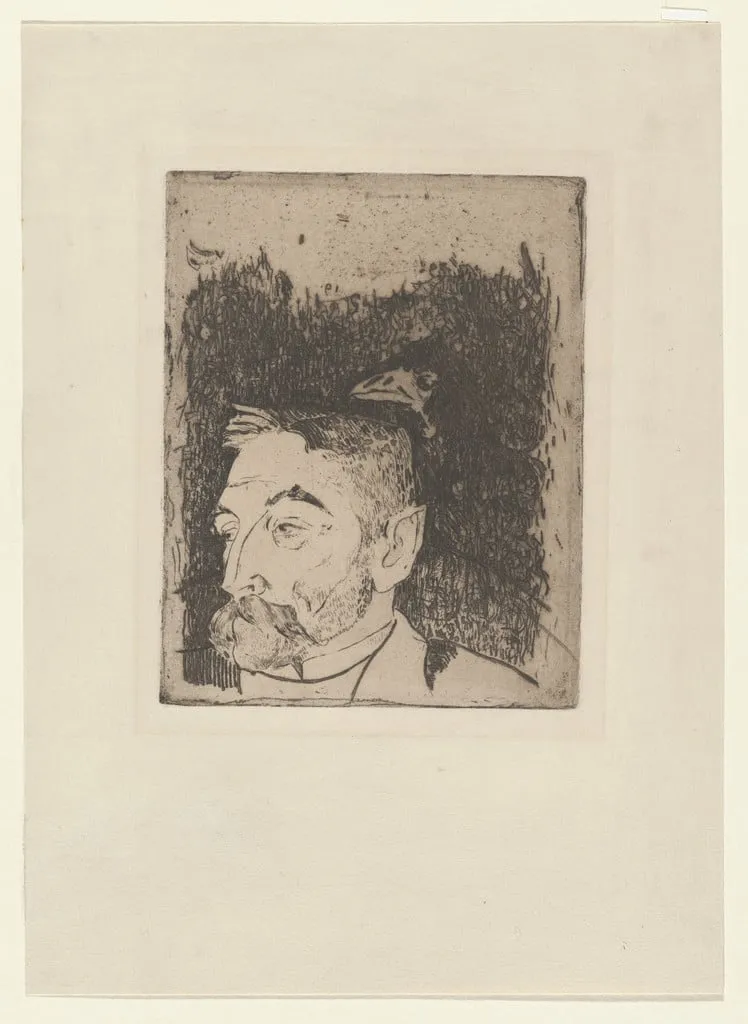
Untitled is an ink print by the Impressionist artist Paul Gauguin. It dates from 1891 and is held in the collection of the Museum of Modern Art.
About this work
Overview
Though untitled, the piece reflects his deepening interest in non-Western subjects and the expressive potential of printmaking as an independent medium.
Created in 1891 during Paul Gauguin’s initial stay in Tahiti, this etching and drypoint work is one of several prints he produced while exploring new visual languages beyond painting. The technique allowed him to merge the spontaneity of drawing with the tonal richness of intaglio methods. Though untitled, the piece reflects his deepening interest in non-Western subjects and the expressive potential of printmaking as an independent medium.
Subject & Meaning
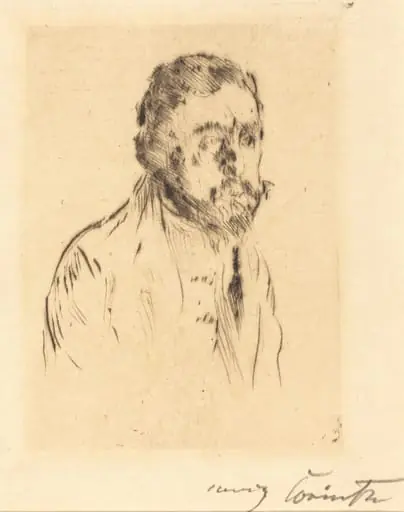
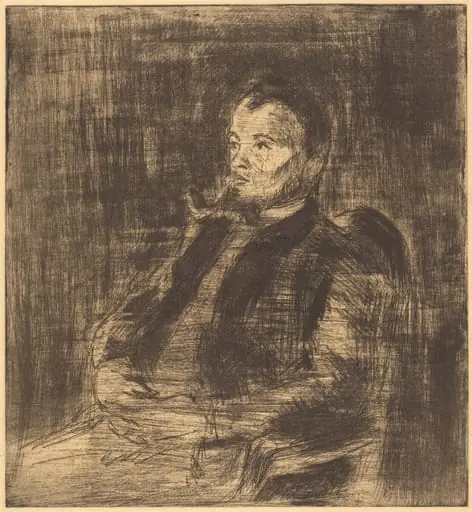
The portrait depicts a local man with a neutral expression, dressed in a high-collared shirt, facing left. His features are rendered with restrained detail, avoiding idealization or narrative embellishment. Gauguin’s focus on an anonymous figure suggests an interest in presence over identity, aligning with Symbolist tendencies to evoke mood rather than tell stories. The subject’s anonymity reinforces the artist’s broader pursuit of authenticity beyond European conventions.
Technique & Style
Gauguin employed etching and drypoint to achieve a range of textures—from fine lines to coarse, burr-heavy shadows. The dark, uneven background, built with layered strokes, contrasts with the smoother, more defined contours of the face. This interplay of precision and spontaneity reflects his Synthetist approach: reducing forms to essential shapes while emphasizing emotional resonance through tonal contrast and surface variation.
History & Provenance
The print was made shortly after Gauguin’s arrival in Tahiti, during a period of intense experimentation as he sought to distance himself from European artistic norms. It was likely produced in small editions, as was typical of his print work at the time. Its early provenance remains undocumented, but it entered institutional collections in the 20th century as interest grew in his graphic oeuvre alongside his paintings.
Context
In 1891, Gauguin was actively rejecting academic traditions and embracing what he perceived as the spiritual and aesthetic purity of Polynesian life. His prints from this period, including this one, were part of a larger effort to synthesize indigenous forms with modernist concerns. Unlike his colorful paintings, these works often relied on monochrome to emphasize structure and psychological presence.
Legacy
This print exemplifies Gauguin’s role in expanding printmaking’s expressive scope in the late 19th century. His integration of non-Western subjects and experimental techniques influenced later generations of artists seeking alternatives to naturalism. Though less celebrated than his paintings, his etchings remain vital for understanding his broader artistic philosophy and the evolution of modern printmaking.
Artist & collection
Artist
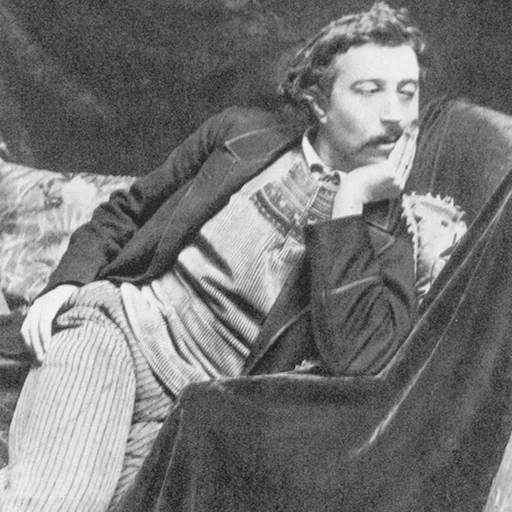
Eugène Henri Paul Gauguin (; French: ; 7 June 1848 – 8 May 1903) was a French painter, sculptor, printmaker, ceramist, and writer, whose work has been primarily associated with the Post-Impressionist and Symbolist movements.