Artwork
Auguste Rodin
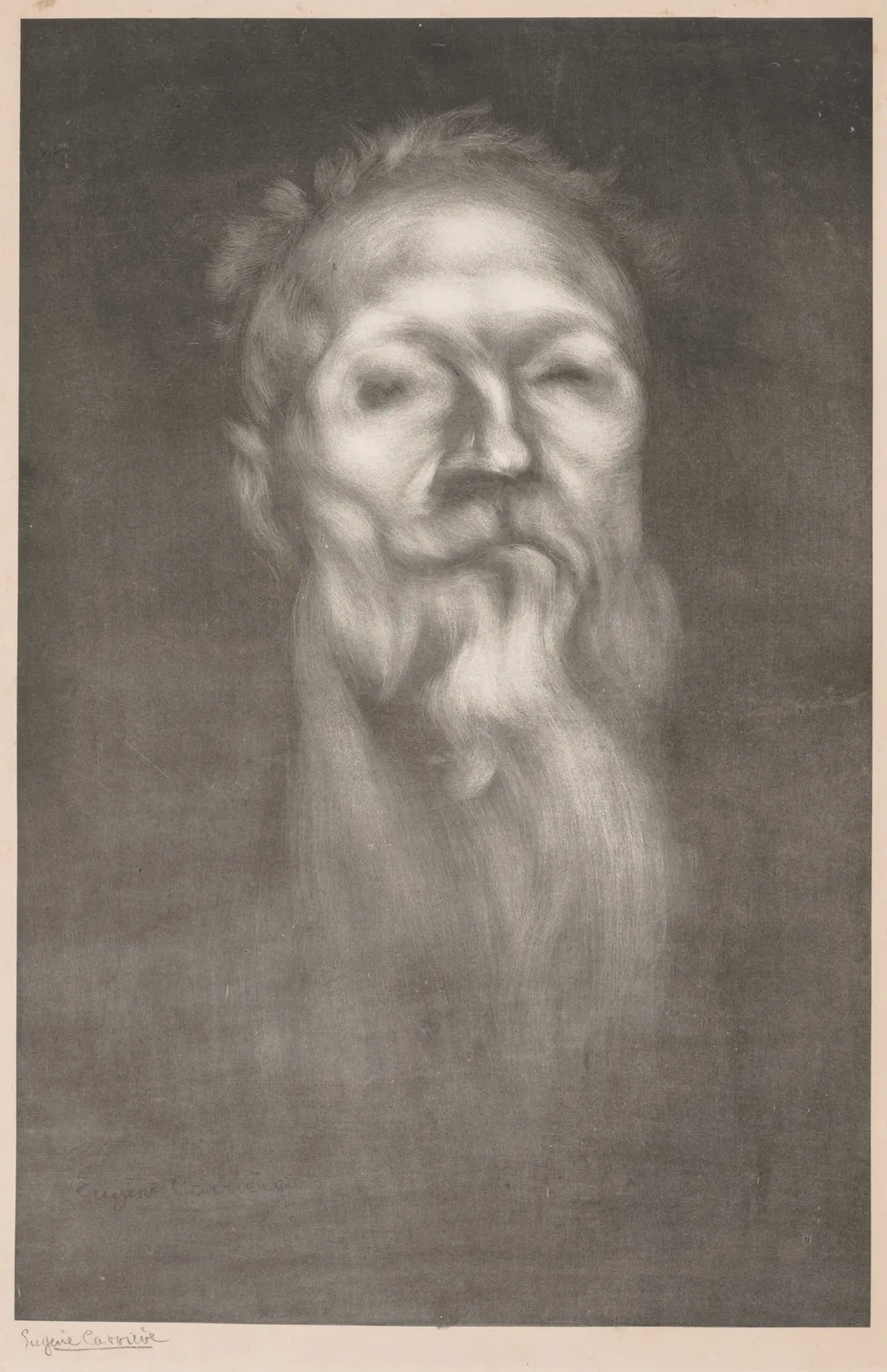
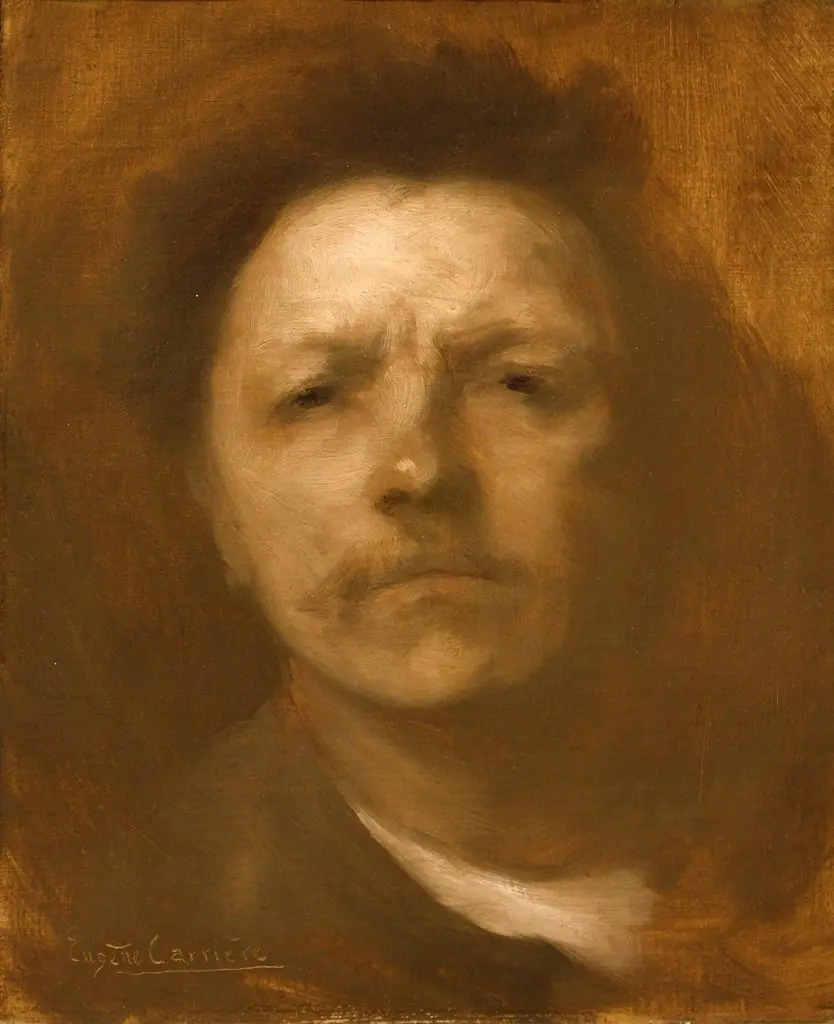
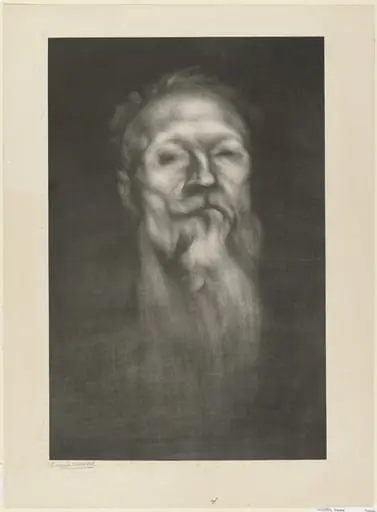
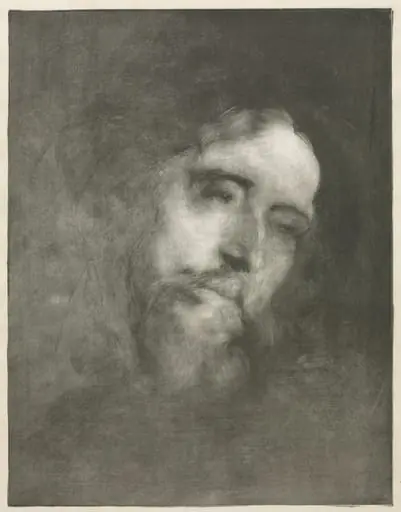
Auguste Rodin is a print by the Impressionist artist Eugène Carrière. It dates from 1897 and is held in the collection of the Cleveland Museum of Art.
About this work
Overview
Created in 1897, this print bears the title “Auguste Rodin” and was executed by French artist Eugène Carrière. The work is part of the collection of the Cleveland Museum of Art, where it is displayed as an example of Carrière’s late‑19th‑century portraiture.
Subject & Meaning
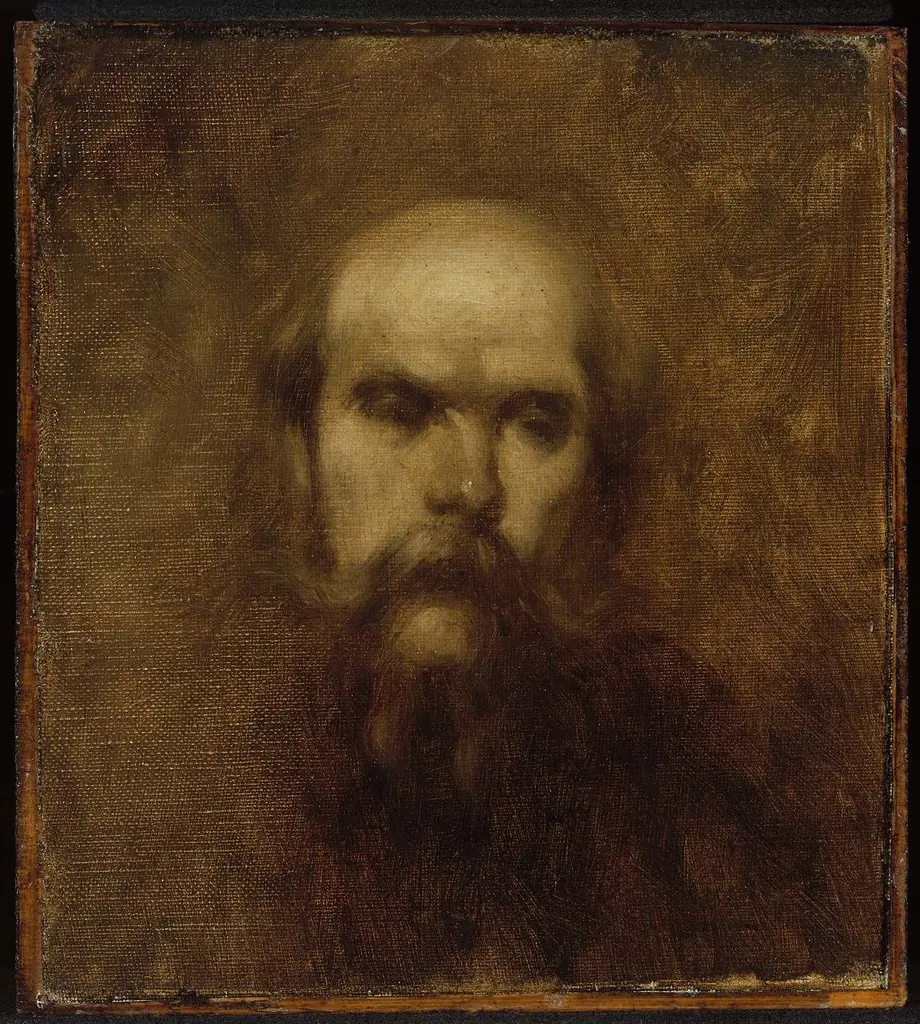
The image presents a close‑up of an elderly man with a flowing white beard and wavy hair. His hands rest thoughtfully on his chin, suggesting contemplation, while the majority of his face recedes into shadow, lending the figure an enigmatic, almost spectral presence.
Technique & Style
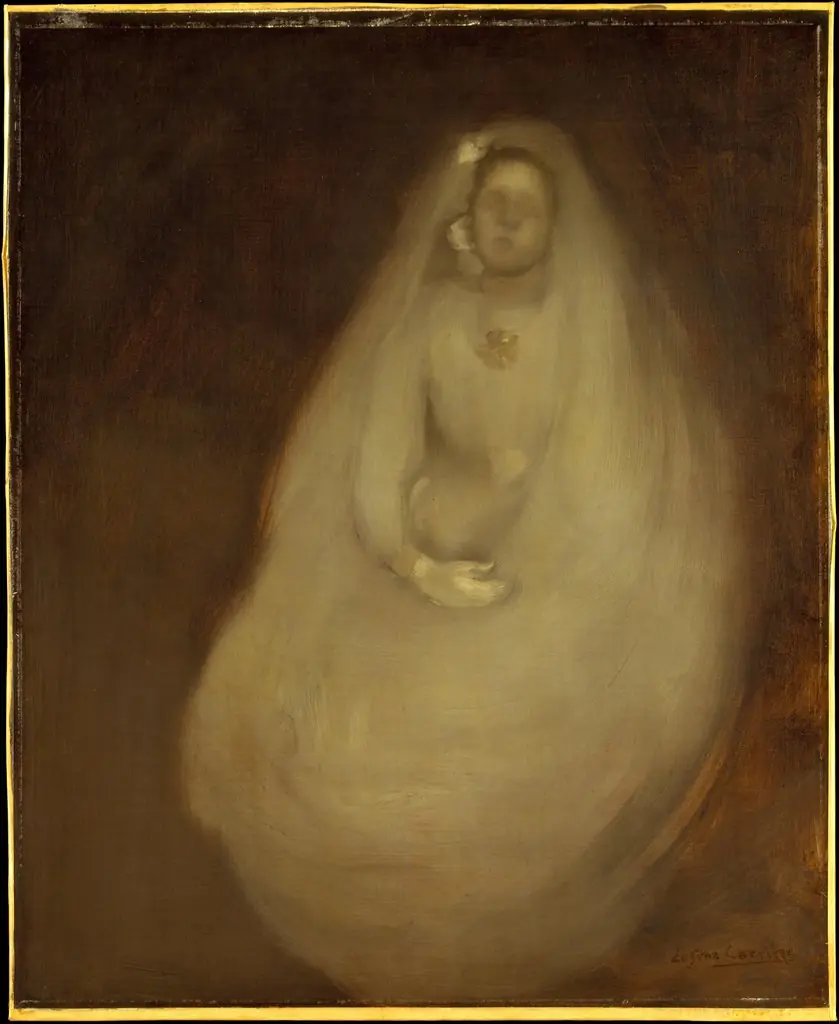
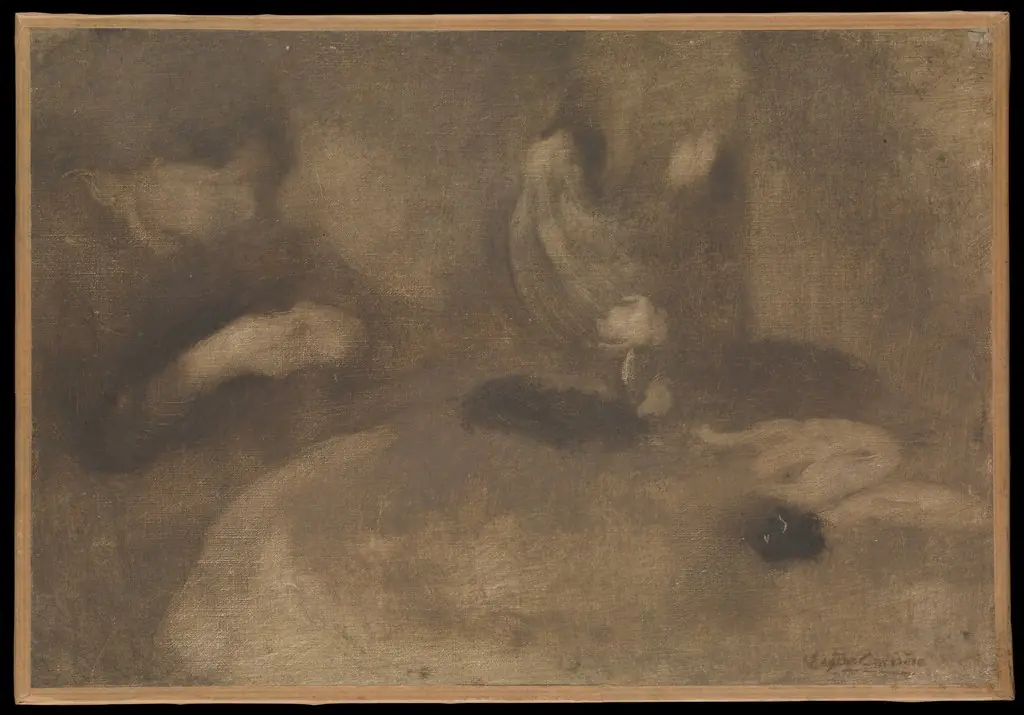
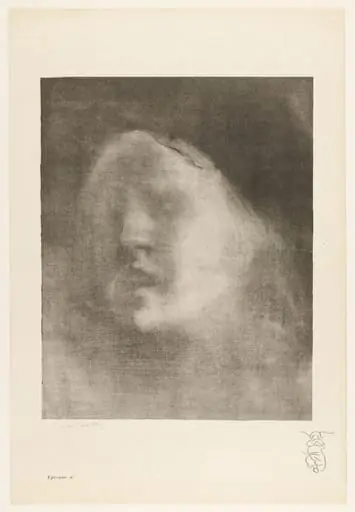
Carrière employs soft, blended brushwork that blurs edges and creates a misty atmosphere. The composition relies on a stark chiaroscuro effect: a concentrated light source illuminates the facial features and hands, while the surrounding darkness deepens the contrast and emphasizes the pallor of the skin and beard.
History & Provenance
The print was produced in the final decade of Carrière’s career, a period marked by his interest in intimate, psychological portraiture. It entered the Cleveland Museum of Art’s holdings through acquisition in the early 20th century, where it has remained in the museum’s prints and drawings department.
Context
Carrière, a contemporary of Rodin, often explored the inner life of his subjects through tonal subtlety rather than detailed realism. This work reflects the broader Symbolist tendency of the 1890s to evoke mood and interiority, aligning with the era’s fascination with the interplay of light and shadow to convey emotional depth.
Artist & collection

Artist
Eugène Anatole Carrière was a French Symbolist artist of the fin-de-siècle period.