Artwork
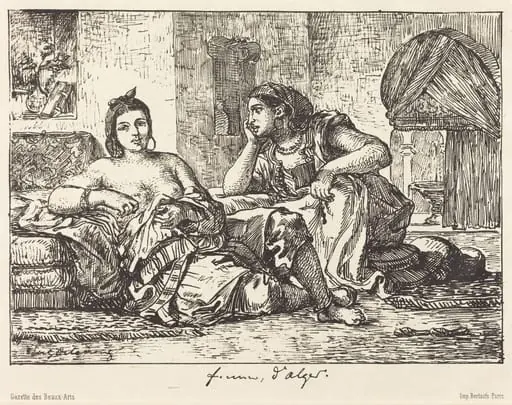
A Jewish Woman of Algiers
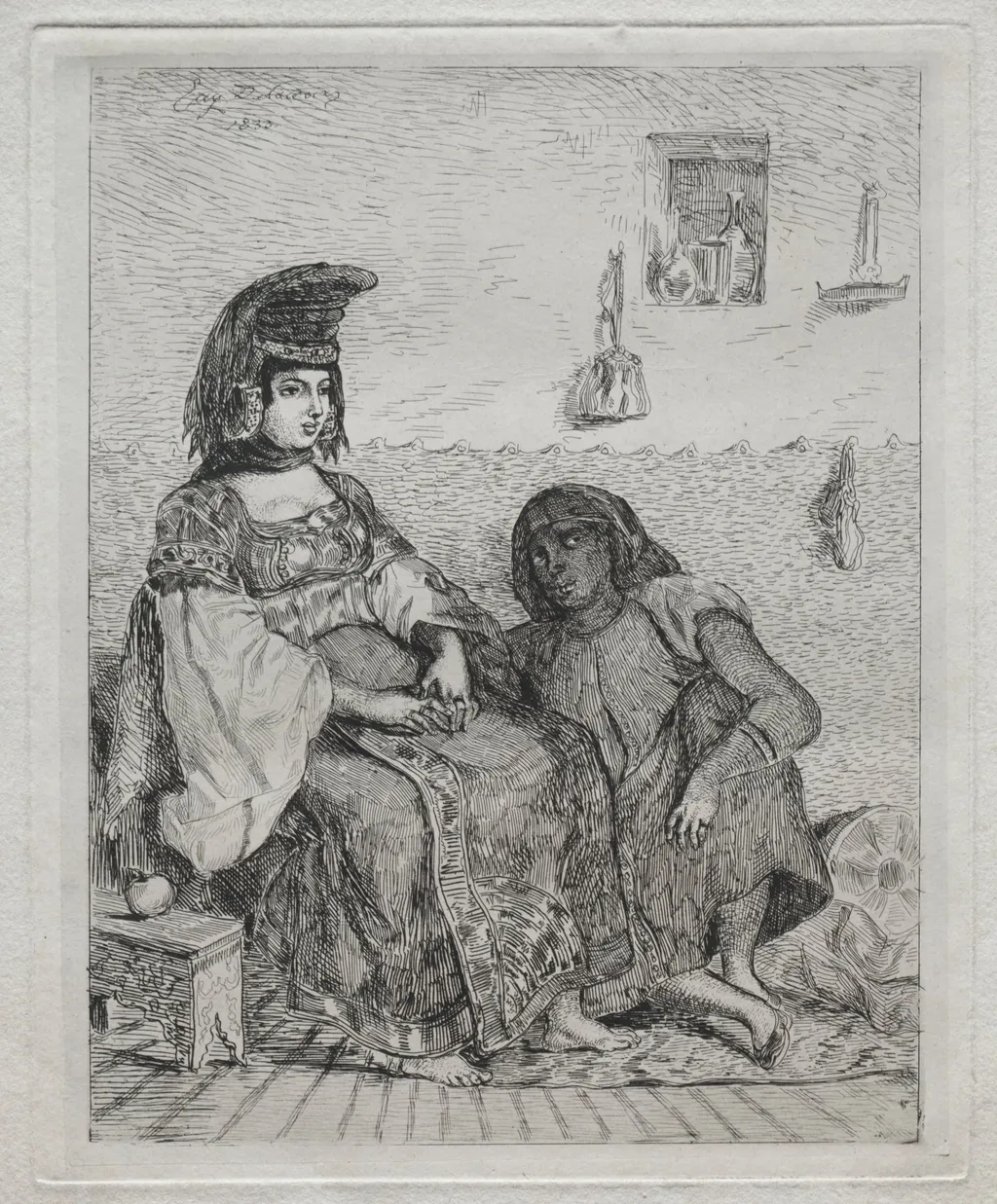
A Jewish Woman of Algiers is a print by the Romanticist artist Eugène Delacroix. It dates from 1833 and is held in the collection of the Cleveland Museum of Art.
About this work
Overview
Created after Delacroix’s travels to North Africa, the piece reflects his fascination with non-European cultures and daily life beyond European norms.
Painted in 1833 by Eugène Delacroix, this work captures a quiet moment between a Jewish woman and her child in Algiers. Created after Delacroix’s travels to North Africa, the piece reflects his fascination with non-European cultures and daily life beyond European norms. Unlike the rigid formalism of academic art, the composition prioritizes emotional resonance over idealized form, aligning with Romantic ideals of authenticity and personal experience.
Subject & Meaning
The painting portrays a mother and child in an intimate, unposed interaction, their gaze locked in quiet connection. Dressed in traditional North African Jewish garments, they sit barefoot on a floor beside simple household items—a basket, a jug—suggesting domestic routine. The absence of theatricality or exoticism shifts focus to tenderness and shared presence, offering a restrained portrait of cultural specificity rather than spectacle.
Technique & Style
Delacroix employs rich, layered color and soft chiaroscuro to model forms with warmth and depth. The woman’s draped fabric and the child’s simple tunic are rendered with loose, expressive brushwork, emphasizing texture over detail. Background elements are muted, drawing attention to the figures’ quiet humanity. His approach, influenced by Venetian colorism and Rubens’ fluidity, rejects linear precision in favor of emotional atmosphere and tactile presence.
History & Provenance
Delacroix painted this work following his 1832 journey to Morocco and Algeria, where he made numerous sketches of local life. The painting entered the Cleveland Museum of Art’s collection in the 20th century, having passed through private hands in Europe. Its preservation reflects sustained interest in Delacroix’s North African studies, which were considered groundbreaking for their ethnographic sensitivity and departure from Orientalist clichés.
Context
In the early 1830s, France’s colonial expansion into Algeria heightened European curiosity about its culture. Delacroix’s depictions, while filtered through a Western lens, avoided caricature by focusing on intimate, unmediated moments. His work stood apart from contemporaneous portrayals that emphasized spectacle or exoticism, instead offering a contemplative view of daily life that resonated with Romanticism’s emphasis on individual experience and emotional truth.
Legacy
This painting contributed to a broader shift in 19th-century art toward observing non-European societies with greater psychological nuance. Though later critics debated the artist’s position as an outsider, the work’s quiet dignity influenced generations of painters seeking authenticity over idealization. Its presence in a major American museum underscores its enduring role in discussions of cross-cultural representation in Western art.
Artist & collection
Artist
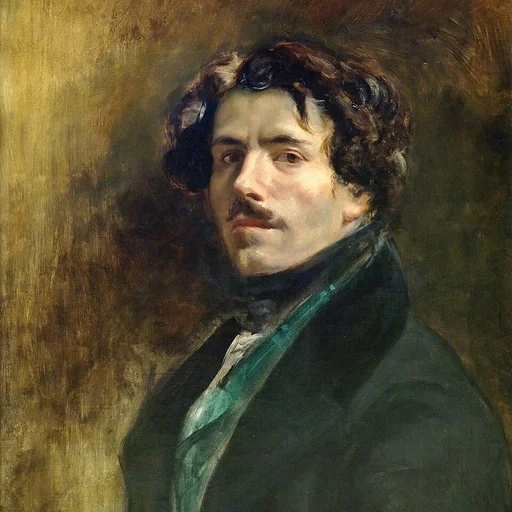
Ferdinand Victor Eugène Delacroix ( DEL-ə-krwah, -KRWAH; French: ; 26 April 1798 – 13 August 1863) was a French Romantic artist who was regarded as the leader of the French Romantic school.

![Market in Tangiers [Mercato di Tangeri], by E. Tommasi](https://artifactworldgallery.com/img/e-tommasi--market-in-tangiers-mercato-di-tangeri--dd40f2e0c7e6fcf9-w320.webp)