Artwork
Seated Woman and Standing Man Surrounded by Other Figures and Paraphernalia
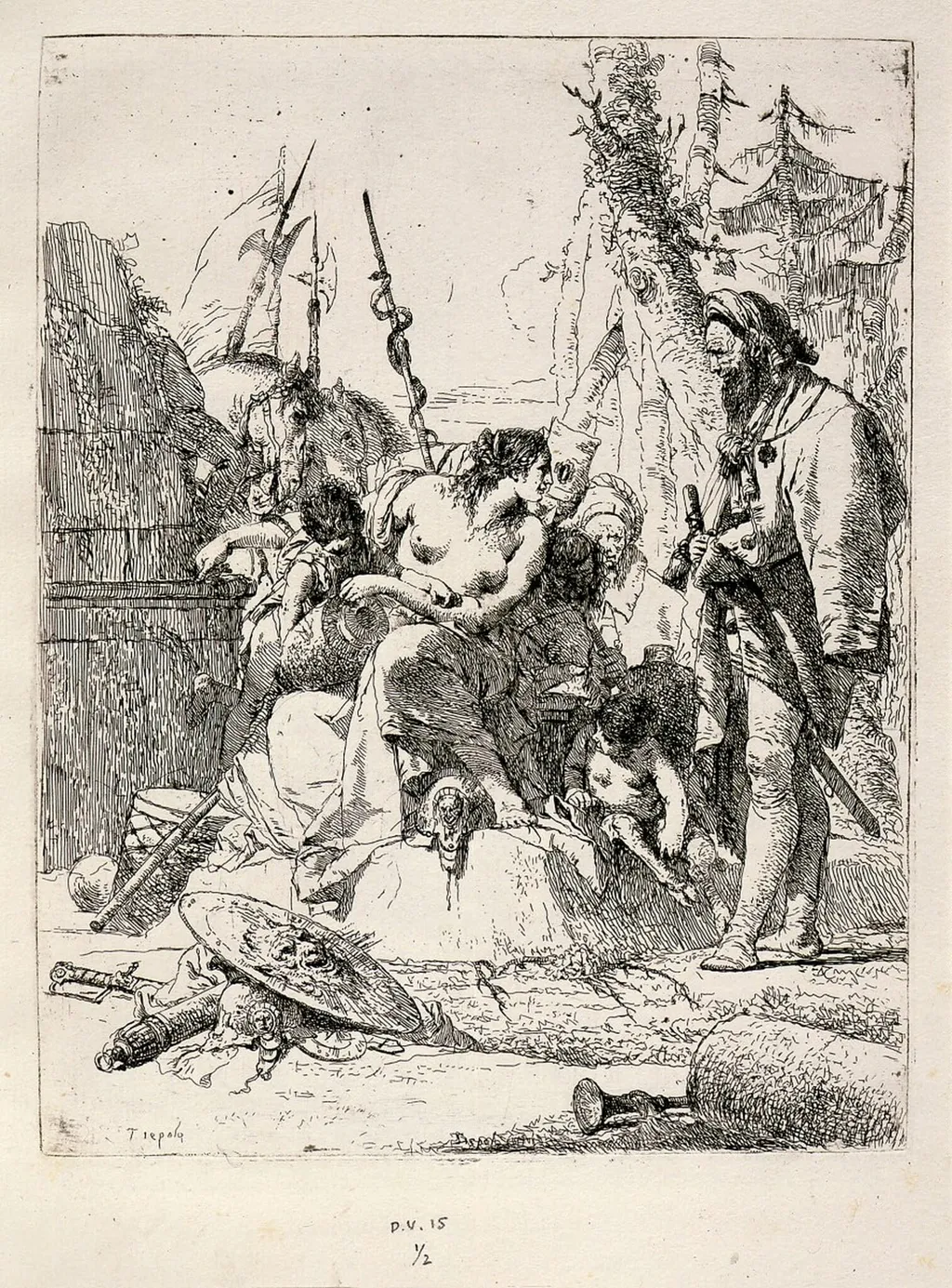
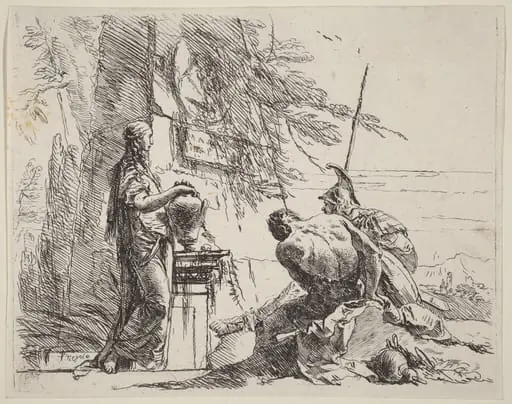
Seated Woman and Standing Man Surrounded by Other Figures and Paraphernalia is an ink print by the Baroque artist Giovanni Battista Tiepolo. It dates from 1733 and is held in the collection of the National Gallery of Art.
About this work
Overview
As a print from his early career, it reveals his command of linear rhythm and spatial complexity.
This 1733 etching by Giovanni Battista Tiepolo combines engraved lines with hand-drawn pen and brown ink accents, particularly visible along the tree trunk behind the central figure. As a print from his early career, it reveals his command of linear rhythm and spatial complexity. The work belongs to a series of imaginative scenes that blend mythic suggestion with theatrical composition, characteristic of Tiepolo’s approach to graphic art before his large-scale frescoes gained wider recognition.
Subject & Meaning
A seated woman, partially draped, and a standing man form the focal pair amid a group of figures in varied attire—some bearing weapons, others wearing hats or flowing garments. Surrounding objects, including a shield, sword, and banner, suggest allegorical or ceremonial context rather than a specific narrative. The arrangement evokes a moment of suspended action, possibly referencing classical or mythic themes, though no definitive source has been identified. The scene’s ambiguity invites interpretation without anchoring to a known story.
Technique & Style
Tiepolo employed etching as a foundation, then enhanced key areas with expressive pen strokes in brown ink, adding texture and emphasis. The tree trunk behind the seated figure demonstrates his skill in layering fine lines to suggest depth and organic form. His fluid, almost improvisational handling of line creates movement across the composition, balancing chaos with underlying structure. This technique reflects the Rococo preference for elegance and dynamism, even in intimate graphic works.
History & Provenance
Created during Tiepolo’s formative years in Venice, the print emerged from a period of intense graphic experimentation before his international commissions in Würzburg and Madrid. It was likely produced for private collectors or as a study for larger works. While its early ownership is undocumented, it entered major collections in the 19th century and is now held in institutions such as the British Museum and the Metropolitan Museum of Art, where it is studied for its technical innovation.
Context
In early 18th-century Venice, printmaking served as both artistic exploration and commercial output. Tiepolo’s etchings responded to a market for decorative, imaginative imagery that bridged the grandeur of Baroque drama with the lighter sensibility of emerging Rococo taste. Unlike narrative paintings, these works often prioritized visual poetry over clear storytelling, allowing viewers to engage with suggestion and atmosphere rather than literal meaning.
Legacy
This print exemplifies Tiepolo’s influence on the evolution of etching as a medium for expressive, non-narrative composition. His integration of ink additions into etched plates expanded the possibilities of printmaking beyond strict reproduction. Later artists, particularly in the 19th century, looked to his graphic works for their freedom of line and imaginative scope, cementing his reputation not only as a frescoist but as a pivotal figure in the history of print.
Artist & collection

Artist
Giovanni Battista Tiepolo, also known as Giambattista Tiepolo, was an Italian painter and printmaker from the Republic of Venice who painted in the Rococo style, considered an important member of the 18th-century Venetian school.

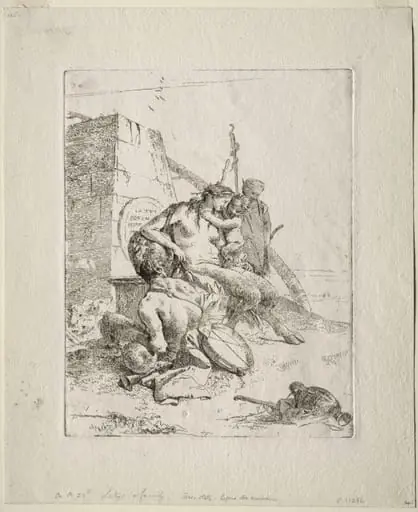 Scherzi di Fantasia: Satyr Family with the Obelisk
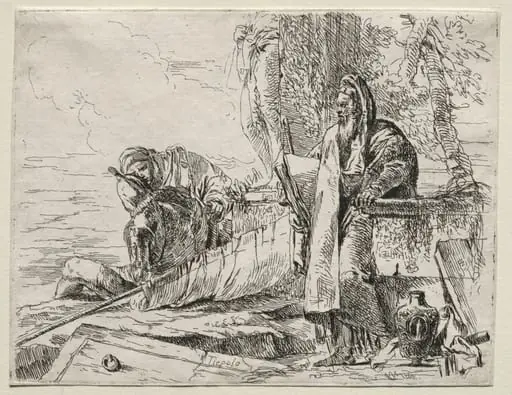 Various Caprices: The Philosopher Holding a Book
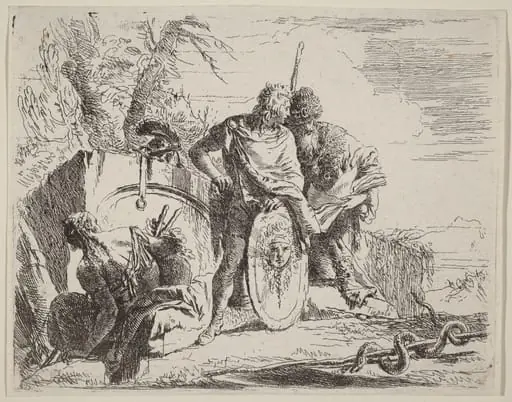 Young Soldier with Philosopher and Seated Woman
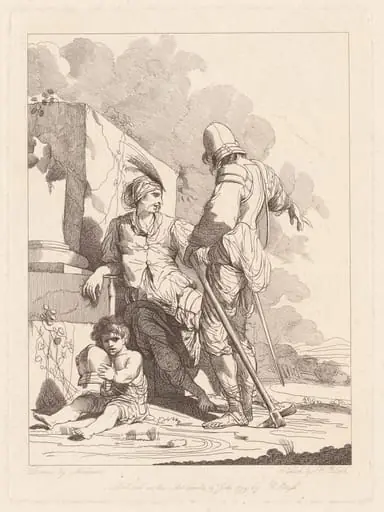 Two Soldiers and Child Holding a Helmet
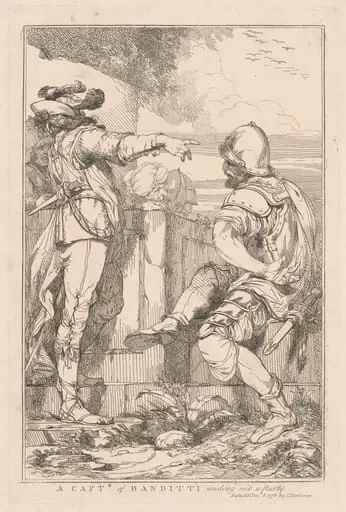 A Captain of Banditti
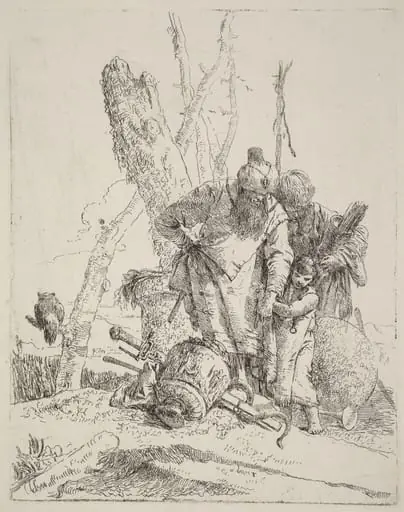 Two Turbaned Magicians and a Boy
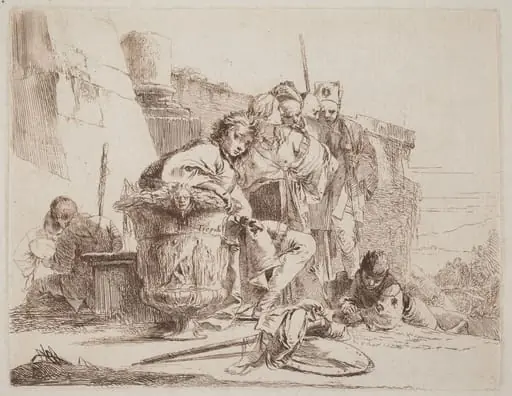 Seated Youth Leaning against an Urn
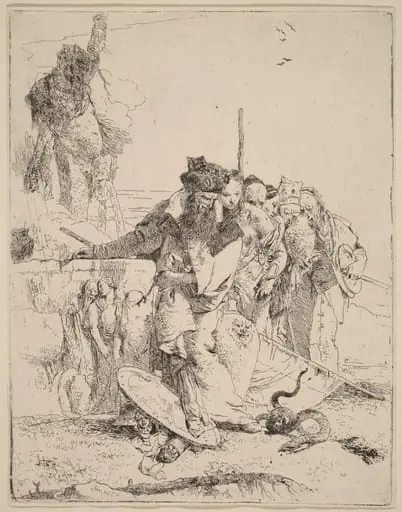 Magician and Others Regarding a Serpent
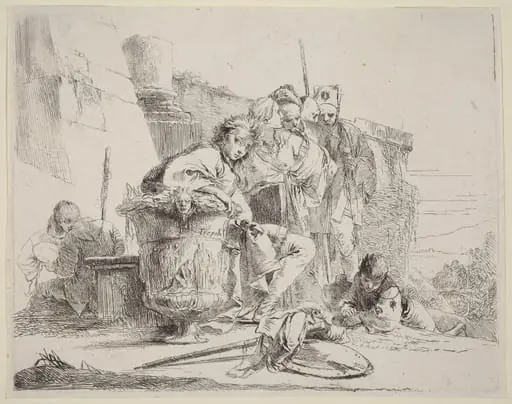 Seated Youth Leaning Against an Urn
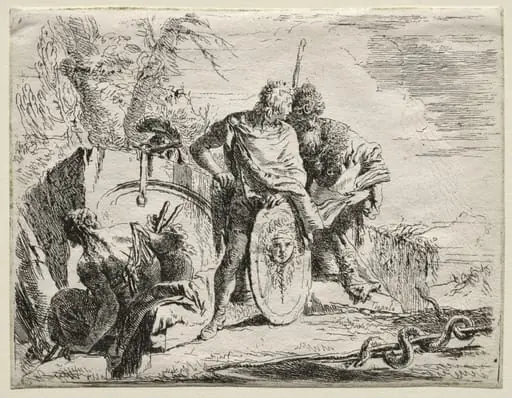 Various Caprices: The Astrologen and the Young Soldier
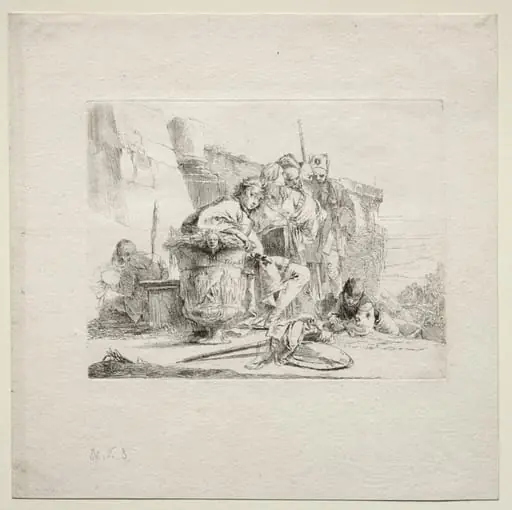 Various Caprices: The Young Man Seated, Leaning Against an Urn
 Standing Woman and Seated Men before an Obelisk