Artwork
Italian Peasant Woman
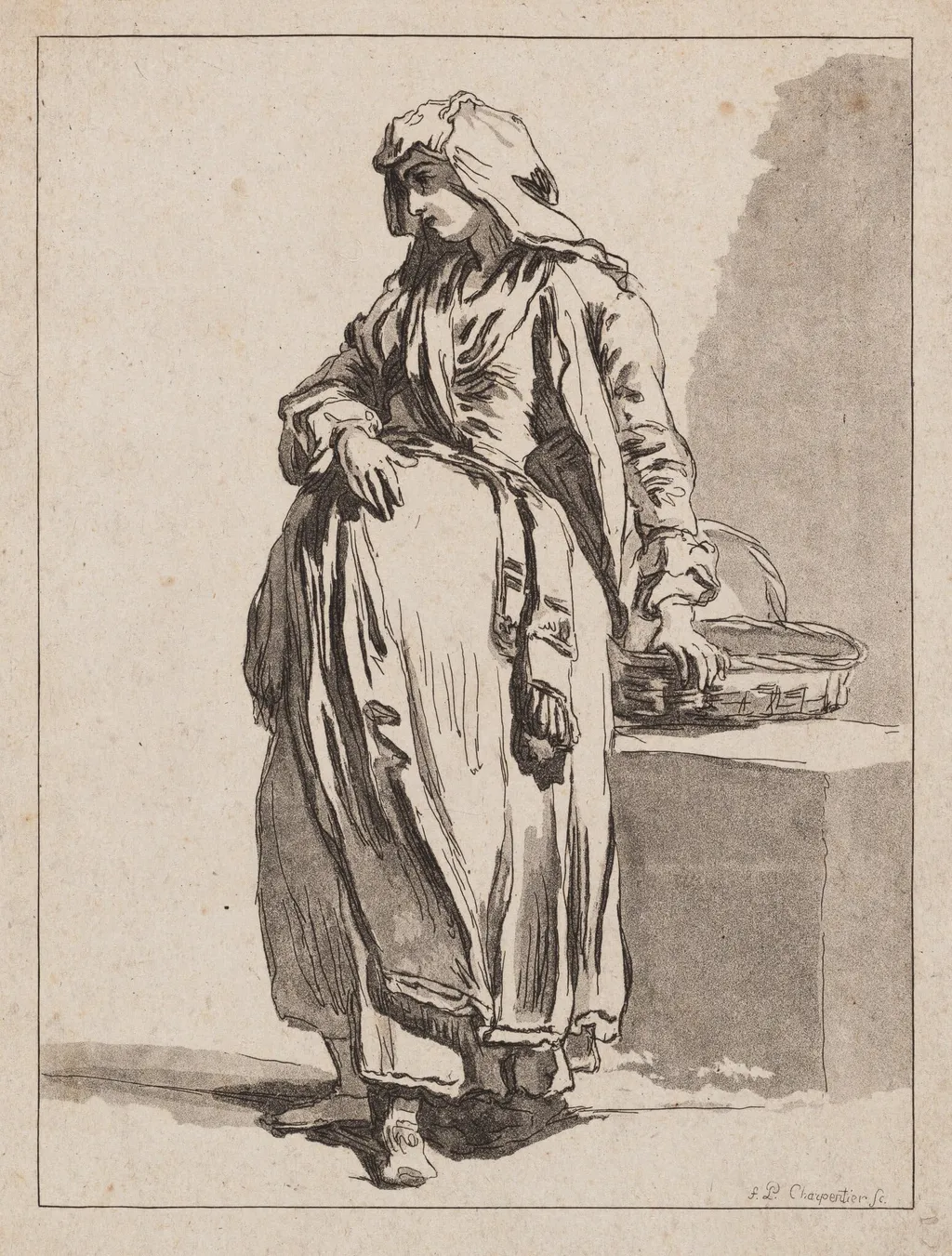
Italian Peasant Woman is an ink print by the Romanticist artist François-Philippe Charpentier. It dates from 1764 and is held in the collection of the National Gallery of Art.
About this work
Overview
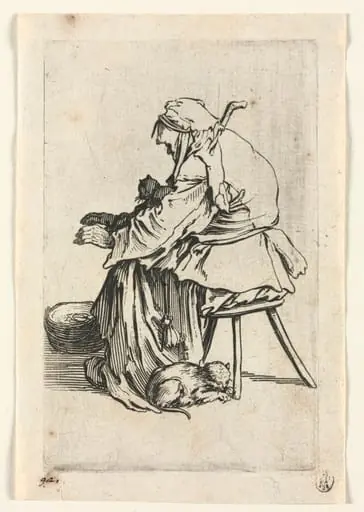
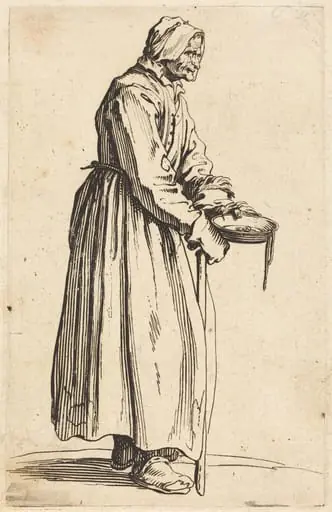
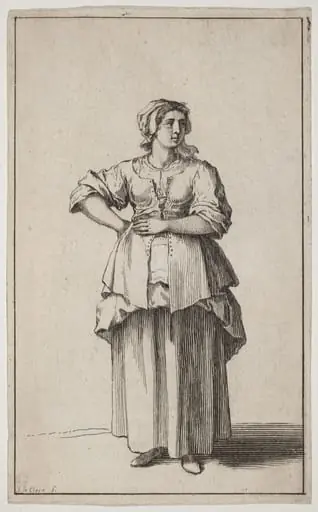
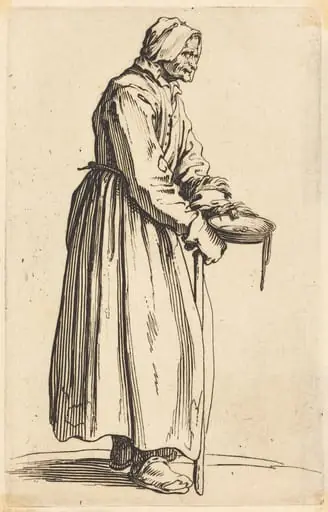
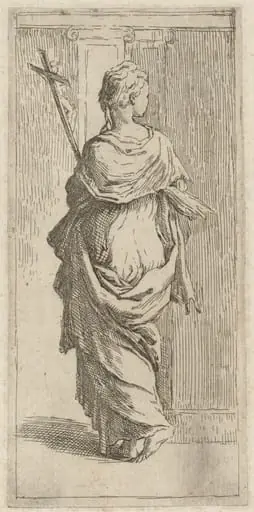
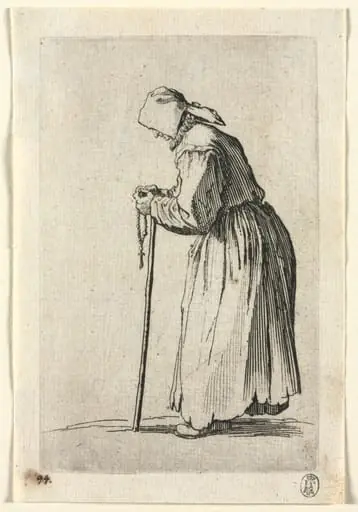
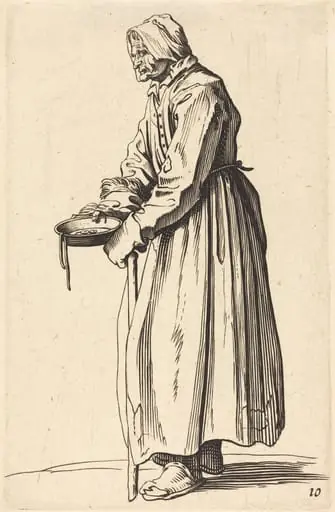
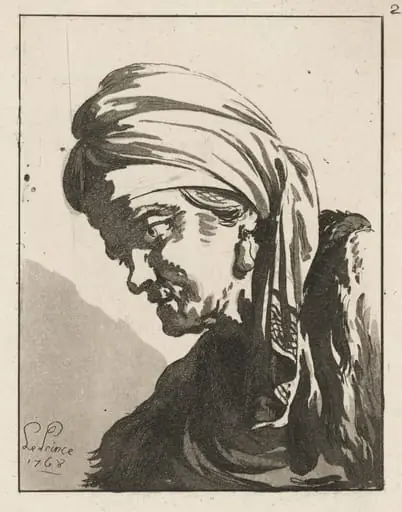
Created in 1764, *Italian Peasant Woman* is an etching and aquatint print on laid paper. The work presents a solitary rural figure from Italy, rendered in a modest, sketch‑like manner that emphasizes everyday life rather than grand narrative.
Subject & Meaning
The composition shows a woman in a loose, long dress and headscarf, hands placed near her chest, gazing slightly downward. A simple table behind her holds a basket and a shallow vessel, suggesting domestic activity and the quiet dignity of peasant existence.
Technique & Style
The artist employed a combination of etching and aquatint, a process he helped refine, to achieve delicate tonal variations. The lines are uneven and rapid, giving the image a spontaneous, almost preliminary quality that highlights texture and light without elaborate detail.
History & Provenance
The print was produced by French engraver François‑Philippe Charpentier, who trained in Paris and later devised an early mechanical method for aquatint. *Italian Peasant Woman* now belongs to the National Gallery of Art in Washington, D.C.
Context
During the mid‑18th century, prints that depicted ordinary people and daily scenes were popular, as the medium allowed for relatively inexpensive reproduction. Charpentier’s work fits within this trend, offering a glimpse into the lives of Italian peasants through the lens of French printmaking.
Artist & collection

Artist
François-Philippe Charpentier (b. Blois, 1734; d. there 22 July 1817) was a French engraver and inventor. His father was a bookbinder, a poor man who reportedly made many sacrifices so that his son might attend the…

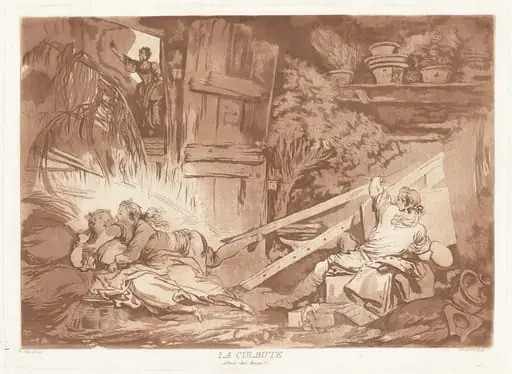 La Culbute (The Tumble)
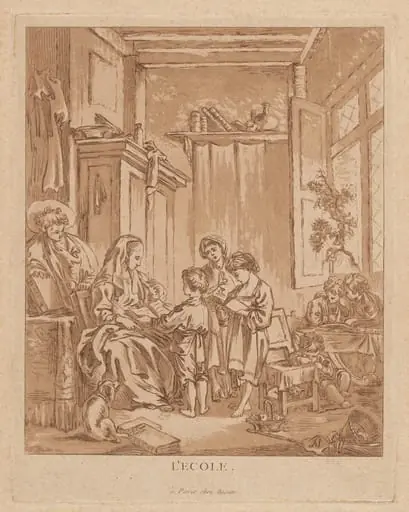 L’École (The School)
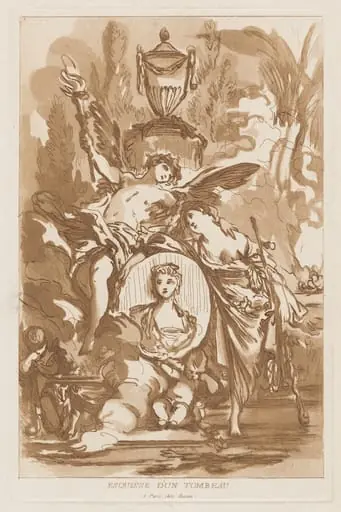 Esquisse d’un tombeau (Sketch for a Tomb)
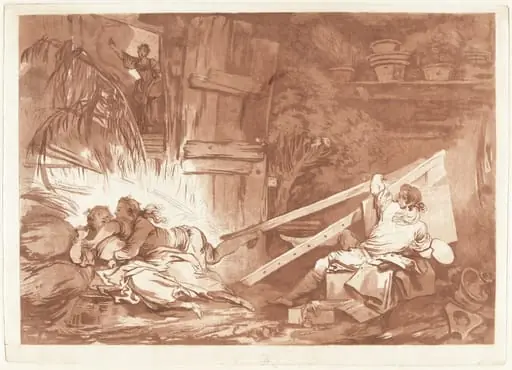 The Tumble
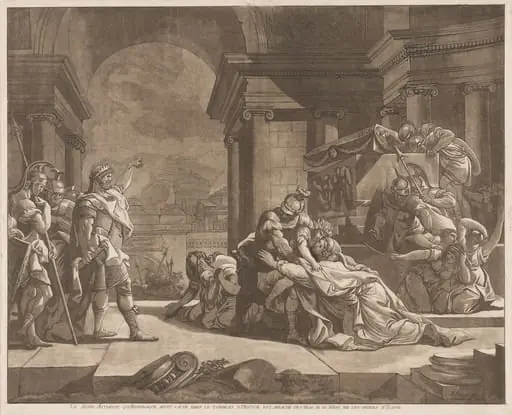 Le Jeune Astianax qu’Andromaque avoit caché dans le tombeau d’Hector est arraché des bras de sa Mere par les ordres d'Ulisse (Young Astianax, who Andromache Hid in Hector's Tomb, is Seized from his Mother's Arms by Ulysses' Orders)
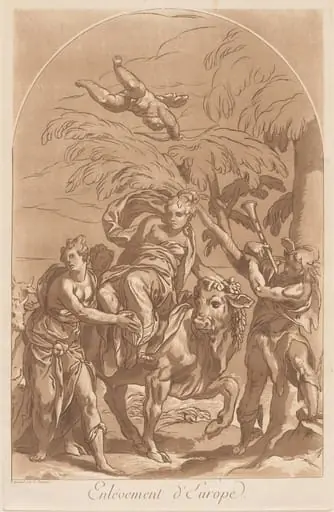 Rape of Europa
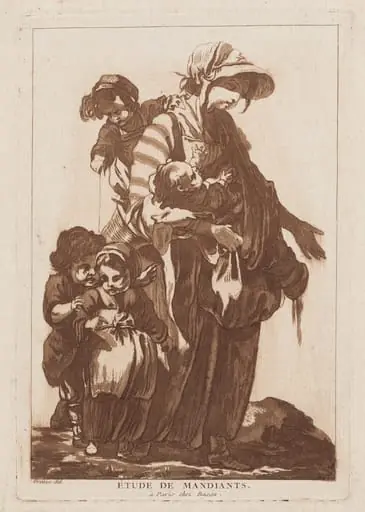 Étude de Mandiants (Study of Beggars)
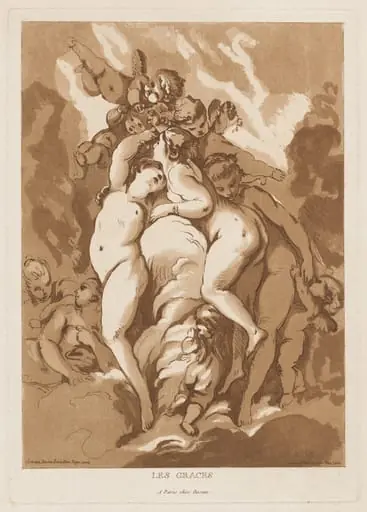 Les Graces (The Graces)