Artwork
Lion of the Atlas Mountains
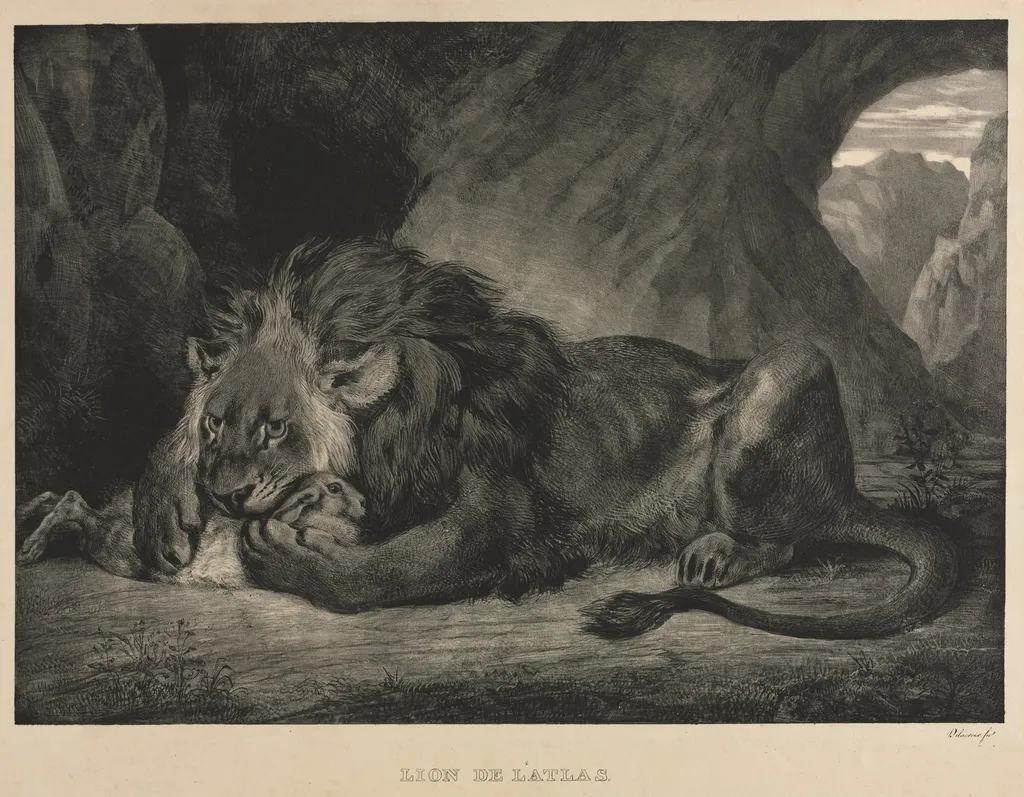
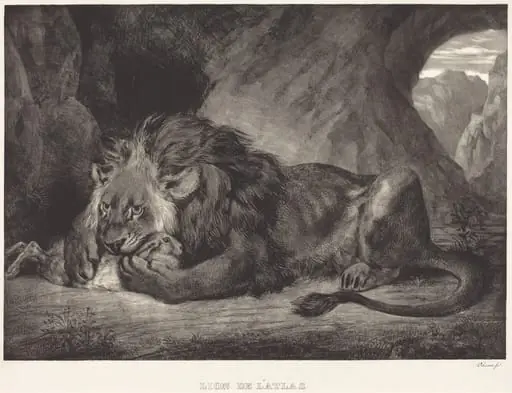
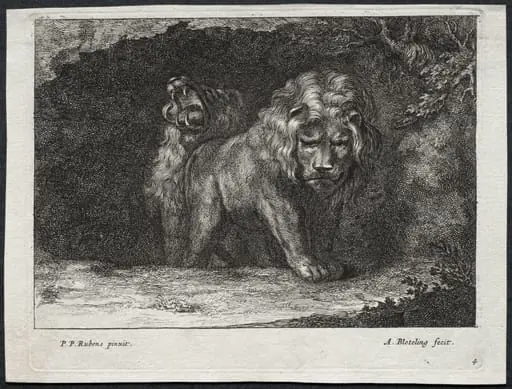
Lion of the Atlas Mountains is a print by the Romanticist artist Eugène Delacroix. It dates from 1829 and is held in the collection of the Cleveland Museum of Art. Created in 1829, this black-and-white print captures a lion resting within a rocky cavern, rendered in ink or etching.
About this work
Overview
Though originally painted by Eugène Delacroix, this version is a reproductive print, likely made to disseminate his imagery more widely.
Created in 1829, this black-and-white print captures a lion resting within a rocky cavern, rendered in ink or etching. Though originally painted by Eugène Delacroix, this version is a reproductive print, likely made to disseminate his imagery more widely. The composition emphasizes the animal’s alert stillness against a shadowed, textured environment, reflecting Delacroix’s interest in wild nature as a subject of emotional intensity rather than idealized form.
Subject & Meaning
The lion, depicted in a moment of quiet vigilance, embodies strength and solitude rather than aggression. Its wide eyes and poised posture suggest awareness of unseen threats or distant horizons. Set within the Atlas Mountains, the scene evokes the untamed landscapes of North Africa, a region Delacroix encountered during his 1832 journey. The animal becomes a symbol of primal presence, removed from human context and grounded in raw, natural existence.
Technique & Style
The print employs sharp contrasts between light and dark to isolate the lion’s form, using quick, angular lines to suggest the texture of its fur without fine detail. The background is rendered with loose, atmospheric strokes, creating depth through gradations of tone rather than defined edges. This approach aligns with Romantic tendencies to prioritize emotional impact and dynamic energy over academic precision, echoing the expressive brushwork of Rubens and Venetian colorists.
History & Provenance
Delacroix painted the original oil in 1829, likely as part of his growing fascination with exotic animals and North African themes. The print version emerged shortly after, possibly produced by a skilled engraver to meet public interest in his work. While the original painting’s current location is uncertain, the print circulated in artistic circles and private collections, contributing to the dissemination of Romantic imagery beyond gallery walls.
Context
In the late 1820s, European interest in North Africa was rising due to colonial expansion and travel narratives. Delacroix, though he had not yet visited the region in 1829, absorbed visual accounts and specimens from Parisian collections. His depictions of lions and other exotic subjects responded to this cultural curiosity, blending observed detail with imaginative drama, positioning nature as a force both awe-inspiring and alien to European sensibilities.
Legacy
This print helped establish Delacroix’s reputation for translating wild, emotional subjects into accessible formats. Its emphasis on chiaroscuro and expressive line influenced later artists exploring animal symbolism and atmospheric tone. Though less celebrated than his large-scale canvases, this work exemplifies how Romantic ideals were communicated beyond the academy, shaping public perceptions of nature as a realm of untamed dignity and mystery.
Artist & collection
Artist
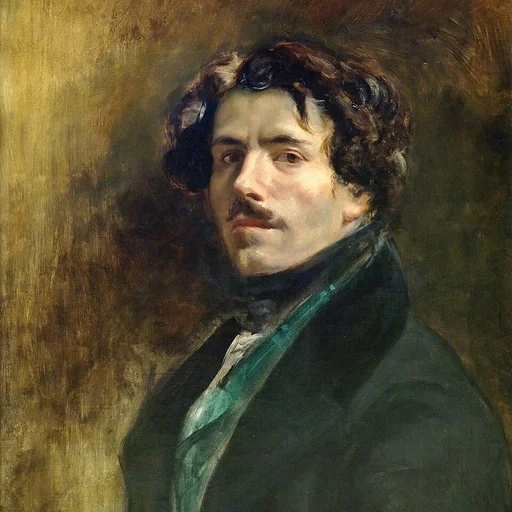
Ferdinand Victor Eugène Delacroix ( DEL-ə-krwah, -KRWAH; French: ; 26 April 1798 – 13 August 1863) was a French Romantic artist who was regarded as the leader of the French Romantic school.