Artwork
The Triumph of Amphitrite
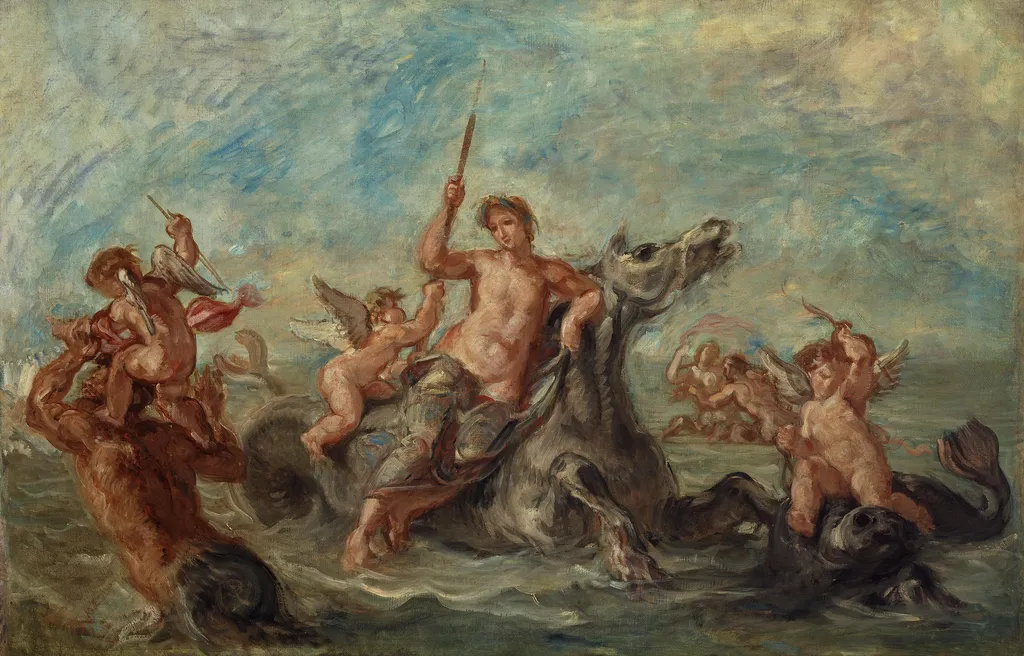
The Triumph of Amphitrite is an oil painting by the French Romanticist artist Eugène Delacroix. It dates from 1861 and is held in the collection of the Foundation E.G. Bührle Collection.
About this work
Overview
Though less widely known than his earlier historical scenes, this piece exemplifies his enduring interest in movement, emotion, and the natural world.
Painted in 1861 by Eugène Delacroix, *The Triumph of Amphitrite* is an oil-on-canvas work that reflects the artist’s late-period engagement with mythological themes. Though less widely known than his earlier historical scenes, this piece exemplifies his enduring interest in movement, emotion, and the natural world. It resides in the Kunsthaus Zürich, where it continues to be studied for its atmospheric composition and departure from academic norms.
Subject & Meaning
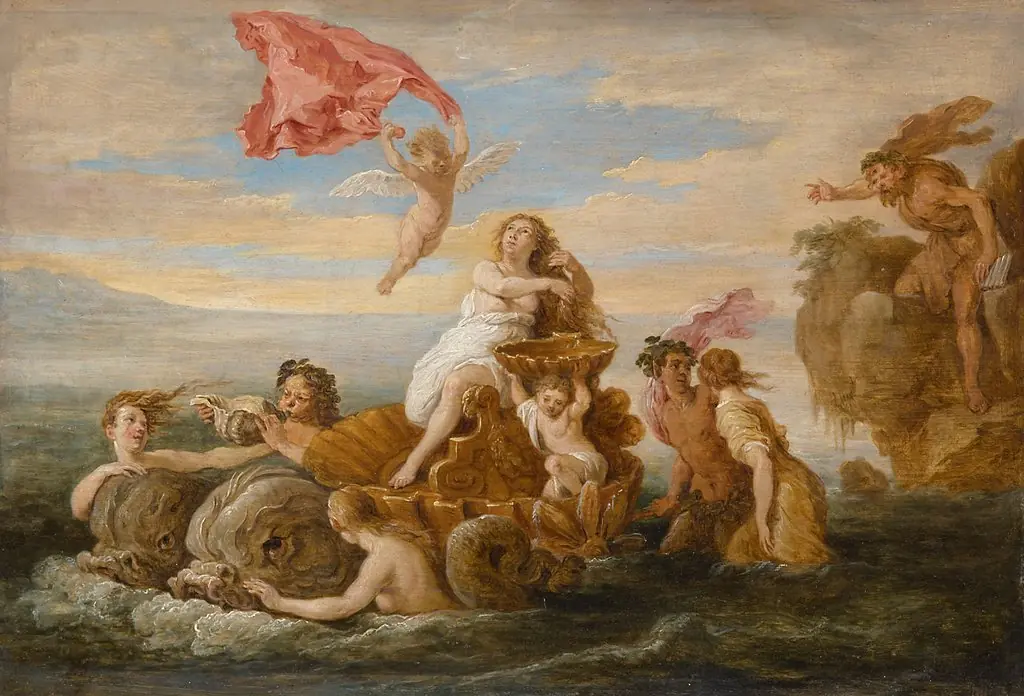
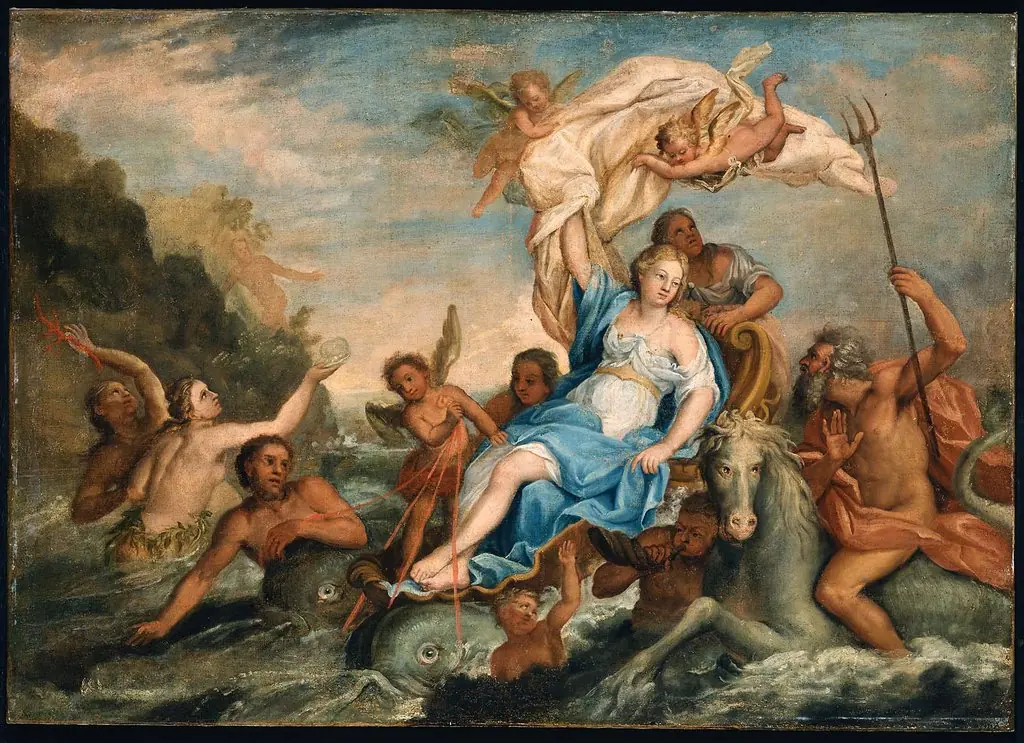
The painting portrays Amphitrite, the sea goddess from Greek myth and consort of Poseidon, riding a marine creature through oceanic waves. Surrounding her are symbolic figures: winged putti, a flute-playing male attendant, and other aquatic beings. These elements suggest a ceremonial procession, evoking the dominion of the sea and the harmony between divine power and nature. The scene is not a literal narrative but a poetic meditation on marine majesty.
Technique & Style
Delacroix employed loose, visible brushwork to convey motion and texture, emphasizing the fluidity of water and fabric. His palette favors muted blues, grays, and soft whites, creating a hazy, atmospheric effect. Unlike the sharp contours of Neoclassicism, his forms blend into one another, enhancing the dreamlike quality. The composition is asymmetrical and dynamic, with figures arranged to guide the eye diagonally across the canvas, reinforcing a sense of forward motion.
History & Provenance
Commissioned in the final decade of Delacroix’s life, the painting was likely intended for private collection rather than public exhibition. It entered the Kunsthaus Zürich’s holdings in the early 20th century, possibly through a Swiss collector with ties to French art circles. Its relatively quiet reception during Delacroix’s lifetime contrasts with its later recognition as a subtle example of his mature style, reflecting his personal engagement with myth beyond public commissions.
Context
In the 1860s, Delacroix distanced himself from the rigid formalism of Ingres and the academic establishment, instead drawing from Rubens and Venetian colorism. *The Triumph of Amphitrite* emerged during a period when Romanticism was waning in France, yet Delacroix continued to explore emotional intensity and mythic symbolism. The work reflects his lifelong fascination with the sea, a recurring motif in his sketches and writings, rooted in personal travel and literary sources like Homer and Ovid.
Legacy
Though not among Delacroix’s most celebrated works, *The Triumph of Amphitrite* illustrates his sustained commitment to expressive form and emotional resonance in later years. Its atmospheric handling of light and movement influenced later Symbolist and Impressionist artists who valued mood over narrative clarity. The painting remains a quiet testament to his ability to transform myth into a sensory experience, bridging Romantic ideals with emerging modern sensibilities.
Own this work as a print
Artist & collection

Artist
Ferdinand Victor Eugène Delacroix ( DEL-ə-krwah, -KRWAH; French: ; 26 April 1798 – 13 August 1863) was a French Romantic artist who was regarded as the leader of the French Romantic school.