Artwork
The Triumph of Bacchus
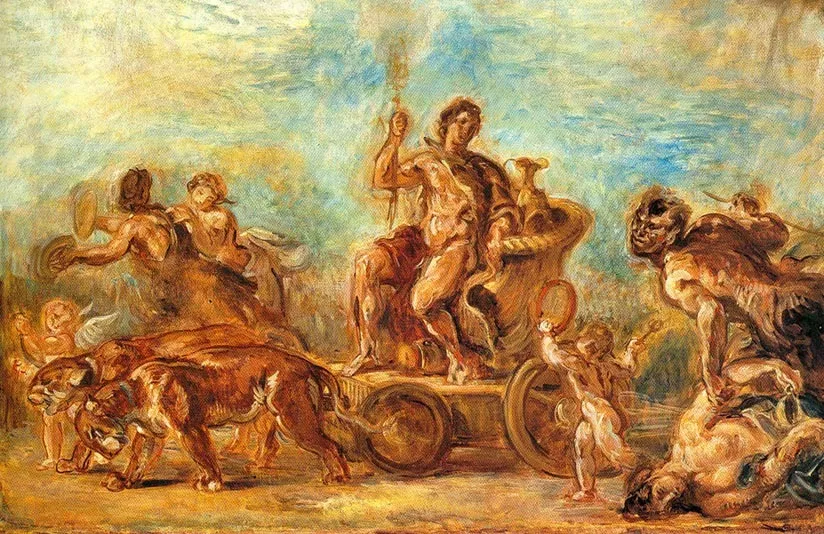
The Triumph of Bacchus is an oil painting by the French Romanticist artist Eugène Delacroix. It dates from 1861 and is held in the collection of the Foundation E.G. Bührle Collection.
About this work
Overview
Painted in 1861 by Eugène Delacroix, *The Triumph of Bacchus* is an oil-on-canvas work that reflects the artist’s mature engagement with mythological themes.
Painted in 1861 by Eugène Delacroix, *The Triumph of Bacchus* is an oil-on-canvas work that reflects the artist’s mature engagement with mythological themes. Though rooted in classical subject matter, the painting diverges from academic rigidity through its vigorous brushwork and chromatic intensity. It belongs to the collection of Kunsthaus Zürich, where it remains a key example of Romantic-era reinterpretations of antiquity.
Subject & Meaning
The painting portrays Bacchus, the Roman god of wine and revelry, standing triumphantly in a chariot, clutching a torch and a drinking vessel. Surrounding him are attendants in motion—dancers, musicians, and followers—suggesting a procession of ecstatic celebration. The scene evokes ritual abandon and divine power, aligning with Romantic ideals of emotion and primal energy over rational order.
Technique & Style
Delacroix employed loose, expressive brushstrokes and layered pigments to generate movement and luminosity. Warm golds and reds dominate the central figures, contrasting with cooler blues and yellows in the background. His approach, influenced by Rubens and Titian, prioritizes atmospheric effect and emotional resonance over anatomical precision, creating a sense of dynamic, almost chaotic vitality.
History & Provenance
Completed near the end of Delacroix’s career, the painting was likely intended as a personal exploration of myth rather than a commission. It entered the Kunsthaus Zürich collection in the late 19th century, possibly through a private acquisition or bequest. Its presence in Switzerland reflects broader European interest in French Romanticism during the post-revolutionary period.
Context
In 1861, Delacroix was increasingly isolated from the Parisian art establishment, yet continued to draw from literary and classical sources. While academic painters favored historical clarity, he pursued expressive intensity, aligning with Romanticism’s broader rejection of Neoclassical restraint. This work stands as part of his late phase, where myth became a vehicle for exploring emotion and sensory experience.
Legacy
Though less frequently exhibited than his earlier works, *The Triumph of Bacchus* exemplifies Delacroix’s enduring influence on color theory and expressive composition. Later artists, including the Impressionists and Fauves, found in his use of pigment a precedent for emotional colorism. The painting remains a quiet but significant testament to his lifelong pursuit of visual passion.
Artist & collection
Artist
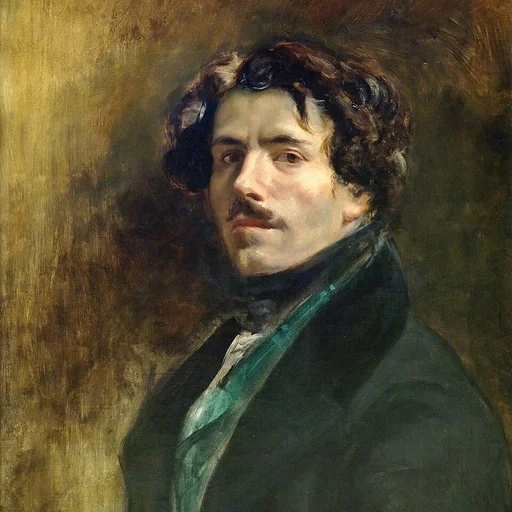
Ferdinand Victor Eugène Delacroix ( DEL-ə-krwah, -KRWAH; French: ; 26 April 1798 – 13 August 1863) was a French Romantic artist who was regarded as the leader of the French Romantic school.

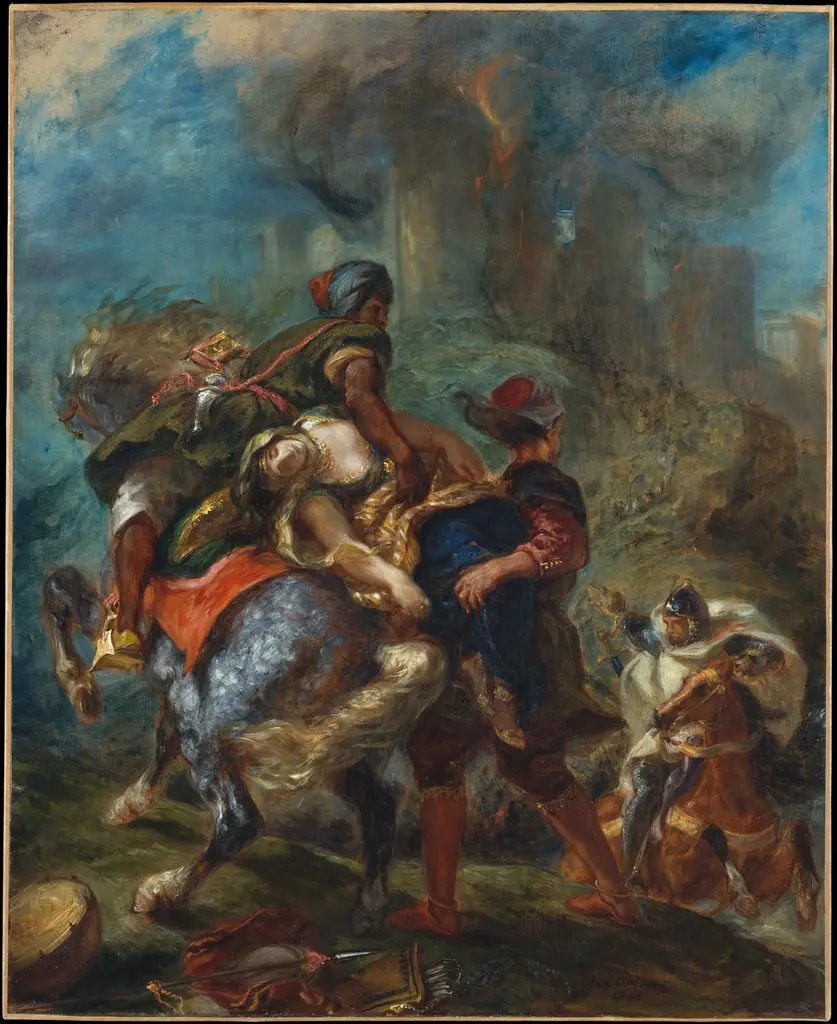
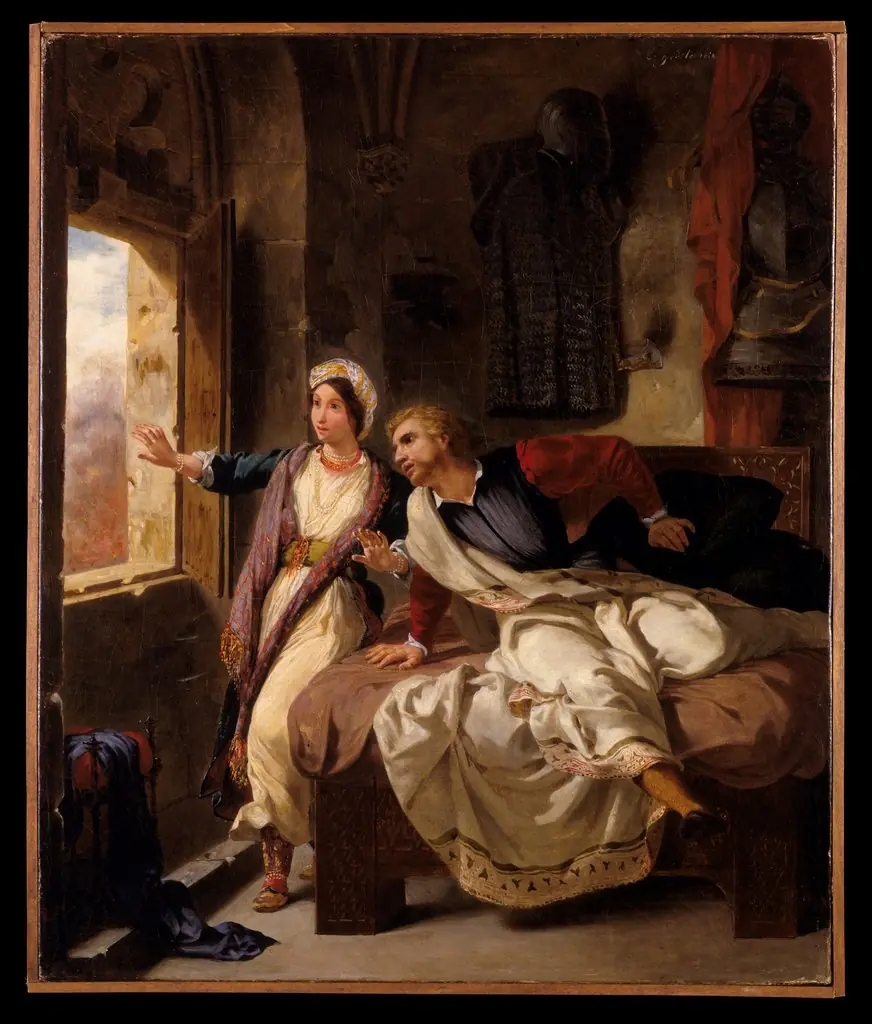
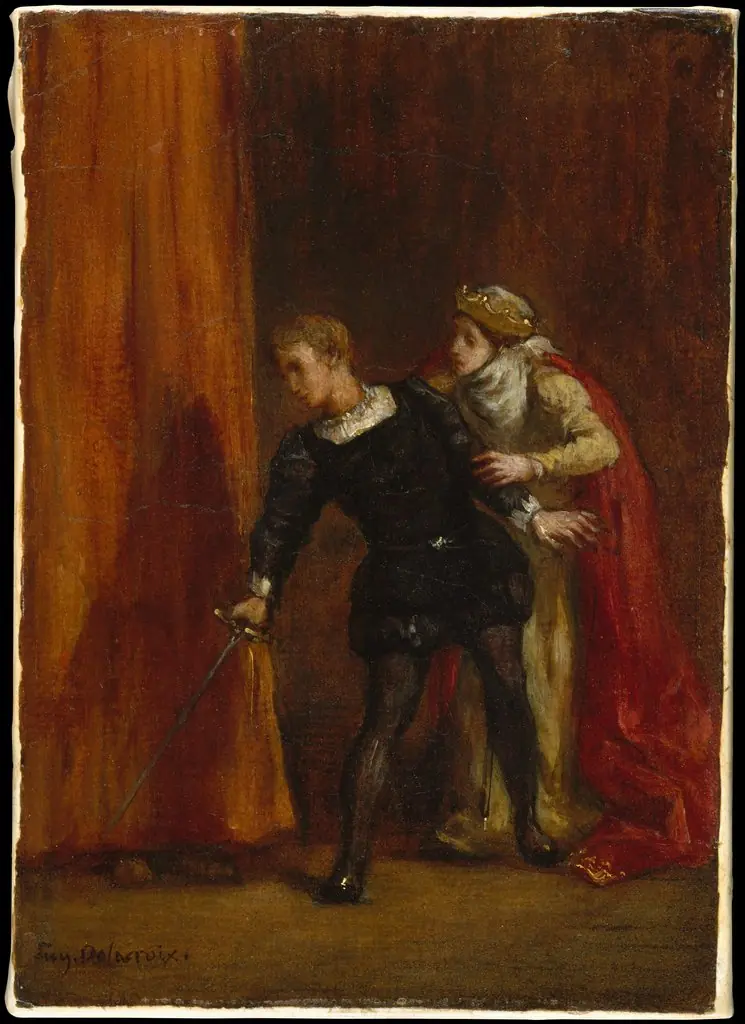
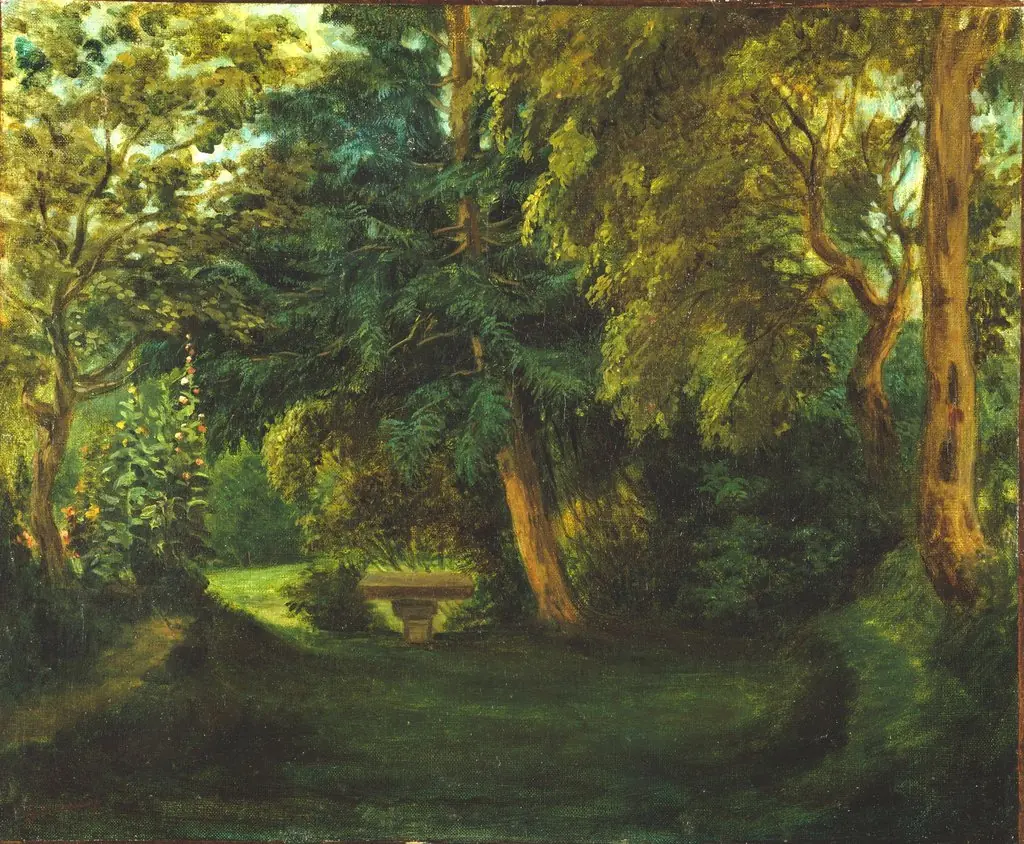
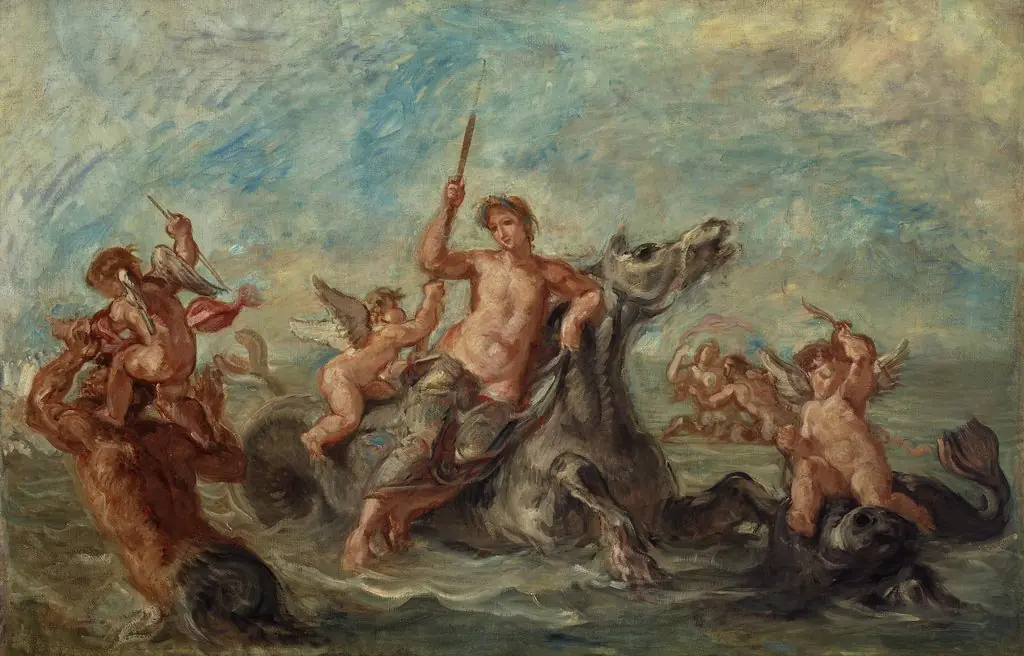 The Triumph of Amphitrite
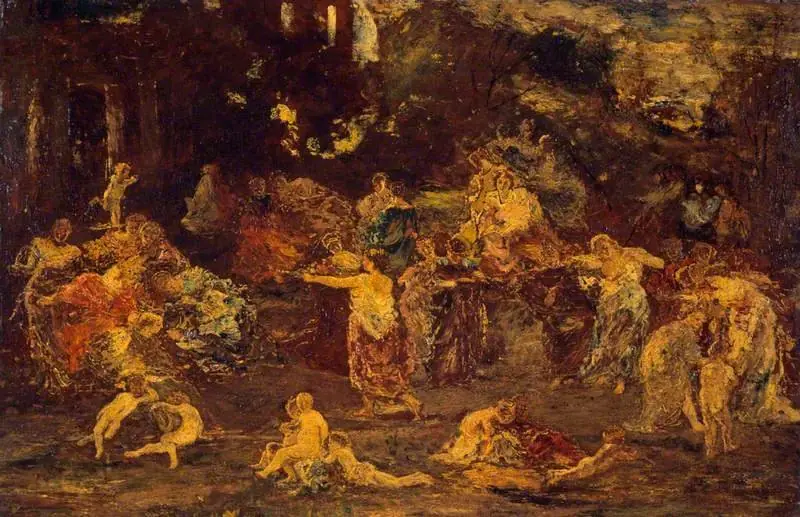 The Garden of Love
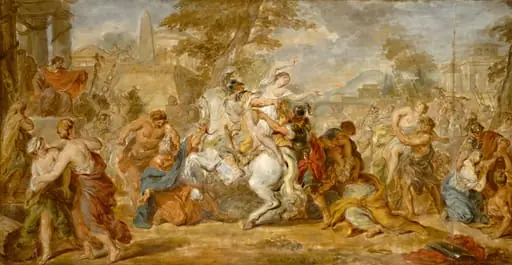 The Rape of the Sabine Women
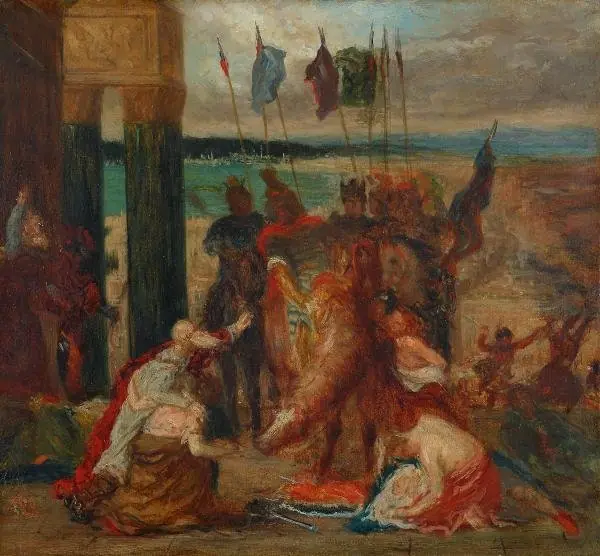 L'Entrée des croisés à Constantinople
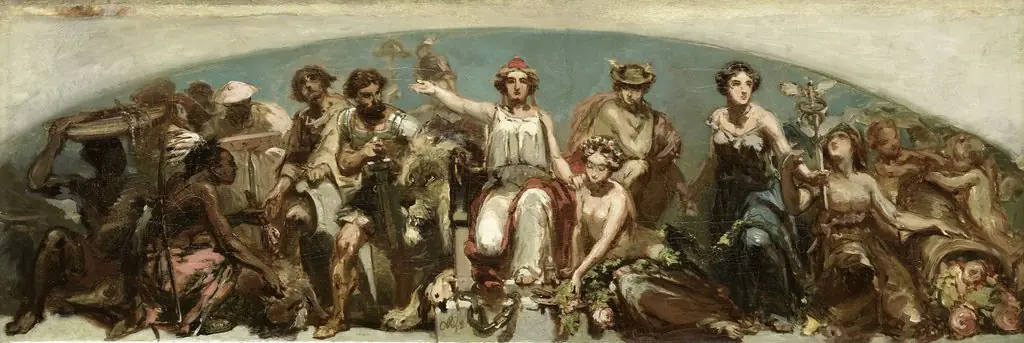 The Colonies Pay Tribute to the Dutch Maiden
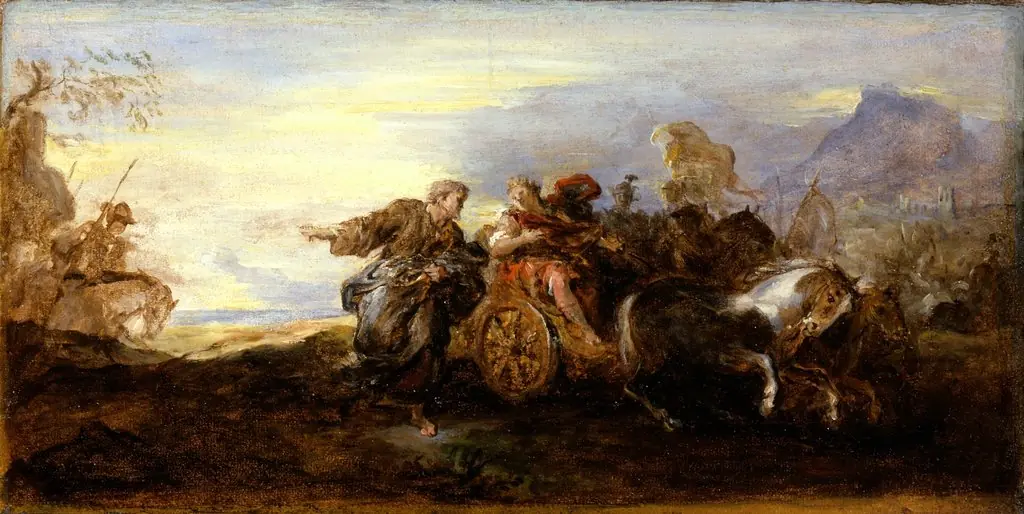 Scene from Ancient History
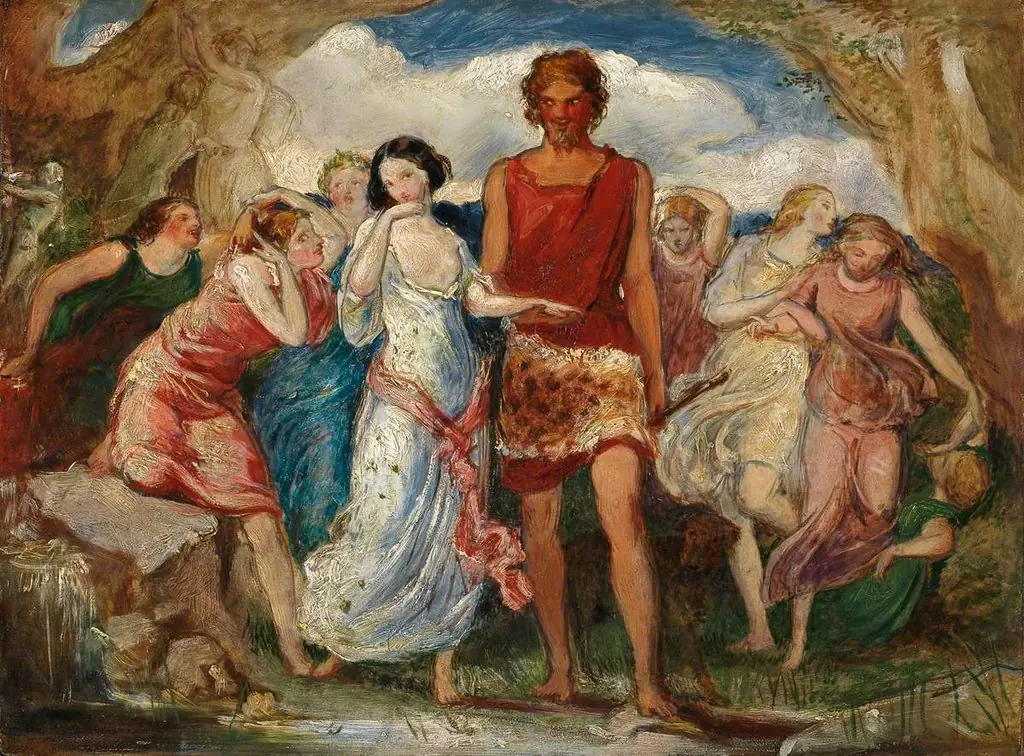 Cimon and Iphigenia
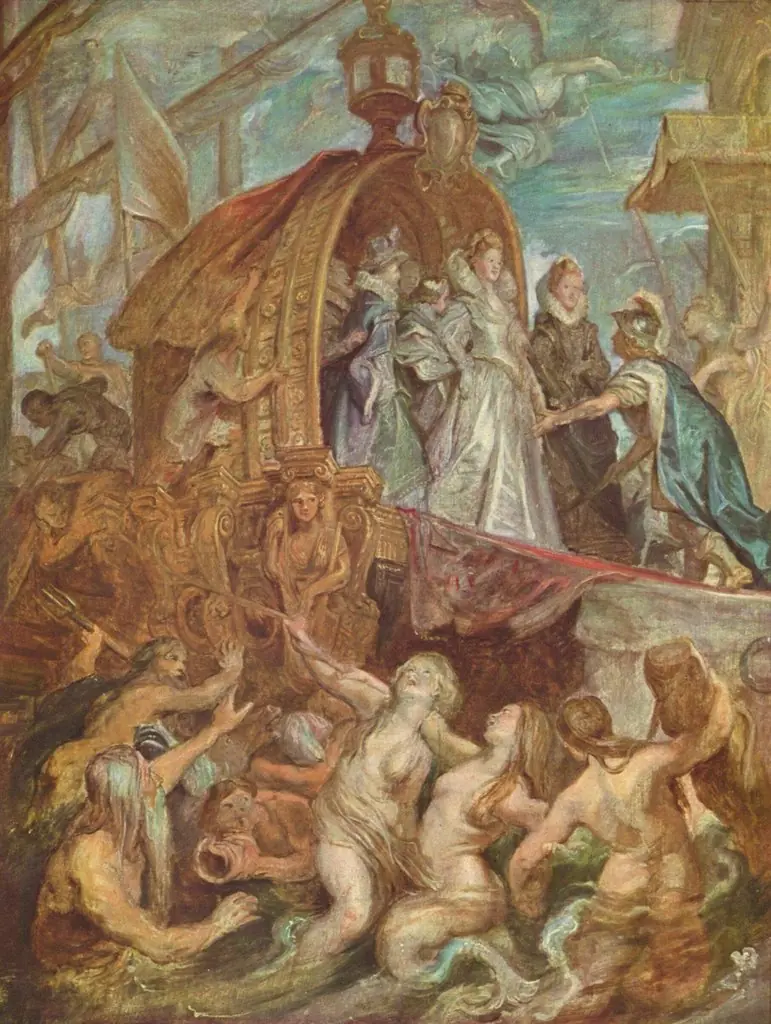 The Landing in Marseilles (Sketch for the Medici Cycle)
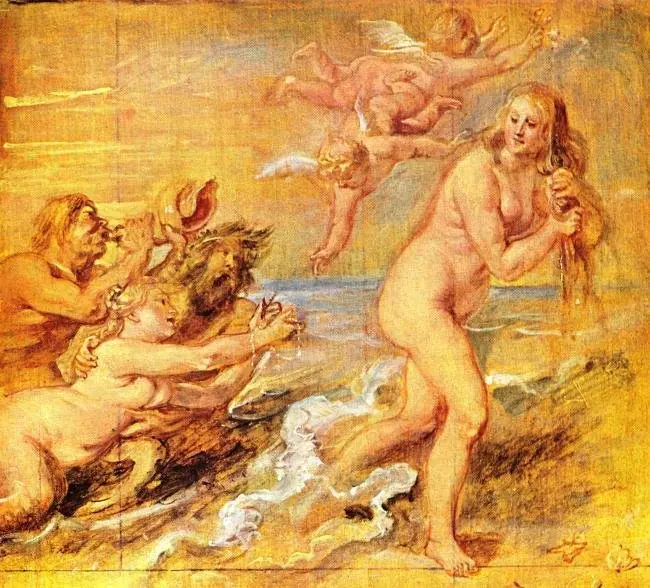 The Birth of Venus (sketch for the Torre de la Parada)
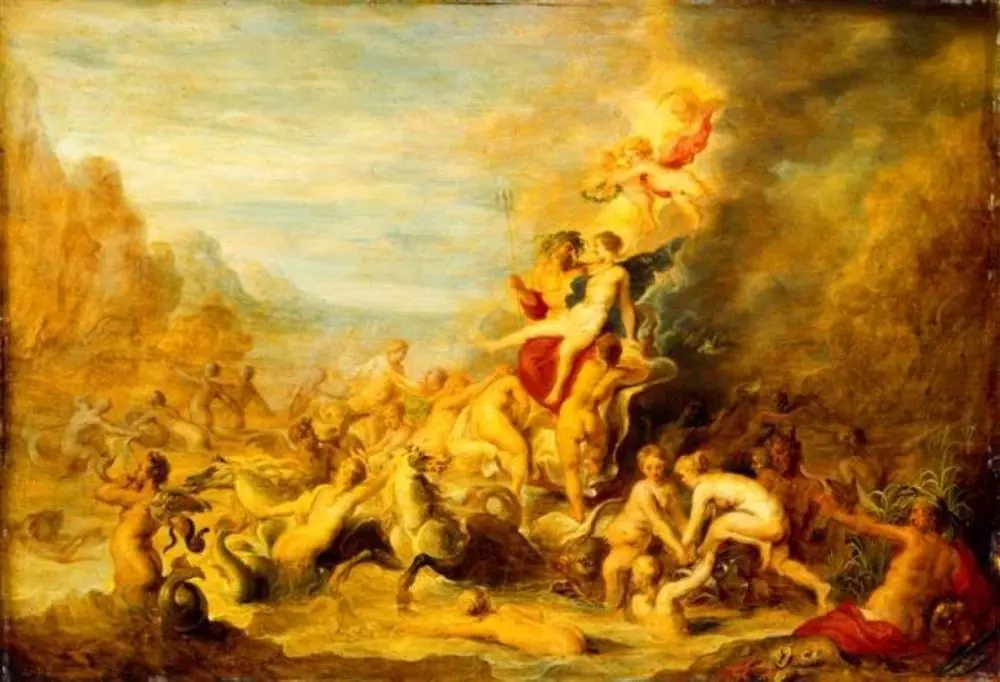 Triumph of Neptune and Amphitrite