Artwork
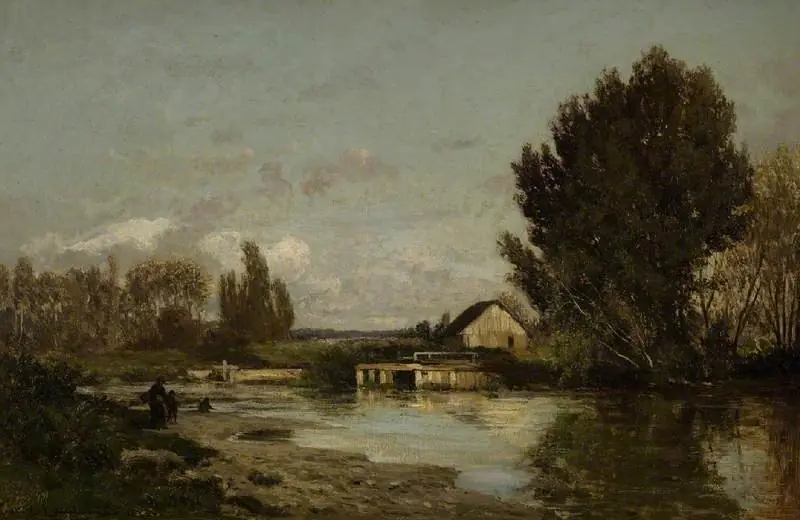
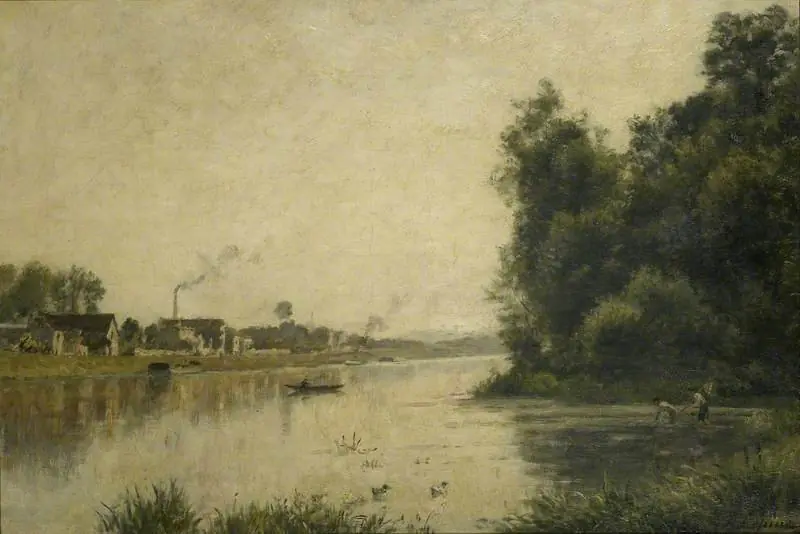
On the banks of the Seine at Lévy, 1884
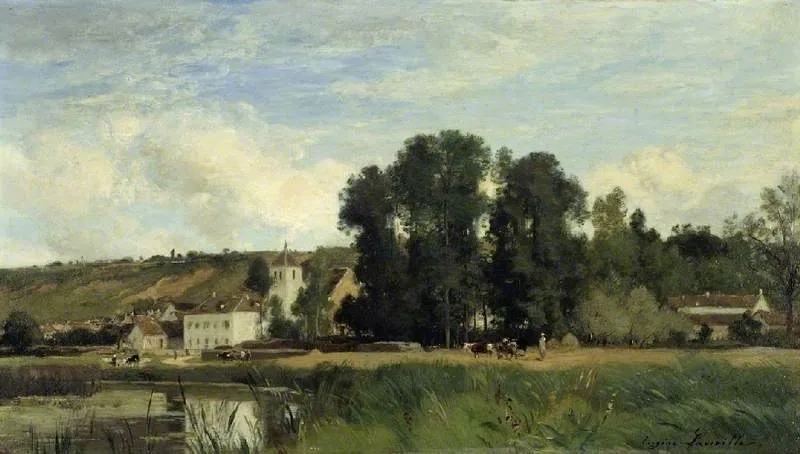
On the banks of the Seine at Lévy, 1884 is an oil painting by the Impressionist artist Eugène Lavieille. It is held in the collection of the Fitzwilliam Museum.
About this work
Overview
Eugène Lavieille’s oil on canvas, titled On the banks of the Seine at Lévy, portrays a quiet riverside scene. Executed in the early 1890s, the work is part of the Fitzwilliam Museum’s collection and exemplifies the artist’s interest in rural French landscapes.
Subject & Meaning
The composition shows the Seine winding past a leafy bank, with modest village structures and distant hills under a cloud‑filled sky. The tranquil atmosphere suggests a contemplative observation of everyday life along the river, emphasizing harmony between nature and settlement.
Technique & Style
Lavieille employs a muted palette of greens, blues, and earth tones, allowing subtle tonal variations to convey depth. Careful brushwork renders the water’s reflective surface and the foliage’s texture, while the placement of foreground elements guides the eye toward the receding horizon.
History & Provenance
Painted in 1892, the canvas entered the Fitzwilliam Museum’s holdings through acquisition in the twentieth century. Its provenance prior to museum ownership is not extensively documented, but the work reflects Lavieille’s consistent output of plein‑air river scenes during this period.
Context
The painting belongs to a broader 19th‑century French tradition of depicting the Seine’s banks, a motif popular among artists seeking to capture the interplay of light, water, and rural architecture. Lavieille’s approach aligns with naturalist tendencies, focusing on realistic observation rather than romanticized idealization.
Artist & collection