Artwork
After Meryon - Le Stryge
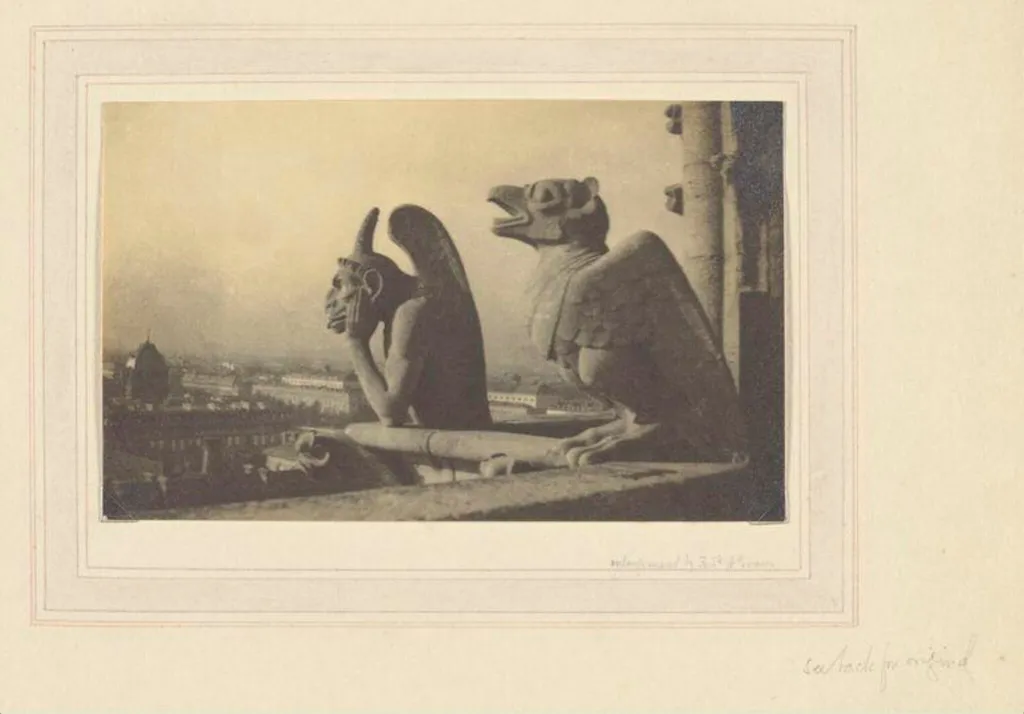
After Meryon - Le Stryge is a photographic photography by Frederick Henry Evans. It dates from 1950 and is held in the collection of the Victoria and Albert Museum.
About this work
Overview
After Meryon - Le Stryge is a sepia-toned photograph featuring a dramatic depiction of Notre Dame Cathedral set against a turbulent sky. Notably, the work incorporates a visual reference to stone statues, contrasting their solidity with the dynamic atmosphere.
Subject & Meaning
The photograph prominently displays two large, intricately carved stone statues on a ledge: one with a human head adorned by a tall headdress, the other with a ram’s head featuring curved horns. These figures, appearing to be hewn from a single piece of stone, embody a sense of quiet, imposing power, set in stark contrast to the diminutive, sprawling cityscape behind them.
Technique & Style
The sepia tone of the photograph contributes to its somber, contemplative atmosphere. The artist’s approach emphasizes the statues’ smooth surfaces and sharp edges, highlighting their sculptural quality. The overall composition reflects a thoughtful adaptation of influences, notably diverging from its inspirations to focus on the statues’ serene strength.
History & Provenance
The reverse of the photograph’s mount bears a reproduction of Frederick H. Evans’ original print, and the work is also associated with inspirations from Gustave Doré’s prints, though the artist has reinterpreted these influences. Current location: Victoria and Albert Museum.
Context
Created in the context of late 19th or early 20th-century photographic practices, 'After Meryon - Le Stryge' intersects with the era’s interests in architectural, artistic, and literary references (notably, the title’s allusion to Charles Meryon and the subject matter echoing Gustave Doré). The photograph reflects a nuanced engagement with preceding artistic works.
Legacy
As part of the Victoria and Albert Museum’s collection, 'After Meryon - Le Stryge' contributes to the institution’s holdings of late photographic works engaging with architectural and sculptural themes, offering insights into early 20th-century photographic reinterpretations of classical and literary subjects.
Artist & collection
Artist
Frederick Henry Evans turned the new century’s photograph into a quiet act of devotion.

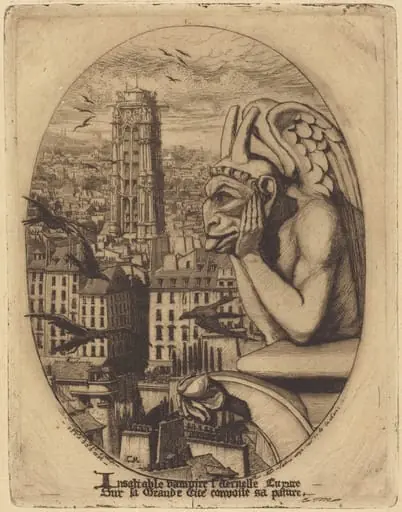 Le stryge (The Vampire)
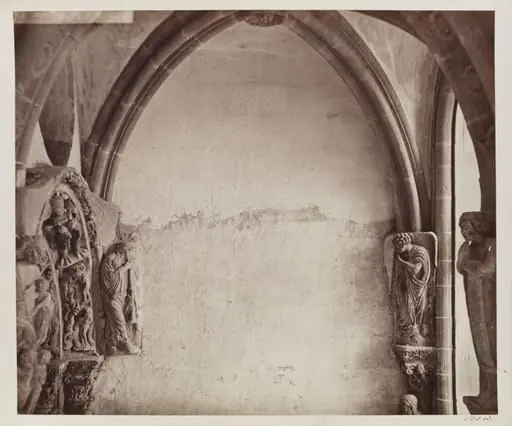 Cathedral, Santiago, Spain, Portico de la Gloria, Sculpture on the South wall
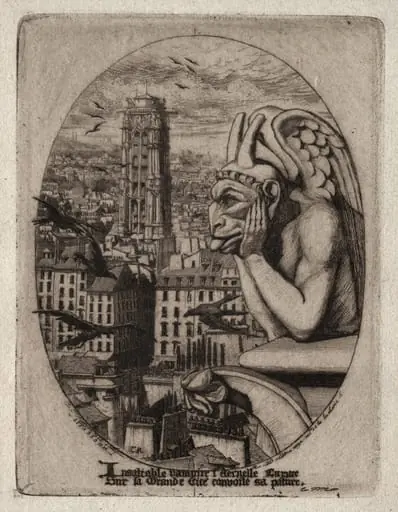 Etchings of Paris: The Gargoyle
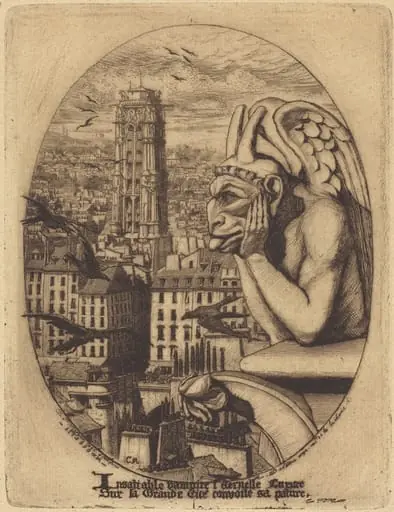 Le stryge (The Vampire)
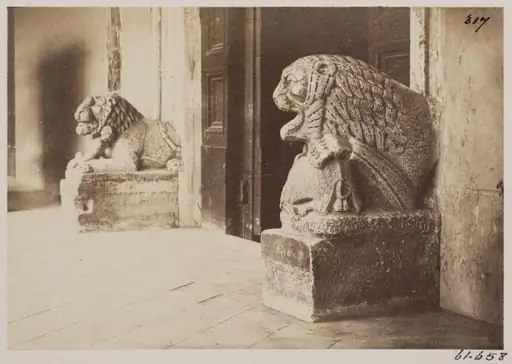 Sculptures - Lions at the Door of the Church of S. Lorenzo
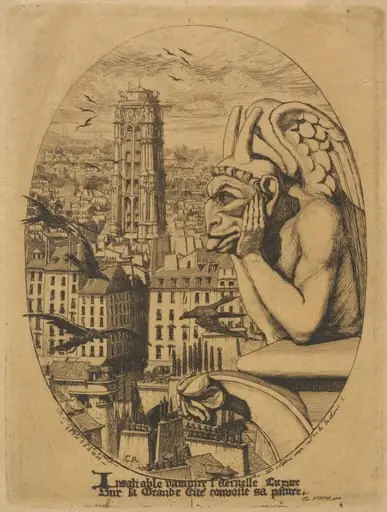 Le stryge (The Vampire)
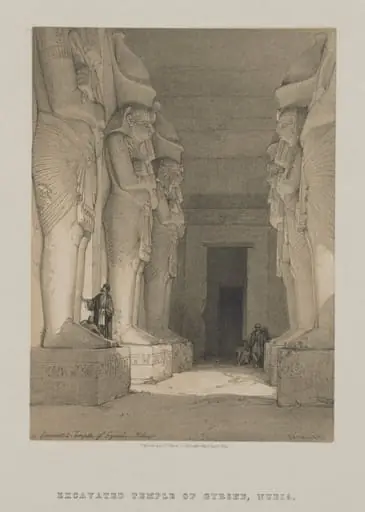 Egypt and Nubia, Volume I: Excavated Temple of Gyrshe, Nubia
 Cathedral, Santiago, Spain, Portico de la Gloria, Sculpture on North wall
 The Wingless Chimera
 In Memoriam