Artwork
Etchings of Paris: The Gargoyle
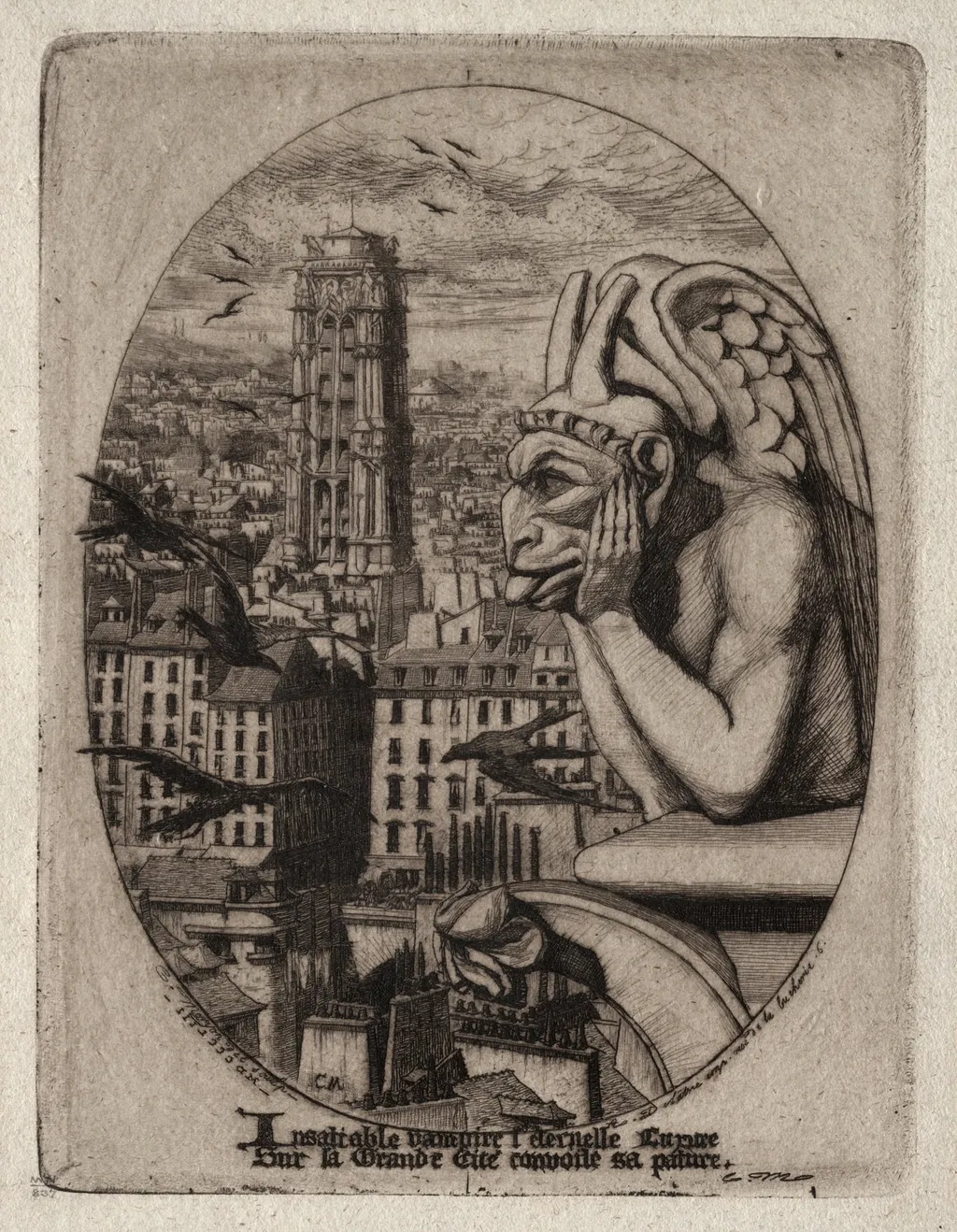
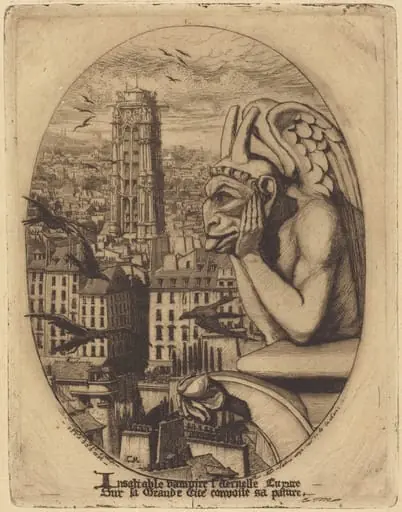
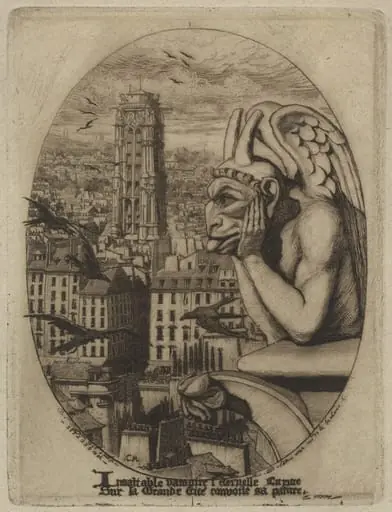
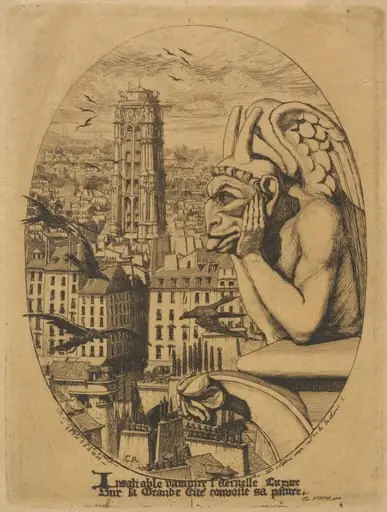
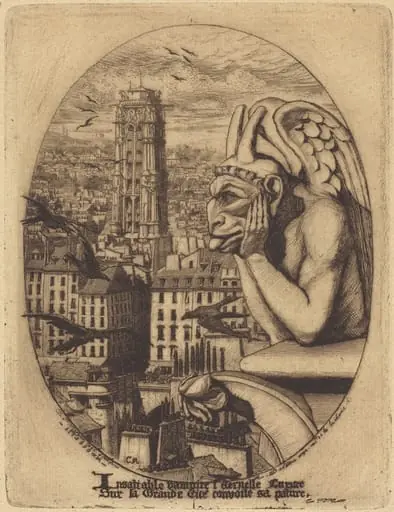
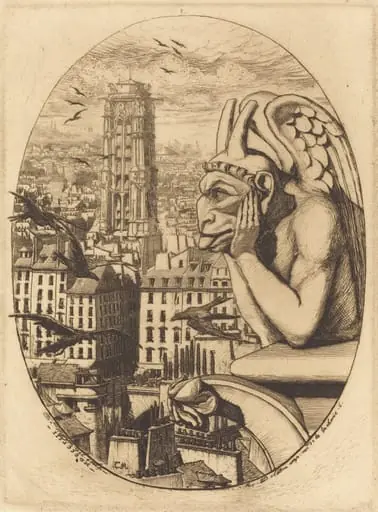
Etchings of Paris: The Gargoyle is a print by the Impressionist artist Charles Meryon. It dates from 1853 and is held in the collection of the Cleveland Museum of Art.
About this work
Overview
Created in 1853, *The Gargoyle* is one of his most recognized prints, capturing the city’s medieval architecture with intense detail and mood.
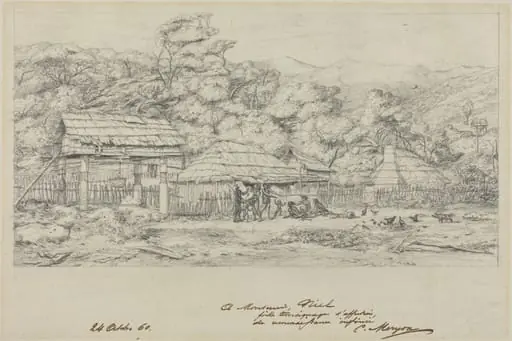
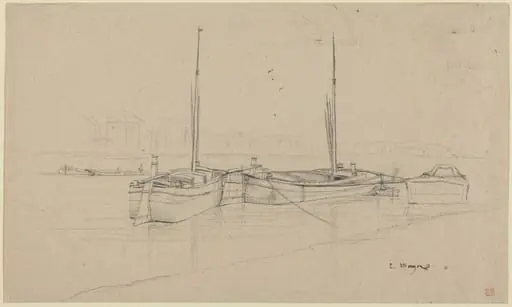
Charles Meryon, a French artist with color blindness, devoted his career to etching, producing a profound body of work centered on Paris. Created in 1853, *The Gargoyle* is one of his most recognized prints, capturing the city’s medieval architecture with intense detail and mood. His technical mastery of the etching needle allowed him to render complex urban textures without reliance on color, establishing him as the leading printmaker of 19th-century France.
Subject & Meaning
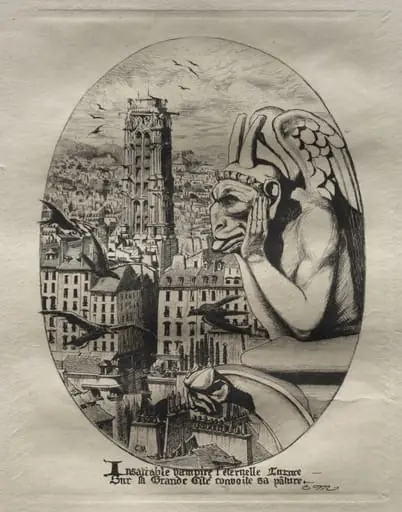
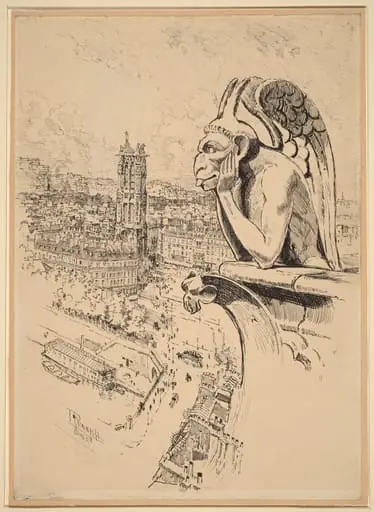
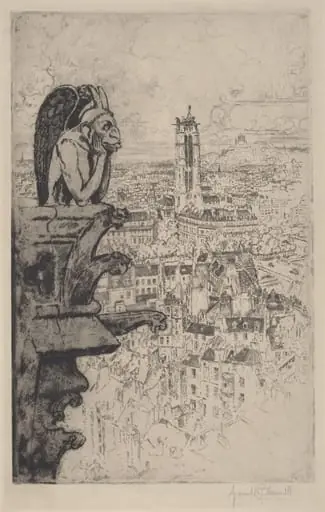
The print centers on a solitary gargoyle, its wings outstretched and face weathered, positioned above a dense cluster of Gothic buildings. Behind it, an unfinished tower with scaffolding suggests urban transformation. The gargoyle, neither purely decorative nor menacing, becomes a silent witness to the city’s layered history—its presence evokes themes of decay, endurance, and the tension between human ambition and architectural ruin.
Technique & Style
Meryon employed fine, controlled etching lines to build depth and atmosphere, using dense cross-hatching for shadows and delicate strokes for architectural detail. The contrast between the sharply defined gargoyle and the softly blurred distant towers creates spatial tension. His use of deep blacks and intricate textures gives the scene a somber, almost nocturnal quality, enhancing the sense of isolation and quiet monumentality within the urban fabric.
History & Provenance
Created during Meryon’s most productive period, the print was part of a larger series documenting Paris’s changing skyline. It entered the collection of The Cleveland Museum of Art in the 20th century, where it remains a key example of French printmaking. Meryon’s works were largely overlooked during his lifetime but gained critical recognition posthumously, particularly for their psychological depth and technical innovation.
Context
In mid-19th-century Paris, rapid modernization under Haussmann’s renovations threatened historic neighborhoods. Meryon’s etchings, including *The Gargoyle*, responded to this upheaval by preserving the city’s older structures with reverence. His focus on decay and incompleteness contrasted with the era’s celebration of progress, offering a quiet counter-narrative rooted in Gothic sensibility rather than Realist observation.
Legacy
Meryon’s influence extended beyond printmaking, shaping how later artists and writers perceived urban space as layered with memory. His emphasis on atmosphere over literal representation anticipated Symbolist tendencies. Though he worked in isolation, his meticulous etchings became touchstones for 20th-century printmakers seeking emotional resonance in architectural subjects, securing his place in the history of graphic art.
Artist & collection
Artist
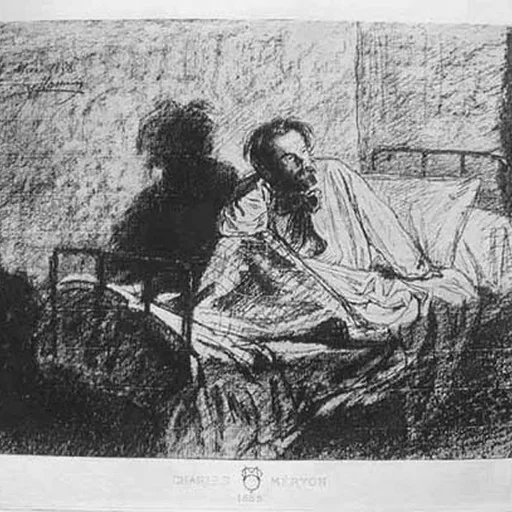
Charles Meryon (sometimes Méryon, 23 November 1821 – 14 February 1868) was a French artist who worked almost entirely in etching, as he had colour blindness.