Artwork
The Wingless Chimera
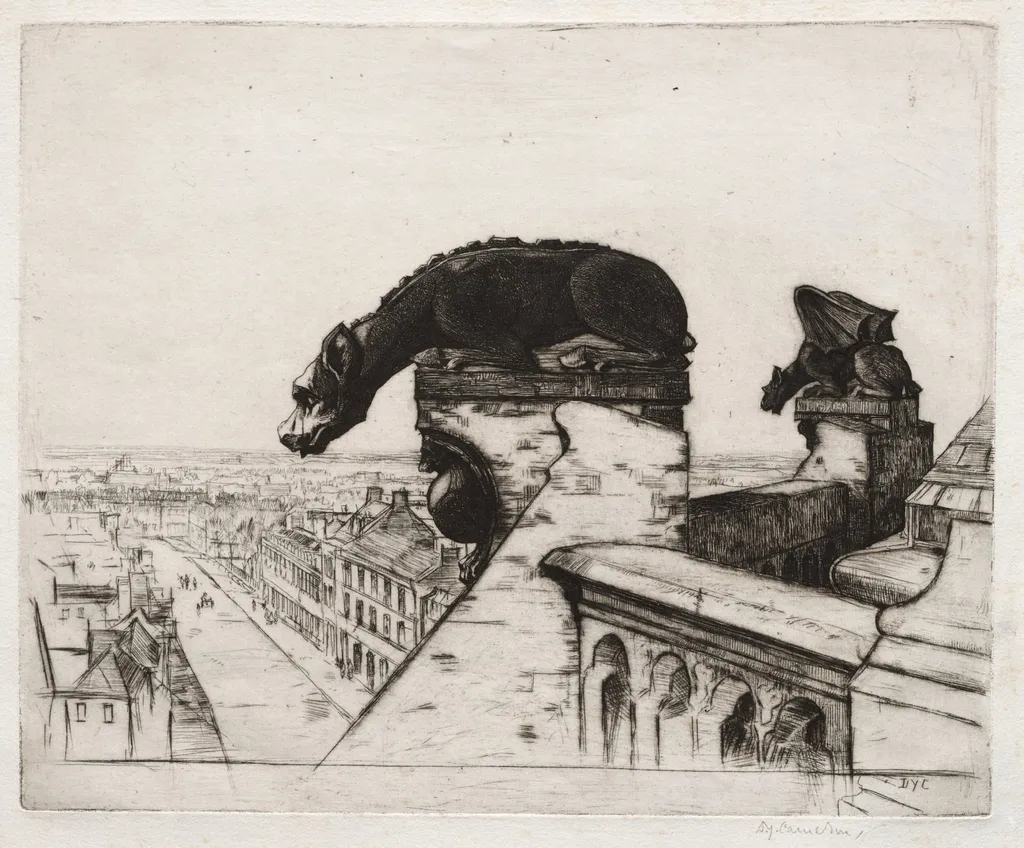
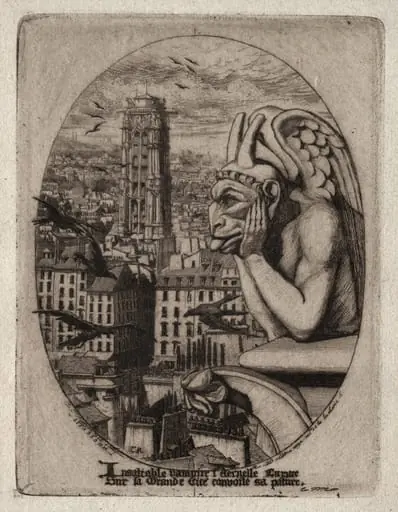
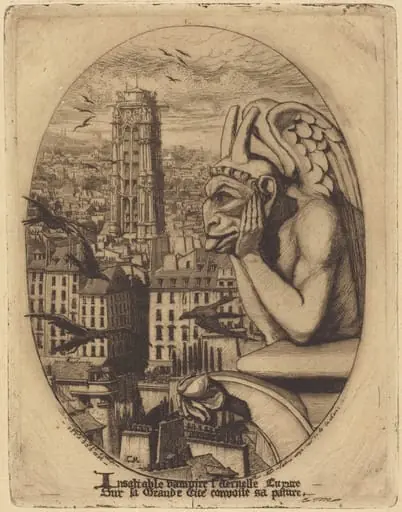
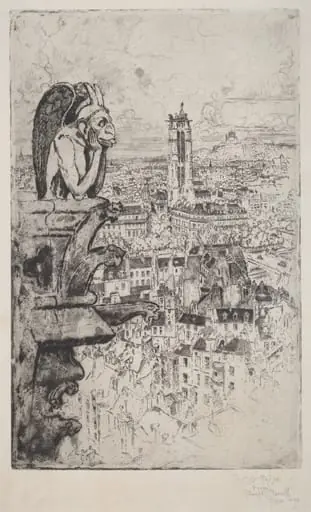
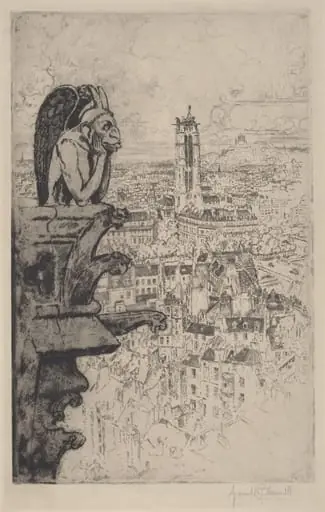
The Wingless Chimera is a print by David Young Cameron. It dates from 1911 and is held in the collection of the Cleveland Museum of Art.
About this work
Overview
Cameron, known for his detailed townscapes and contributions to the Etching Revival, here departs from his usual subjects to present an enigmatic structure.
Created in 1911 by Scottish artist David Young Cameron, *The Wingless Chimera* is a monochrome etching that blends architectural realism with mythological fantasy. Cameron, known for his detailed townscapes and contributions to the Etching Revival, here departs from his usual subjects to present an enigmatic structure. The work is part of the collection at The Cleveland Museum of Art and exemplifies his experimental approach in later years.
Subject & Meaning
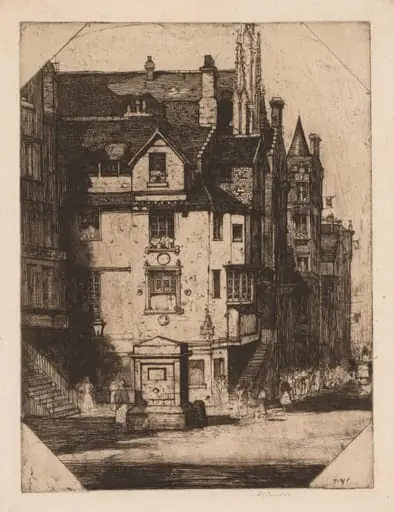
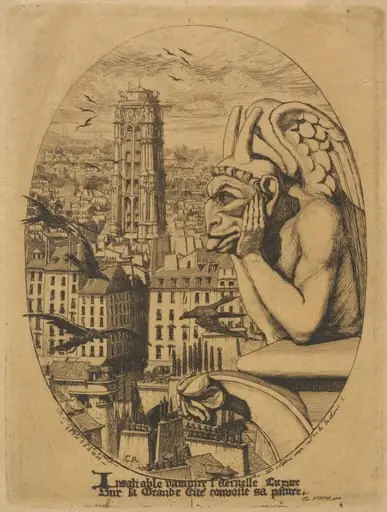
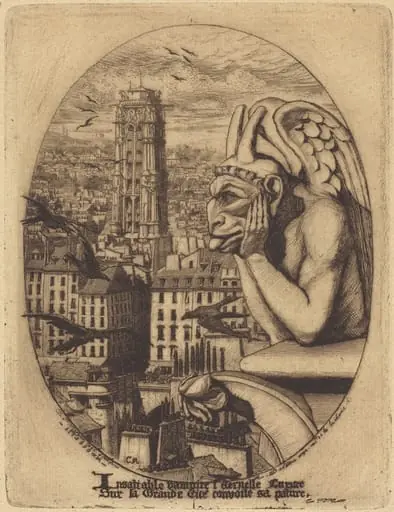
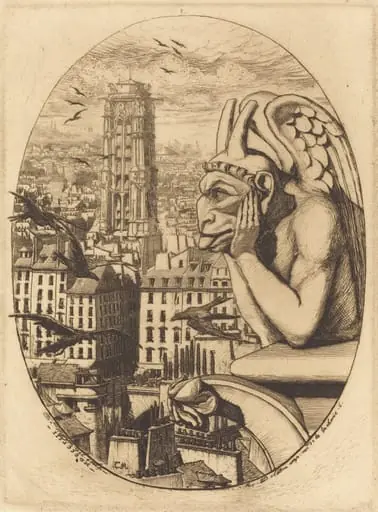
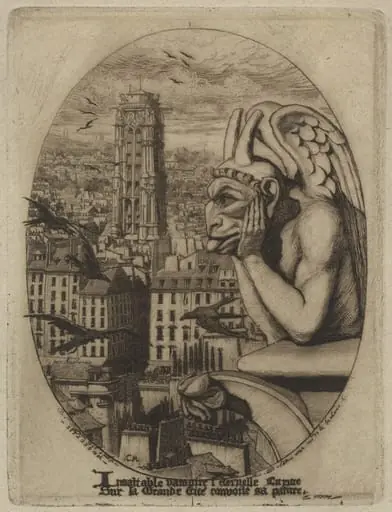
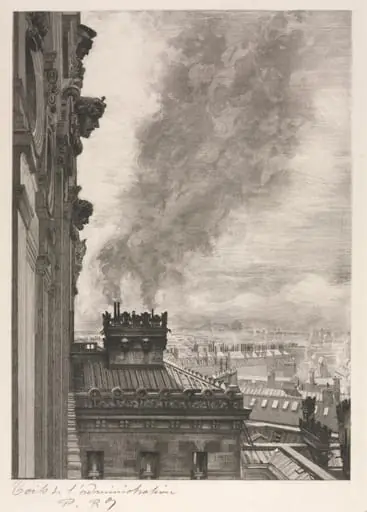
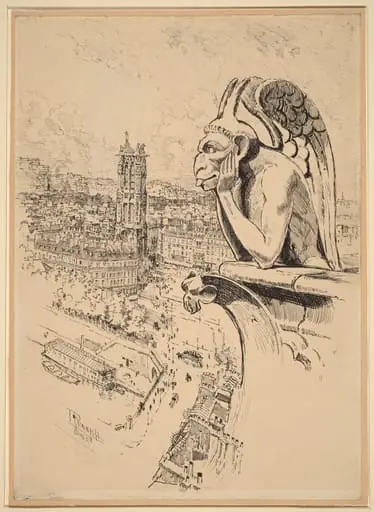
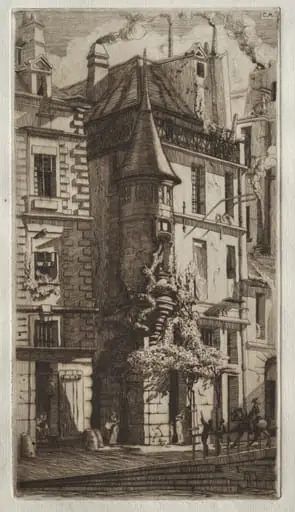
The image depicts a fractured building with two colossal, wingless heads emerging from its upper structure—one resembling a bull, the other a bird. Below, a sparse urban street with minimal human figures suggests a quiet, almost abandoned town. The absence of wings and the hybrid form evoke a sense of fallen or dormant myth, possibly reflecting themes of lost grandeur or the collapse of symbolic order within modern life.
Technique & Style
Cameron employed loose, rapid etching lines to construct the scene, avoiding detailed rendering in favor of suggestive forms. The lack of color and the emphasis on tonal contrast create a somber, atmospheric effect. The technique prioritizes spontaneity over precision, with the building’s jagged contours and the sketchy streets conveying a sense of instability and fleeting perception, aligning with early 20th-century interests in psychological and surreal landscapes.
History & Provenance
The work was produced during a period when Cameron was increasingly exploring symbolic and imaginative subjects beyond his traditional landscapes. It entered the collection of The Cleveland Museum of Art in the 20th century, likely through acquisition or donation, and has since been recognized as a rare example of his non-topographical work. Its provenance remains unbroken since its acquisition by the museum.
Context
Emerging in the wake of the Etching Revival, *The Wingless Chimera* reflects a broader shift among artists toward personal symbolism and psychological depth. While Cameron was known for topographical accuracy, this piece aligns with contemporaneous European trends that questioned rationalism and embraced the irrational. The chimera, a classical hybrid, here becomes a metaphor for the disintegration of familiar structures in a rapidly changing world.
Legacy
Though not widely reproduced, *The Wingless Chimera* stands as a distinctive outlier in Cameron’s oeuvre, illustrating his willingness to engage with myth and abstraction. It contributes to scholarly discussions on the evolution of British printmaking beyond realism, offering insight into how traditional techniques were adapted to express modern anxieties and imaginative landscapes in the early 1900s.
Artist & collection
Artist
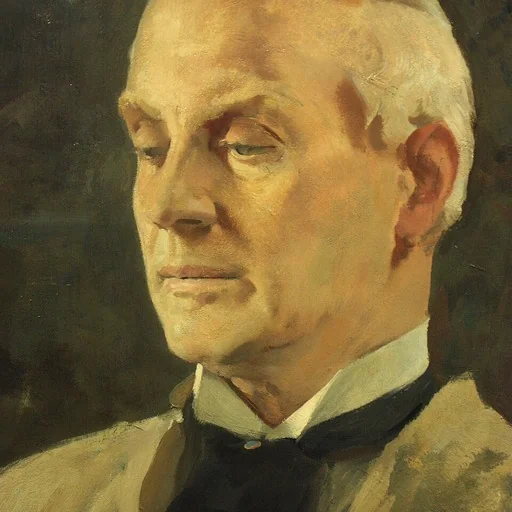
Sir David Young Cameron (28 June 1865 – 16 September 1945) was a Scottish painter and, with greater success, etcher, mostly of townscapes and landscapes in both cases. He was a leading figure in the final decades of the Etching Revival.