Artwork
All Rejoice for the Bear and the Wolf
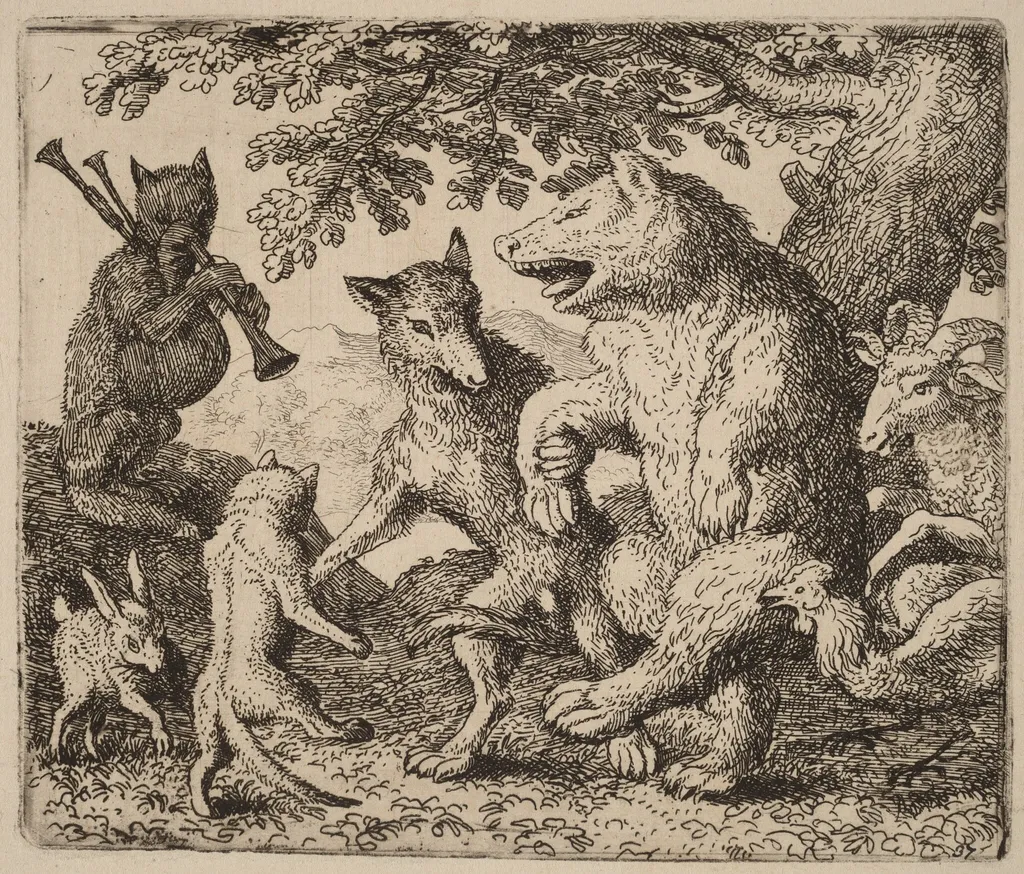
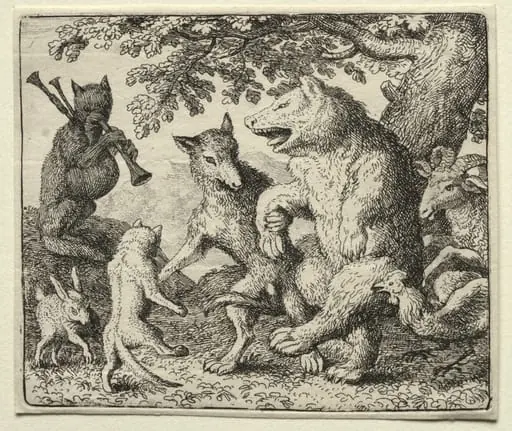
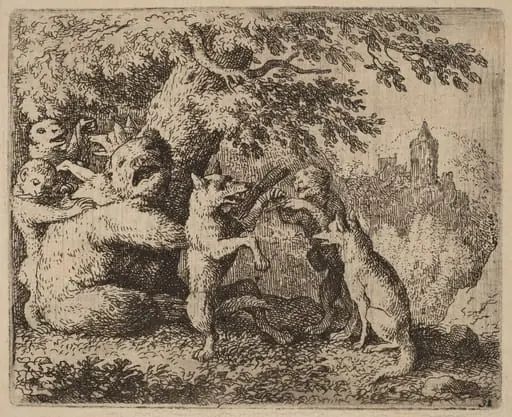
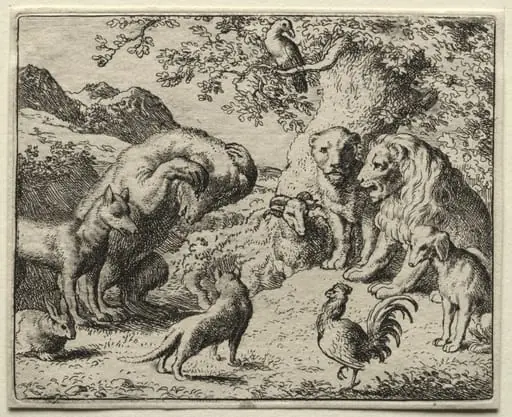
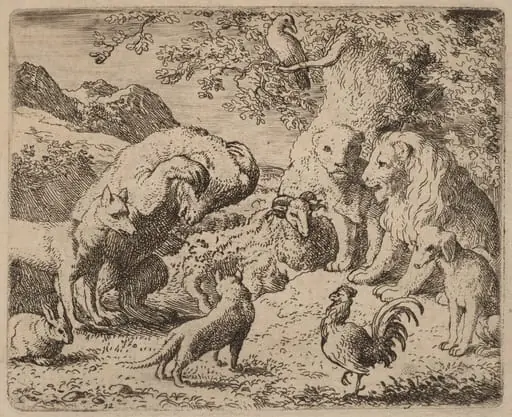
All Rejoice for the Bear and the Wolf is an ink print by the Baroque artist Allart van Everdingen. It dates from 1650 and is held in the collection of the National Gallery of Art.
About this work
Overview
Allart van Everdingen created this etching around 1650, demonstrating his mastery of the medium during the Dutch Golden Age.
Allart van Everdingen created this etching around 1650, demonstrating his mastery of the medium during the Dutch Golden Age. Unlike his more familiar landscape works, this print presents a fantastical animal scene rendered in fine, incised lines. The composition is dense and dynamic, with no clear focal point, inviting the viewer to navigate its tangled forms. The work belongs to a small group of imaginative prints by Everdingen that depart from his typical naturalism.
Subject & Meaning
The title suggests a symbolic or allegorical scene involving a bear and a wolf, surrounded by smaller creatures in motion. The bear, rearing on its hind legs, grips a branch while the wolf leans into it, suggesting a moment of uneasy alliance. Foxes, rabbits, and other animals appear engaged in playful or chaotic interaction. The scene may reflect folkloric or moral themes, possibly alluding to the unpredictability of nature or the temporary harmony of opposites.
Technique & Style
Everdingen employed etching to achieve fine, expressive lines and rich tonal variation. He scratched through a wax coating on a metal plate, then submerged it in acid to bite the exposed lines. The resulting print captures intricate textures—fur, bark, foliage—through dense cross-hatching and delicate contours. The black-and-white contrast enhances the sense of movement and depth, while the crowded background creates a wild, immersive atmosphere.
History & Provenance
The etching was produced during Everdingen’s mature period, when he was actively experimenting with printmaking alongside his painting. Few of his imaginative animal scenes survive, making this work rare. It was likely circulated among collectors interested in Northern European prints with allegorical or whimsical content. No definitive early ownership records exist, but it appears in several 18th-century European print collections.
Context
In mid-17th-century Holland, printmaking flourished as a medium for both artistic expression and commercial distribution. While most etchers focused on landscapes or genre scenes, Everdingen occasionally turned to mythic or animal subjects, possibly influenced by northern European folklore and emblem books. This work stands apart from his more documented travels to Scandinavia, revealing a more imaginative side of his practice.
Legacy
Though not widely reproduced or studied, this etching contributes to understanding Everdingen’s range beyond topographical views. It reflects a broader interest in animal symbolism among Dutch artists of the period, even if rarely pursued with such intensity. The print remains a curiosity in print archives, valued for its unusual subject and technical finesse, offering insight into the playful margins of Dutch Golden Age imagery.
Artist & collection
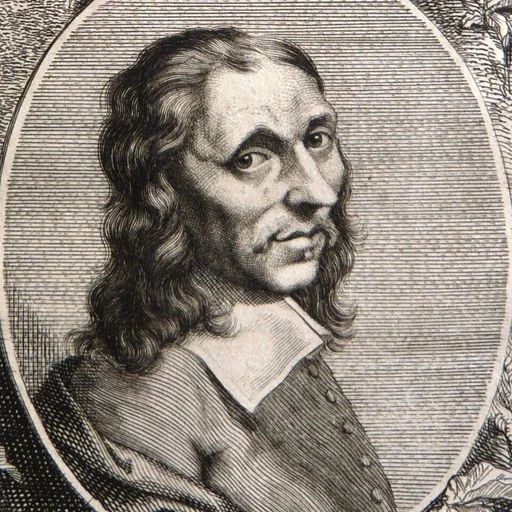
Artist
Allaert van Everdingen (Dutch pronunciation: ; bapt. 18 June 1621 – 8 November 1675 (buried)), was a Dutch Golden Age painter and printmaker in etching and mezzotint.