Artwork
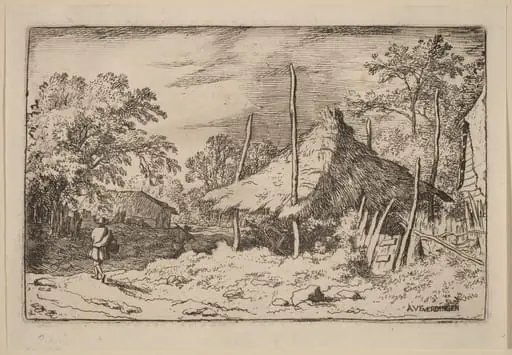
Straw Hut Seen from Behind
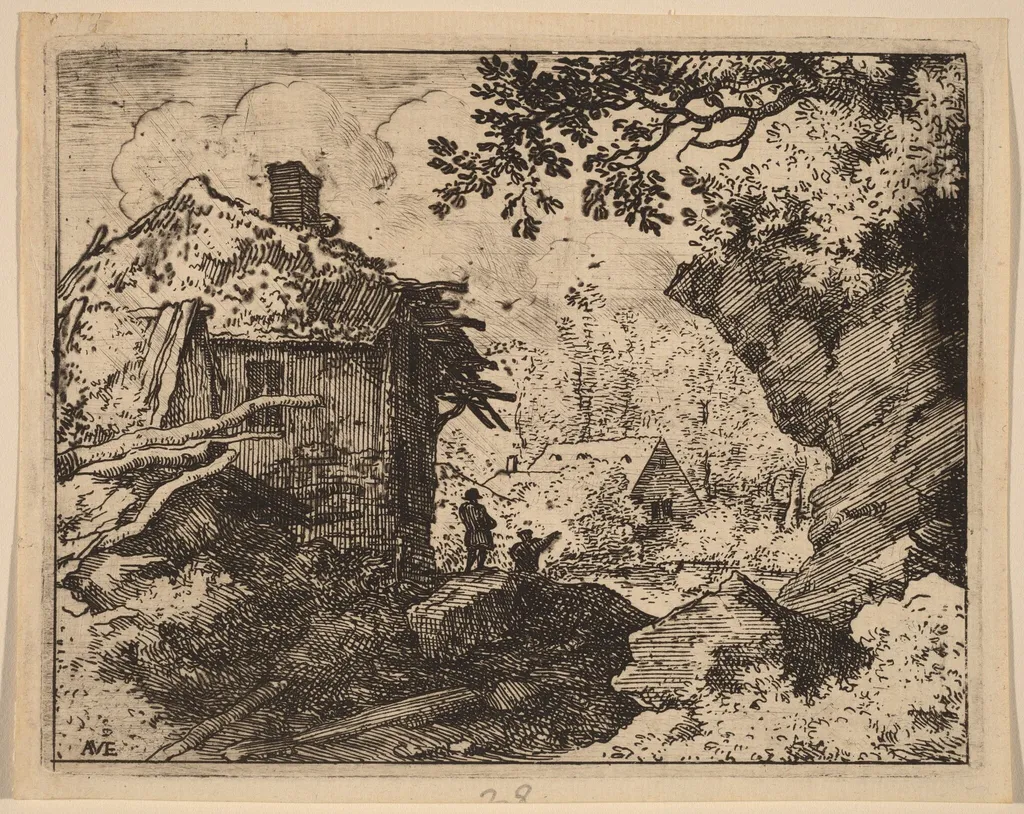
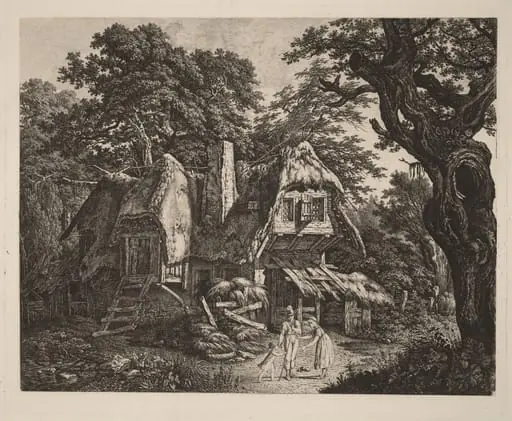
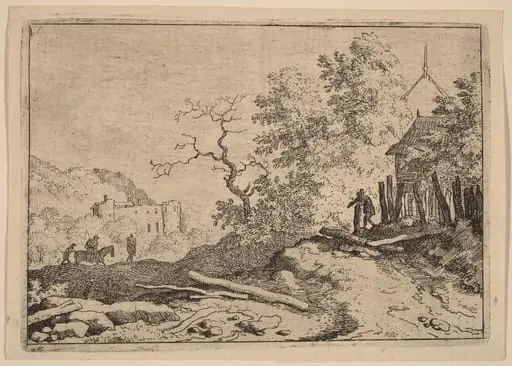
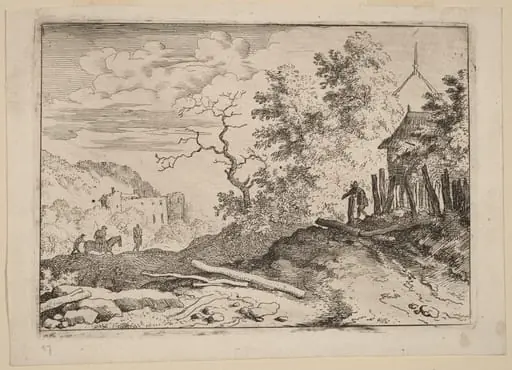
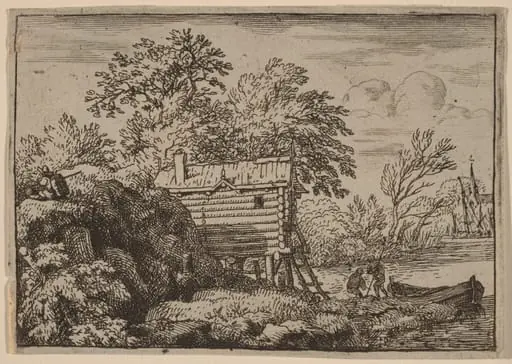
Straw Hut Seen from Behind is an ink print by the Baroque artist Allart van Everdingen. It dates from 1650 and is held in the collection of the National Gallery of Art.
About this work
Overview
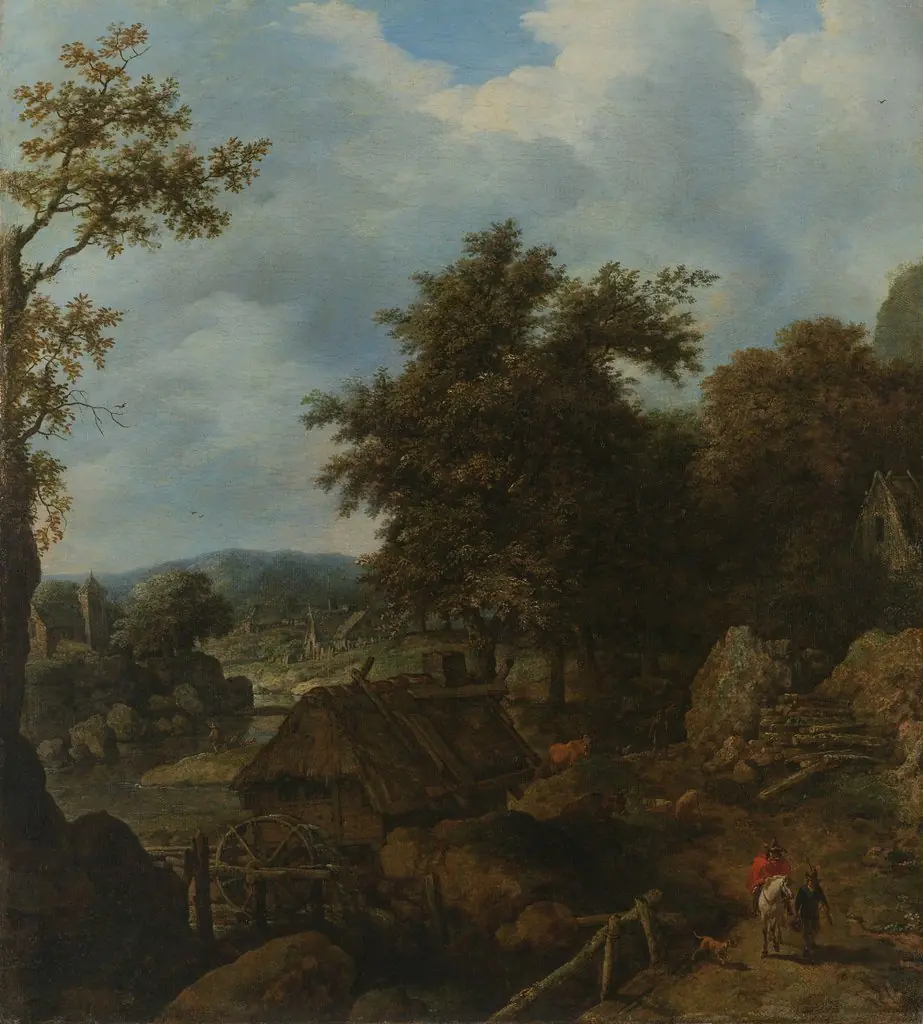
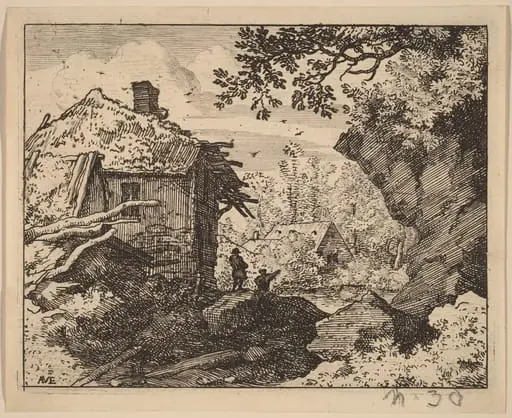
Allart van Everdingen, active in the mid‑17th century Dutch Golden Age, produced the etching *Straw Hut Seen from Behind* circa 1650. The print portrays a modest rural hut viewed from the rear, set against a wooded hillside and a gently undulating landscape.
Subject & Meaning
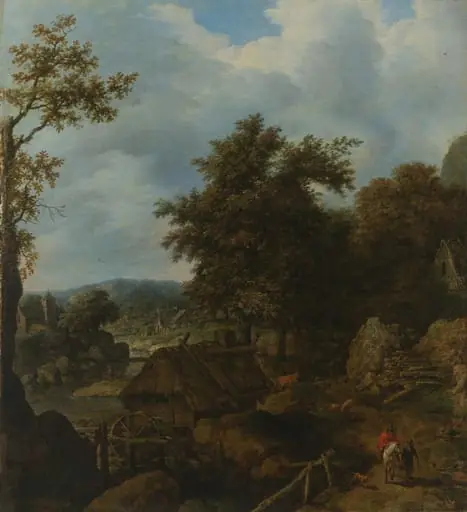
The composition centers on a thatched hut nestled among trees, with a solitary figure strolling nearby. By placing the viewer behind the structure, Everdingen emphasizes the everyday nature of the scene and invites contemplation of the quiet relationship between human habitation and the surrounding countryside.
Technique & Style
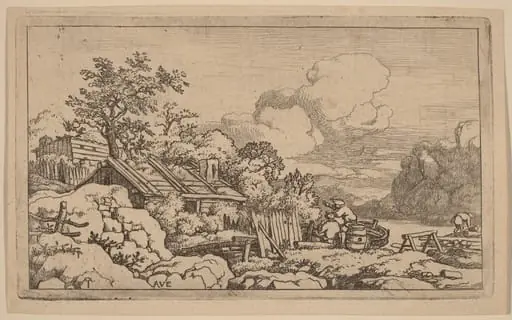
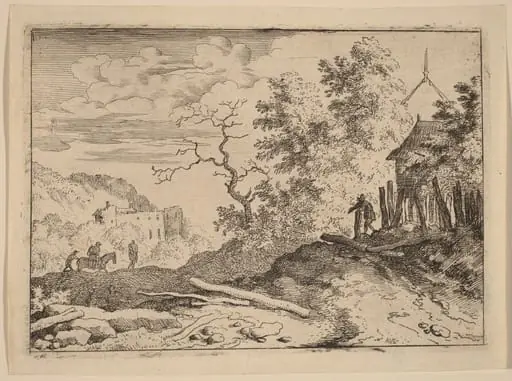
Executed in black‑and‑white etching, the work relies on fine line work to render textures such as bark, thatch, and earth. Careful modulation of light and shadow creates a sense of depth, giving the hut and foliage a three‑dimensional presence that reflects contemporary Dutch interests in realism and atmospheric effect.
History & Provenance
Created around 1650, the print belongs to Everdingen’s broader output of landscape etchings and mezzotints produced during his mature period. It exemplifies the artist’s engagement with printmaking as a means of disseminating detailed, naturalistic scenes beyond the confines of painted works.
Context
During the Dutch Golden Age, printmakers frequently explored rural subjects, catering to a market that prized depictions of the native environment. Everdingen’s focus on a simple hut aligns with this trend, illustrating the era’s fascination with everyday topography rendered with meticulous observation.
Artist & collection
Artist
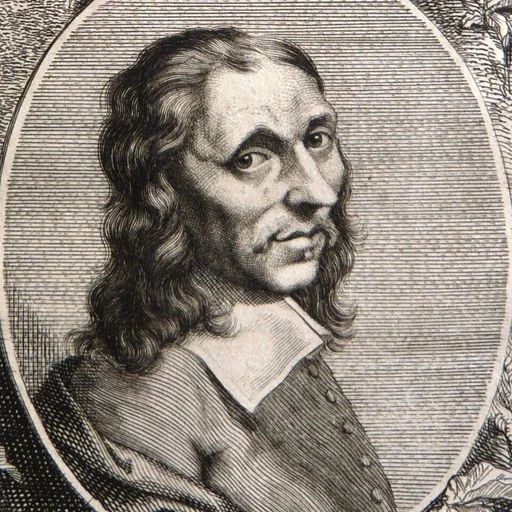
Allaert van Everdingen (Dutch pronunciation: ; bapt. 18 June 1621 – 8 November 1675 (buried)), was a Dutch Golden Age painter and printmaker in etching and mezzotint.