Artwork
The Wolf and the Monkeys
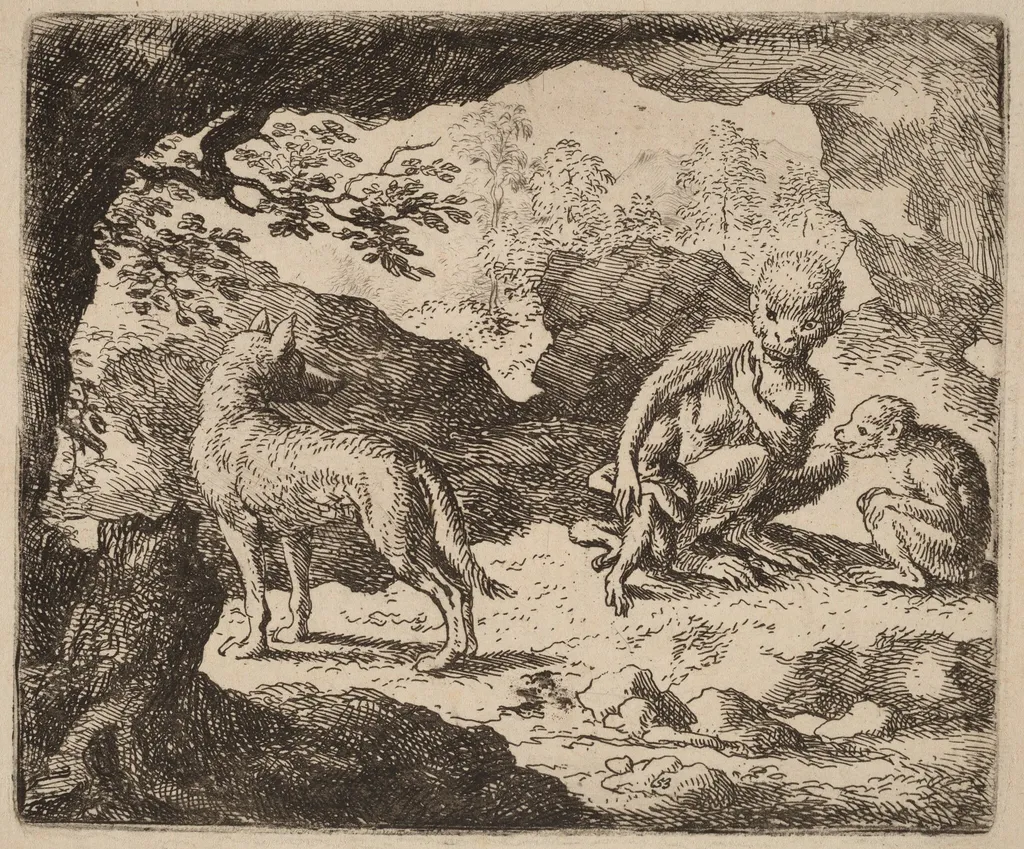
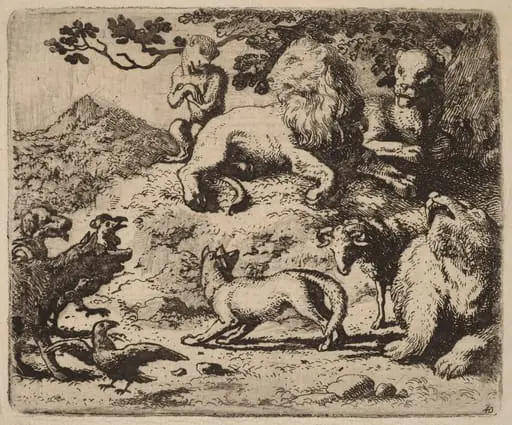
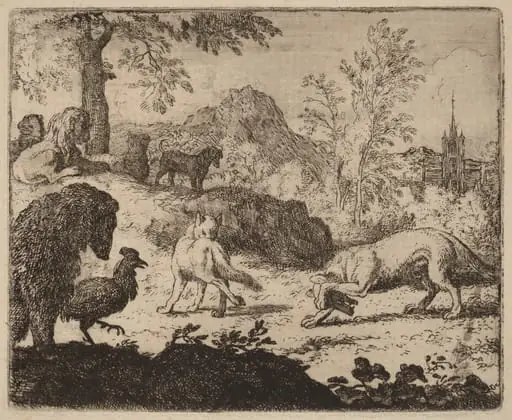
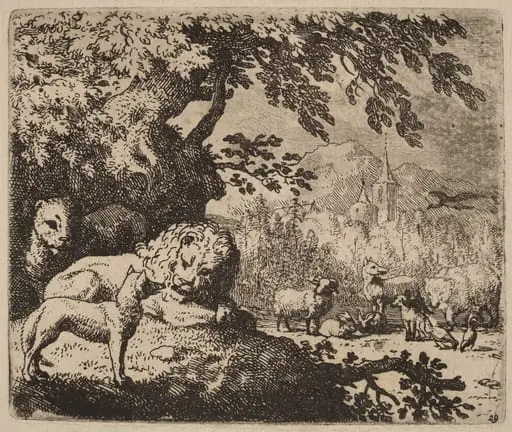
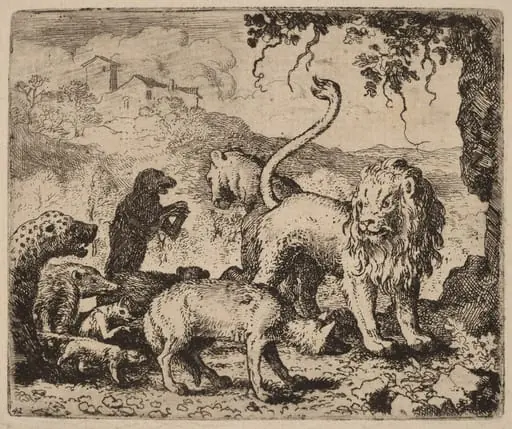
The Wolf and the Monkeys is an ink print by the Baroque artist Allart van Everdingen. It dates from 1650 and is held in the collection of the National Gallery of Art.
About this work
Overview
Allart van Everdingen, a Dutch artist active in the mid‑17th century, produced the etching *The Wolf and the Monkeys* circa 1650. Executed in the printmaking technique for which he was renowned, the work presents a compact, narrative scene rendered in monochrome tones.
Subject & Meaning
The image shows a solitary wolf perched on a rocky ledge, confronting three monkeys seated lower on the ground. The animals appear engaged in a silent exchange, suggesting a moral or allegorical fable in which the predator and the primates symbolize opposing traits or social commentary.
Technique & Style
Van Everdingen employs fine incised lines and varied hatching to model forms and generate depth. Darker cross‑hatching creates shadow on the wolf’s flank and the surrounding rocks, while lighter strokes delineate the monkeys and distant foliage, producing a dynamic contrast of light and dark typical of his etchings.
History & Provenance
Created around 1650, the print belongs to the period when van Everdingen was establishing his reputation as both a painter and a printmaker. It has circulated among collectors of Dutch Golden Age prints, though specific ownership records are limited.
Context
The work reflects the 17th‑century Dutch fascination with animal subjects drawn from emblem books and moral tales. By pairing a wolf—a traditional symbol of greed or danger—with monkeys, often associated with folly, the artist taps into contemporary visual allegory.
Artist & collection
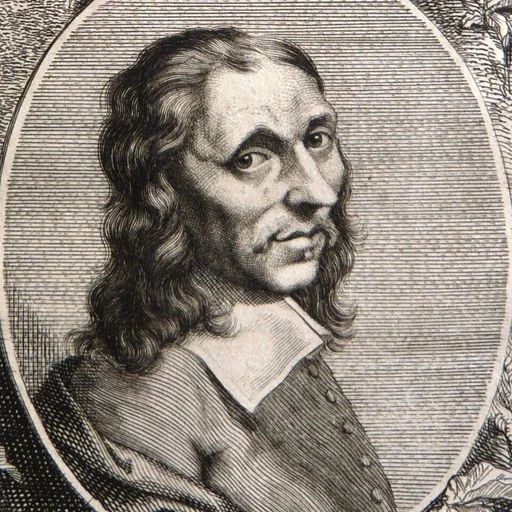
Artist
Allaert van Everdingen (Dutch pronunciation: ; bapt. 18 June 1621 – 8 November 1675 (buried)), was a Dutch Golden Age painter and printmaker in etching and mezzotint.