Artwork
Three Cottages
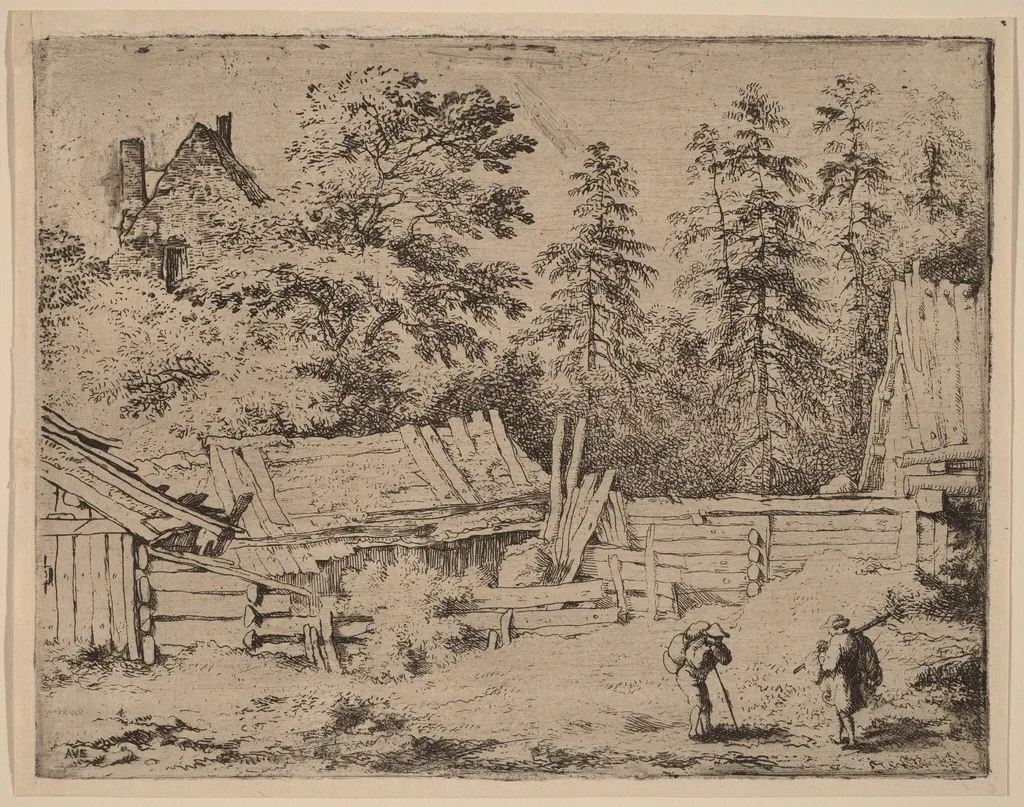
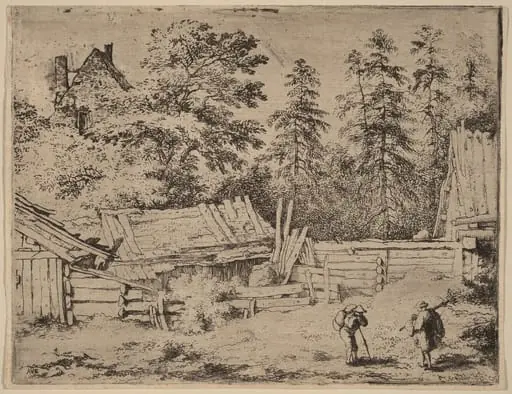
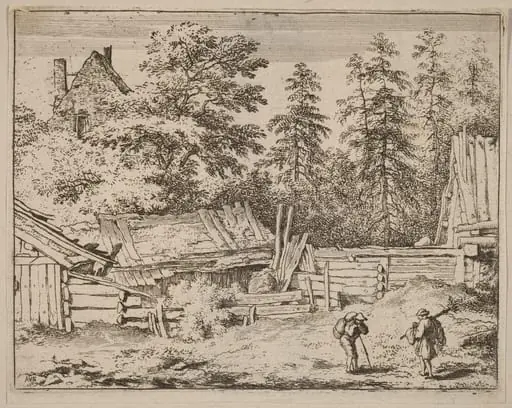
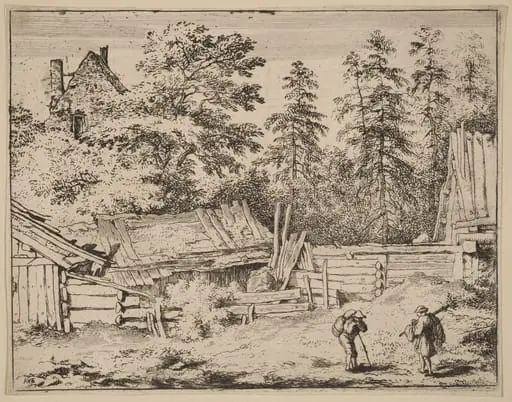
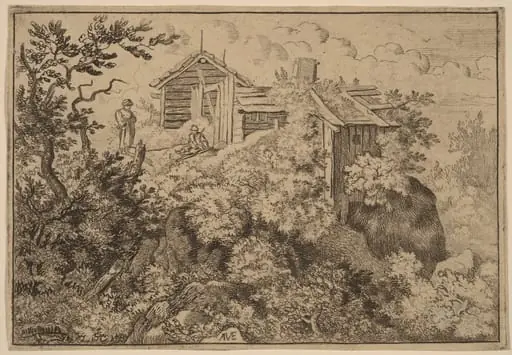
Three Cottages is an ink print by the Baroque artist Allart van Everdingen. It dates from 1650 and is held in the collection of the National Gallery of Art.
About this work
Overview
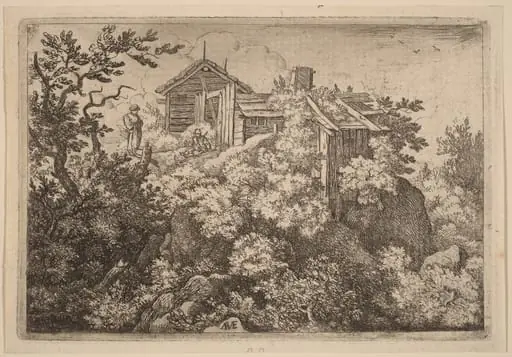
Created circa 1650, *Three Cottages* is an etching by Dutch artist Allart van Everdingen. The print presents a compact rural landscape in which three modest thatched-roof dwellings are nestled against a wooded slope. The composition balances built structures with natural elements, offering a snapshot of 17th‑century countryside life.
Subject & Meaning
The scene centers on three small cottages set within a forested hillside, their thatched roofs contrasting with the dense foliage. Two figures appear near a low fence—one crouched, perhaps gathering something, the other moving away—suggesting everyday activity and the relationship between humans and their environment.
Technique & Style
Van Everdingen employs the fine, incised lines characteristic of etching to render texture: the bark of trees, the slats of the fence, and the uneven ground are all delineated with crisp strokes. This precise line work emphasizes surface detail and conveys a tactile sense of the landscape.
History & Provenance
Allart van Everdingen, known for both paintings and prints, produced this work during the Dutch Golden Age, a period when printmaking flourished as a means of disseminating landscape imagery. The etching reflects his broader interest in rural subjects and the natural world, themes that recur throughout his oeuvre.
Own this work as a print
Artist & collection
Artist
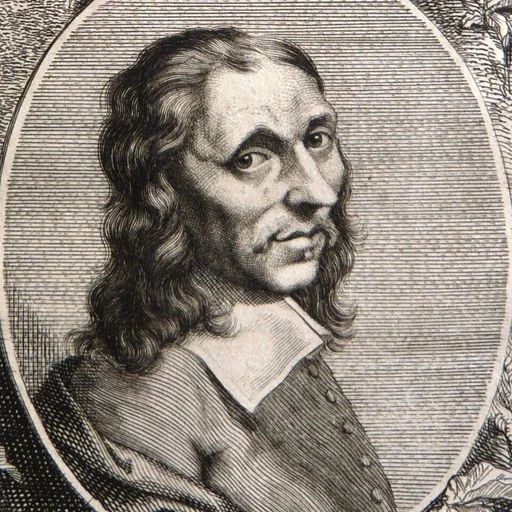
Allaert van Everdingen (Dutch pronunciation: ; bapt. 18 June 1621 – 8 November 1675 (buried)), was a Dutch Golden Age painter and printmaker in etching and mezzotint.