Artwork
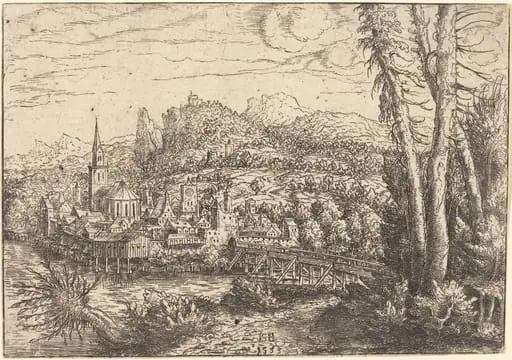
Mountainous Landscape with a Village
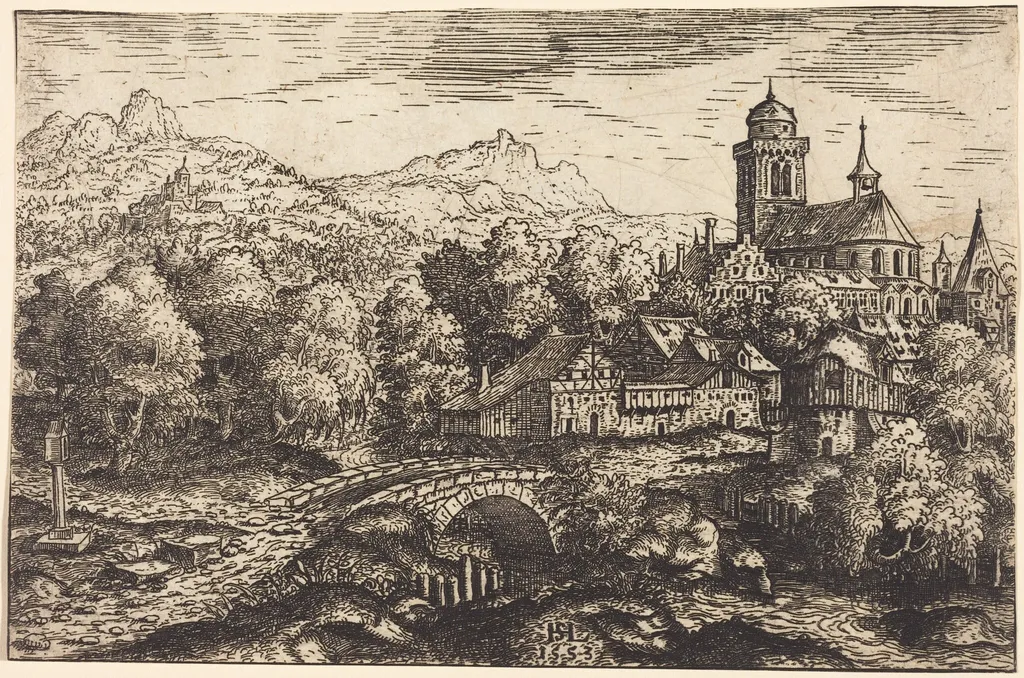
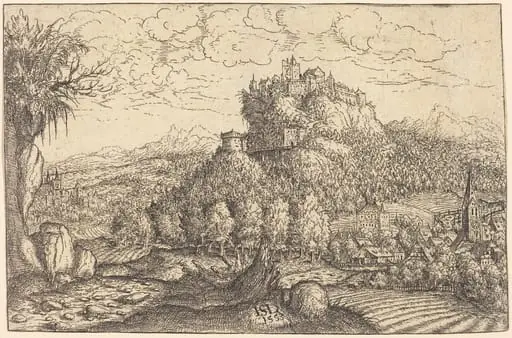
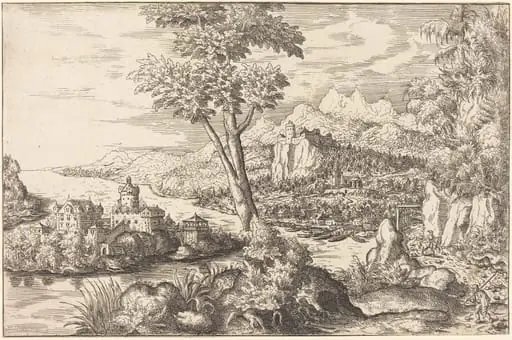
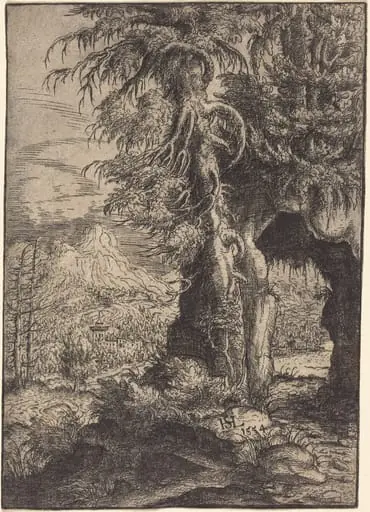
Mountainous Landscape with a Village is an ink print by the Renaissance artist Hanns Lautensack. It dates from 1553 and is held in the collection of the National Gallery of Art.
About this work
Overview
Created in 1553 by Hanns Lautensack, *Mountainous Landscape with a Village* is an etching that captures a quiet alpine settlement nestled within rugged terrain.
Created in 1553 by Hanns Lautensack, *Mountainous Landscape with a Village* is an etching that captures a quiet alpine settlement nestled within rugged terrain. As a German printmaker active in Nuremberg and later Vienna, Lautensack employed fine, controlled lines to construct depth and atmosphere. The work belongs to a tradition of Northern Renaissance landscape prints that prioritize natural detail over narrative drama.
Subject & Meaning
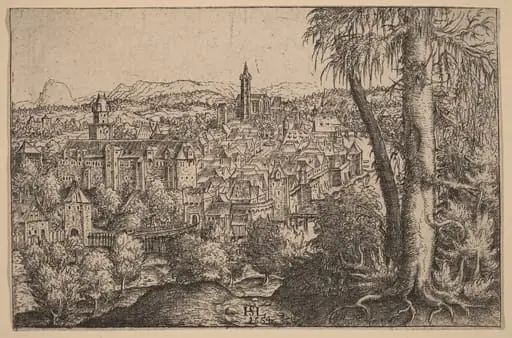
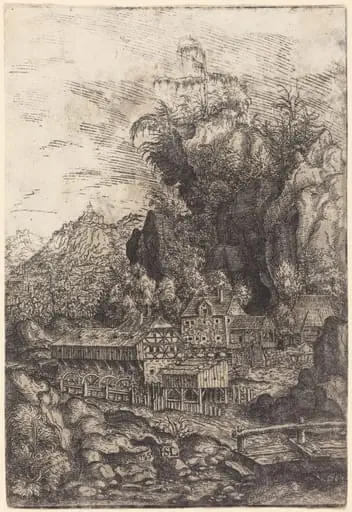
The scene centers on a modest village surrounded by dense foliage and towering peaks, with a stone bridge crossing a river in the foreground. A church with a slender spire anchors the composition, suggesting spiritual presence within the landscape. The absence of human figures and the hazy mountain backdrop evoke stillness, reflecting a contemplative view of rural life rather than a depiction of daily activity.
Technique & Style
Lautensack used etching to achieve intricate textures—dense cross-hatching for shadowed slopes, delicate lines for tree canopies, and soft gradations for atmospheric perspective. The medium allowed precise control over tonal variation, enabling the illusion of mist clinging to distant ridges. His technique emphasizes tactile surface and spatial recession, hallmarks of his mature style developed during his Nuremberg years.
History & Provenance
Born in Bamberg in 1524 and trained in his father Paul Lautensack’s workshop, Hanns moved to Vienna around 1556, likely under imperial patronage. This etching predates that relocation, placing it within his Nuremberg period. While specific early ownership records are sparse, the work aligns with the circulation of German prints among collectors and artisans in Central Europe during the mid-16th century.
Context
In the mid-1500s, landscape as an independent subject gained traction in Northern Europe, separate from religious or mythological themes. Lautensack’s work reflects this shift, influenced by Albrecht Dürer’s detailed naturalism and the growing interest in topographical accuracy. His etchings contributed to a visual culture that valued the observation of terrain and climate as subjects worthy of artistic attention.
Legacy
Lautensack’s landscapes, though less widely known than those of his contemporaries, represent a refined strand of German printmaking that emphasized quiet observation over grandeur. His technical precision and sensitivity to atmospheric effects influenced later generations of etchers, particularly in the development of topographical and pastoral imagery in Central European art.
Artist & collection
Artist
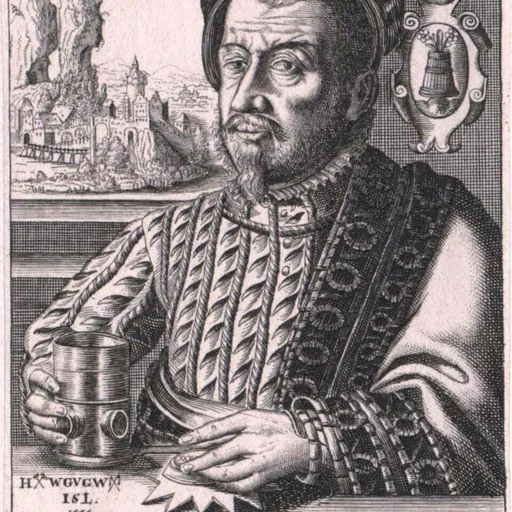
Hanns Lautensack (sometimes erroneously referred to as Hans Sebald Lautensack) (1524 – c.

![View of Nuremberg from the West [center section], by Hanns Lautensack](https://artifactworldgallery.com/img/hanns-lautensack--view-of-nuremberg-from-the-west-center-section--12422dca269411c0-w320.webp)