Artwork
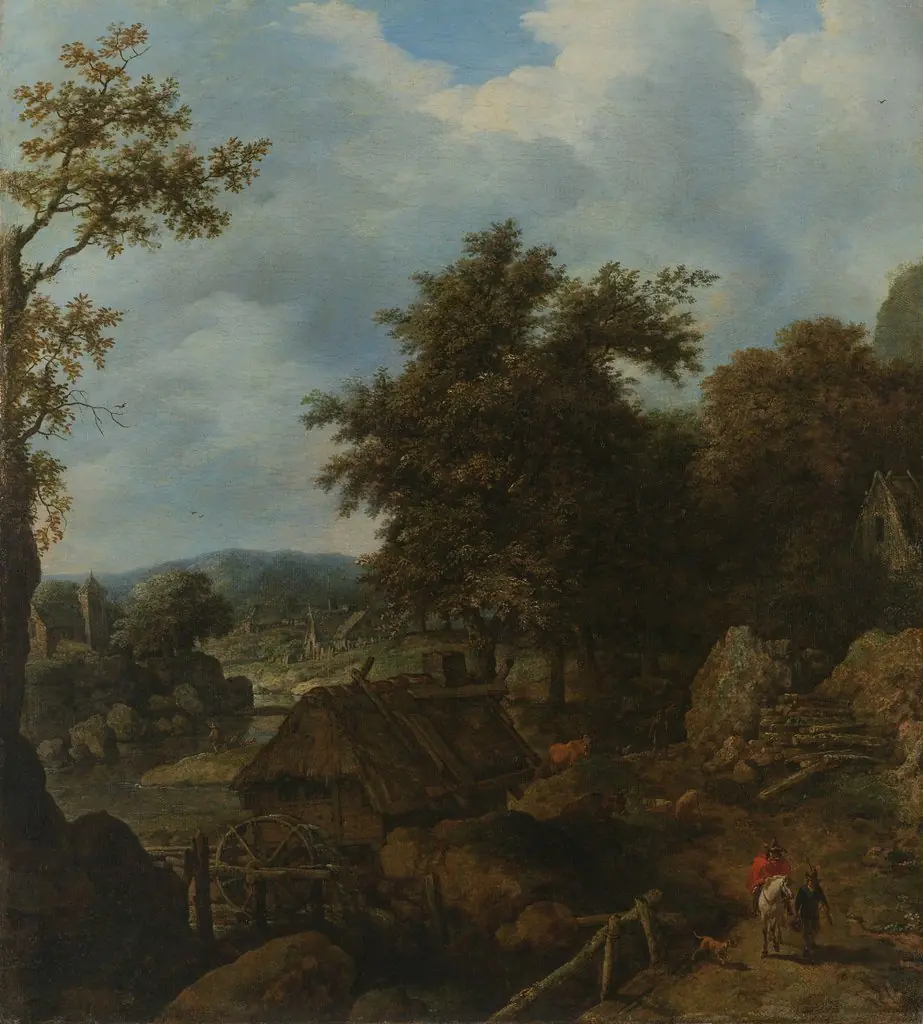
Wheel underneath the Hay Barn
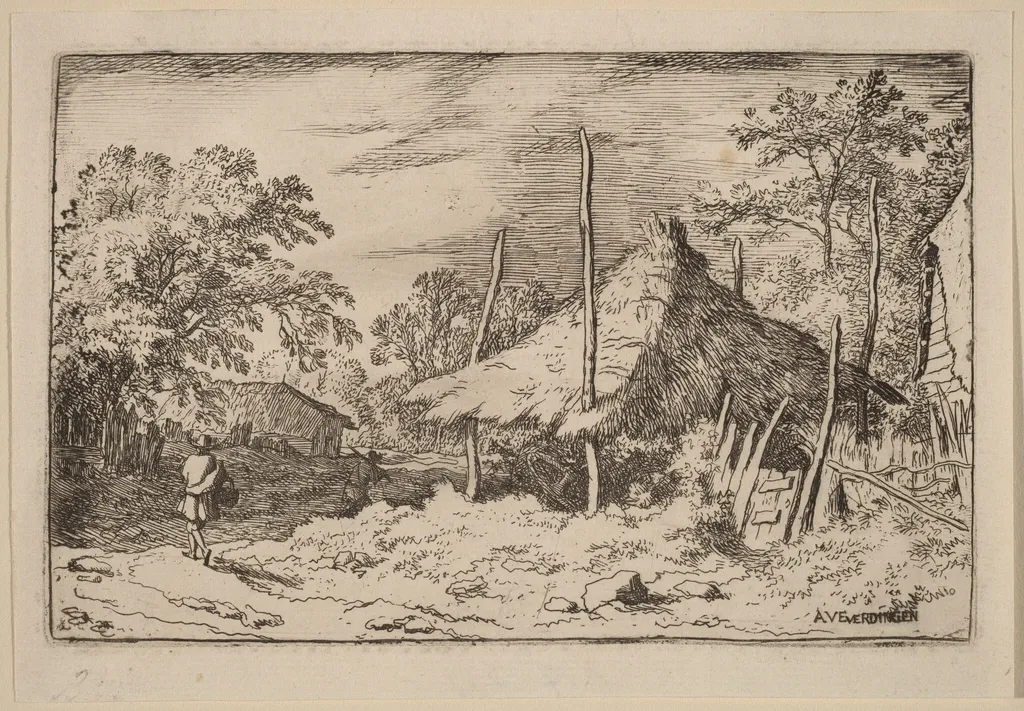
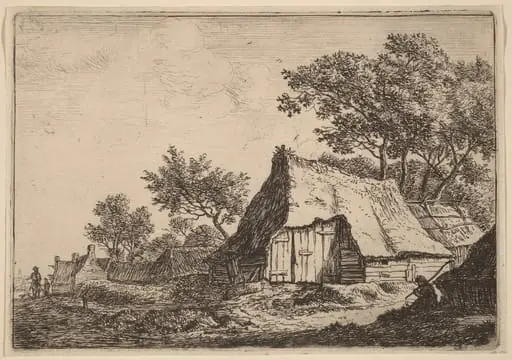
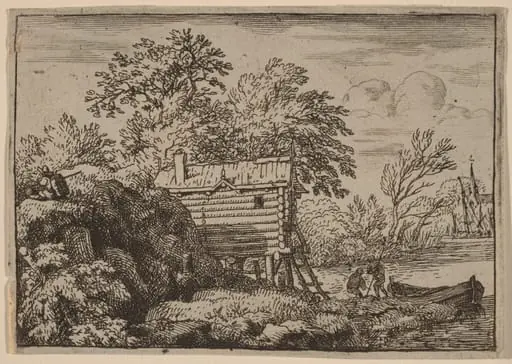
Wheel underneath the Hay Barn is an ink print by the Baroque artist Allart van Everdingen. It dates from 1650 and is held in the collection of the National Gallery of Art.
About this work
Overview
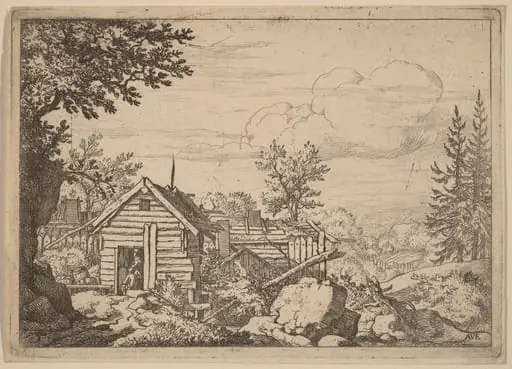
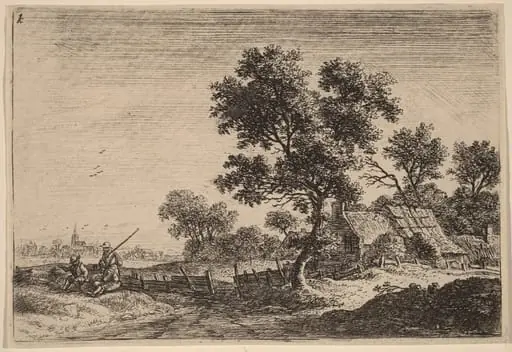
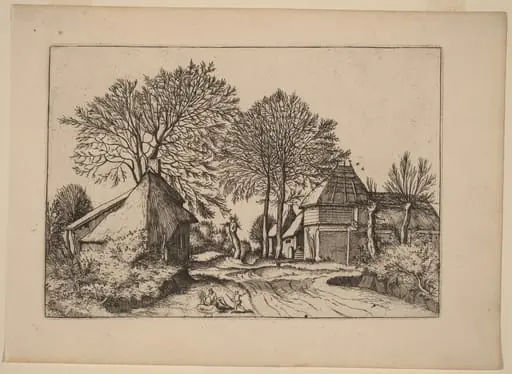
Created around 1650 by the Dutch artist Allart van Everdingen, this etching captures a quiet rural moment beneath a hay barn. Unlike his more dramatic Nordic landscapes, this work focuses on a modest, grounded scene. The medium of etching allowed for fine linear detail and subtle tonal variations, characteristic of Everdingen’s printmaking practice during the Dutch Golden Age.
Subject & Meaning
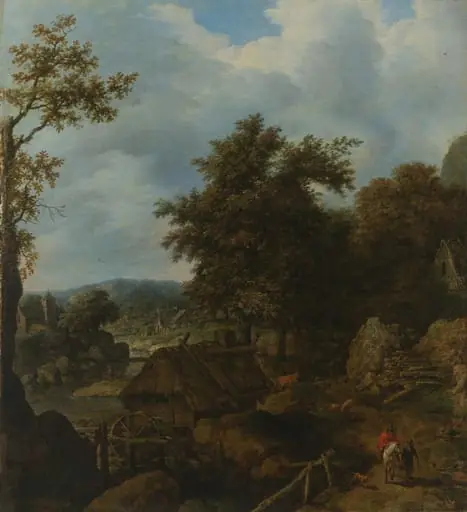
The scene depicts a lone figure approaching a hay barn, with a wooden wheel resting nearby—likely a cart or agricultural implement. The absence of human activity beyond the walker suggests a pause in daily labor, evoking stillness rather than narrative. The wheel, half-hidden under the structure, implies utility and the quiet rhythm of farm life, grounded in practicality rather than symbolism.
Technique & Style
The composition uses atmospheric perspective, with lighter, sparser detailing in the background to enhance depth.
Everdingen employed etching to render texture with precision: the roughness of the barn’s timber, the softness of overgrown brush, and the grain of the wheel are delicately suggested through incised lines and controlled ink tones. The composition uses atmospheric perspective, with lighter, sparser detailing in the background to enhance depth. The medium’s capacity for fine detail supports the quiet realism of the scene.
History & Provenance
The print emerged during Everdingen’s mature period, following his travels to Scandinavia and his return to the Netherlands. While many of his works depicted dramatic waterfalls and forests, this etching reflects a shift toward intimate, localized rural subjects. Its survival in multiple institutional collections suggests it was circulated among collectors interested in Dutch genre scenes and printmaking.
Context
In mid-17th century Holland, landscape and genre prints flourished as affordable art for the merchant class. Everdingen’s work aligned with this trend, offering scenes of rural life that resonated with urban audiences seeking connection to the countryside. Unlike grand historical subjects, this etching valued quiet observation, reflecting broader cultural interests in everyday authenticity.
Legacy
Though less celebrated than his Nordic landscapes, this etching exemplifies Everdingen’s versatility and his contribution to the Dutch print tradition. It influenced later artists interested in subtle, unidealized rural imagery. Its preservation in major print rooms underscores its role as a representative example of domestic landscape etching in the Golden Age.
Own this work as a print
Artist & collection
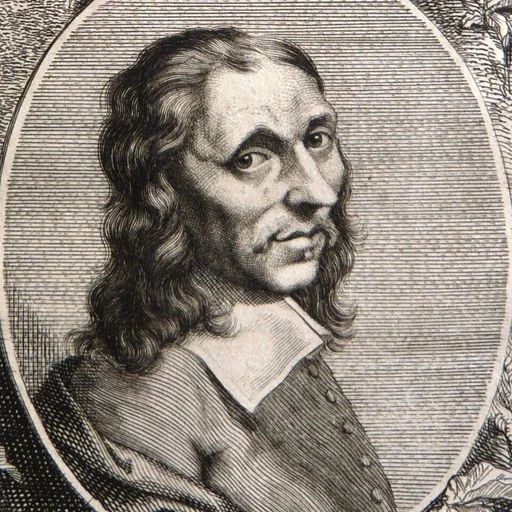
Artist
Allaert van Everdingen (Dutch pronunciation: ; bapt. 18 June 1621 – 8 November 1675 (buried)), was a Dutch Golden Age painter and printmaker in etching and mezzotint.