Artwork
Three Peasants on a Knoll outside a Hamlet
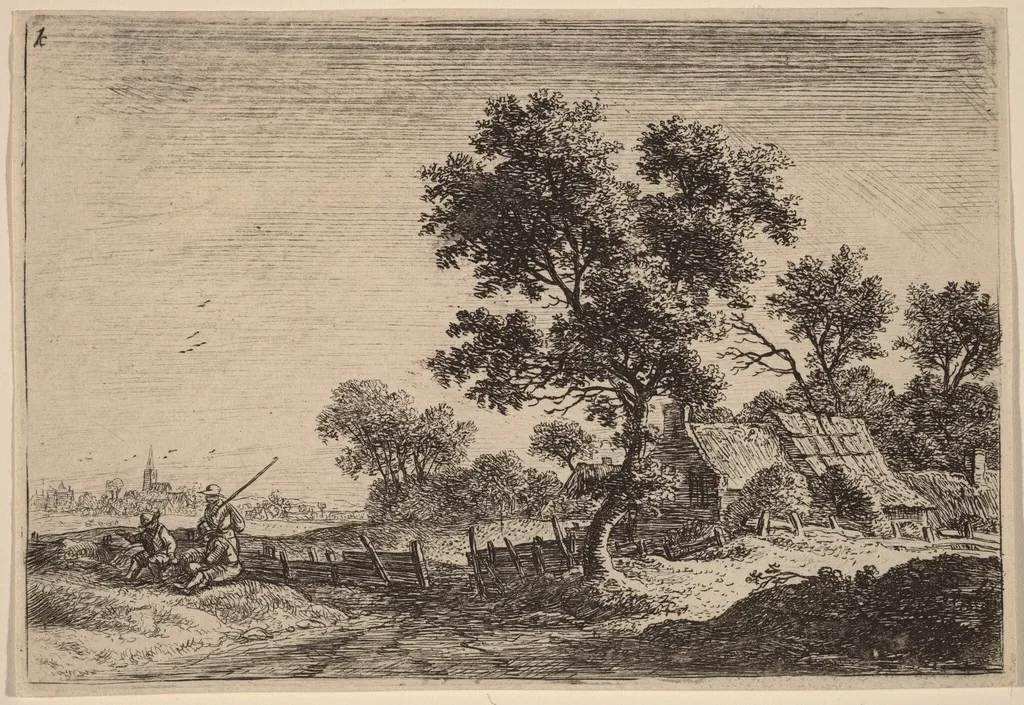
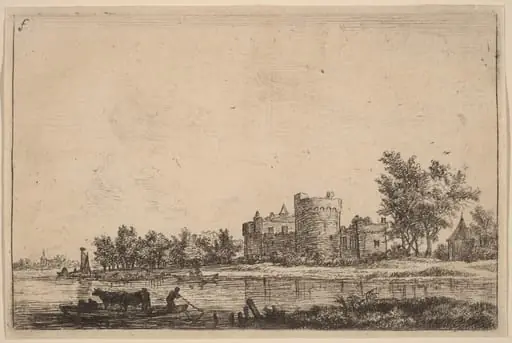
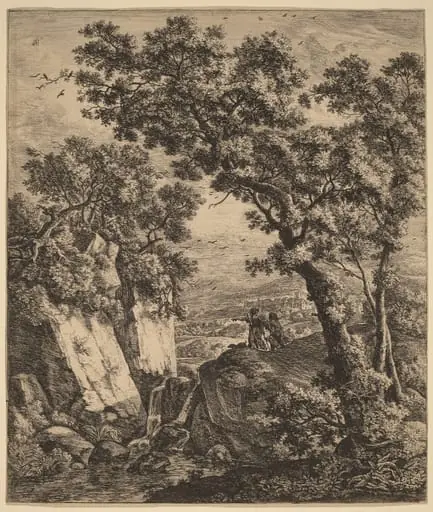
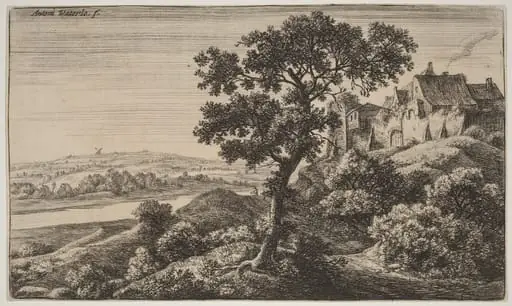
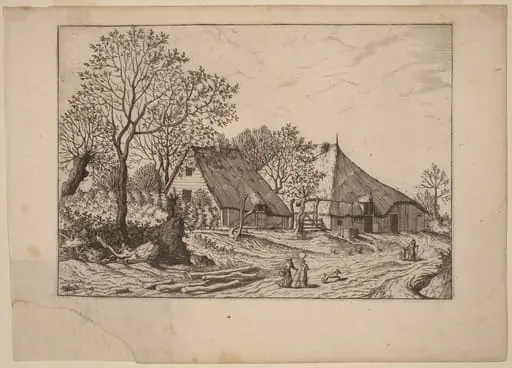
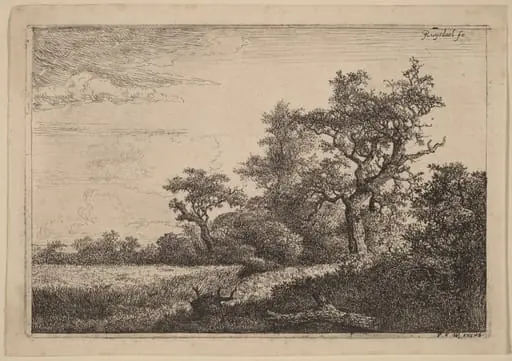
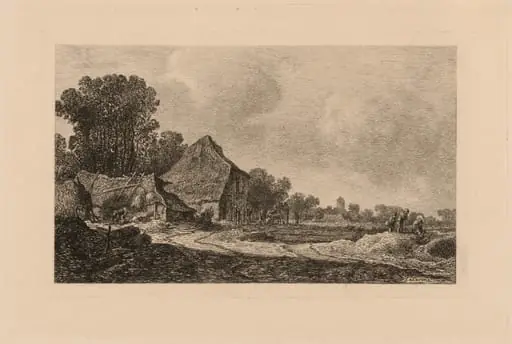
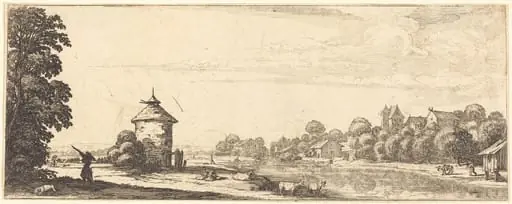
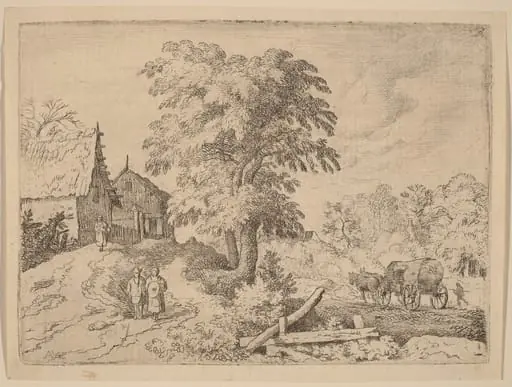
Three Peasants on a Knoll outside a Hamlet is an ink print by the Baroque artist Antonie Waterloo. It dates from 1650 and is held in the collection of the National Gallery of Art.
About this work
Overview
Created around 1650, this etching by Anthonie Waterloo depicts a quiet rural scene with three figures traversing a gentle slope near a hamlet.
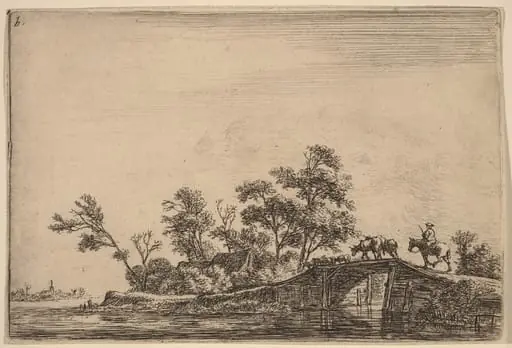
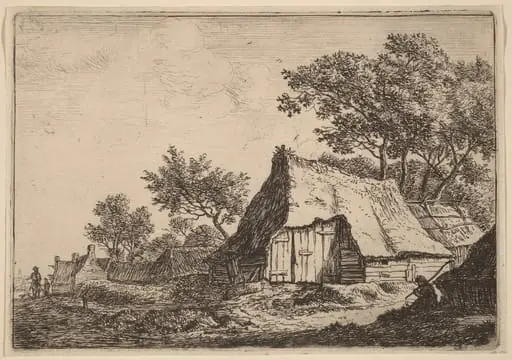
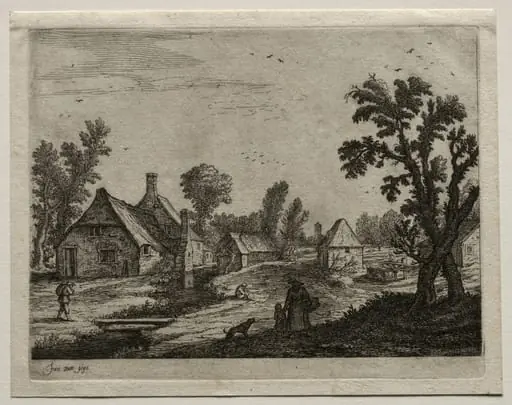
Created around 1650, this etching by Anthonie Waterloo depicts a quiet rural scene with three figures traversing a gentle slope near a hamlet. Rendered in monochrome, the print captures a moment of everyday life, framed by natural elements such as a winding river, scattered trees, and a distant church spire. The composition emphasizes stillness and spatial depth, typical of Northern European landscape prints of the mid-seventeenth century.
Subject & Meaning
The three peasants, shown in modest attire and moving along a path, suggest ordinary laborers engaged in routine travel. Their small scale relative to the landscape underscores a broader theme of human presence within nature rather than dominance over it. The inclusion of a church spire hints at the spiritual and communal center of rural life, subtly anchoring the scene in its social context without overt symbolism.
Technique & Style
Waterloo employed fine, controlled etching lines to model textures in grass, foliage, and distant architecture. The delicate cross-hatching and varying line weight create subtle tonal shifts, suggesting light and volume without color. This method, common among Dutch and Flemish printmakers, allowed for detailed atmospheric effects and a sense of quiet realism, prioritizing observation over dramatic expression.
History & Provenance
The work originates from Waterloo’s active period in the Netherlands during the 1640s and 1650s, when he produced numerous landscape etchings influenced by his travels and exposure to Italianate tonal painting. While specific early ownership records are sparse, the print aligns with the broader circulation of small-scale prints among collectors and artists of the time, valued for their intimate scale and technical precision.
Context
In mid-seventeenth-century Northern Europe, landscape prints flourished as affordable art for middle-class households. Waterloo’s work reflects a shift from idealized vistas to observed, modest rural settings. His etchings contributed to a growing interest in the everyday countryside, paralleling developments in Dutch painting and the rise of print culture as a medium for documenting local life.
Legacy
Waterloo’s etchings, including this one, remain examples of the quiet, observational tradition in Dutch printmaking. Though less widely known than contemporaries like Rembrandt, his work influenced later generations of landscape artists through its restrained composition and sensitivity to natural detail. The print endures as a record of rural life rendered with technical discipline and understated dignity.
Artist & collection