Artwork
A Vanitas
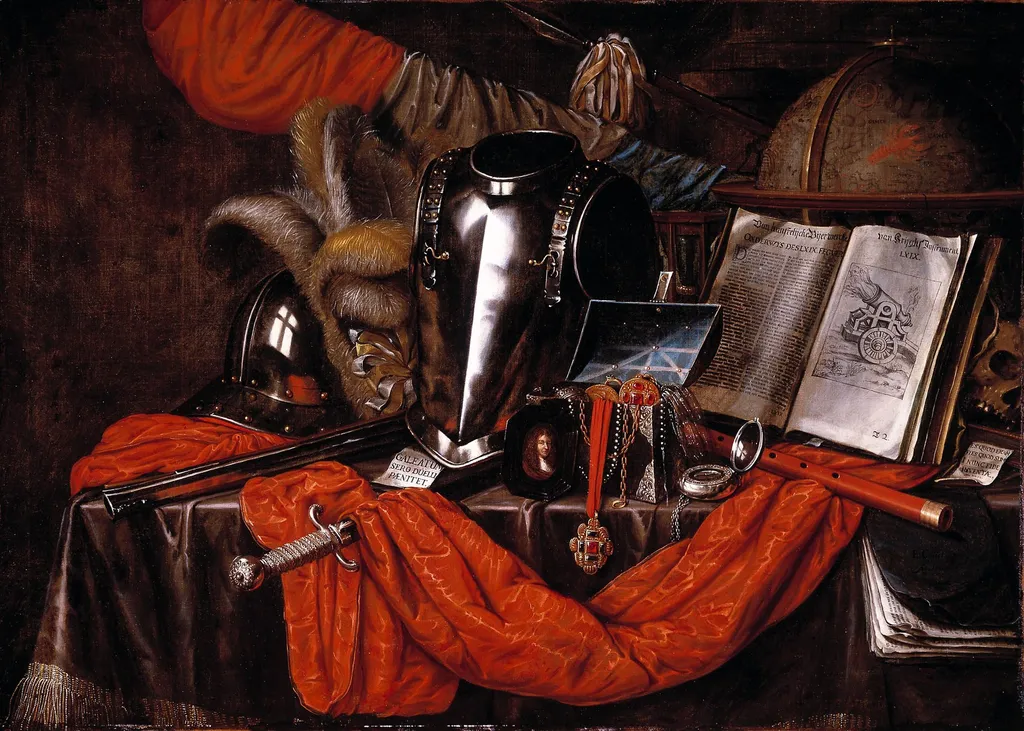
A Vanitas is an oil painting by the Dutch Golden Age artist Evert Collier. It dates from 1669 and is held in the collection of the Denver Art Museum.
About this work
Overview
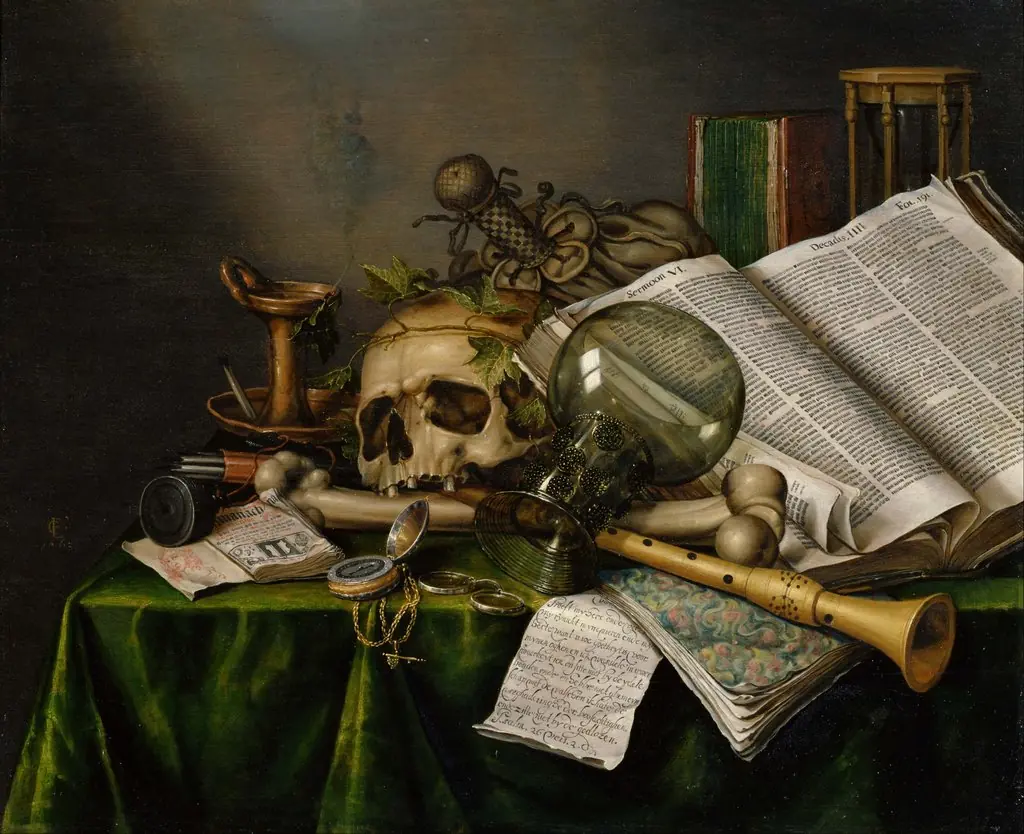
Created in 1669, *A Vanitas* is an oil painting by Dutch artist Evert Collier. The work presents a carefully arranged still life on a red‑draped table, featuring a helmet, sword, jeweled objects, a book and a celestial globe. The composition reflects the vanitas tradition, using material symbols to contemplate the fleeting nature of earthly wealth and knowledge.
Subject & Meaning
The assortment of armor, scholarly items and decorative jewelry functions as a visual meditation on mortality and the transience of worldly achievements. By juxtaposing instruments of war and learning with a globe that suggests the cosmos, Collier underscores the limited span of human endeavors against the backdrop of an indifferent universe, a common theme in 17th‑century moralizing art.
Technique & Style
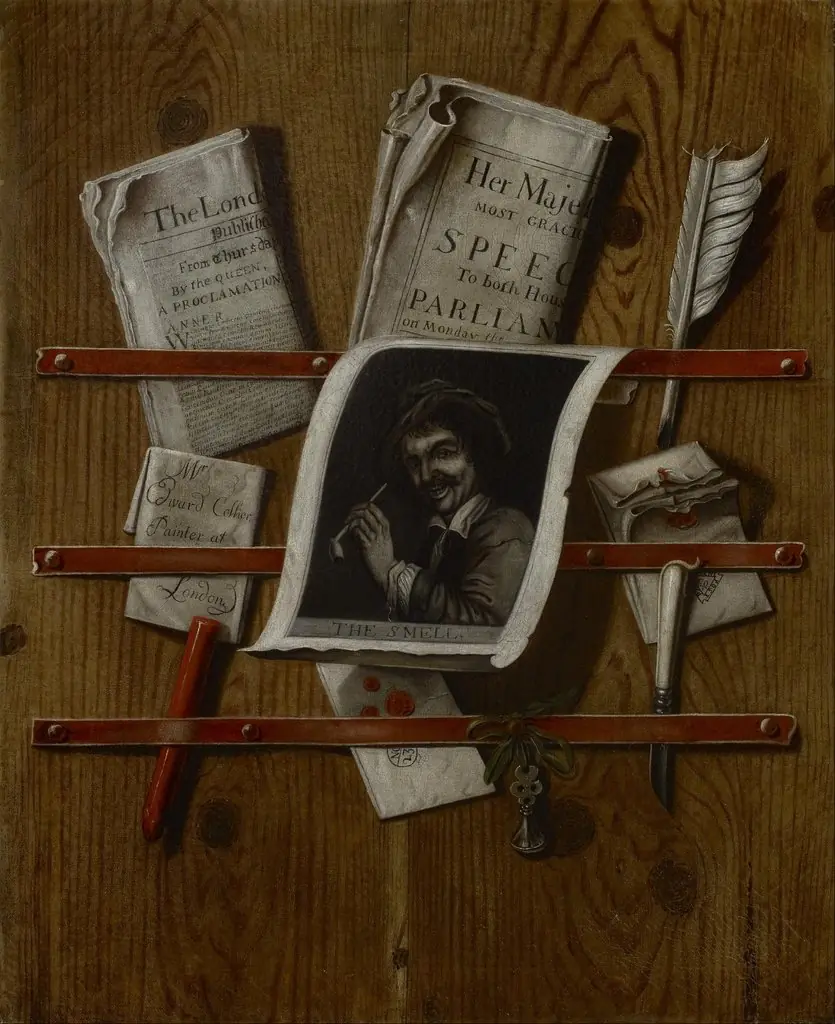
Collier employs a meticulous trompe‑l’œil approach, rendering textures—from polished metal to soft fabric—with striking realism.
Collier employs a meticulous trompe‑l’œil approach, rendering textures—from polished metal to soft fabric—with striking realism. The oil medium allows subtle gradations of light that enhance the reflective surfaces of the helmet and sword, while the red tablecloth provides a vivid chromatic counterpoint. The balanced placement of objects demonstrates the artist’s command of perspective and compositional harmony.
History & Provenance
The painting has been part of the Denver Art Museum’s collection, where it is displayed as an example of Dutch Golden Age still life. Documentation of Collier’s name appears in several contemporary spellings, reflecting the fluid orthography of 17th‑century Dutch records. The work’s provenance traces back to private collections before its acquisition by the museum in the late 20th century.
Context
*A Vanitas* belongs to the broader Dutch Golden Age movement, a period when still‑life painters frequently used symbolic objects to convey moral lessons. Collier, noted for both vanitas and illusionistic trompe‑l’œil pieces, contributed to this tradition by integrating everyday luxury items with scholarly paraphernalia, thereby linking personal vanity to universal impermanence.
Own this work as a print
Artist & collection

Artist
Evert Collier (26 January 1642 – few days before 8 September 1708) was a Dutch Golden Age still-life painter known for vanitas and trompe-l'œil paintings.

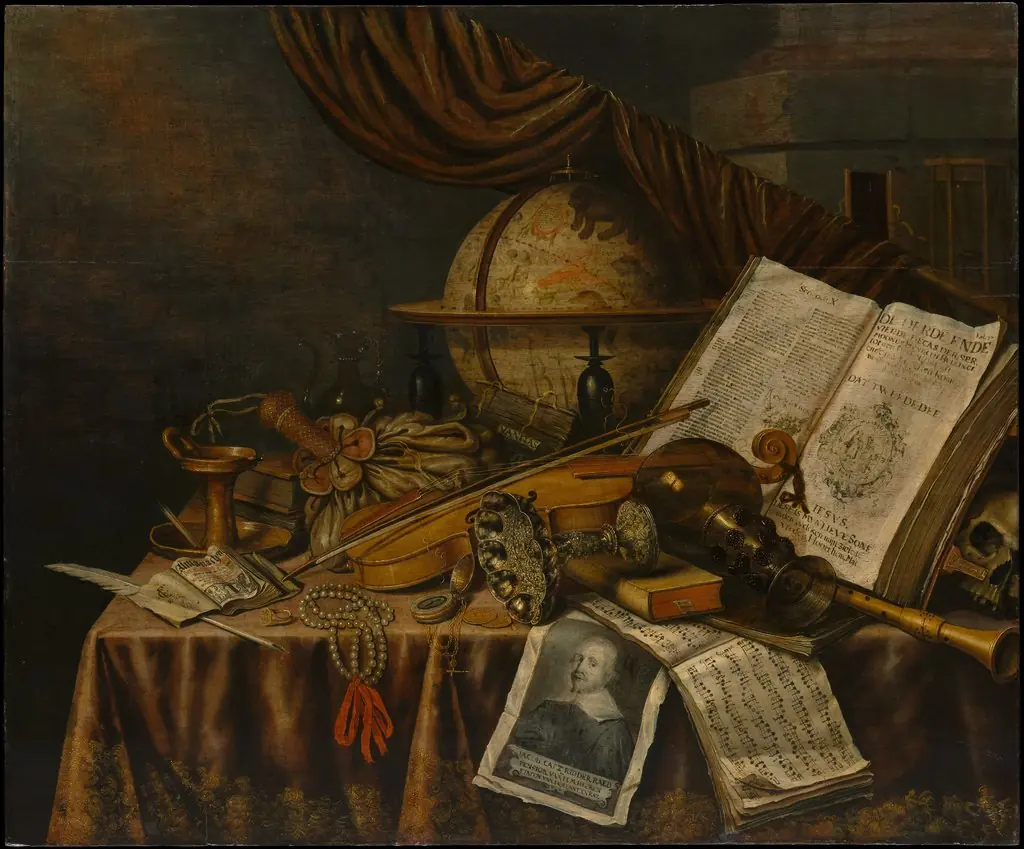 Vanitas Still Life
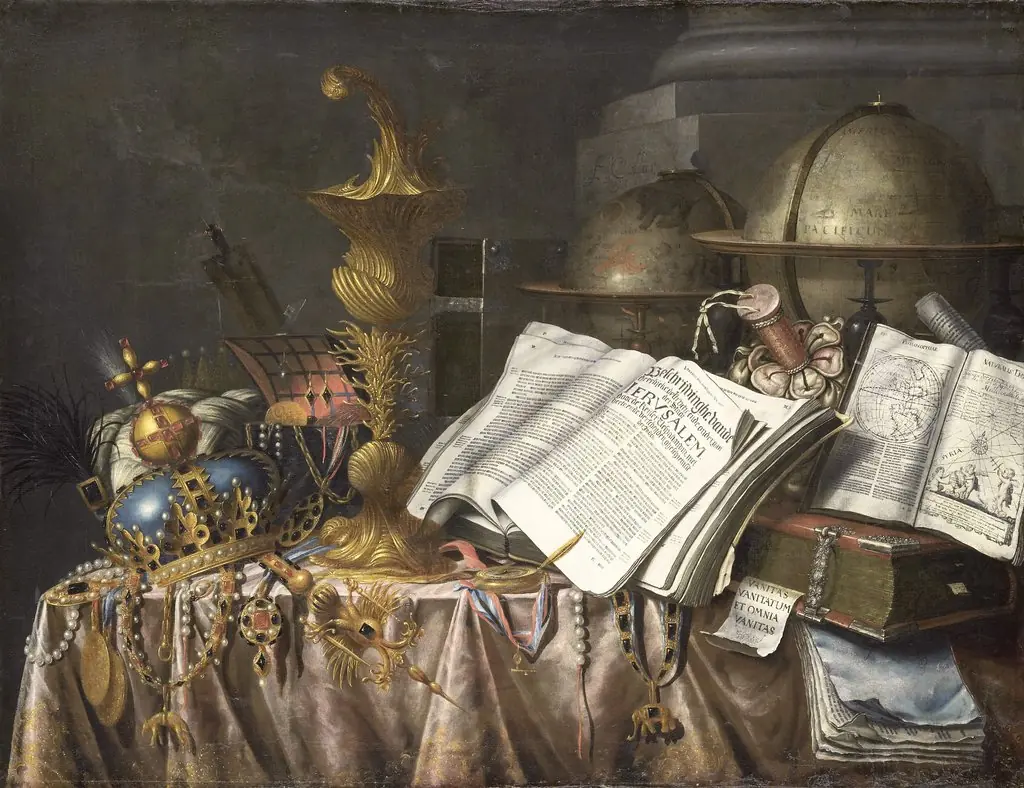 Vanitas still life
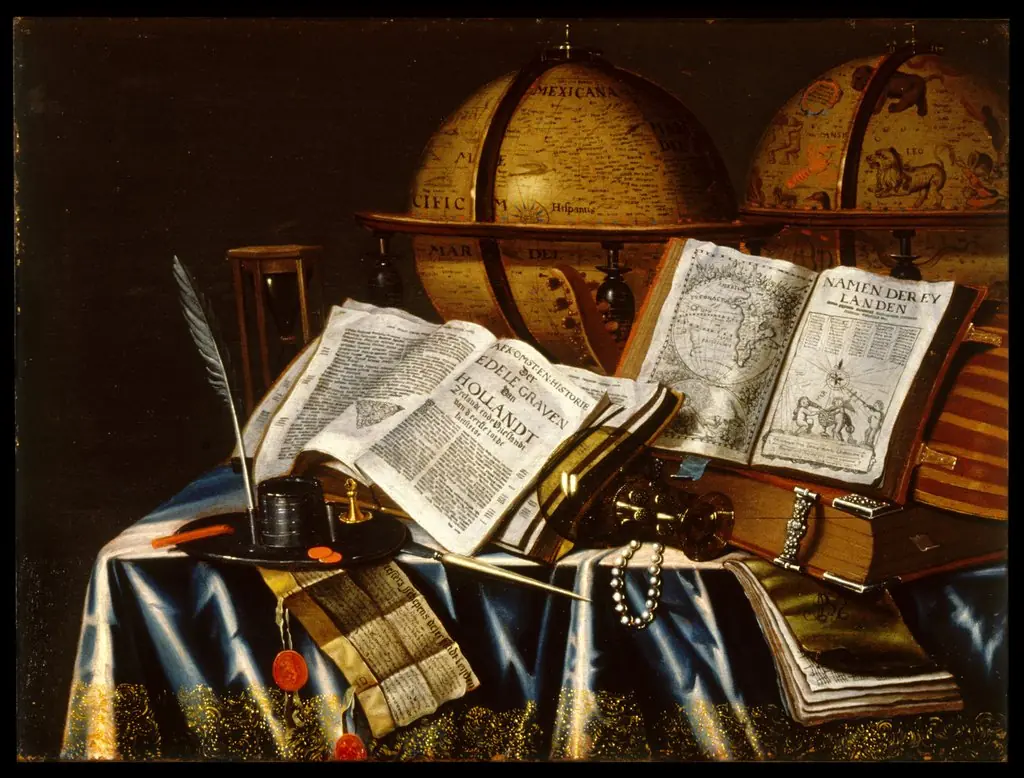
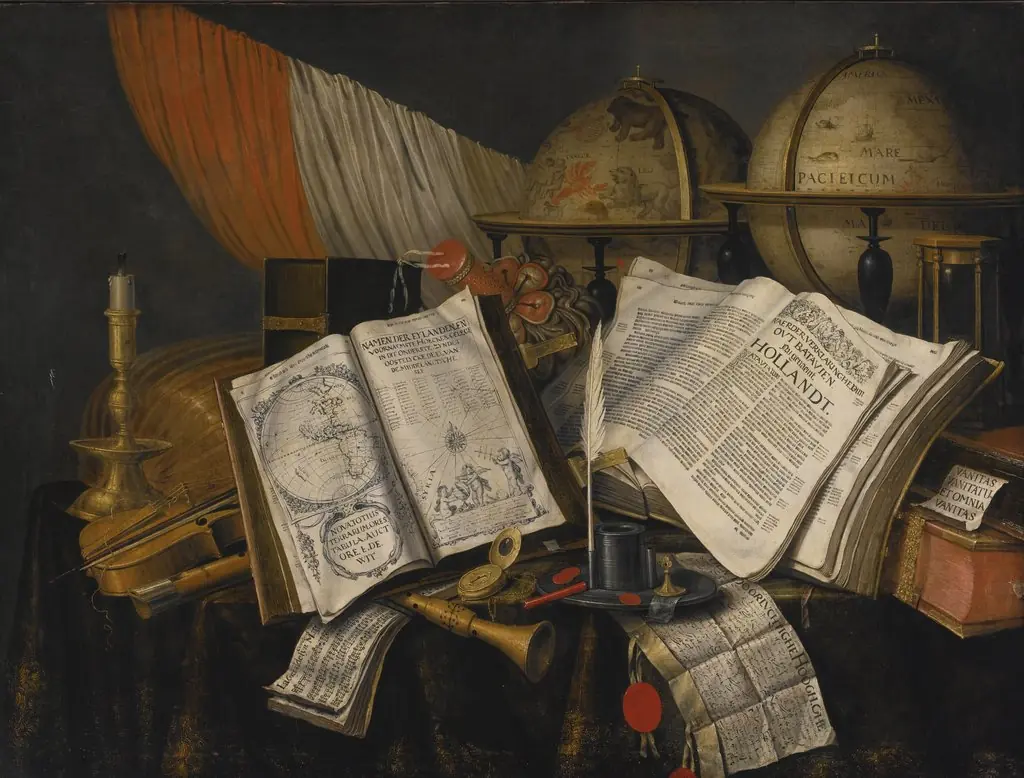 Vanitas Still Life with a Candlestick, Musical Instruments, Dutch Books, a Writing Set, an Astrological and a Terrestial Globe and an Hourglass, All on a Draped Table
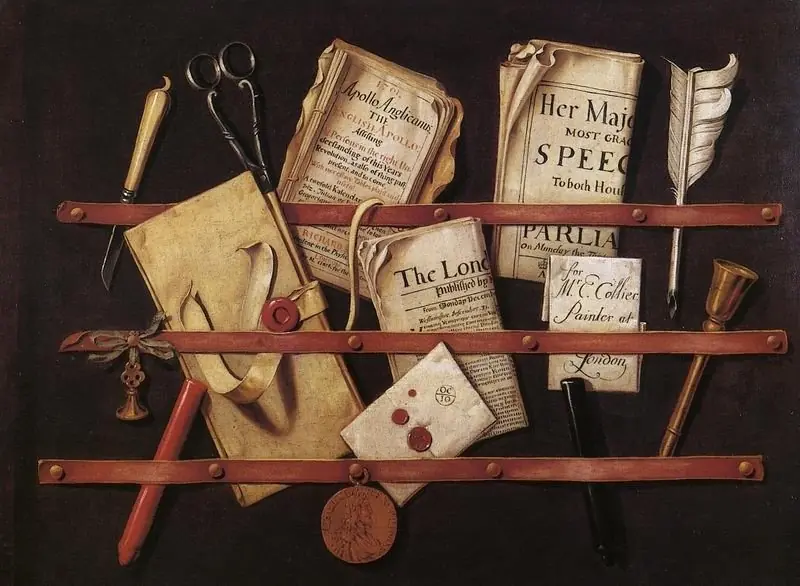 Trompe l'œil with Writing Materials
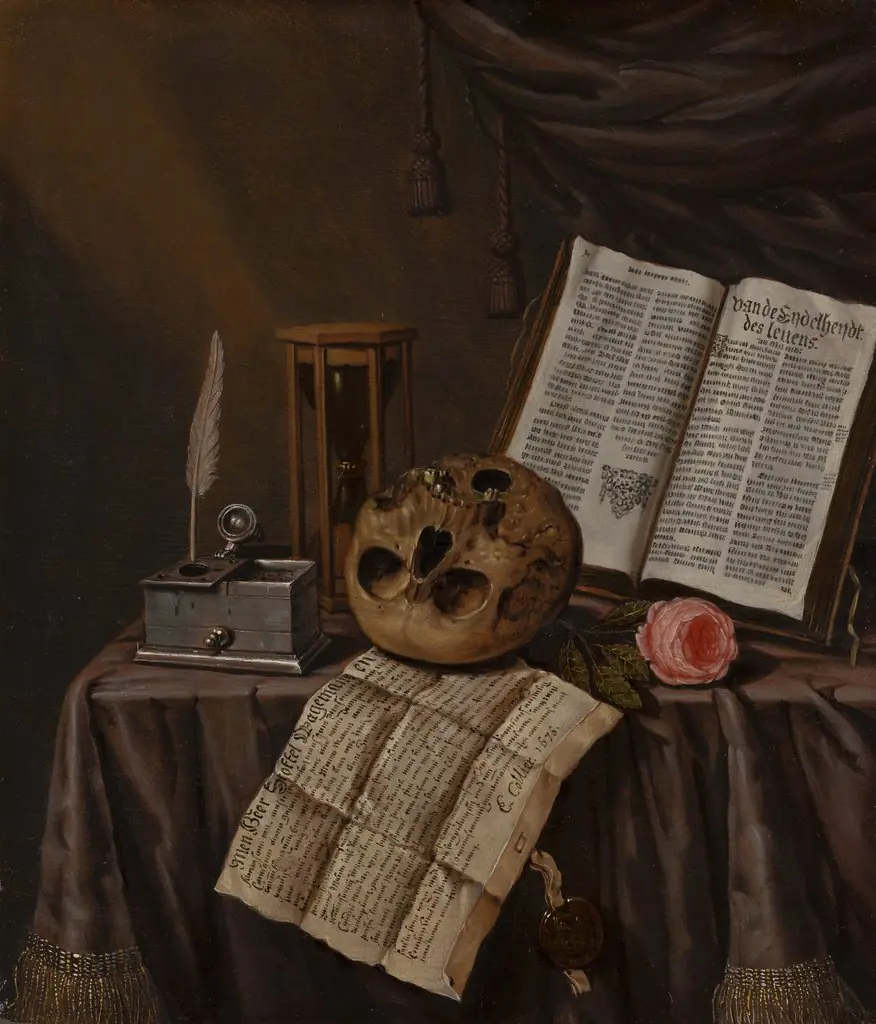 Vanitas Still Life
 Still Life: The Smell
 Vanitas, Still Life with Books and Manuscripts and a Skull
 Still Life