Artwork
Baudelaire, after Emil de Roy
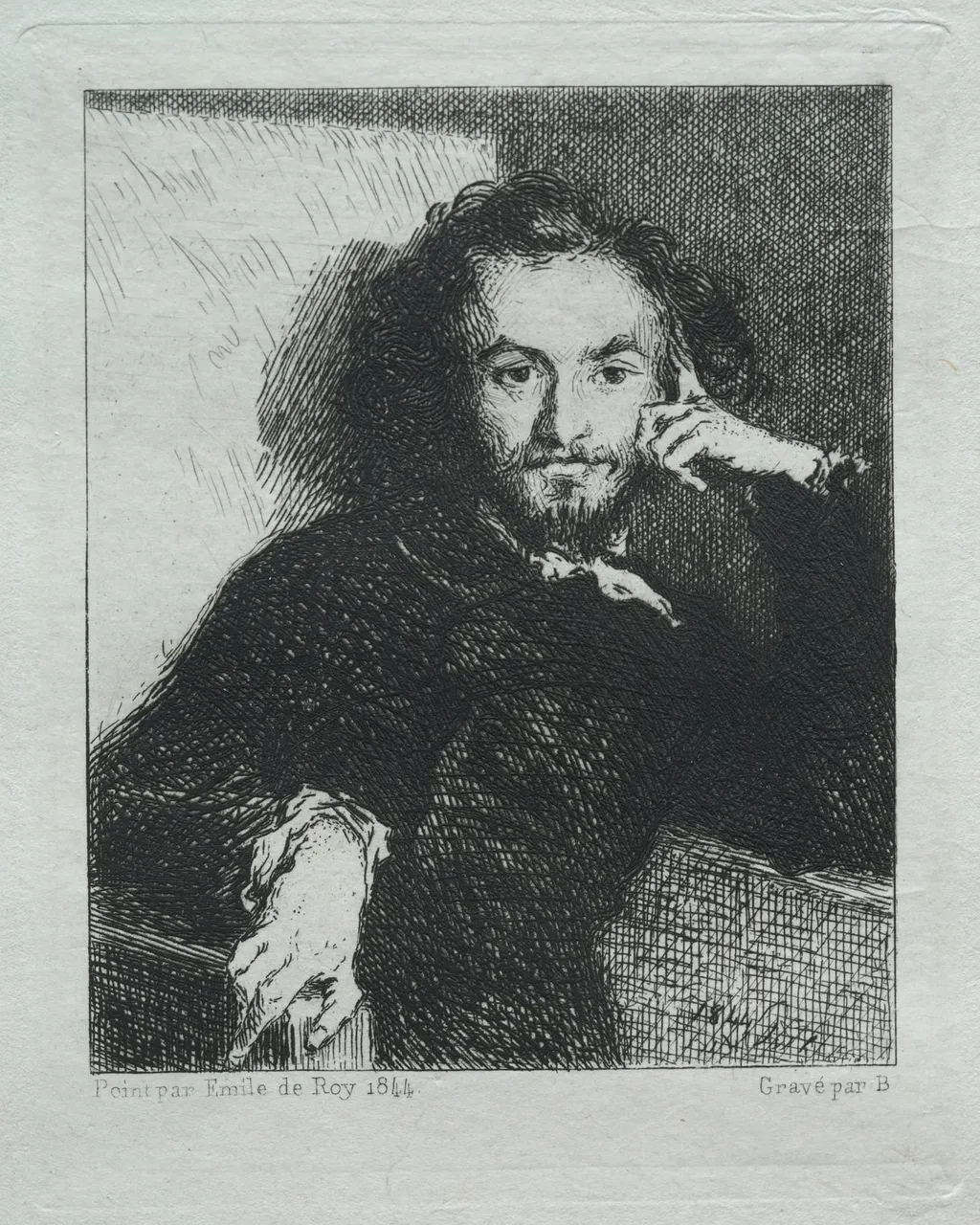
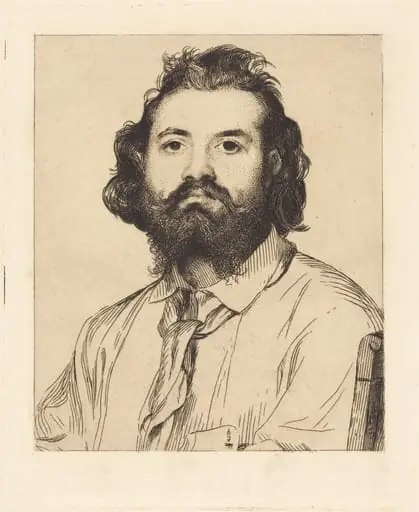
Baudelaire, after Emil de Roy is a print by the Impressionist artist Félix Bracquemond. It dates from 1869 and is held in the collection of the Cleveland Museum of Art.
About this work
Overview
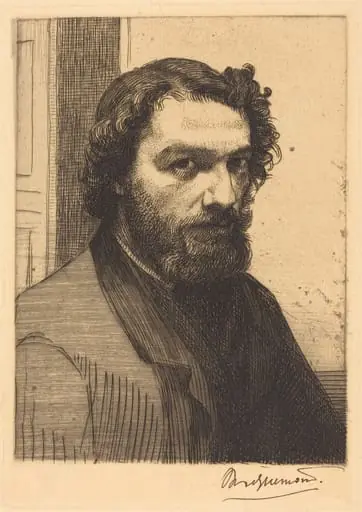
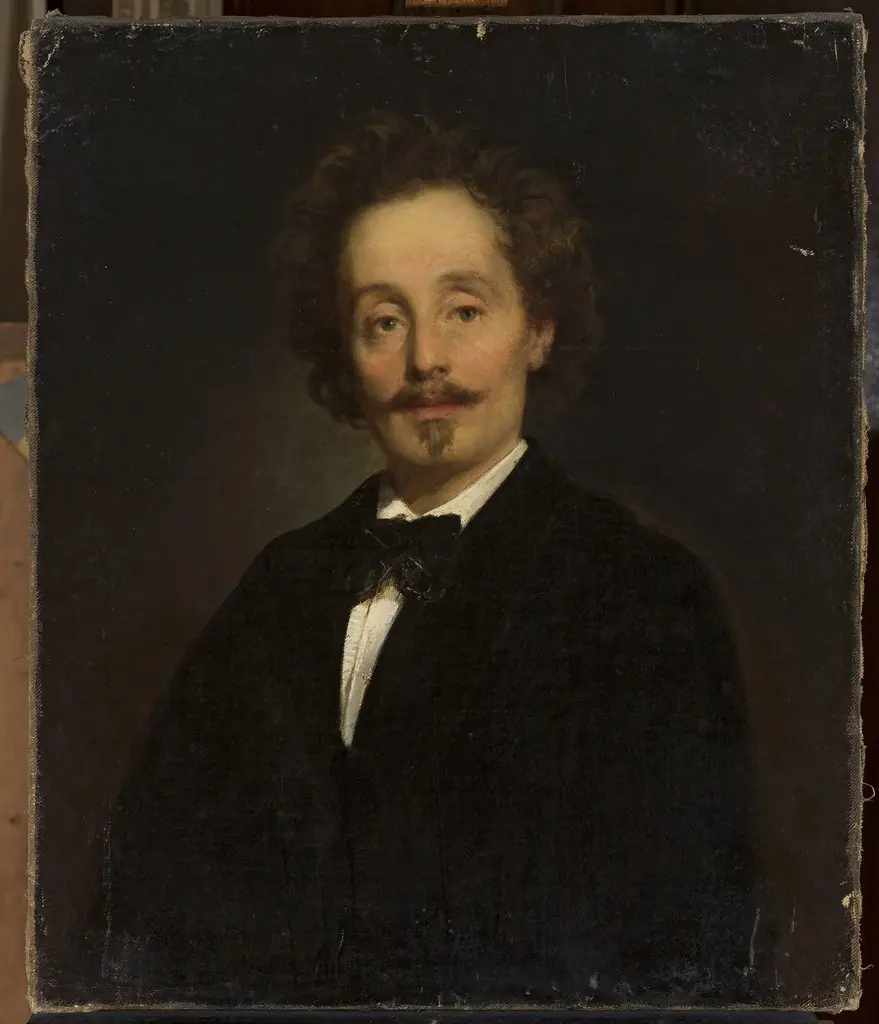
Félix Bracquemond’s 1869 print, titled “Baudelaire, after Emil de Roy,” presents a somber portrait of the French poet Charles Baudelaire. Executed in the late nineteenth century, the work is part of the Cleveland Museum of Art’s collection and reflects the artist’s engagement with contemporary literary figures.
Subject & Meaning
The image depicts Baudelaire with dark, curly hair and a neatly trimmed beard, his right hand gently supporting his cheek. His gaze is directed outward, suggesting a reflective or pensive mood that aligns with the poet’s reputation for introspection and melancholy.
Technique & Style
Bracquemond employs strong chiaroscuro, allowing the illuminated face and hand to emerge from a predominantly dark background. The contrast of light and shadow creates a three‑dimensional effect, while the delicate rendering of the curled fingers emphasizes the intimate, contemplative gesture.
History & Provenance
The print is based on an earlier portrait by Emil de Roy, which Bracquemond reinterpreted in his own medium. After its creation in 1869, the work entered various private collections before being acquired by the Cleveland Museum of Art, where it remains on view.
Artist & collection

Artist
Félix Henri Bracquemond (French pronunciation: ; 22 May 1833 – 29 October 1914) was a French painter, etcher, and printmaker.