Artwork
The Question Mark
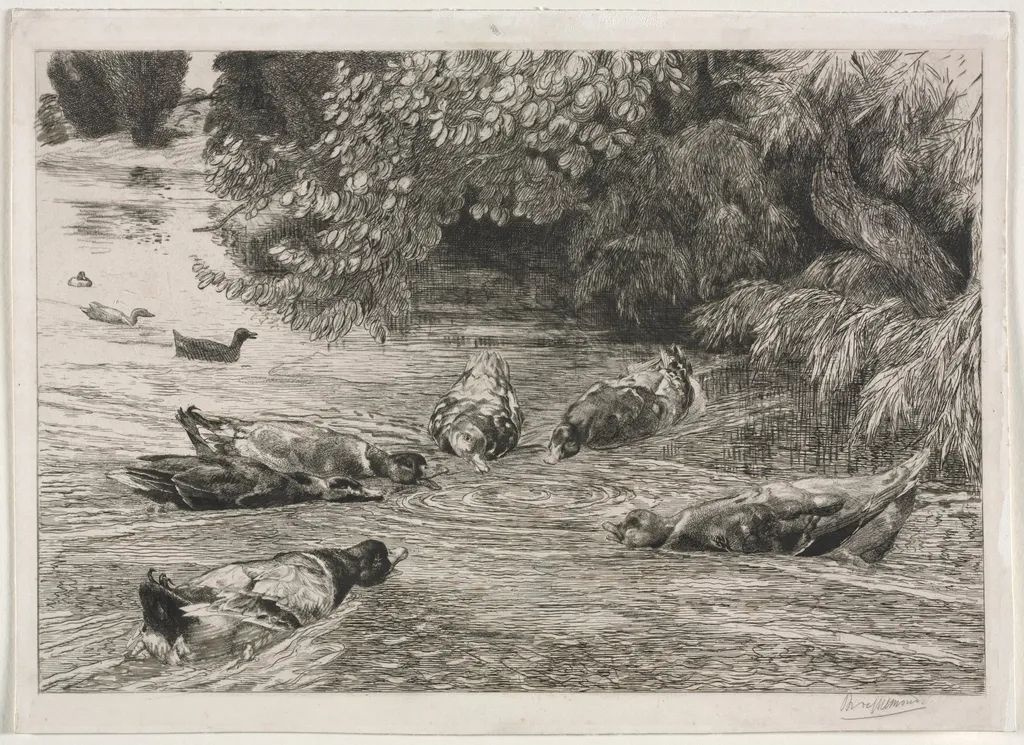
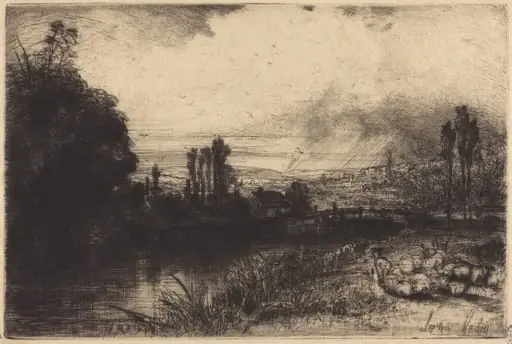
The Question Mark is a print by the Impressionist artist Félix Bracquemond. It dates from 1865 and is held in the collection of the Cleveland Museum of Art.
About this work
Overview
It resides in the collection of The Cleveland Museum of Art, reflecting Bracquemond’s interest in intimate, observational subjects drawn from the natural world.
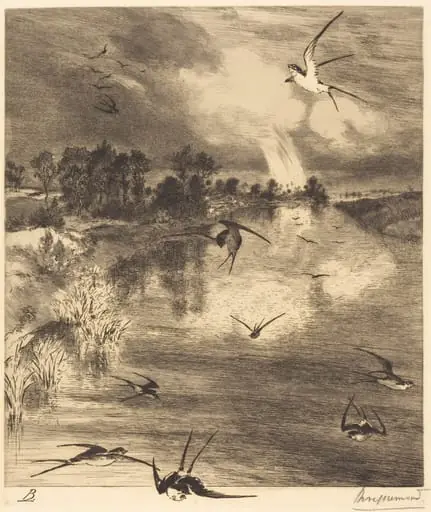
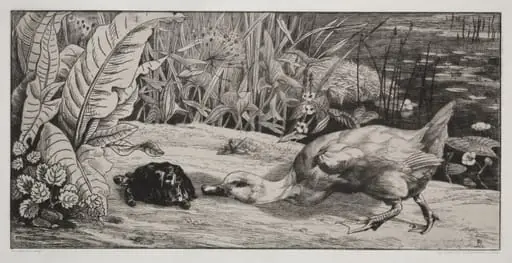
Created around 1865 by Félix Bracquemond, this black-and-white print depicts a quiet pond scene with seven ducks in various states of rest and movement. Executed in etching, the work captures subtle natural details through delicate line work. It resides in the collection of The Cleveland Museum of Art, reflecting Bracquemond’s interest in intimate, observational subjects drawn from the natural world.
Subject & Meaning
The scene presents ducks in a tranquil aquatic environment—some floating, others half-submerged, one pecking at the surface. The composition avoids narrative drama, instead emphasizing stillness and quiet observation. The absence of human figures and the focus on animal behavior suggest an appreciation for nature’s unembellished rhythms, aligning with broader 19th-century shifts toward naturalism in art.
Technique & Style
Bracquemond employed etching to render fine textures: ripples in the water, individual feathers, and the slender stalks of reeds. The lines are precise yet fluid, creating depth through variation in density rather than tone. The dark background behind the vegetation enhances the sense of spatial recession, while the muted contrasts preserve a soft, atmospheric quality characteristic of his printmaking approach.
History & Provenance
The print was made in the mid-1860s during a period when Bracquemond was deeply engaged with Japanese woodblock prints and their influence on European printmakers. It entered The Cleveland Museum of Art’s collection through established acquisition channels, though specific early ownership records are not widely documented. Its preservation reflects its status as a representative example of French etching from the era.
Context
In the 1860s, French artists increasingly turned to printmaking as a medium for personal expression, moving beyond reproductive functions. Bracquemond, influenced by Japanese aesthetics and the Barbizon school’s focus on nature, used etching to explore quiet, everyday scenes. This work aligns with a broader movement that valued technical precision and lyrical observation over grand historical themes.
Legacy
Bracquemond’s work contributed to the revival of etching as an independent art form in France. His attention to natural detail and restrained composition influenced later printmakers seeking authenticity in landscape and animal subjects. While not widely known today, this print remains a quiet example of how 19th-century artists redefined printmaking through intimate, observational study.
Own this work as a print
Artist & collection

Artist
Félix Henri Bracquemond (French pronunciation: ; 22 May 1833 – 29 October 1914) was a French painter, etcher, and printmaker.

 An Unknown
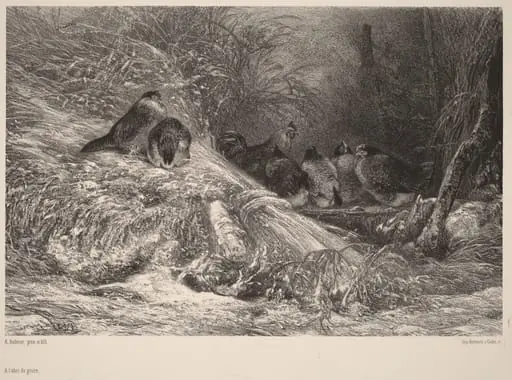 A l'abri du givre
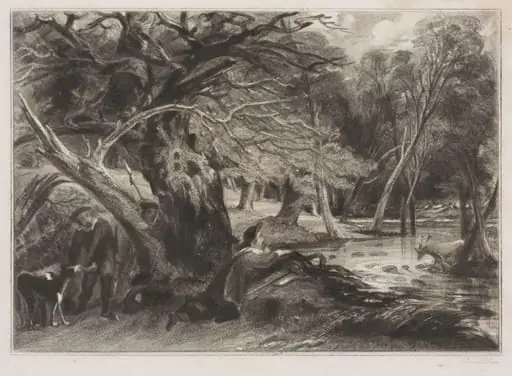 Jaques and the Wounded Stag
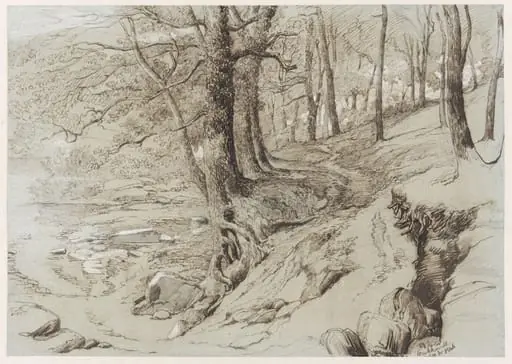 Trees near a stream at Crickhowell
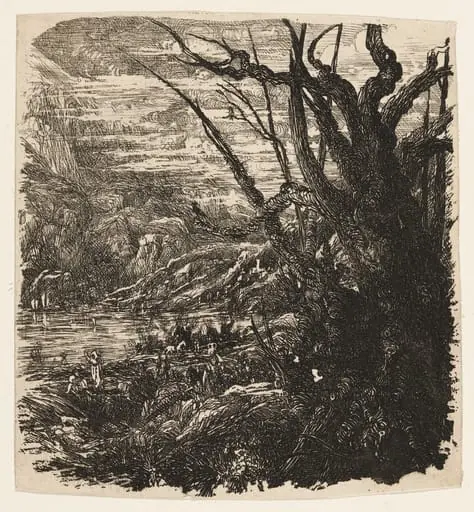 Untitled
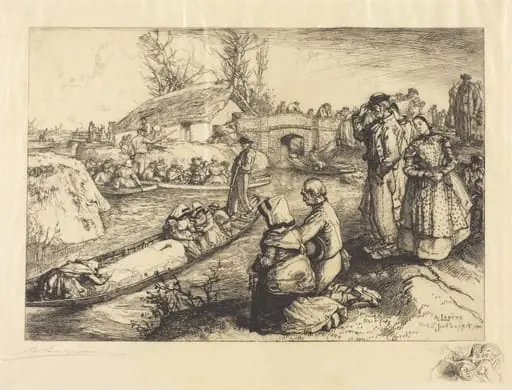 Burial in the Vendeen Marsh (Un enterrement dans le marais Vendeen)
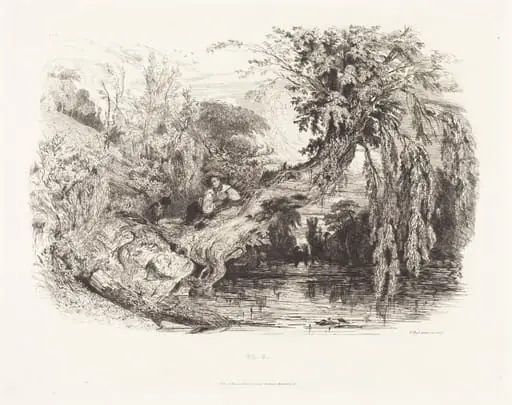 The Poacher
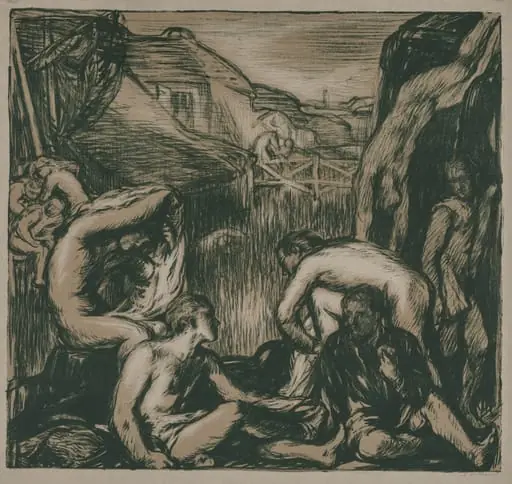 The Mill-Pond
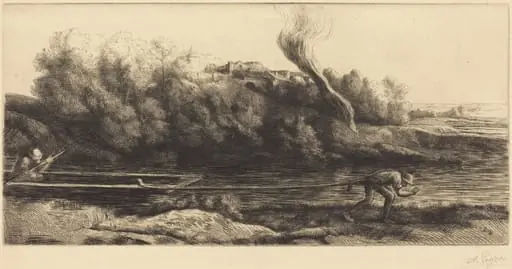 Landscape with Boat, 2nd plate (Paysage au bateau)
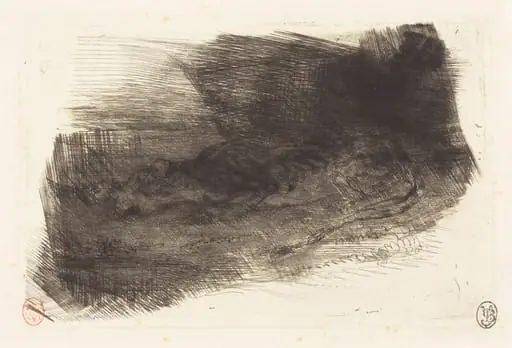 Tiger Sleeping at the Entrance to its Lair (Tigre couché à l'entrée de son antre)
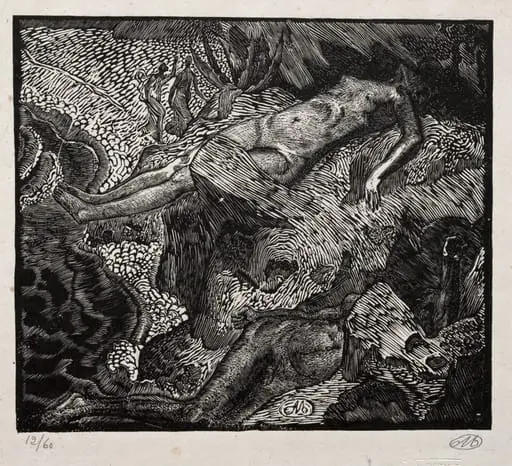 Hero and Leander
 On the Test