Artwork
Burial in the Vendeen Marsh (Un enterrement dans le marais Vendeen)
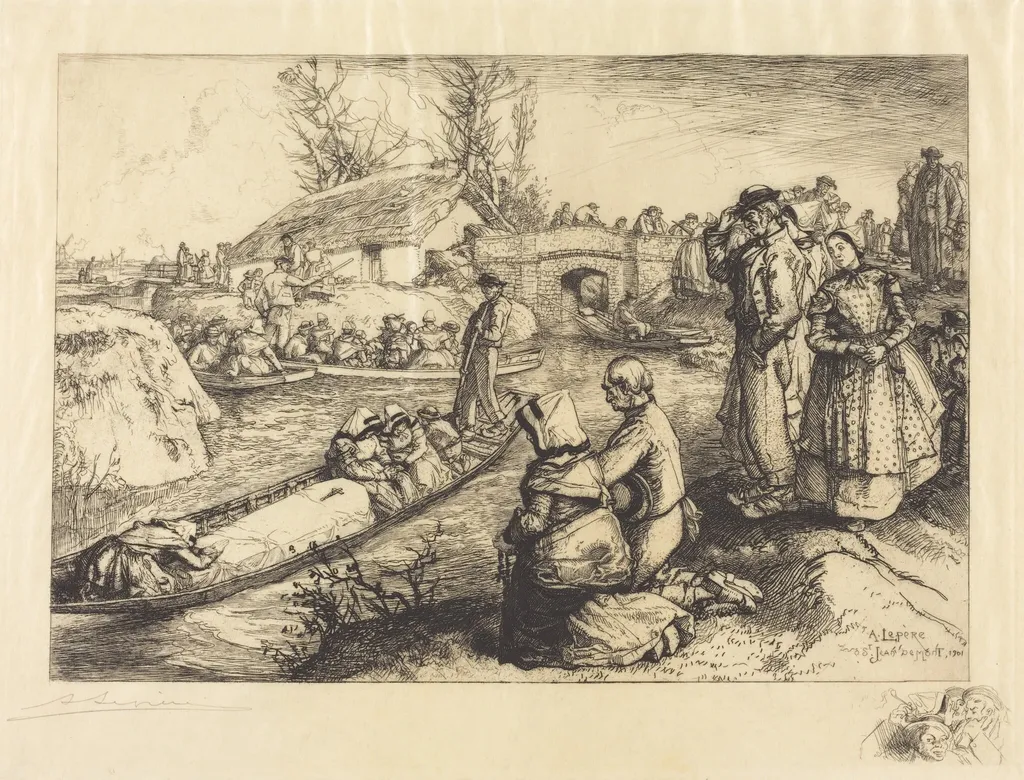
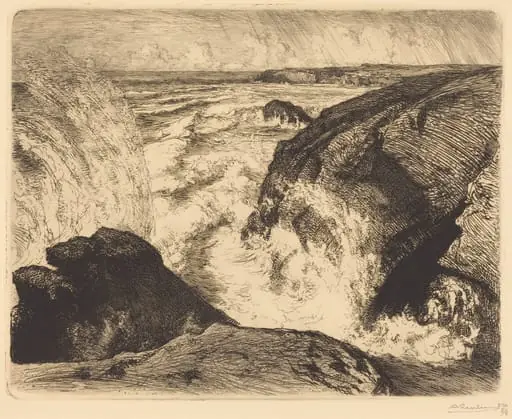
Burial in the Vendeen Marsh (Un enterrement dans le marais Vendeen) is an ink print by Auguste Lepère. It dates from 1901 and is held in the collection of the National Gallery of Art.
About this work
Overview
Created in 1901 by French artist Auguste Lepère, *Burial in the Vendeen Marsh* is an etching that captures a quiet yet intense moment of rural mourning.
Created in 1901 by French artist Auguste Lepère, *Burial in the Vendeen Marsh* is an etching that captures a quiet yet intense moment of rural mourning. Lepère, known for his dedication to printmaking, used this work to explore the expressive potential of fine-line engraving. The scene unfolds in a damp, low-lying landscape, where the weight of loss is conveyed not through drama but through restrained composition and meticulous detail.
Subject & Meaning
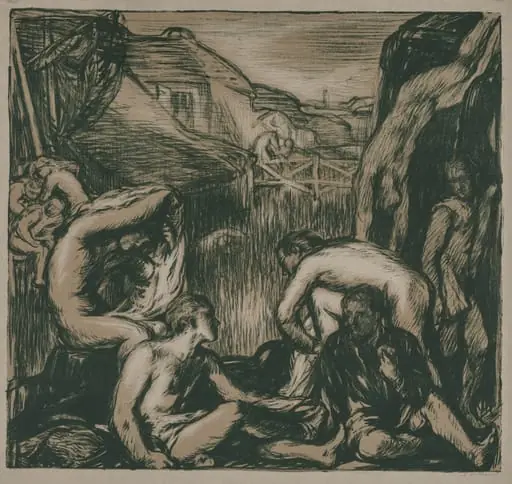
The scene portrays a funeral procession in a marshland of western France, where a body wrapped in cloth is laid on the ground as mourners gather. A kneeling figure, likely a close relative, is surrounded by others standing in silent observation. Boats moored nearby and distant figures on a bridge suggest a community bound by tradition and geography. The absence of overt emotion underscores the solemnity of rural life, where death is met with quiet endurance.
Technique & Style
Lepère employed fine, controlled etching lines to render texture in clothing, foliage, and water, creating depth without color. His use of hatching and cross-hatching suggests light filtering through mist, casting soft shadows across the marsh. The density of lines in the foreground contrasts with sparser strokes in the distance, guiding the eye through the layered landscape. The technique emphasizes atmosphere over narrative, inviting contemplation rather than spectacle.
History & Provenance
This print emerged during a period when Lepère was actively promoting wood engraving and etching as serious artistic media in France. Though not widely exhibited at the time, it reflects his broader interest in documenting regional life through print. The work remained in private collections after its creation, with no major institutional acquisition recorded until the mid-20th century, when it gained recognition among print scholars.
Context
Lepère’s work coincided with a revival of interest in traditional print techniques across Europe, as artists sought alternatives to industrial reproduction. In rural Vendée, where Catholic traditions persisted strongly, funerals often took place near waterways due to terrain and custom. This etching aligns with broader 19th-century efforts to record vanishing rural customs, though Lepère avoids romanticism, focusing instead on the quiet dignity of everyday ritual.
Legacy
Though not among Lepère’s most reproduced works, *Burial in the Vendeen Marsh* exemplifies his commitment to print as a vehicle for nuanced observation. It influenced later generations of French printmakers who valued emotional restraint and technical precision. Today, it is held in a few public collections as a testament to the quiet power of etching to convey the weight of communal grief without embellishment.
Artist & collection
Artist
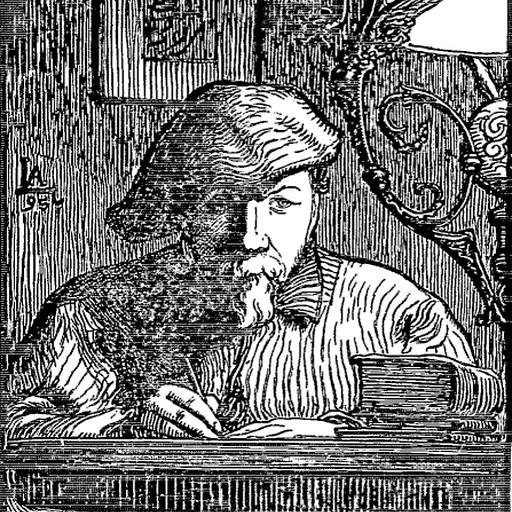
Louis-Auguste Lepère (30 November 1849 – 20 November 1918) was a French painter and etcher. Lepère is also considered a leader in the creative revival of wood engraving in Europe.