Artwork
The Owl
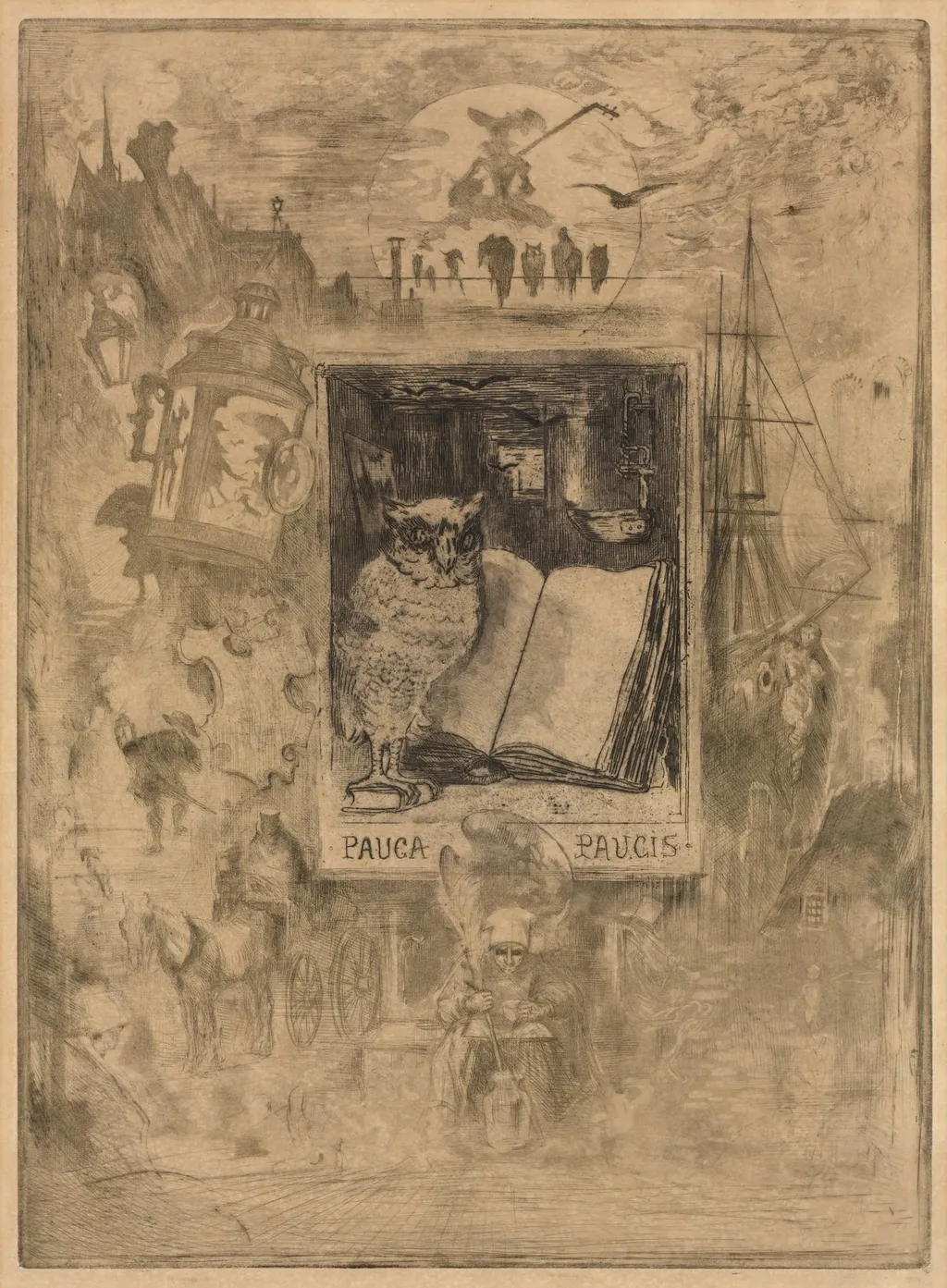
The Owl is a print by the Impressionist artist Félix-Hilaire Buhot. It dates from 1883 and is held in the collection of the Cleveland Museum of Art. Created in 1883 by Félix Hilaire Buhot, this print captures a dimly lit interior scene with meticulous detail.
About this work
Overview
Created in 1883 by Félix Hilaire Buhot, this print captures a dimly lit interior scene with meticulous detail. The work is part of the collection at The Cleveland Museum of Art and exemplifies Buhot’s interest in urban quietude and layered domestic life. Rendered in a delicate, tonal style, it blends observation with subtle narrative, inviting viewers to linger over its many small elements.
Subject & Meaning
The composition suggests a wry meditation on knowledge, solitude, and the quiet rituals of intellectual life, tinged with irony rather than solemnity.
An owl perches atop an open book inscribed with 'PAUCA PAUCIS'—Latin for 'few words to few.' The bird, traditionally linked to wisdom, contrasts with the mundane: a cellist plays nearby, figures pass outside, and shelves overflow with books and a classical bust. The composition suggests a wry meditation on knowledge, solitude, and the quiet rituals of intellectual life, tinged with irony rather than solemnity.
Technique & Style
Buhot employed drypoint and etching to achieve fine, atmospheric lines and soft gradations of tone. The print’s texture mimics the grain of paper and the roughness of stone, while the interplay of light and shadow defines the room’s depth. His hand is precise yet loose, capturing fleeting moments without idealization—characteristic of late 19th-century printmaking that favored intimacy over grandeur.
History & Provenance
The print was made during Buhot’s mature period, when he focused on Parisian street scenes and interior studies. It entered The Cleveland Museum of Art’s collection through established acquisition channels in the 20th century. No significant alterations or restorations are recorded, and its condition reflects careful preservation since its creation.
Context
Produced in the wake of Realism’s influence, the work aligns with a broader European trend of depicting ordinary life with psychological nuance. Buhot, influenced by Japanese prints and the Barbizon school, avoided overt drama, instead finding significance in quiet, unremarkable moments. This piece reflects a growing interest in the domestic sphere as a site of contemplation and subtle symbolism.
Legacy
Though not widely reproduced, the print remains a quiet example of Buhot’s contribution to modern printmaking. It illustrates how artists of the time used print media to explore domestic interiors with emotional restraint and visual complexity. Its inclusion in major collections underscores its value as a refined, understated document of late 19th-century visual culture.
Artist & collection

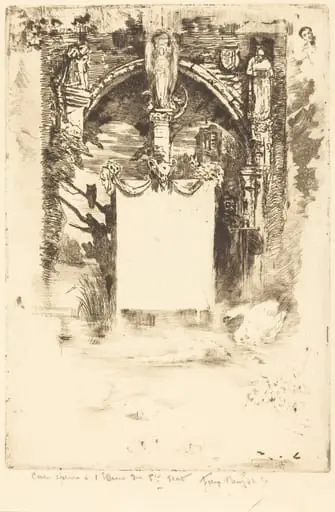 Ex-Libris pour "L'Ensorcelée" (Bookplate for "L'Ensorcelée")
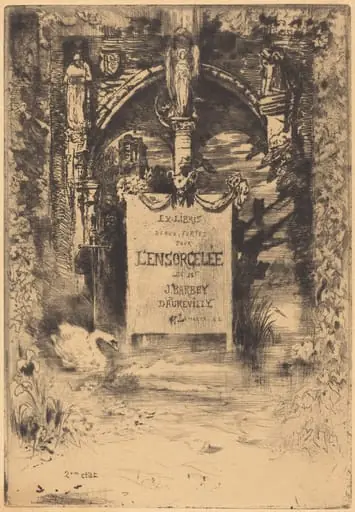 Ex-Libris pour "L'Ensorcelée" (Bookplate for "L'Ensorcelée")
 Figures on Top of a Hill, Overlooking the Sea
 Ebury Street
 A Gathering in an Interior; A Curtained Doorway
 Frontispiece for L'Illustration Nouvelle: The Burial of the Burin
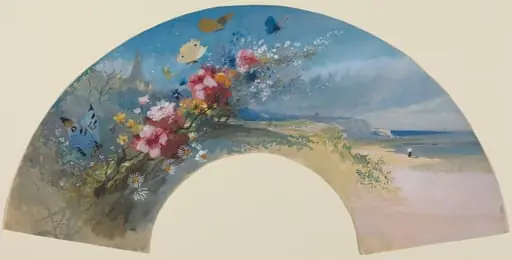 Fan with Wildflowers and Butterflies against the Norman Coast
![Gillingham Pier, London [verso], by Félix-Hilaire Buhot](https://artifactworldgallery.com/img/felix-hilaire-buhot--gillingham-pier-london-verso--641e03dd7de8217b-w320.webp) Gillingham Pier, London [verso]
Gillingham Pier, London [verso]
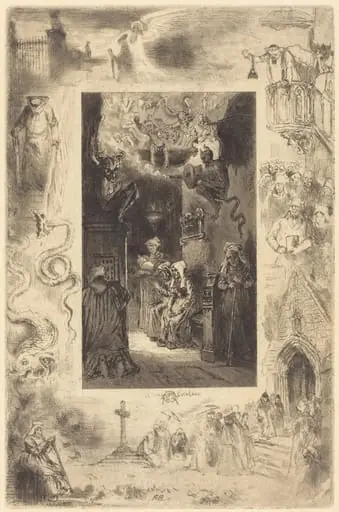 Le Curé de Cucugnan (The Vicar of Cucugnan)
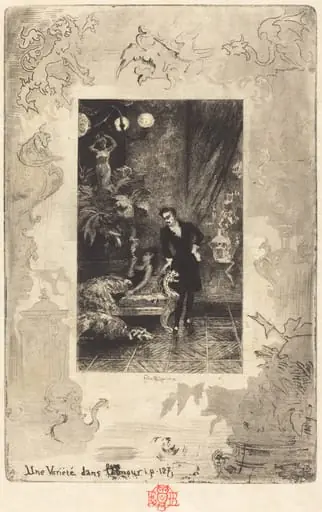 Une Variété dans l'Amour (A Change of Heart)
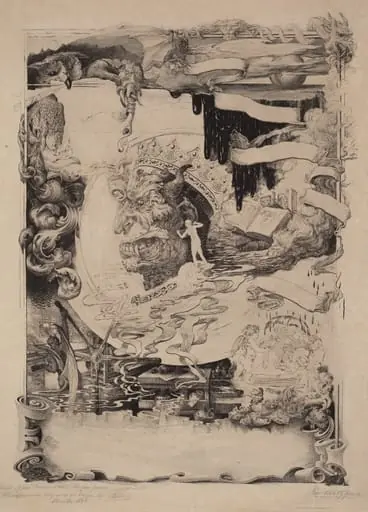 The Bookplate of the Printer's Devil
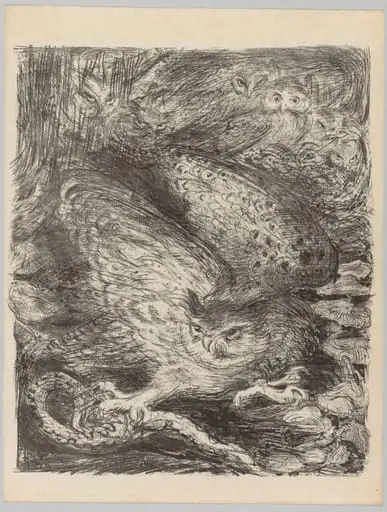 The Vintages!: Seven Owls and a Serpent
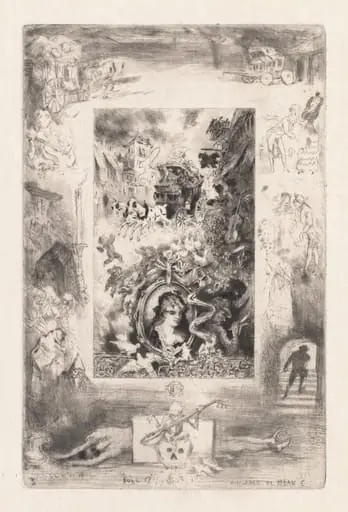 Letters from My Windmill:The Diligence of Beaucaire
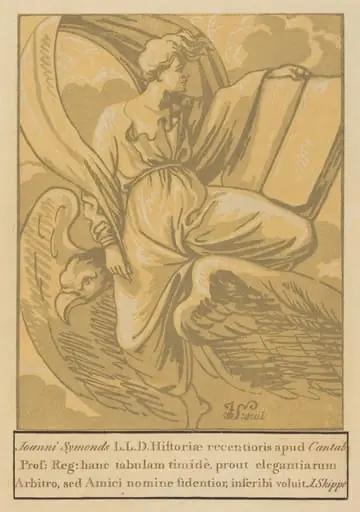 Saint John the Evangelist
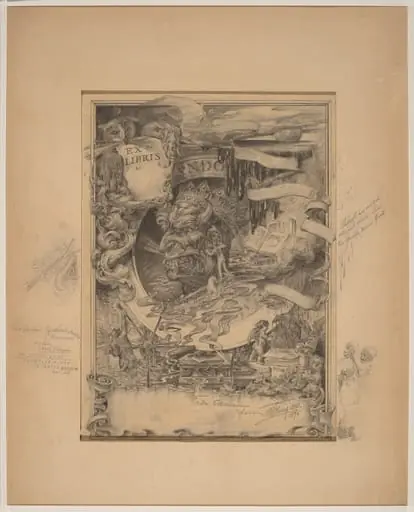 The Bookplate of the Printer's Devil
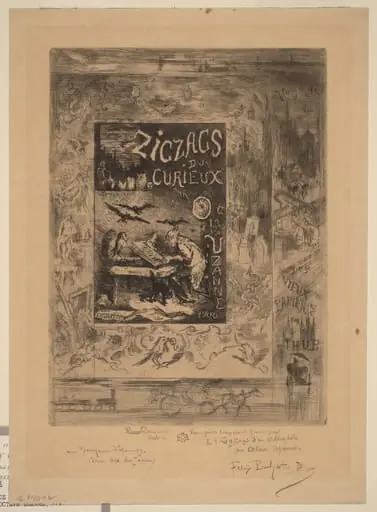 Frontispiece for "Zigzags d'un Curieux, d'Octave Uzanne"
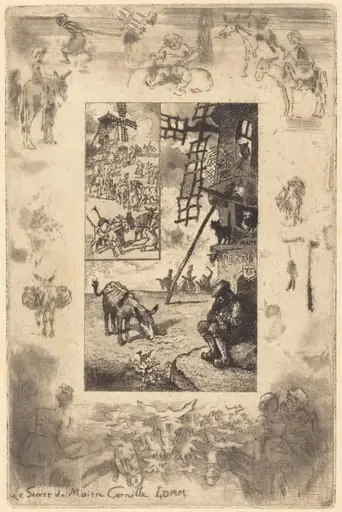 Le Secret du Mâitre Cornille (The Secret of Master Cornille)