Artwork
Saint John the Evangelist
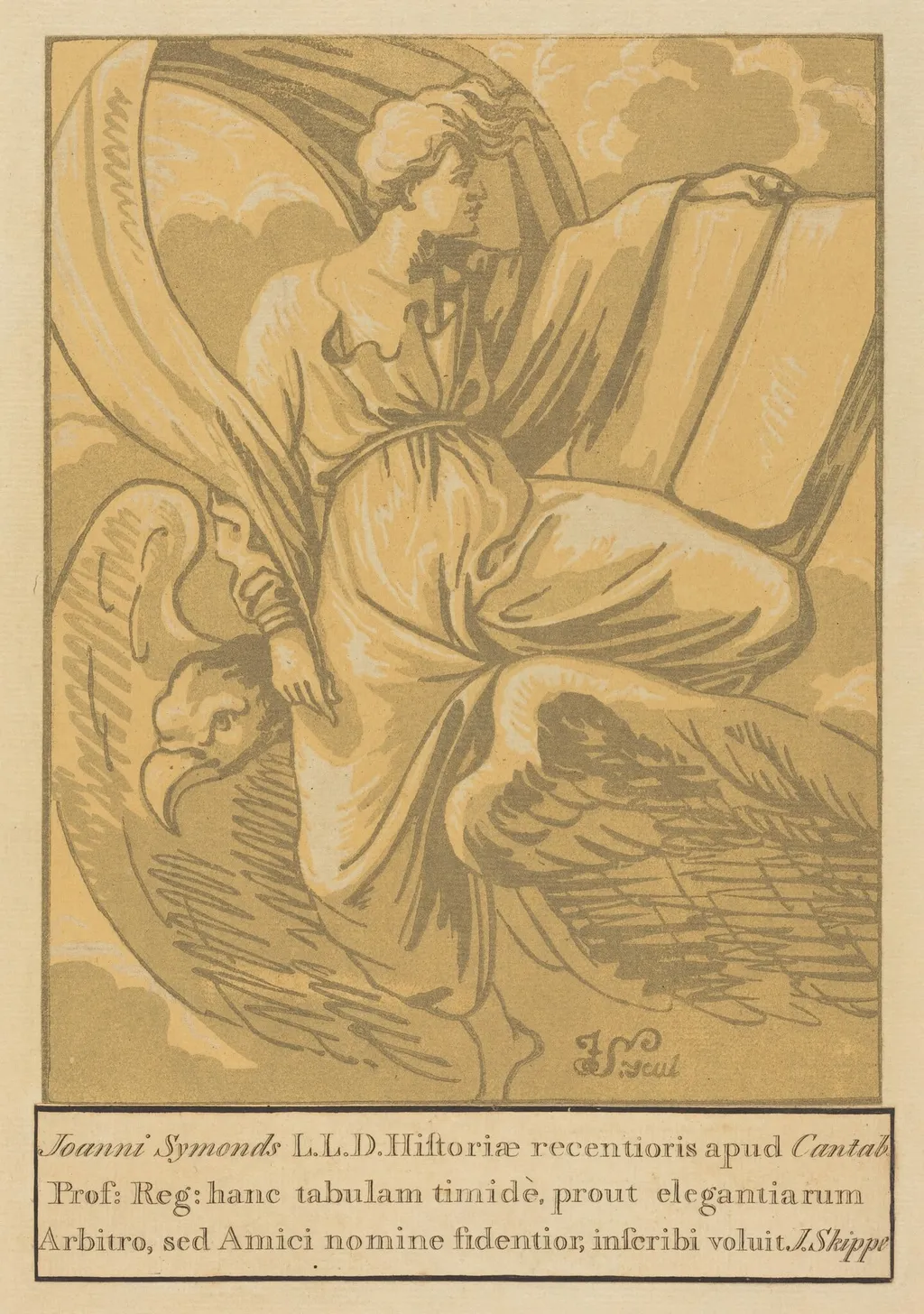
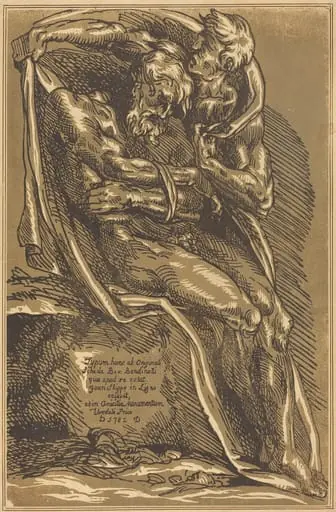
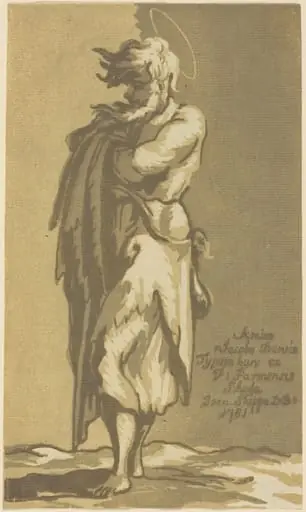
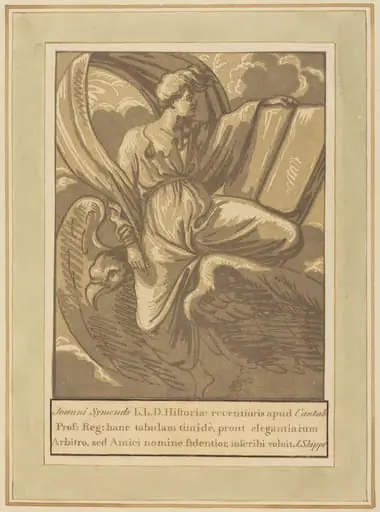
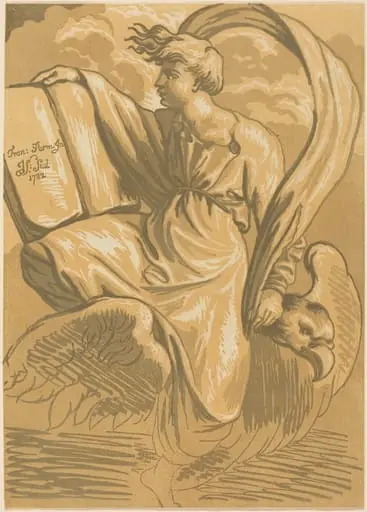
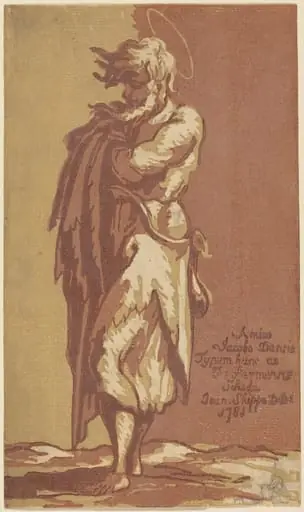
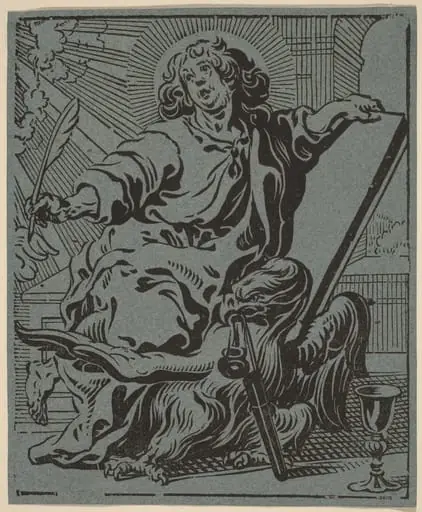
Saint John the Evangelist is an ink print by the Romanticist artist John Skippe. It dates from 1771 and is held in the collection of the National Gallery of Art.
About this work
Overview
Unlike typical line woodcuts, this work uses tonal contrast to model form, giving the figures a sculptural presence against a softly graded background.
Created in 1771 by John Skippe, this chiaroscuro woodcut depicts Saint John the Evangelist as a celestial figure, rendered in tones of tan and brown. The print employs layered blocks to achieve subtle gradations of light and shadow, a technique borrowed from Renaissance printmaking. Unlike typical line woodcuts, this work uses tonal contrast to model form, giving the figures a sculptural presence against a softly graded background.
Subject & Meaning
The scene portrays Saint John receiving divine inspiration, a common motif in Christian iconography. The winged angel, traditionally associated with the evangelist, hovers above a sleeping man, likely representing the apostle in repose before receiving revelation. The book and scroll symbolize the Gospel and prophetic writings, reinforcing John’s role as a divine scribe. The calm demeanor of the angel suggests quiet revelation rather than dramatic intervention.
Technique & Style
Skippe used multiple woodblocks to layer tones of tan and brown, creating a chiaroscuro effect without color. The shadows are deep and deliberate, defining the contours of the angel’s robes and the sleeper’s form, while the lighter areas suggest ambient glow. Fine lines define curls and fabric folds, but the emphasis is on tonal harmony over detail. The muted palette and soft transitions reflect an interest in atmospheric quietude rather than theatricality.
History & Provenance
The print was produced in England during a period of renewed interest in religious imagery among amateur printmakers. Skippe, a lesser-known artist of the late 18th century, likely created this work for private devotional use. No major institutional records trace its early ownership, and surviving impressions are rare, suggesting limited circulation. Its survival reflects its appeal to collectors of modest, spiritually oriented prints.
Context
In the decades before the Romantic movement, religious subjects remained popular in domestic art, even as secular themes gained ground. Skippe’s work aligns with a trend of small-scale, tonal prints that emulated the solemnity of Old Master engravings. The use of chiaroscuro, though rooted in Italian traditions, was adapted here for intimate, contemplative viewing rather than public display, fitting the domestic devotional culture of Georgian England.
Legacy
Though Skippe’s oeuvre is obscure, this print exemplifies the quiet persistence of religious iconography in 18th-century British print culture. It stands as a modest but technically refined example of chiaroscuro woodcutting outside the mainstream of artistic innovation. Its survival offers insight into how sacred imagery was privately sustained during a time of shifting cultural priorities.
Artist & collection