Artwork
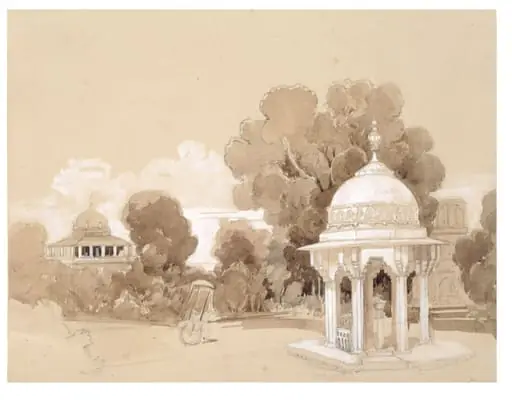
Pavilion Near a Mosque (recto)
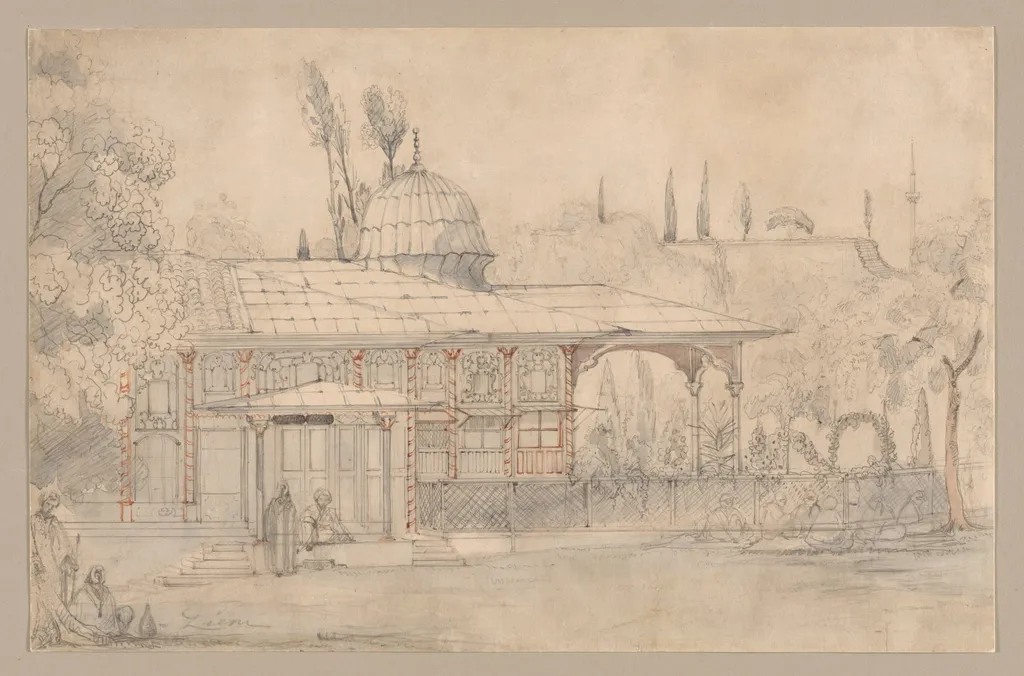
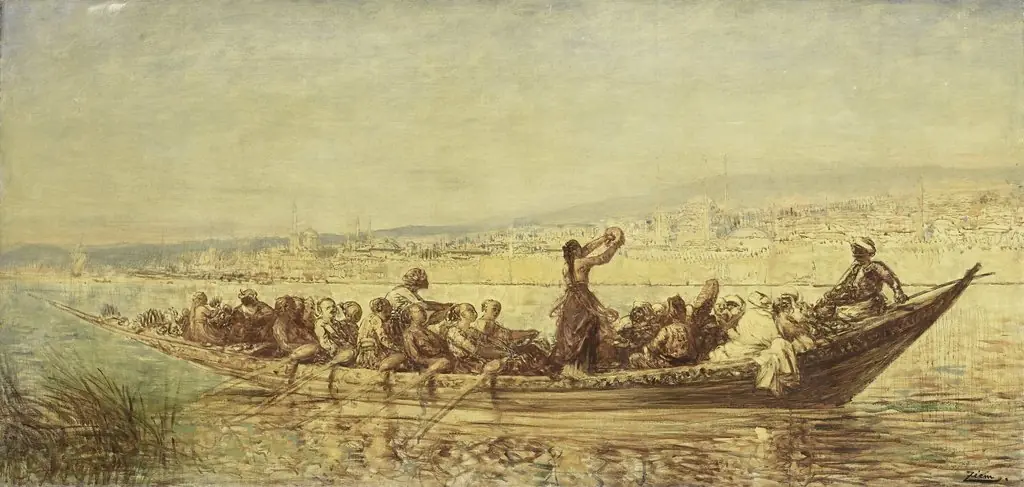
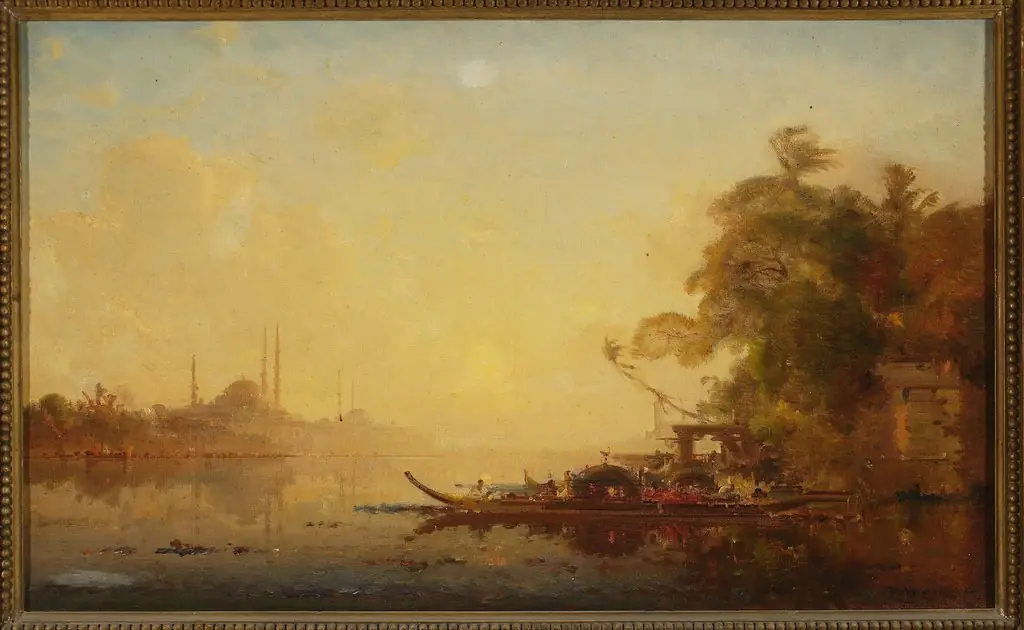
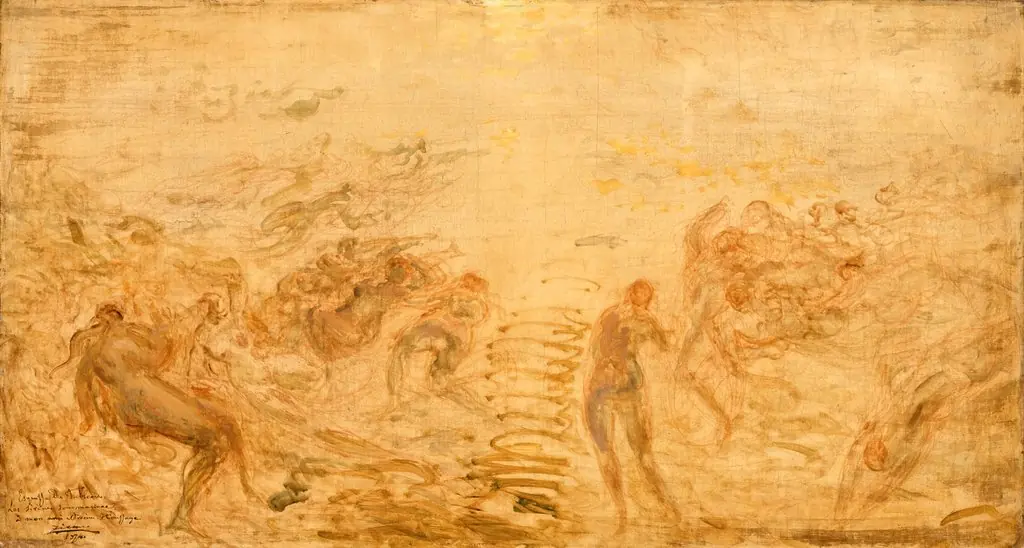
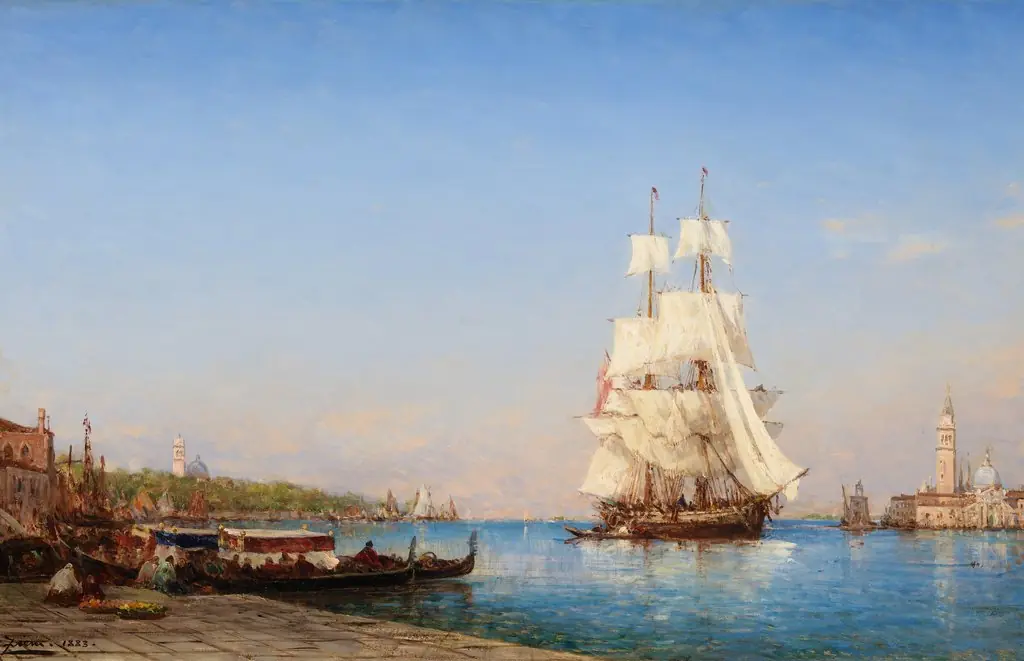
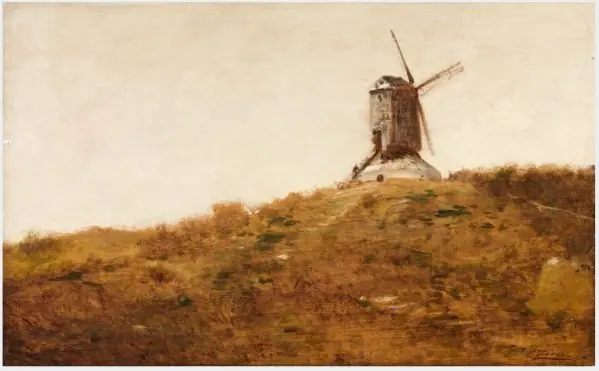
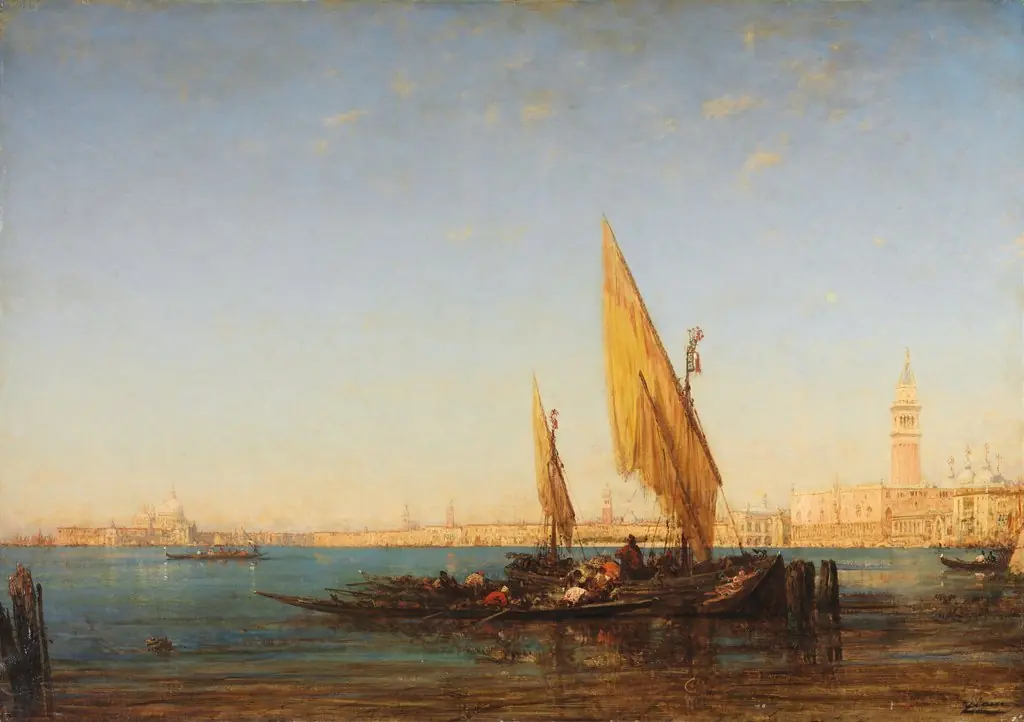
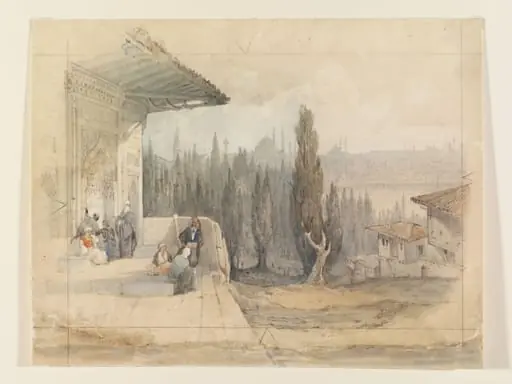
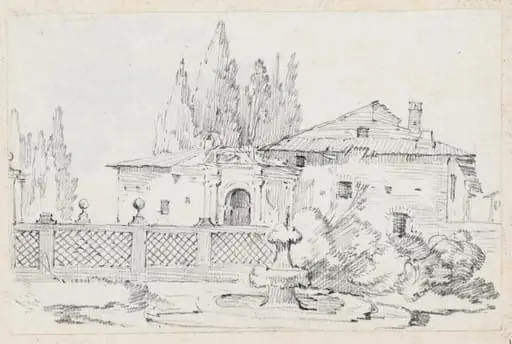
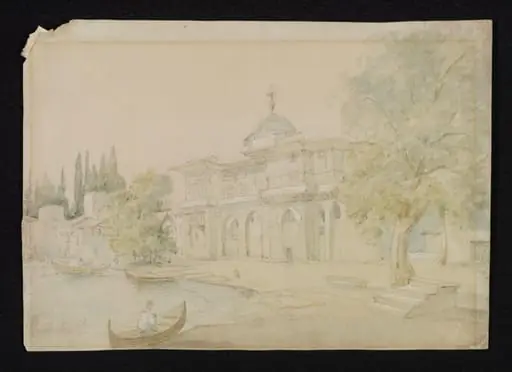
Pavilion Near a Mosque (recto) is a drawing by the Romanticist artist Félix Ziem. It dates from 1804 and is held in the collection of the Cleveland Museum of Art.
About this work
Overview
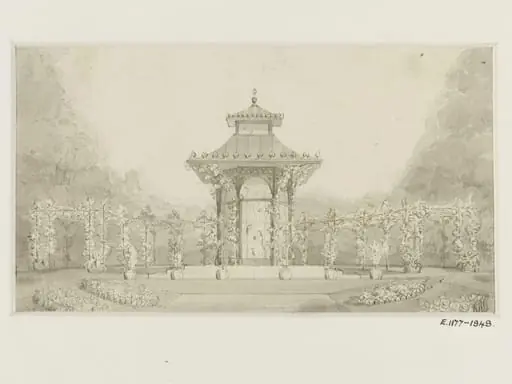
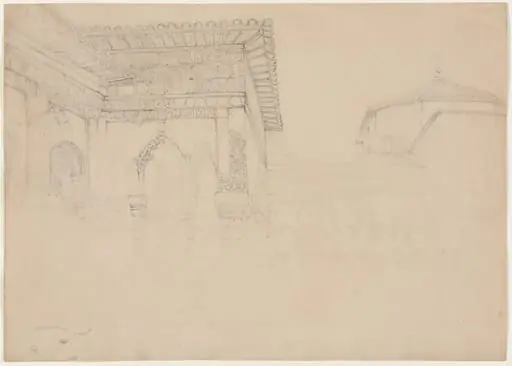
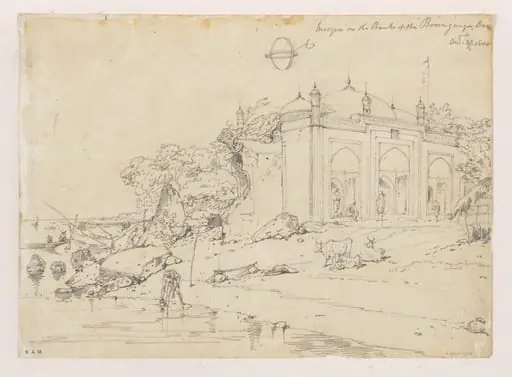
This piece captures a tranquil architectural ensemble near a mosque, rendered not from direct observation but from recollection after his travels.
Félix Ziem, a French artist known for his landscape and Orientalist subjects, produced this drawing around 1804. Though often linked to the Barbizon School, his work diverged in its focus on Mediterranean and North African scenes. This piece captures a tranquil architectural ensemble near a mosque, rendered not from direct observation but from recollection after his travels. The composition emphasizes quiet harmony between built form and natural light.
Subject & Meaning
The drawing depicts a modest pavilion adjacent to a mosque’s minaret, suggesting a moment of daily life in a North African setting. Ziem’s interest lay not in religious symbolism but in the interplay of architecture and environment. The still water and soft sky imply serenity, reflecting his fascination with how light transforms ordinary structures into something ethereal, devoid of narrative but rich in atmosphere.
Technique & Style
Ziem employed loose, fluid strokes to convey the immediacy of his memory. The pavilion’s white surface glows with warm tones, achieved through subtle layering rather than heavy impasto. The sky’s pale pink and the calm water suggest a twilight hour, rendered with minimal detail but strong tonal sensitivity. His approach prioritizes atmospheric effect over precise delineation, aligning with a poetic realism rather than topographical accuracy.
History & Provenance
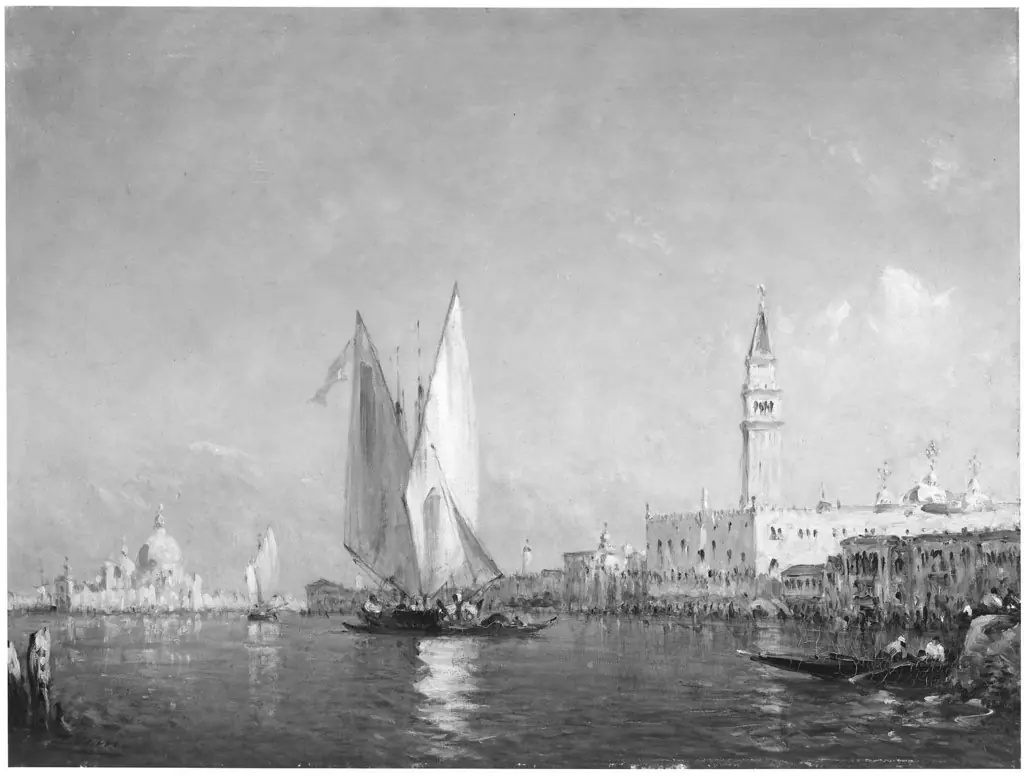
Created after Ziem’s journeys through North Africa, this work stems from his personal recollections rather than on-site sketches. It was likely made during his early career, before he gained wider recognition for his Venetian and Mediterranean views. The drawing remained in private hands for much of its history, with limited public exposure until later 20th-century exhibitions of his graphic works.
Context
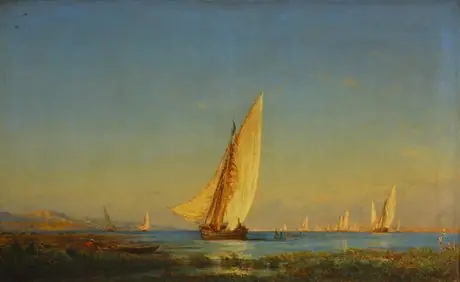
In the early 19th century, European artists increasingly turned to the Orient as a source of visual inspiration, often filtered through romanticized lenses. Ziem’s approach was less exoticizing than many of his contemporaries; he focused on quiet, everyday architecture and the subtleties of light. His work reflects a broader trend of travel-influenced landscape drawing, grounded in personal experience rather than fantasy.
Legacy
Ziem’s drawings like this one contributed to a quieter, more observational strand of Orientalism in 19th-century art. Though overshadowed by his later oil paintings, these works reveal his enduring sensitivity to light and place. They influenced later artists interested in atmospheric landscape and memory-based composition, offering an alternative to the more theatrical depictions of the East.
Artist & collection
Artist
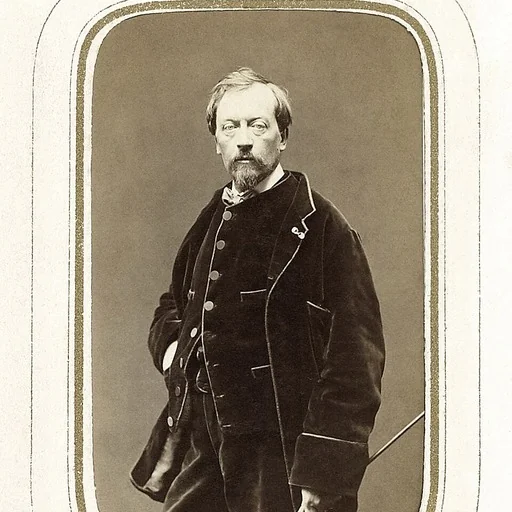
Félix Ziem (26 February 1821 – 10 November 1911) was a French painter in the style of the Barbizon School, who also produced some Orientalist works.