Artwork
Joan of Aragon
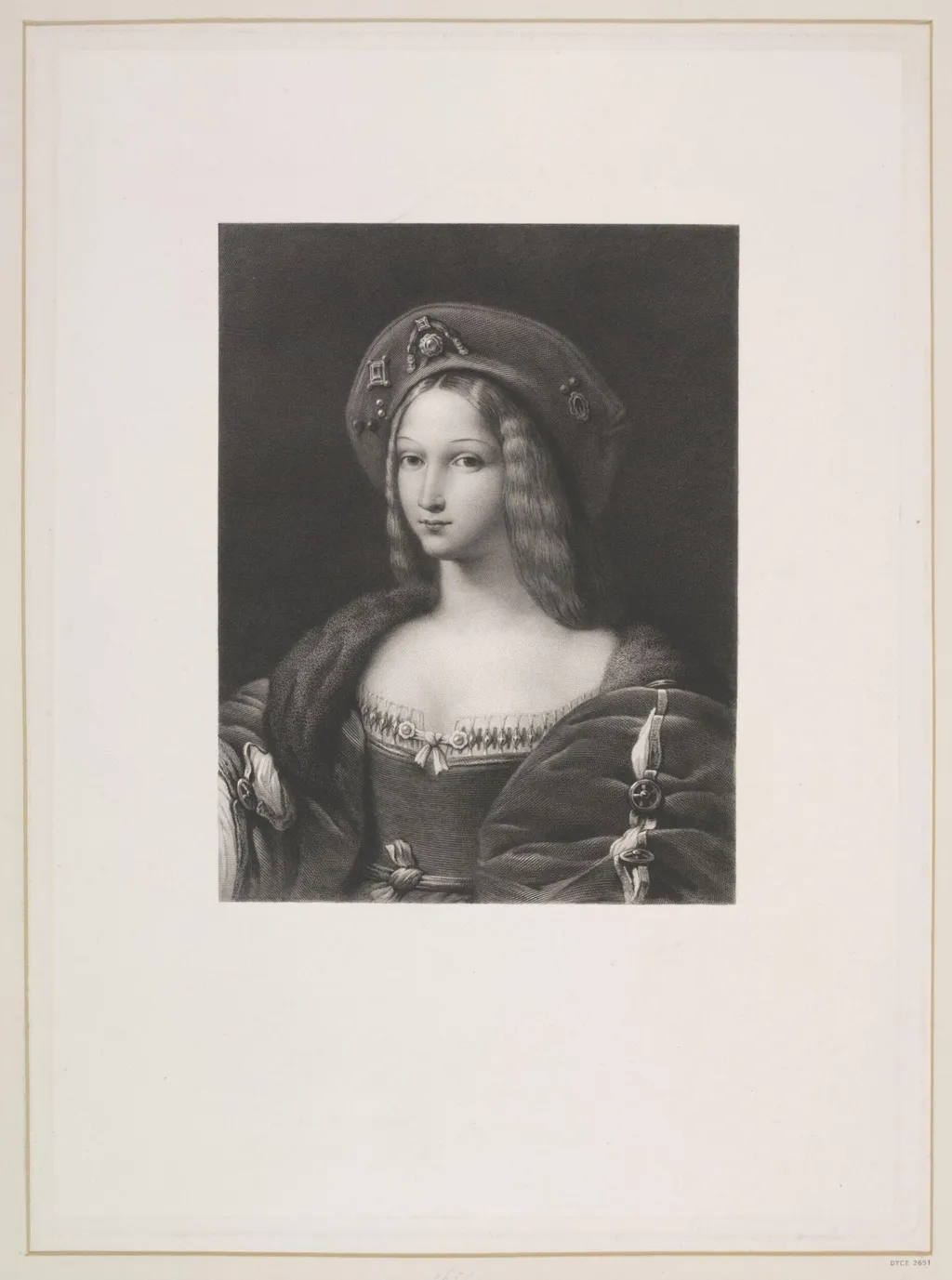
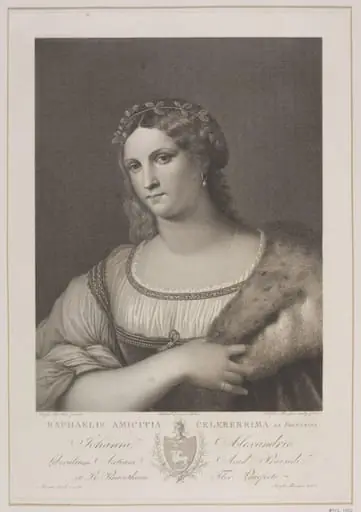
Joan of Aragon is a print by Achille Désiré le Fèvre. It dates from 1850 and is held in the collection of the Victoria and Albert Museum.
About this work
Overview
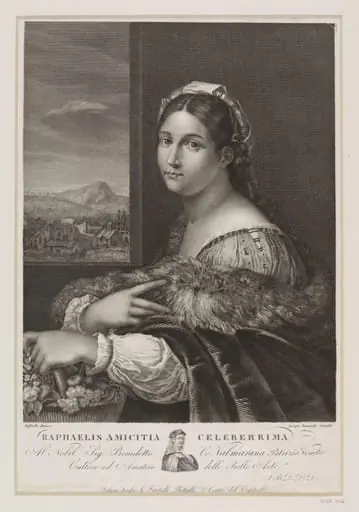
The work is a black‑and‑white paper print titled *Joan of Aragon*, created in 1850 by the French engraver Achille Désiré le Fèvre. It reproduces a design originally drawn by the Renaissance master Raphael, serving as a proof before the addition of textual elements.
Subject & Meaning
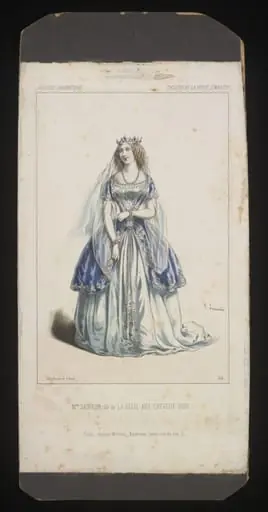
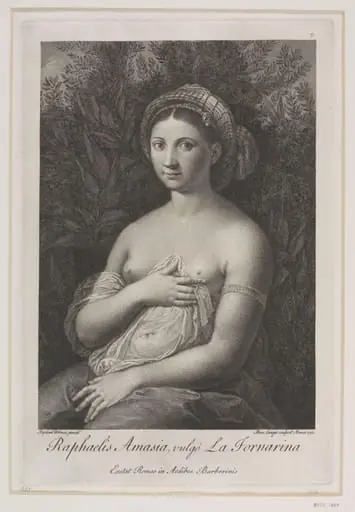
The image portrays a woman of fair complexion and light hair, dressed in a dark gown trimmed with a fur collar. She wears an elaborate hat set with jewels, and her sleeves are bound with ribbon bows. One hand rests lightly on her chest, suggesting a pose of modesty or contemplation.
Technique & Style
Le Fèvre employed chiaroscuro, a method that juxtaposes deep shadows with illuminated areas to suggest volume. The subtle gradations on the face and drapery give the figure a three‑dimensional presence despite the monochrome medium.
History & Provenance
The print was produced as a preliminary proof, intended to be combined later with accompanying letters or captions. Its creation in the mid‑nineteenth century reflects a period of renewed interest in reproducing Renaissance compositions for a broader audience.
Context
By translating Raphael’s drawing into an engraved print, le Fèvre participated in a long tradition of disseminating canonical artworks through printmaking, making the composition accessible beyond the original drawing’s limited circulation.
Artist & collection
Artist
Achille Désiré le Fèvre spent his days hunched over copper plates, blowing smoke rings while he etched.