Artwork
Lord Thomas Fairfax
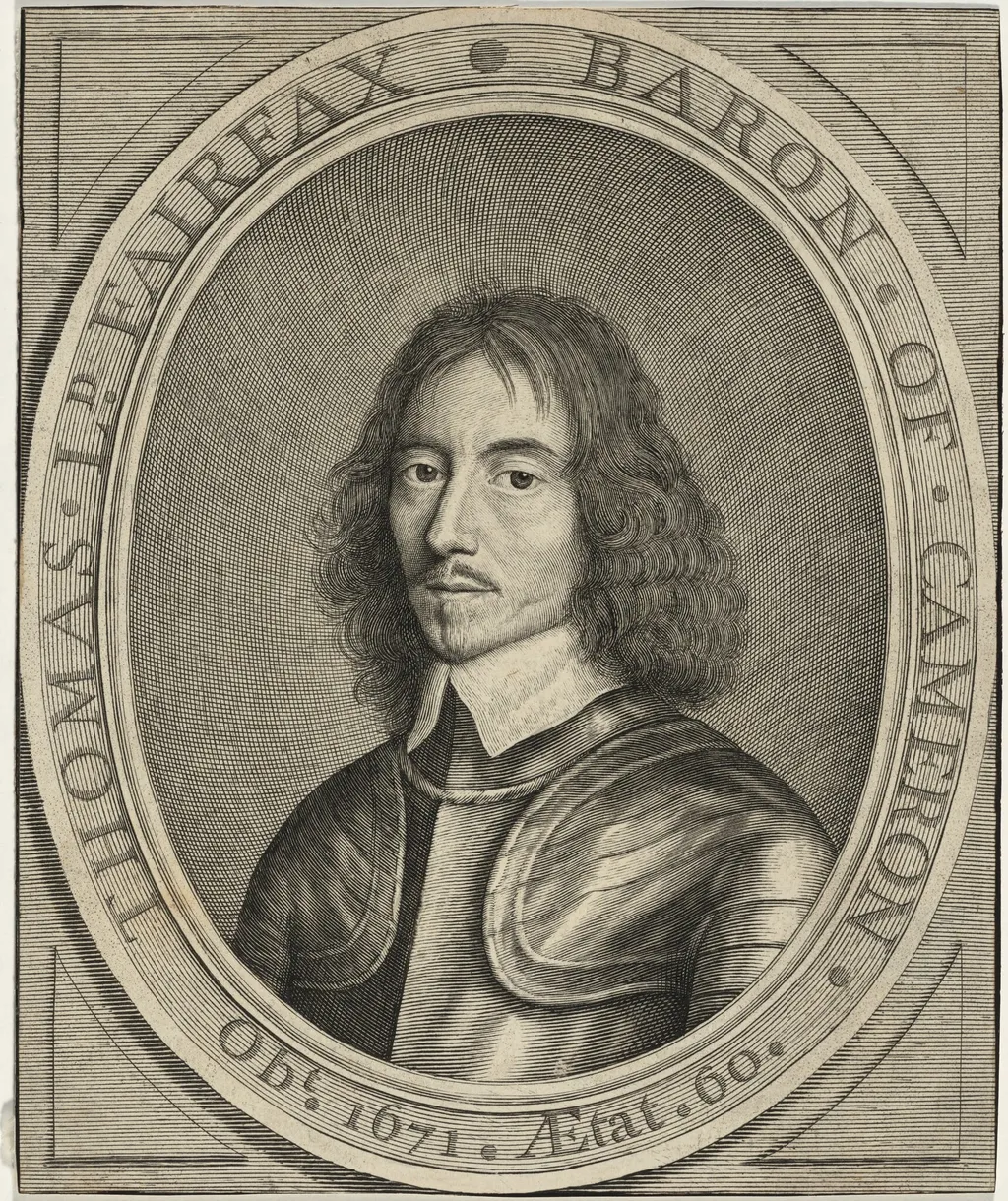
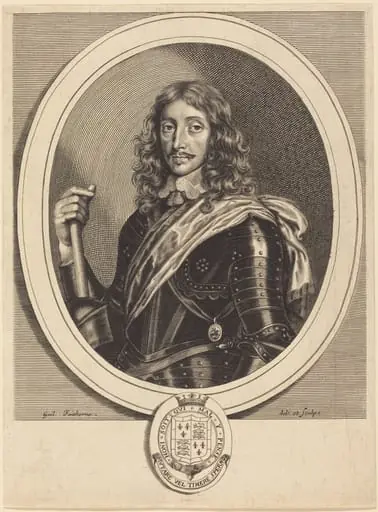
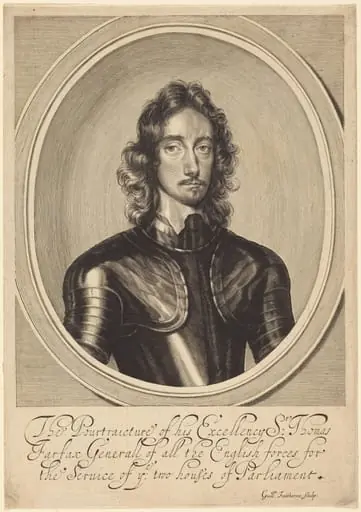
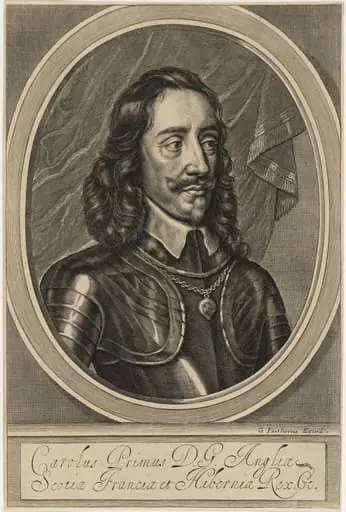
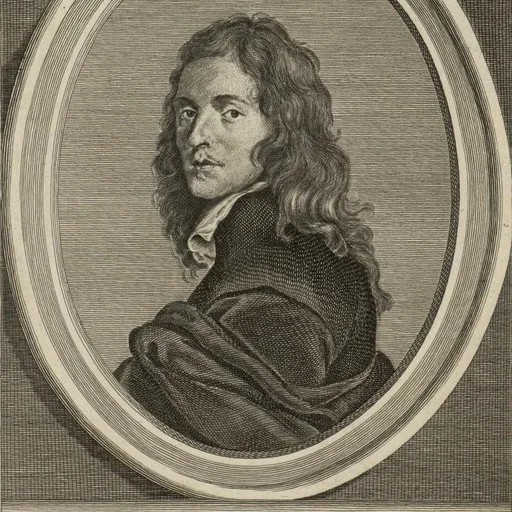
Lord Thomas Fairfax is an ink print by the Baroque artist William Faithorne. It dates from 1654 and is held in the collection of the National Gallery of Art.
About this work
The level of detail in the engraving is impressive, with fine lines and shading that give the subject a sense of realism.
This image is an engraving of a man with shoulder-length hair and a serious expression. He is dressed in a dark jacket with a high collar and a white shirt underneath. The engraving is circular, with a thin border around the edge that features text.
The text on the border reads "Thomas Fairfax Baron of Cameron" at the top, and "Obt 1671 Aet 60" at the bottom. The background of the engraving is a subtle cross-hatching pattern, which adds depth and texture to the image.
The level of detail in the engraving is impressive, with fine lines and shading that give the subject a sense of realism. To learn more about the artist behind this work, look up Faithorne, William.
Overview
This 1654 engraving by William Faithorne depicts Lord Thomas Fairfax, a prominent Parliamentarian commander during the English Civil War. Rendered in a circular format with a narrow inscribed border, the portrait follows the conventions of mid-17th-century commemorative prints. The composition emphasizes solemnity and dignity, characteristic of portraits commissioned to affirm status during a period of political upheaval.
Subject & Meaning
Lord Thomas Fairfax, Baron of Cameron, is portrayed with a composed, introspective gaze, reflecting his role as a military leader who later withdrew from public life. The inscription identifies his title and notes his age at death—sixty—suggesting the print was produced posthumously or intended as a memorial. His attire, with a high collar and dark jacket, conveys restrained nobility, aligning with Puritan ideals of modesty among the English elite.
Technique & Style
Faithorne employed fine, controlled line work typical of stipple and cross-hatching engraving techniques to model form and texture. The subtle gradations in the subject’s face and clothing create a lifelike volume, while the background’s delicate hatching adds depth without distraction. The circular frame and bordered inscription reflect the influence of medallion portraiture, a format favored for its association with classical and royal imagery.
History & Provenance
Created in 1654, the engraving likely served to reinforce Fairfax’s public image during the Interregnum, when his reputation as a disciplined commander remained influential despite his political withdrawal. Faithorne, a leading English engraver of the era, produced numerous portraits of parliamentary figures. The print’s survival in institutional collections indicates its early recognition as a significant record of a key political figure.
Context
During the 1650s, England was under republican rule, and portraiture became a tool for legitimizing authority outside monarchy. Fairfax, though retired from active command, retained symbolic weight as a figure of military integrity. Engravings like this circulated among elites, functioning as both personal mementos and political statements in a society where printed images shaped public perception.
Legacy
Faithorne’s engraving of Fairfax endures as a precise example of mid-century English printmaking, valued for its technical refinement and historical testimony. It contributes to the visual archive of the Civil War generation, offering insight into how leaders were represented when traditional monarchical iconography was no longer viable. The work remains a reference for scholars studying portraiture in republican England.
Artist & collection
Artist
William Faithorne (1616–1691) was a British artist, born in Greater London.