Artwork
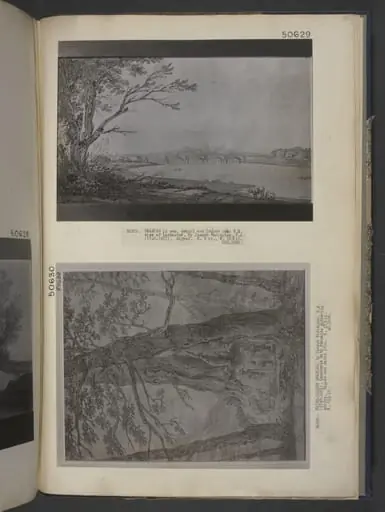
Rydal Bridge, Westmorland
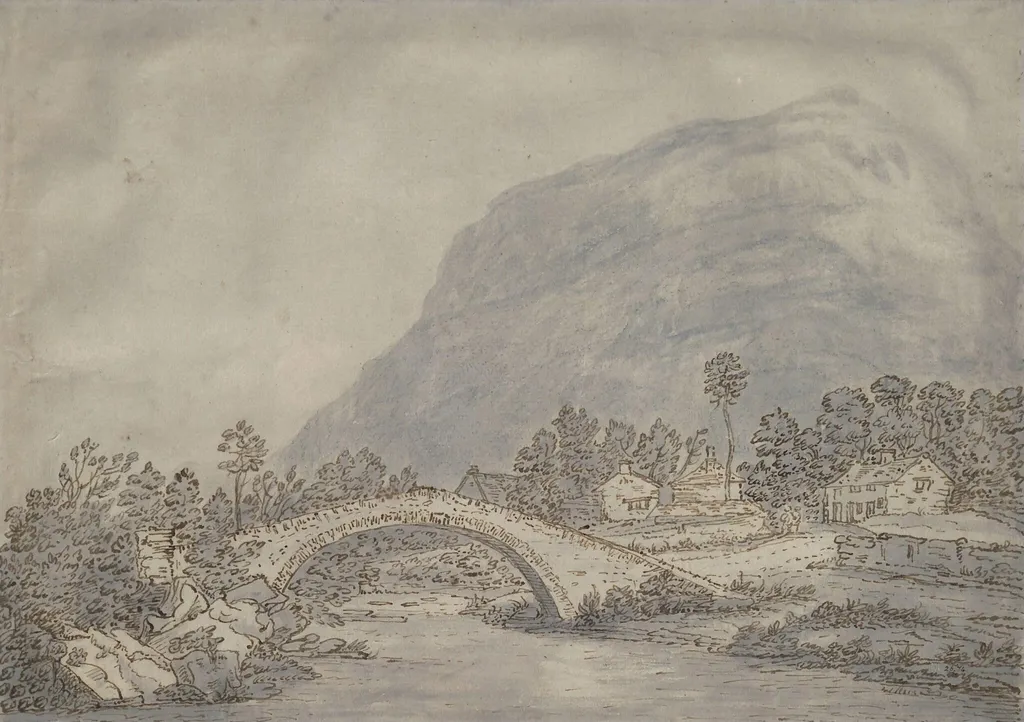
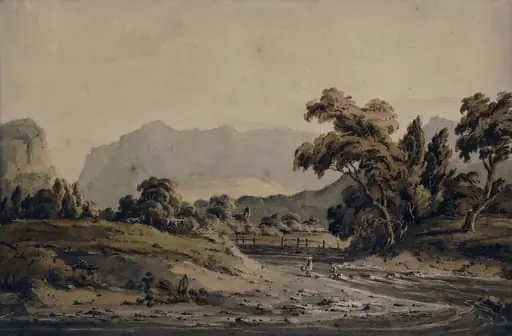
Rydal Bridge, Westmorland is a watercolor work on paper by the Neoclassicist artist Farington. It dates from 1786 and is held in the collection of the Victoria and Albert Museum. Created in 1786, this watercolour captures Rydal Bridge in Westmorland, a quiet rural crossing over a narrow stream.
About this work
Overview
Soft, translucent washes of pale blue, gray, and green dominate the palette, suggesting a damp, early morning atmosphere.
Created in 1786, this watercolour captures Rydal Bridge in Westmorland, a quiet rural crossing over a narrow stream. The composition emphasizes stillness and solitude, with the bridge as the central structural element. Soft, translucent washes of pale blue, gray, and green dominate the palette, suggesting a damp, early morning atmosphere. The technique avoids sharp definition, favoring subtle gradations that dissolve edges between land, water, and sky.
Subject & Meaning
The scene portrays a modest stone bridge flanked by dense vegetation and a distant hamlet nestled against rolling hills. There is no human activity visible, reinforcing a sense of withdrawal from urban life. The misty horizon and muted tones evoke contemplation rather than narrative, aligning with emerging Romantic sensibilities that valued nature as a space for quiet reflection and emotional resonance over grandeur or drama.
Technique & Style
The artist employed light, layered watercolour washes to build atmosphere rather than detail. Bare paper suggests highlights, while faint browns define rooftops and tree trunks without outlining. The absence of sharp contours and the diffused quality of the forms create a hazy, ethereal effect. This approach reflects a deliberate move away from topographical precision toward expressive, mood-driven landscape rendering.
History & Provenance
Painted in 1786, the work originates from a period when watercolour was gaining recognition as a serious medium for landscape study in Britain. Though the artist’s identity is not specified here, such works were often made for private collections or as sketches for later oil paintings. Its survival suggests it was valued early on, possibly as a personal record of a journey through the Lake District.
Context
In the late 18th century, artists increasingly turned to the English countryside as a subject worthy of artistic attention, particularly regions like Westmorland. This shift coincided with growing interest in natural beauty, solitude, and the sublime. Rydal Bridge, though unremarkable in scale, became emblematic of a new aesthetic that prized quiet, unspoiled landscapes over classical or theatrical compositions.
Legacy
This watercolour contributes to a broader trend in British art where nature was rendered not as a backdrop but as an emotional presence. Its delicate handling influenced later Romantic painters who sought to convey atmosphere through tonal subtlety. Though not widely exhibited, such works helped establish watercolour as a legitimate medium for serious artistic expression in the 19th century.
Own this work as a print
Artist & collection

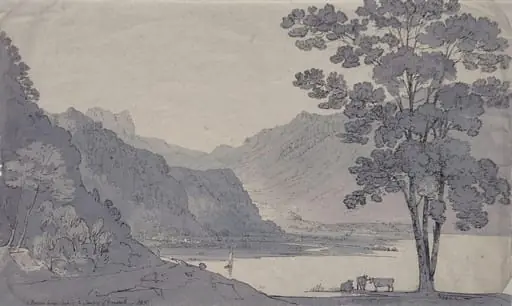 View looking down to Lodore and Borrowdale
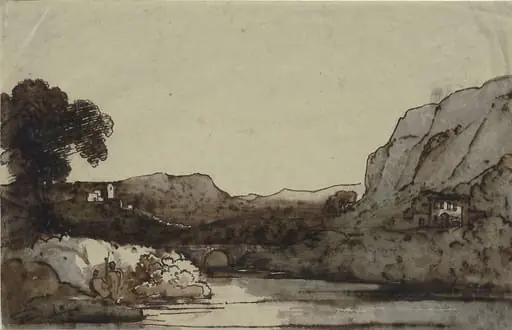 Landscape with Bridge and Mountains
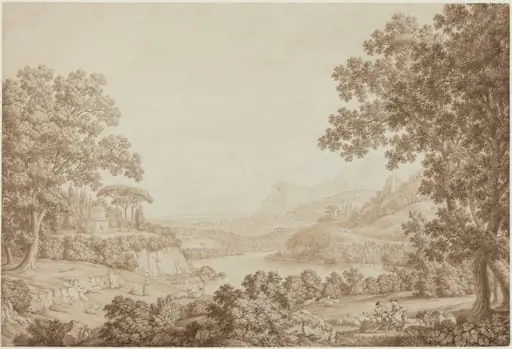 Arcadian Landscape with a Mausoleum
 Snowdon with Llanberis Lake
 Pont Aberglaslyn, North Wales
 Landscape with a Bridge
 Mountain Landscape with a Hollow
 A Mountain Valley with a Waterfall
 Lake Scene
 Valley with winding streams, a range of mountains in the background, and a village on the left
 Untitled
 Rydal Head, Ambleside, Westmorland