Artwork
Landscape with a Bridge
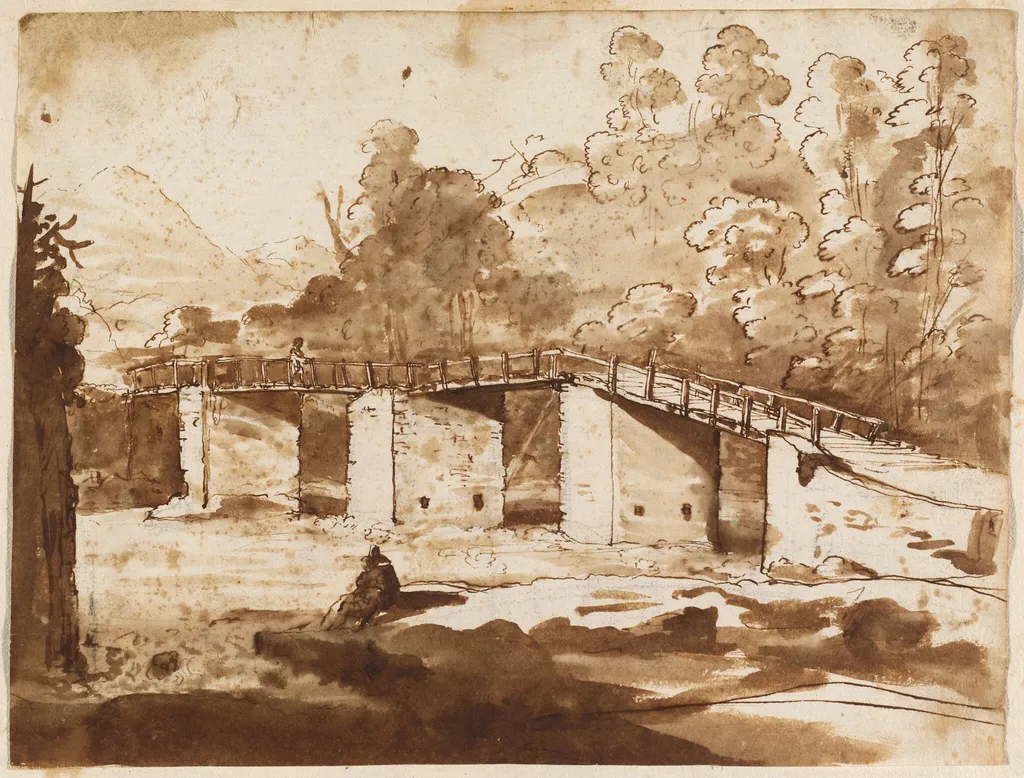
Landscape with a Bridge is a chalk drawing by the Baroque artist Claude Lorrain. It dates from 1632 and is held in the collection of the National Gallery of Art.
About this work
Overview
Created around 1632, *Landscape with a Bridge* is a drawing by Claude Lorrain, the French-born Baroque artist who spent most of his career in Italy.
Created around 1632, *Landscape with a Bridge* is a drawing by Claude Lorrain, the French-born Baroque artist who spent most of his career in Italy. Executed on laid paper, the work combines pen, brown ink, and a brown wash applied over an initial black‑chalk sketch. The composition presents a tranquil countryside scene dominated by a modest arched bridge, exemplifying Lorrain’s early exploration of landscape as an independent subject.
Subject & Meaning
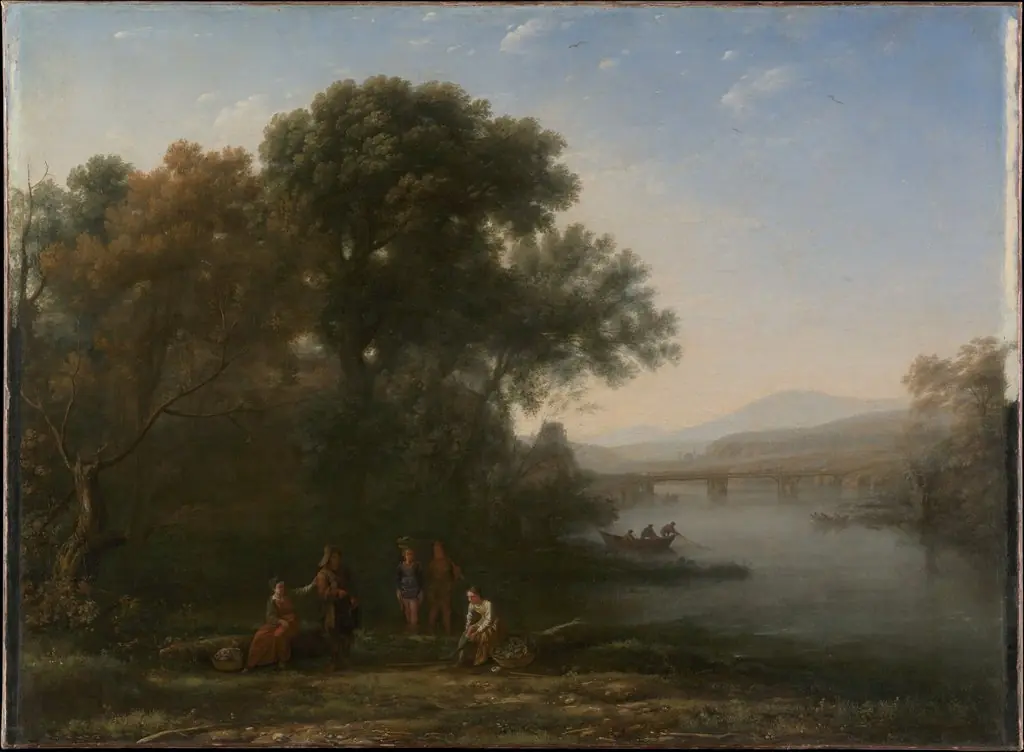
The drawing depicts a quiet rural setting where a simple stone bridge spans a shallow watercourse, framed by gently rolling hills and sparse foliage. Though devoid of narrative figures, the tranquil atmosphere and balanced arrangement suggest Lorrain’s intent to evoke an idealized, timeless landscape, a hallmark of his approach that often incorporated subtle references to classical or biblical themes in other works.
Technique & Style
Lorrain employed a layered method: an initial drawing in black chalk establishes the composition, followed by fine pen lines and brown ink that define structure and texture. A translucent brown wash overlays the ink, unifying the scene and lending atmospheric depth. The use of laid paper, with its characteristic ribbed texture, enhances the drawing’s tactile quality and reflects the artist’s meticulous handling of line and tone.
History & Provenance
The piece is believed to be a preparatory study rather than a finished work, likely produced as part of Lorrain’s process for larger compositions. Its early date places it among the artist’s formative drawings, created before his celebrated oil landscapes. The drawing has remained in private collections before entering a museum holding, where it serves as a reference for Lorrain’s developmental period.
Context
During the early 1630s, landscape drawing was gaining legitimacy as a genre separate from historical painting. Lorrain’s practice of rendering natural scenery with classical balance contributed to this shift. By integrating precise observation with an idealized vision, his works helped define the Baroque landscape tradition that would influence subsequent generations of European artists.
Artist & collection
Artist
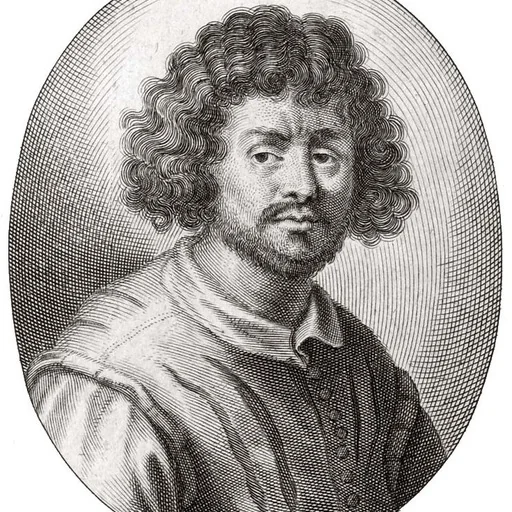
Claude Lorrain (French: ; born Claude Gellée , called le Lorrain in French; traditionally just Claude in English; c.

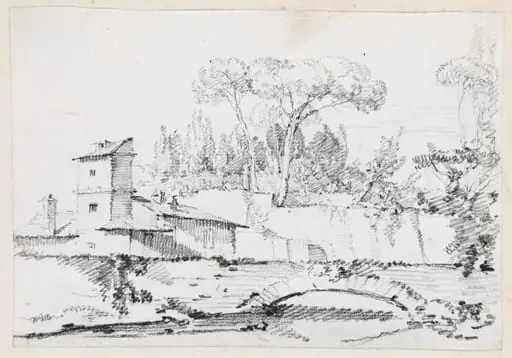 View of the Prato of the Villa Borghese
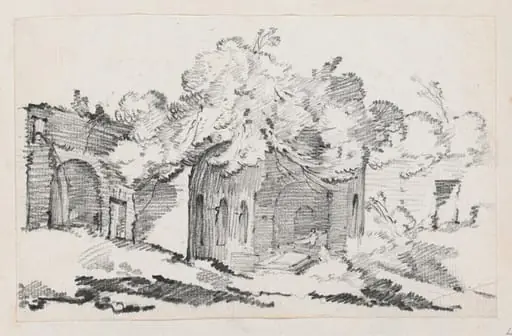 The Grotto of the Nymph Egeria
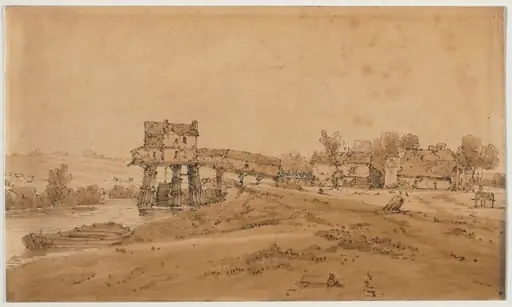 A Selection of Twenty of the Most Picturesque Views in Paris: The Watermill above the Bridge at Charenton
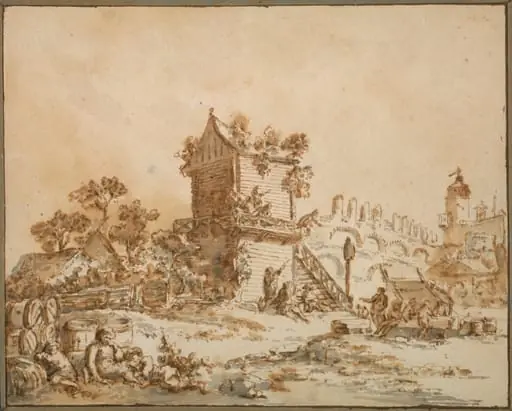 The Moscow Tavern
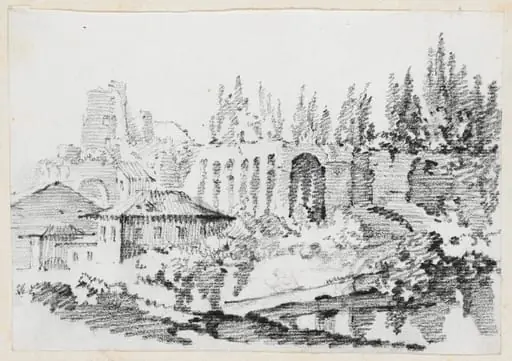 Ruins of the Imperial Palaces on the Palatine Hill
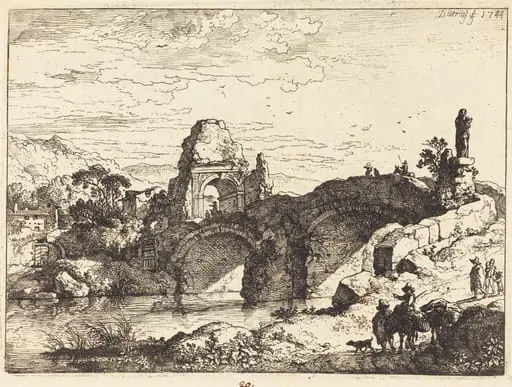 Landscape with a Bridge and Ruined Tower
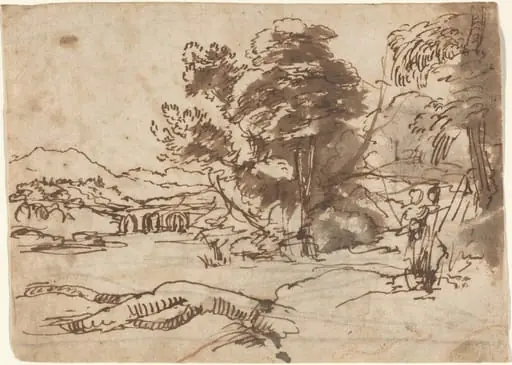 River Landscape
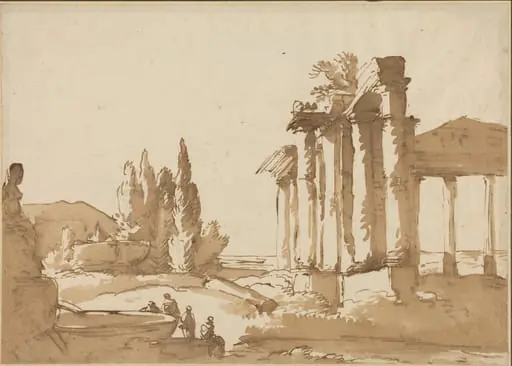 Landscape with Ruins
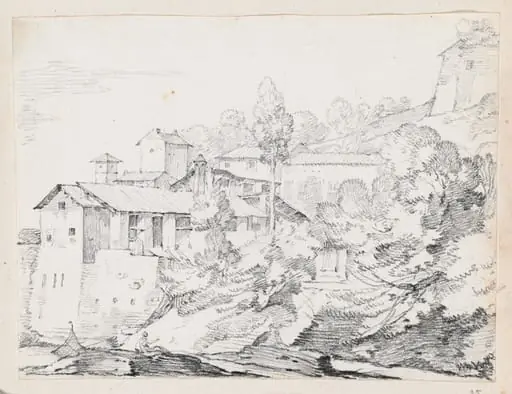 Italian Buildings on a Hillside
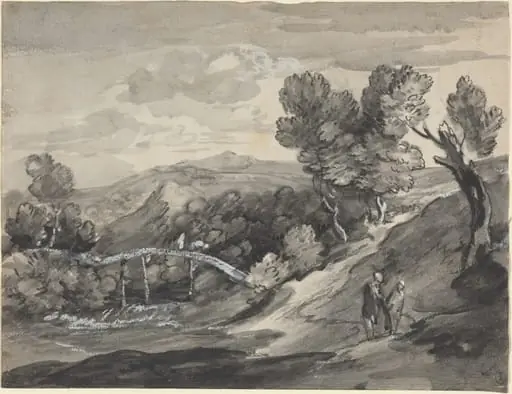 Wooded Upland Landscape with a Bridge