Artwork
The Annunciation
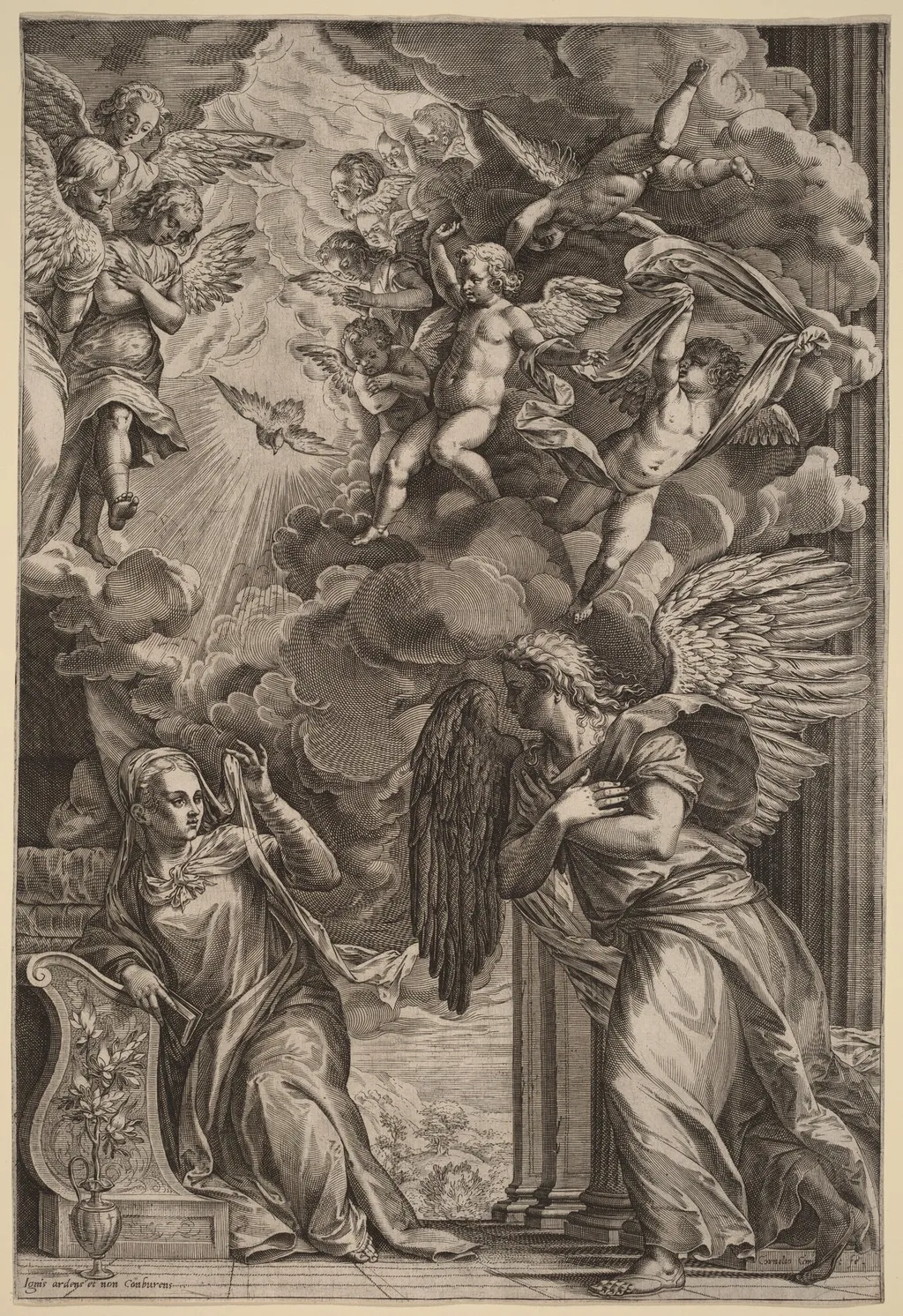
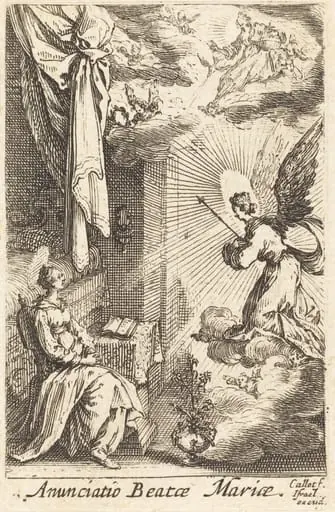
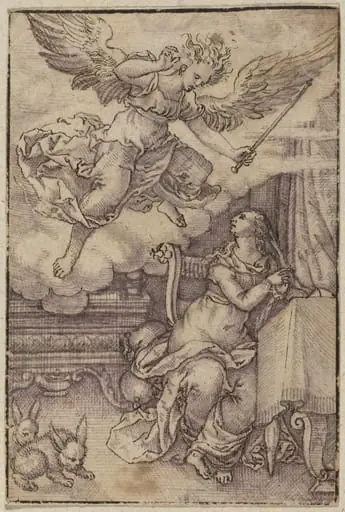
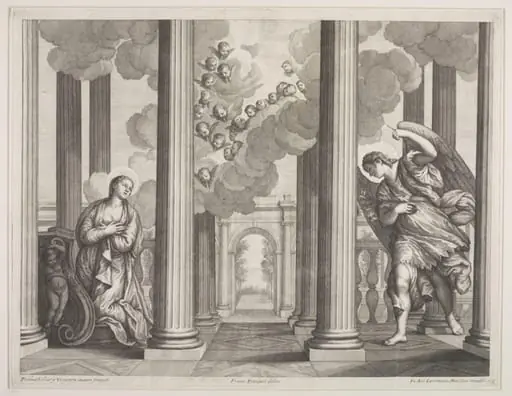
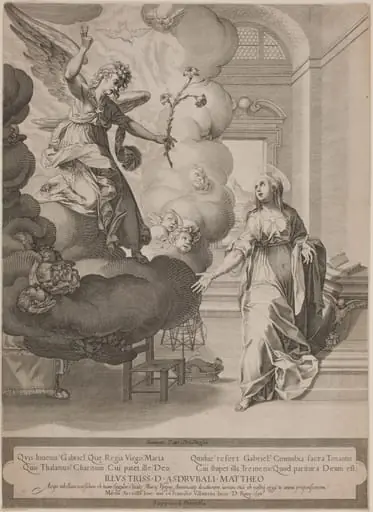
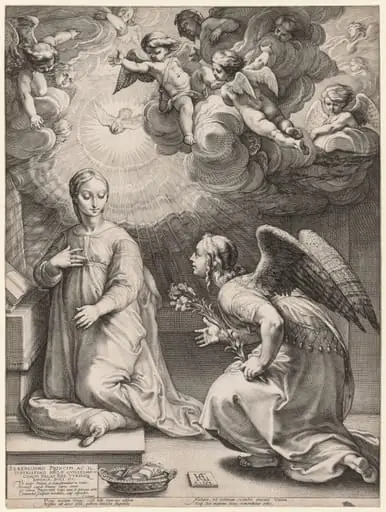
The Annunciation is an ink print by the Renaissance artist Cornelis Cort. It dates from 1566 and is held in the collection of the National Gallery of Art.
About this work
Overview
Created around 1566, *The Annunciation* is an engraving by the Dutch artist Cornelis Cort, who worked in Italy under the name Cornelio Fiammingo.
Created around 1566, *The Annunciation* is an engraving by the Dutch artist Cornelis Cort, who worked in Italy under the name Cornelio Fiammingo. The print belongs to the religious tradition of Northern European art but shows the influence of Italian Mannerist composition. Cort’s technical precision and use of fine line work reflect his training in both the Low Countries and the Italian peninsula, where he spent the latter part of his career.
Subject & Meaning
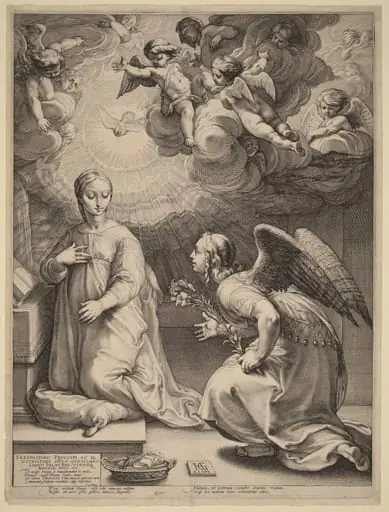
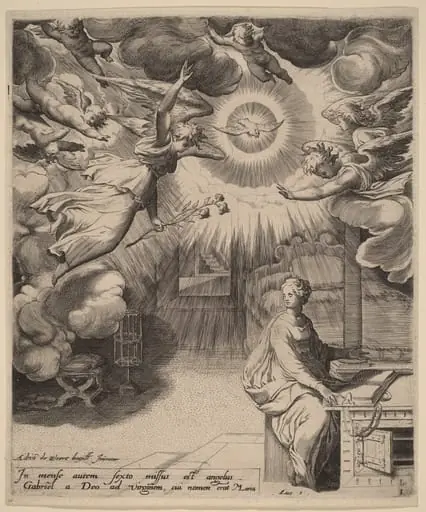
The scene illustrates the moment the angel Gabriel announces to the Virgin Mary that she will conceive the Son of God. Mary is shown kneeling in prayer, while Gabriel hovers above her, staff in hand. A second angel, positioned to the right, gestures toward her, reinforcing the divine message. Surrounding figures, including smaller angels in the sky, amplify the sacred nature of the event, emphasizing its theological significance through layered symbolism.
Technique & Style
Cort employs fine, controlled lines to model form and depth, relying heavily on cross-hatching to suggest volume and shadow. The composition is densely populated yet meticulously organized, with each figure placed to guide the viewer’s eye through the narrative. The absence of color heightens the focus on line and structure, characteristic of Renaissance engraving, where precision and clarity were paramount.
History & Provenance
Cornelis Cort moved to Italy in the mid-1550s and became active in Rome and Venice, where he reproduced works by leading artists for wider circulation. *The Annunciation* likely originated during this period as part of his output for religious and scholarly audiences. Though its early ownership is undocumented, the print circulated among collectors and ecclesiastical institutions in Europe, reflecting its status as a respected reproductive work.
Context
In the mid-16th century, engravings like this served as accessible religious imagery for both private devotion and public instruction, especially in regions affected by the Reformation. Cort’s fusion of Northern detail with Italian spatial harmony aligned with broader trends in printmaking, where artists synthesized regional styles to meet the demands of a transnational audience seeking devotional and artistic content.
Legacy
Cort’s engravings, including *The Annunciation*, influenced later printmakers through their technical rigor and compositional clarity. While not widely known today as standalone works, his prints contributed to the dissemination of religious iconography across Europe and helped standardize visual narratives in print culture during the late Renaissance.
Artist & collection

Artist
Cornelis Cort (c. 1533 – c. 17 March 1578) was a Dutch engraver and draughtsman. He spent the last 12 years of his life in Italy, where he was known as Cornelio Fiammingo.