Artwork
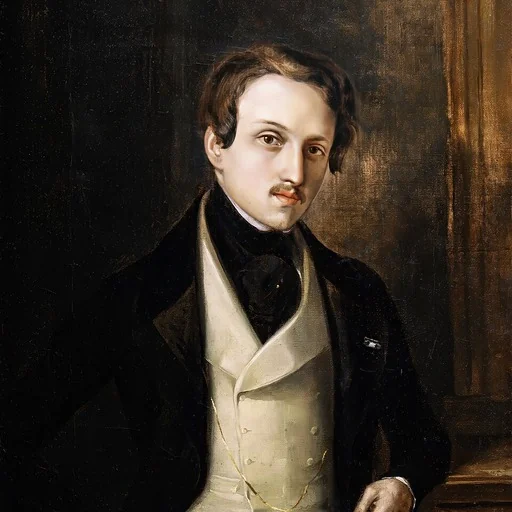
Portrait of Marià Fortuny
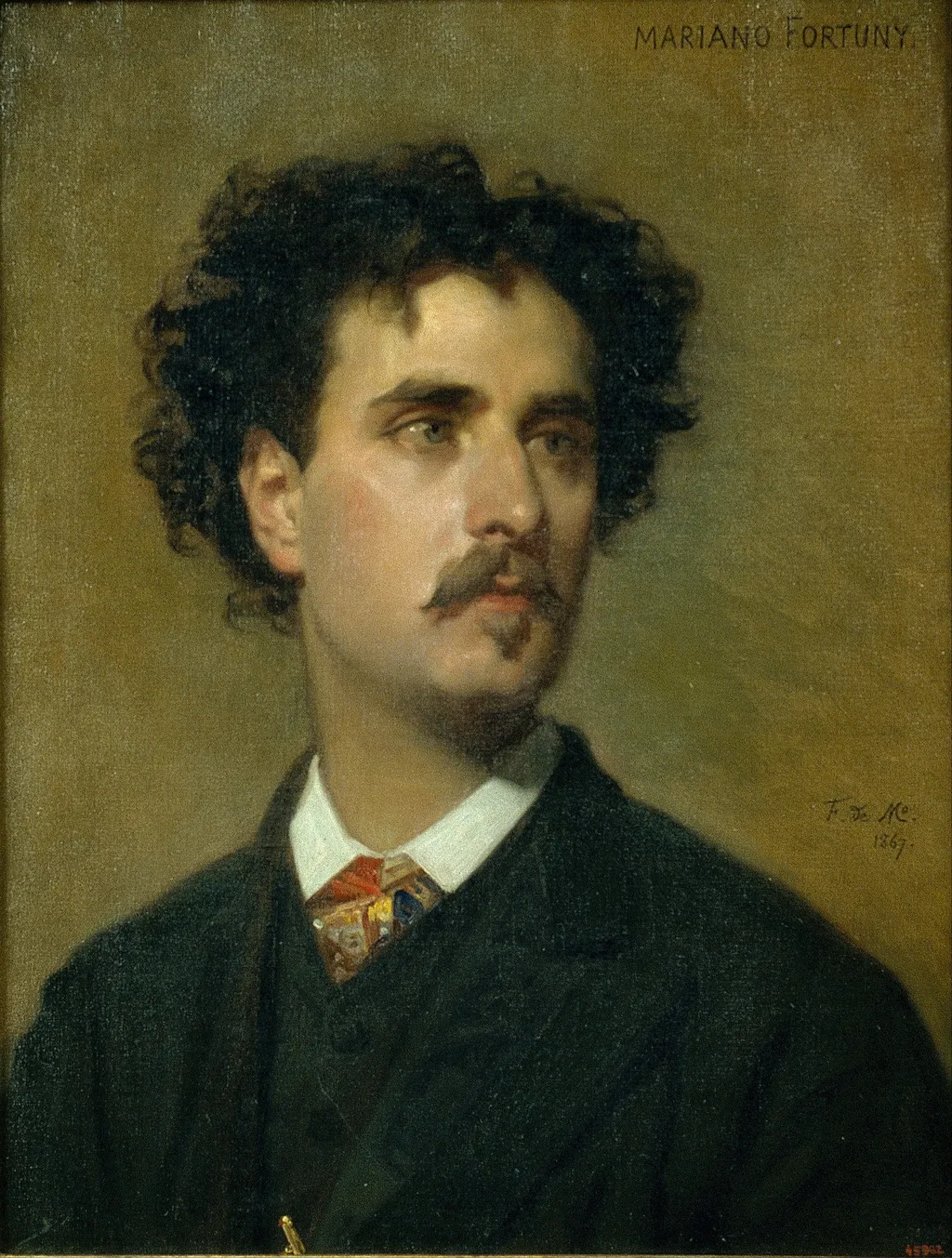
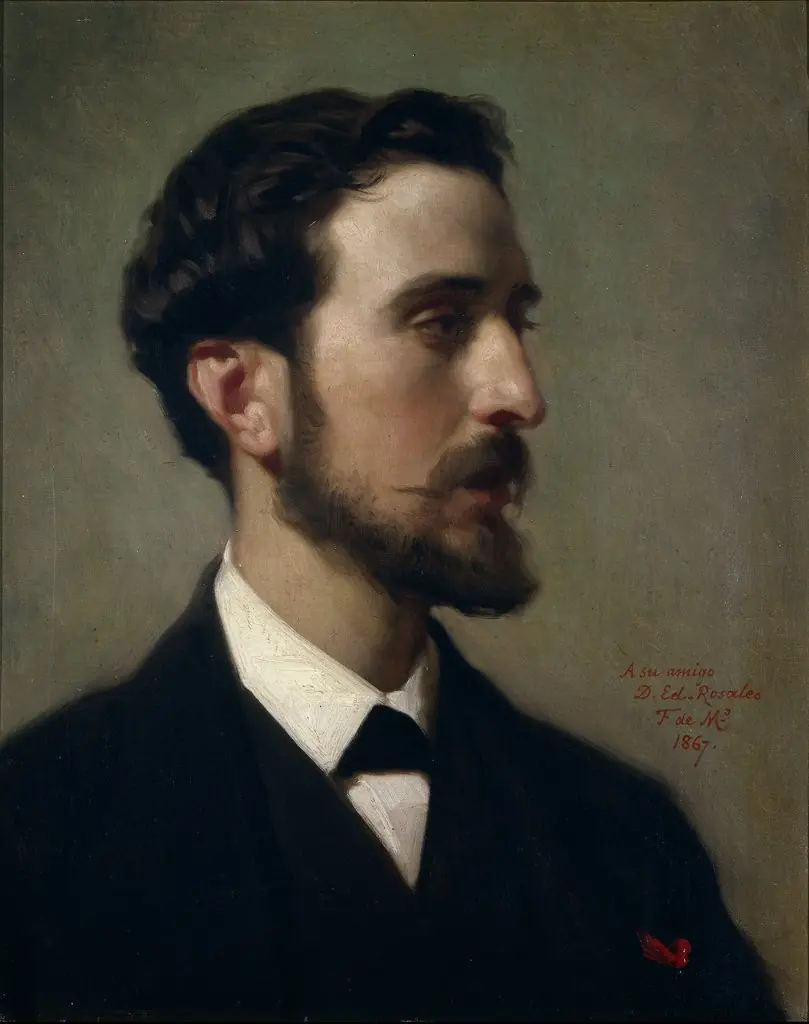
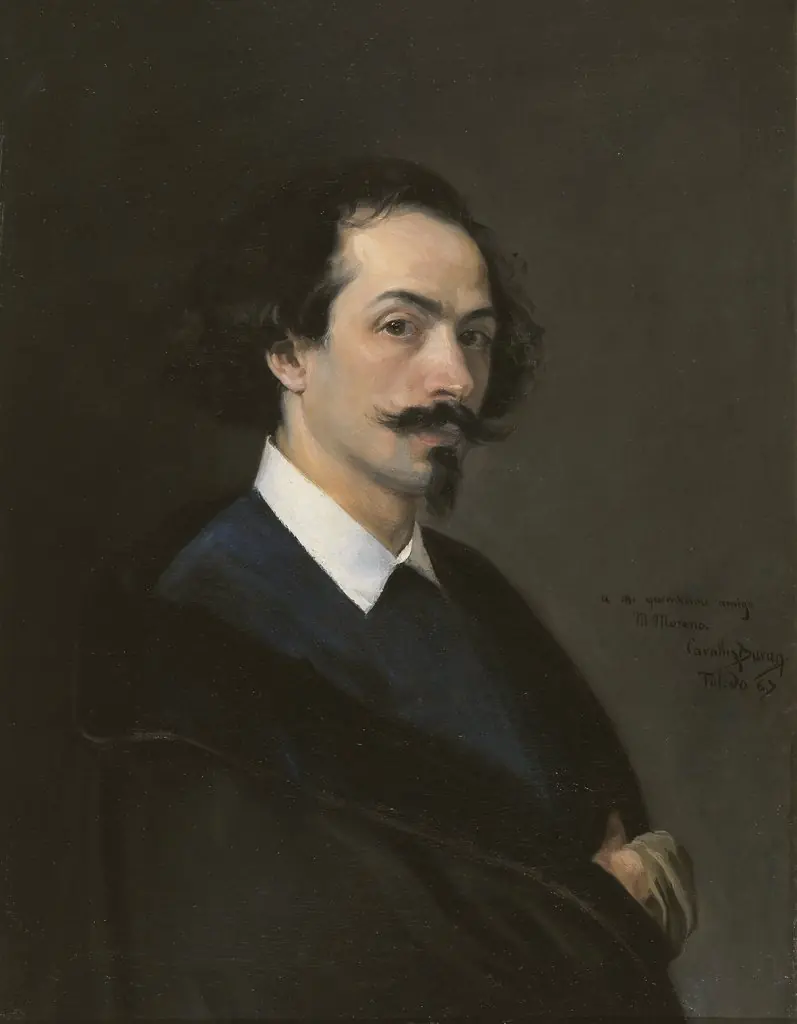
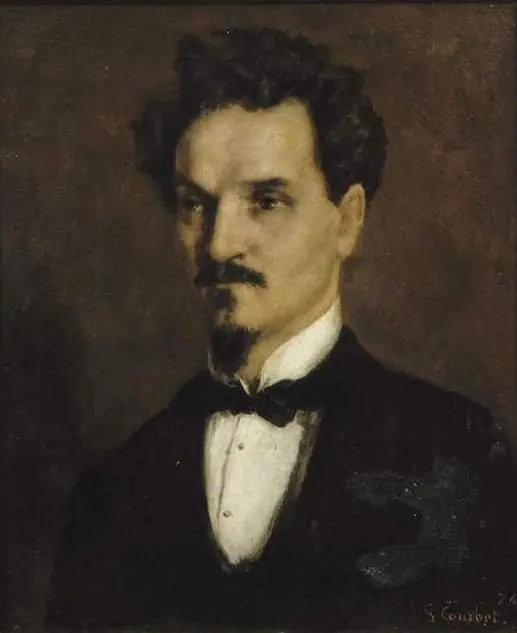
Portrait of Marià Fortuny is an oil painting by the Realist artist Federico de Madrazo y Kuntz. It dates from 1867 and is held in the collection of the Museu Nacional d'Art de Catalunya.
About this work
Overview
Painted in 1867 by Federico de Madrazo y Kuntz, this oil portrait captures the Spanish artist Marià Fortuny.
Painted in 1867 by Federico de Madrazo y Kuntz, this oil portrait captures the Spanish artist Marià Fortuny. The work is part of the permanent collection at the Museu Nacional d'Art de Catalunya. Rendered with careful attention to detail, it presents Fortuny in formal attire against a subdued brown backdrop, reflecting the conventions of 19th-century portraiture and the artist’s standing within his cultural circle.
Subject & Meaning
Marià Fortuny, a prominent painter of his time, is depicted with a composed demeanor, his dark curly hair and neatly groomed mustache conveying a sense of personal refinement. His attire—a black jacket, white shirt, and patterned tie—signals both professional identity and social standing. The portrait does not aim for narrative drama but instead offers a quiet affirmation of his identity as an artist within the intellectual elite of the era.
Technique & Style
Madrazo employed oil paint to achieve subtle gradations of light and shadow, particularly in the rendering of Fortuny’s fabric and hair. The chiaroscuro technique enhances the three-dimensionality of the figure, while the restrained palette and soft transitions between tones reflect academic training. Brushwork is precise yet unobtrusive, prioritizing realism over expressive gesture, characteristic of mid-century Spanish portraiture.
History & Provenance
The portrait was completed in 1867, during a period when Madrazo was a leading portraitist in Madrid and Fortuny was gaining international recognition. It remained in private hands before entering the collection of the Museu Nacional d'Art de Catalunya, where it now serves as a document of artistic networks in 19th-century Spain. Its preservation reflects its value as a record of cultural exchange between artists.
Context
In the 1860s, Spanish artists increasingly engaged with European artistic trends while maintaining national identity. Madrazo, from a distinguished artistic family, was known for his refined portraits of intellectuals and creatives. Fortuny, celebrated for his Orientalist scenes, represented a new generation of Spanish painters. This portrait situates him within a broader milieu of artistic patronage and mutual recognition among peers.
Legacy
The portrait endures as a visual testament to the relationship between two significant Spanish artists. It contributes to the historical record of how artists portrayed one another, emphasizing dignity and professional presence over theatricality. Its presence in a national museum underscores its role in documenting the artistic community of 19th-century Catalonia and Spain.
Own this work as a print
Artist & collection
Artist
Federico de Madrazo y Kuntz (1815–1894) was an artist, born in Spain.