Artwork
Autoportret
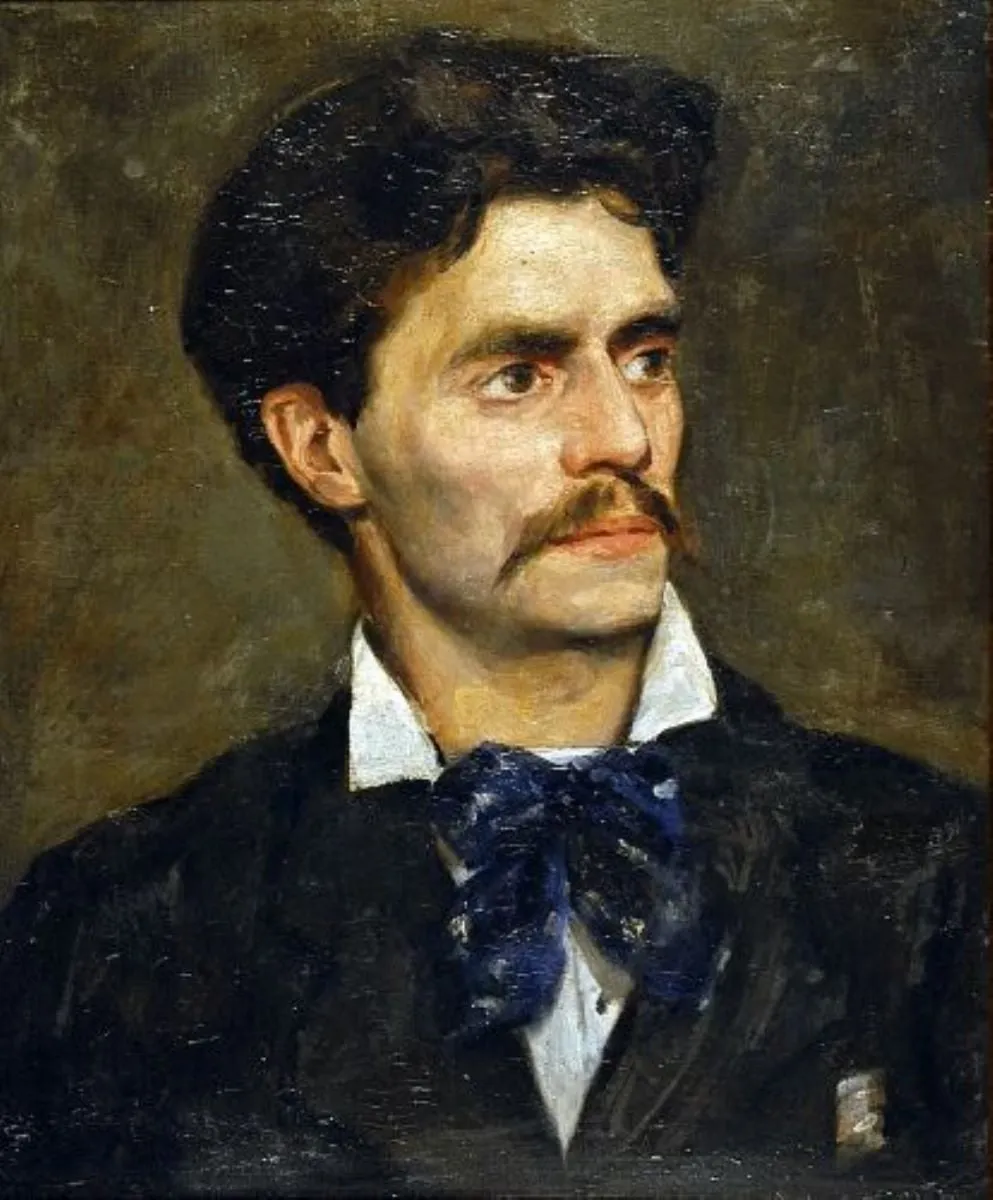
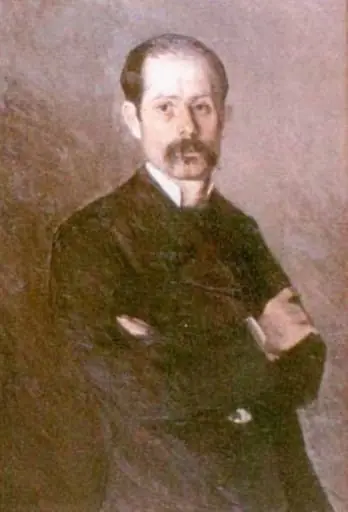
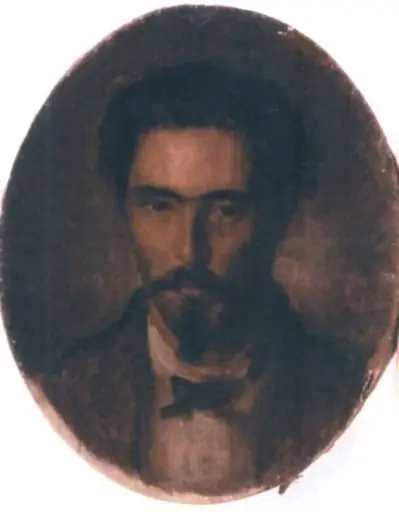
Autoportret is an unspecified painting by Paul Baudry. It dates from 1850 and is held in the collection of the Țării Crișurilor Museum.
About this work
Overview
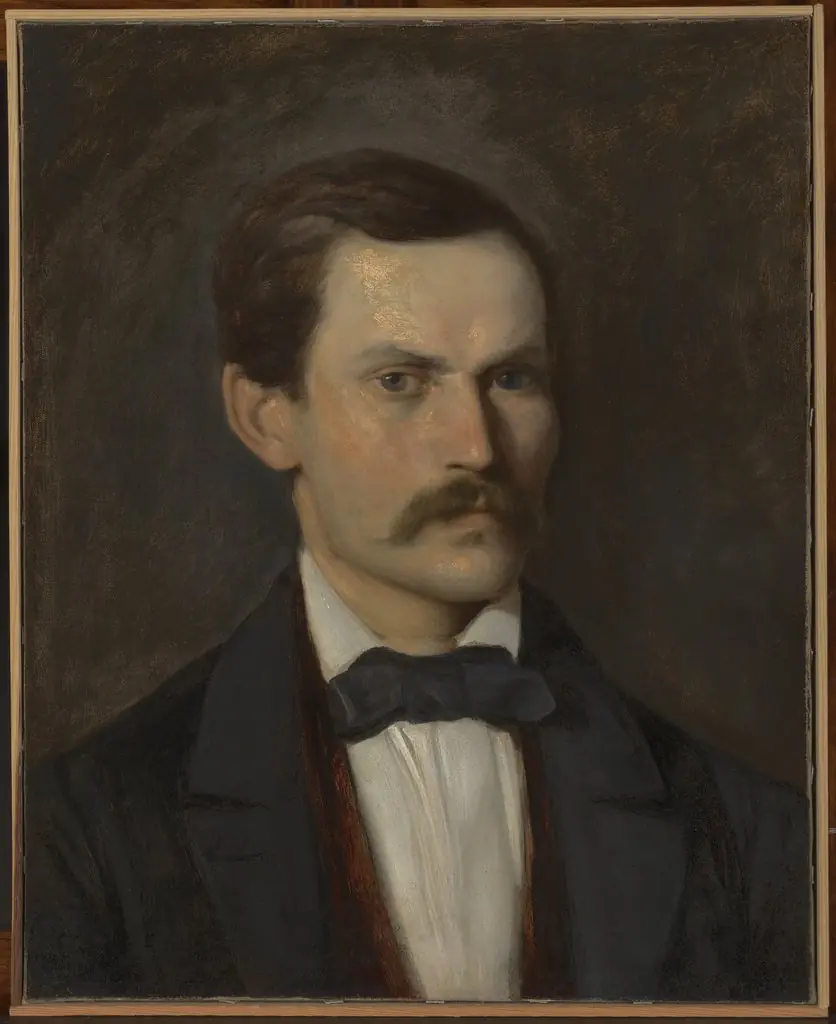
Painted around 1850 by Paul Baudry, this self-portrait is a modest yet deliberate study of the artist’s own likeness. Executed in oil, it presents a direct, unadorned view of the sitter against a deep, neutral background. The work resides in the Museum of Ethnography, where its placement suggests an interest in personal identity as a cultural artifact rather than a traditional artistic statement.
Subject & Meaning
The direct gaze and restrained expression convey introspection rather than assertion, aligning with 19th-century ideals of quiet self-awareness.
The subject is the artist himself, depicted with a dark mustache, short hair, and formal attire: a dark coat, white shirt, and blue bow tie. The absence of symbolic objects or elaborate setting shifts focus to the face and demeanor, inviting contemplation of self-representation. The direct gaze and restrained expression convey introspection rather than assertion, aligning with 19th-century ideals of quiet self-awareness.
Technique & Style
Baudry employs thick, tactile brushwork, particularly on the bow tie and collar, to suggest fabric texture and volume. The face is rendered with refined detail, while the background remains uniformly dark, enhancing the contrast. Strong chiaroscuro directs attention to the features, using light as a sculptural tool. The technique balances precision with visible handwork, avoiding idealization in favor of physical presence.
History & Provenance
The painting was likely created during Baudry’s early career, prior to his major commissions. It entered the Museum of Ethnography’s collection in the 20th century, possibly through donation or acquisition focused on personal artifacts of artists. Its classification within an ethnographic context reflects a broader institutional interest in individual identity as a cultural record.
Context
In mid-19th-century France, self-portraiture was less common among academic painters than in earlier centuries, often reserved for established artists. Baudry’s choice to depict himself plainly, without status symbols, aligns with a growing trend of introspective realism. The work reflects a shift from grand narrative to personal observation, even within formal training traditions.
Legacy
Though not widely exhibited, the portrait contributes to understanding Baudry’s artistic development before his public successes. Its preservation in an ethnographic setting underscores evolving views of the artist’s role—not merely as a creator of ideals, but as a subject worthy of documentation. The painting remains a quiet testament to the personal dimension of 19th-century artistic practice.
Artist & collection
Artist
Paul Baudry kept a pet parrot named César that squawked critiques while he painted.