Artwork
Portrait of Ye.Ye. Baranov
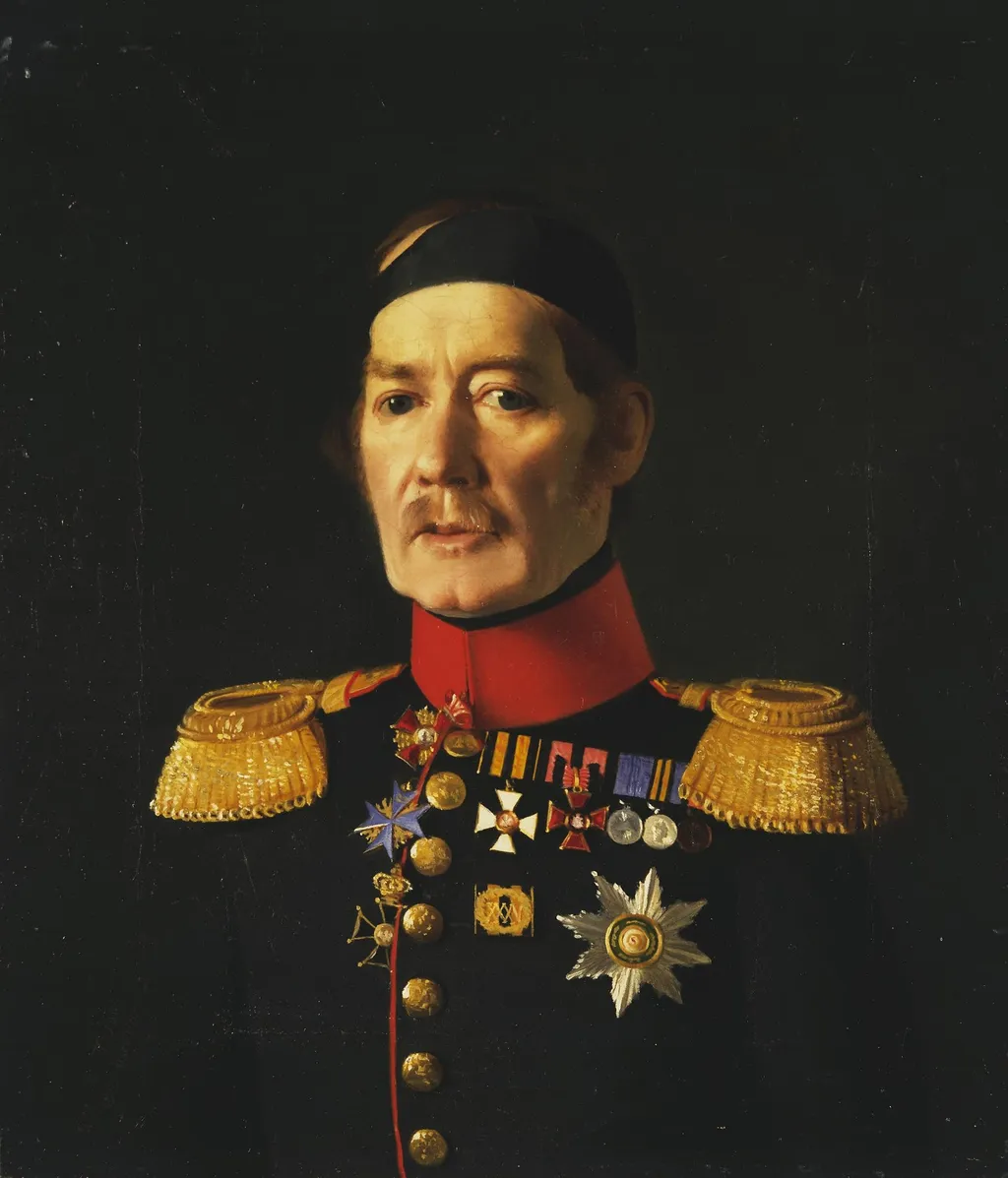
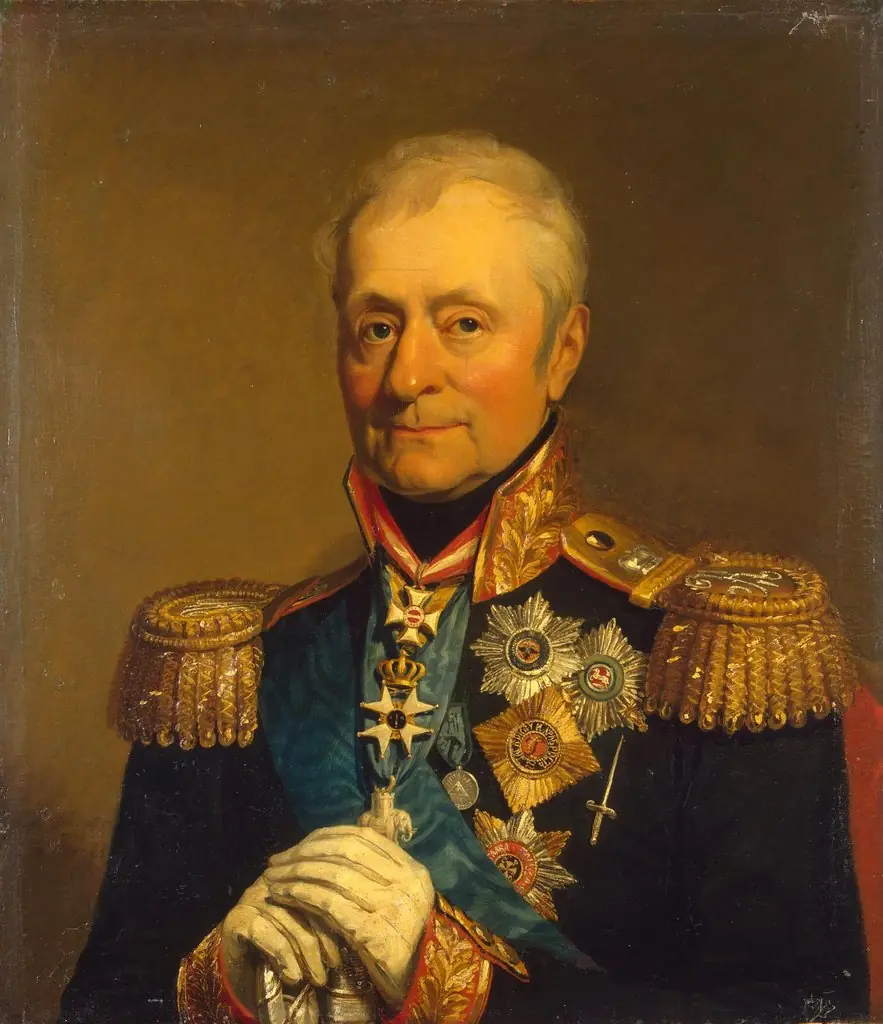
Portrait of Ye.Ye. Baranov is an oil painting by the Realist artist Fedor Tulov. It dates from 1845 and is held in the collection of the Hermitage Museum.
About this work
Overview
The work is part of the State Hermitage Museum’s collection and exemplifies 19th-century Russian portraiture focused on rank and composure.
Painted in 1845 by Fedor Tulov, this oil portrait depicts Ye.Ye. Baranov, a Russian military officer. The work is part of the State Hermitage Museum’s collection and exemplifies 19th-century Russian portraiture focused on rank and composure. The subject is rendered with restrained elegance, emphasizing dignity over theatricality. The plain black background isolates the figure, directing attention to his uniform and expression.
Subject & Meaning
Ye.Ye. Baranov is portrayed in full military dress, his chest adorned with multiple medals and ribbons in red, blue, and gold, signaling distinguished service and high rank. His expression is calm and unsmiling, conveying authority rather than emotion. The absence of context or gesture reinforces a sense of quiet gravitas, typical of official portraiture meant to affirm status and institutional loyalty rather than personal narrative.
Technique & Style
Tulov employs chiaroscuro to model Baranov’s face with subtle gradations of light, enhancing the three-dimensionality of his features—particularly around the eyes, cheeks, and jawline. The dark uniform contrasts sharply with the illuminated skin, while the metallic gleam of medals is rendered with precise highlights. Brushwork remains controlled and smooth, avoiding ornamentation to preserve the portrait’s solemn tone.
History & Provenance
The portrait entered the State Hermitage Museum’s collection in the 19th century, likely acquired through state or imperial channels given Baranov’s military standing. Its preservation suggests it was valued as a record of official service. No records indicate prior ownership outside state institutions, reinforcing its role as a formal commission rather than a private portrait.
Context
In mid-19th-century Russia, military portraiture served as both personal commemoration and state documentation. Officers like Baranov were depicted in full regalia to affirm loyalty to the empire and the hierarchy of service. Such works were often displayed in government or military buildings, reinforcing ideals of discipline and duty through visual representation.
Legacy
The portrait remains a representative example of Russian academic portraiture from the Nicholas I era. It reflects the era’s preference for restrained realism and symbolic detail over emotional expression. While not widely exhibited outside the Hermitage, it continues to inform studies of military identity and state imagery in 19th-century Russia.
Own this work as a print
Artist & collection
Artist
Fedor Tulov painted formal oil portraits in the early 1800s, leaving behind two surviving works in our collection: Portrait of Ivan Markov, the Governor of Mogilev from 1837 and Portrait of Ye.Ye.

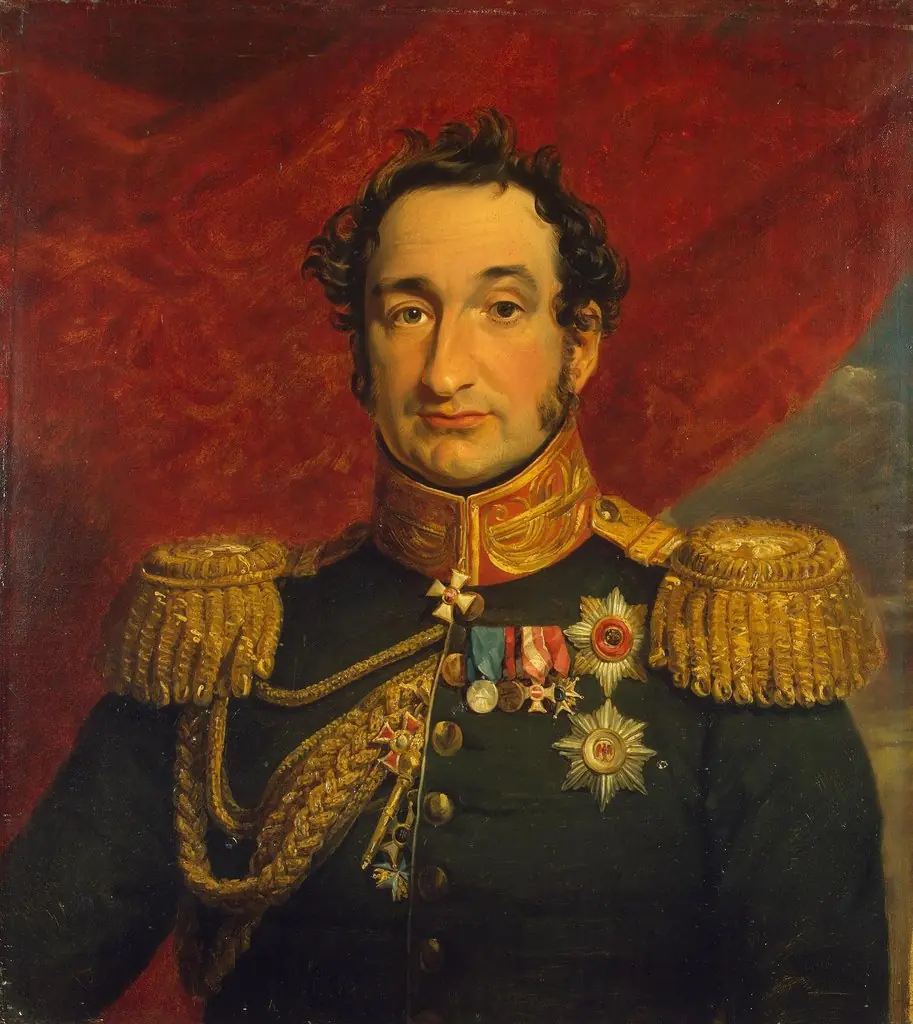 Portrait of Vasily S. Trubetskoy (1776-1841)
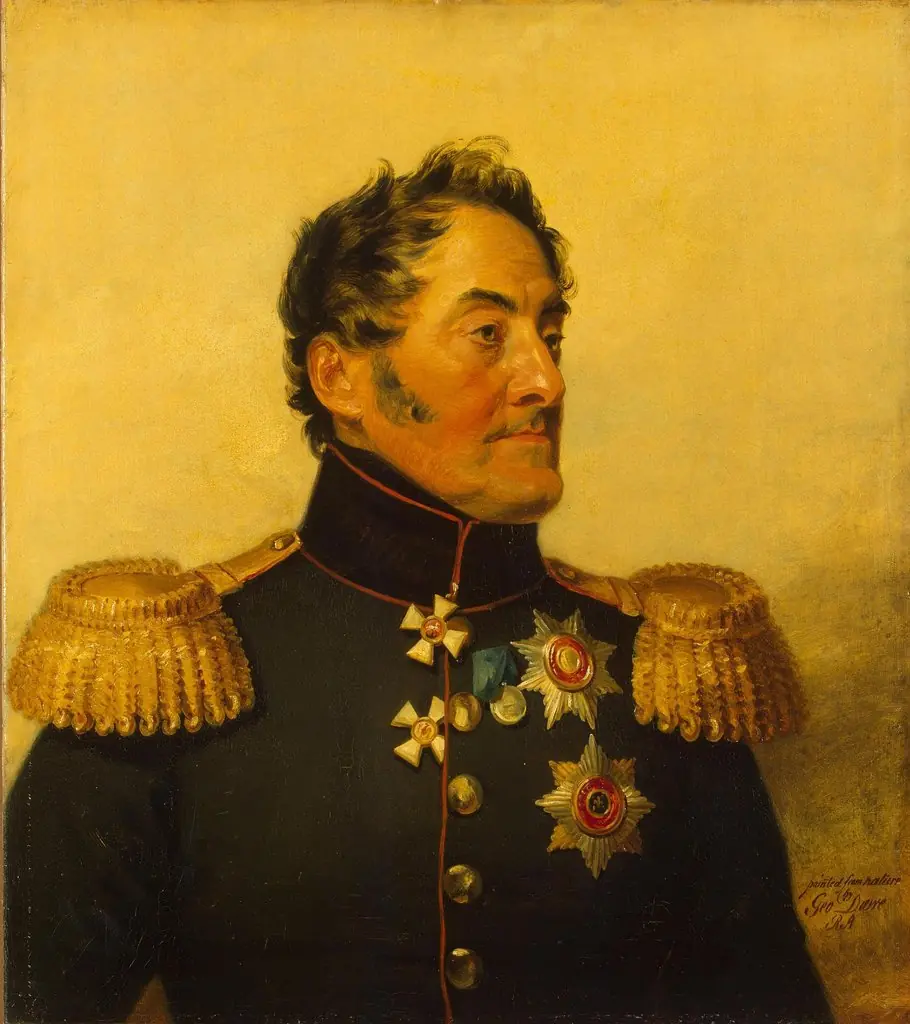 Portrait of Lev M. Yashvil (1768-1836)
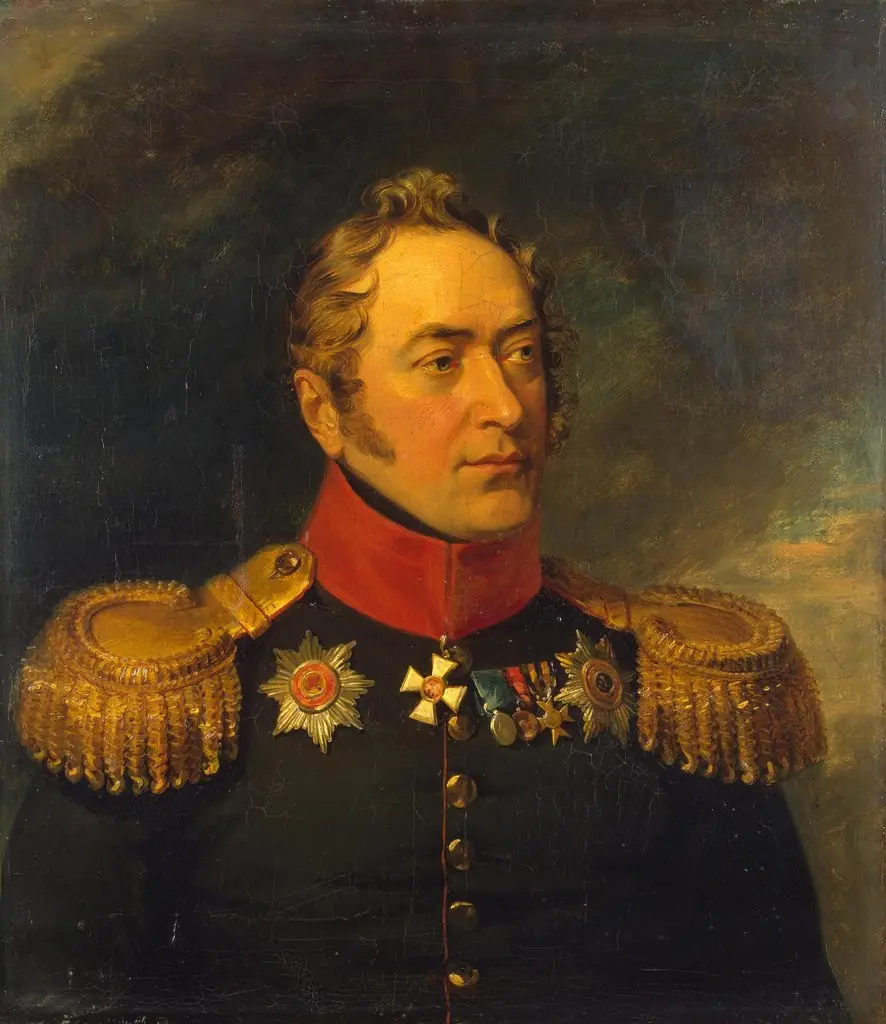 Portrait of Nikolai N. Khovansky (1777-1837)
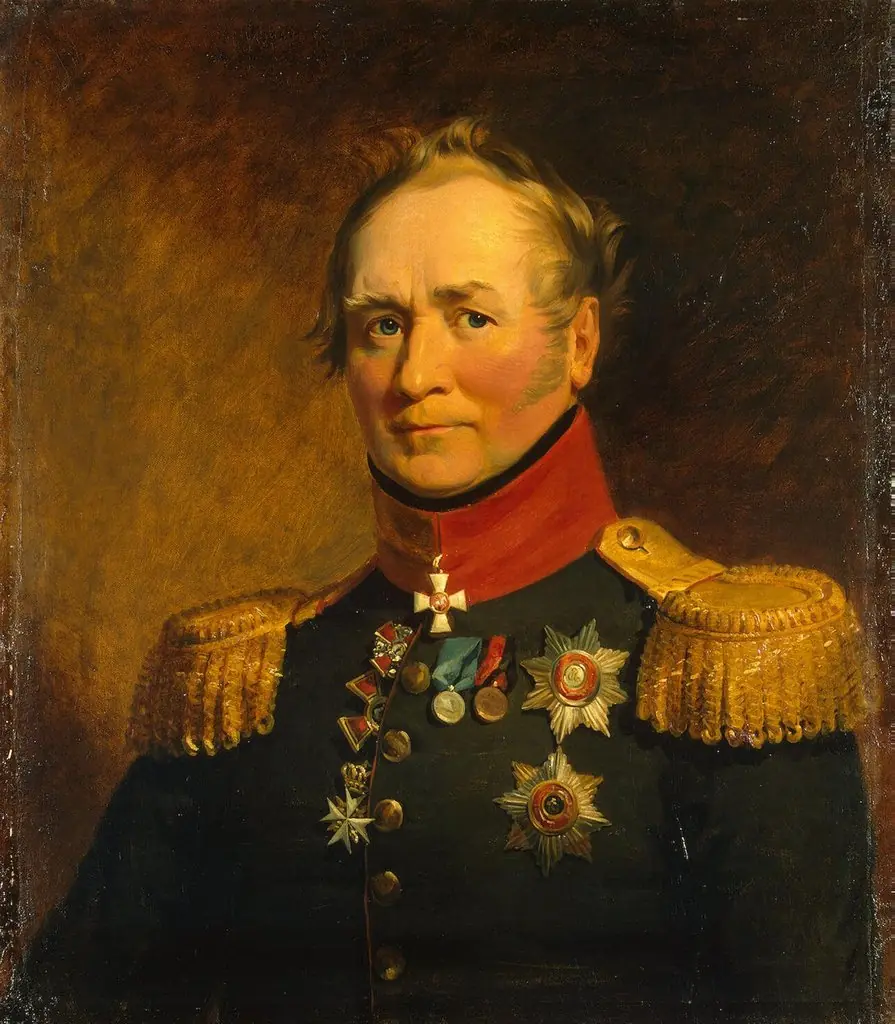 Portrait of Fyodor F. Oerthel (1767/68-1825)
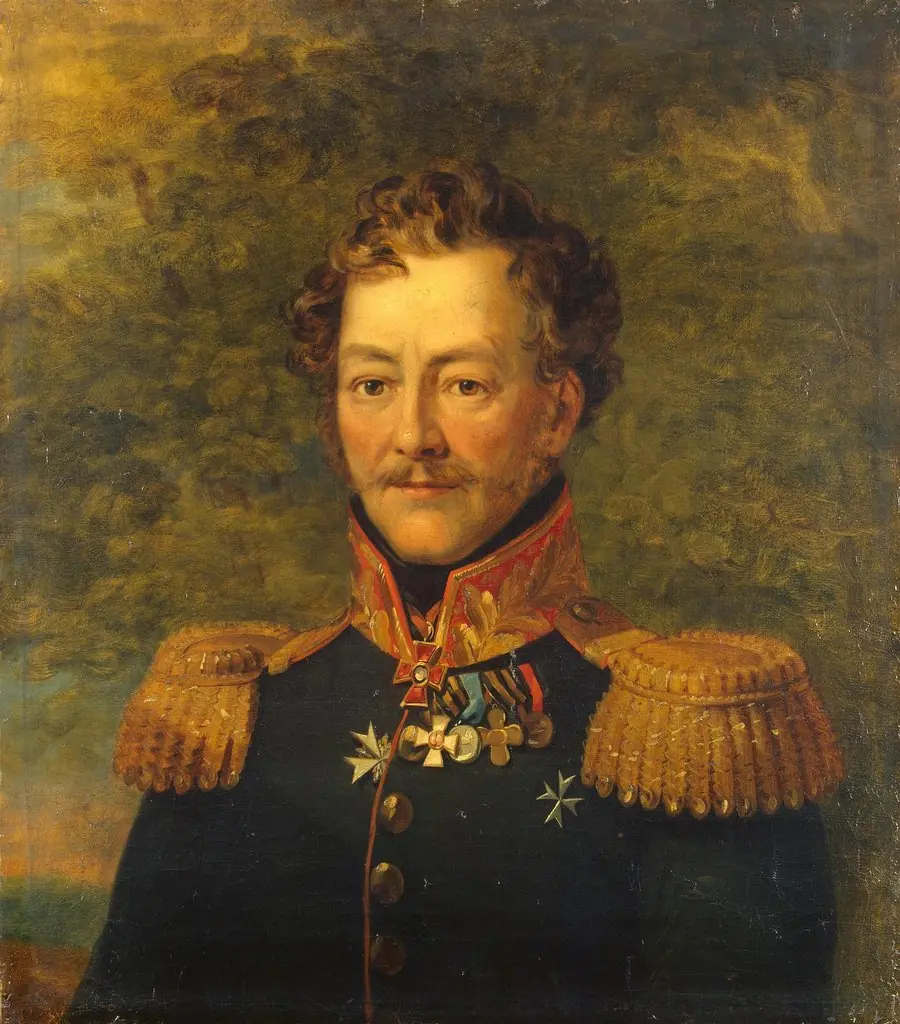 Portrait of Ivan V. Argamakov (1763-1834) (1st)
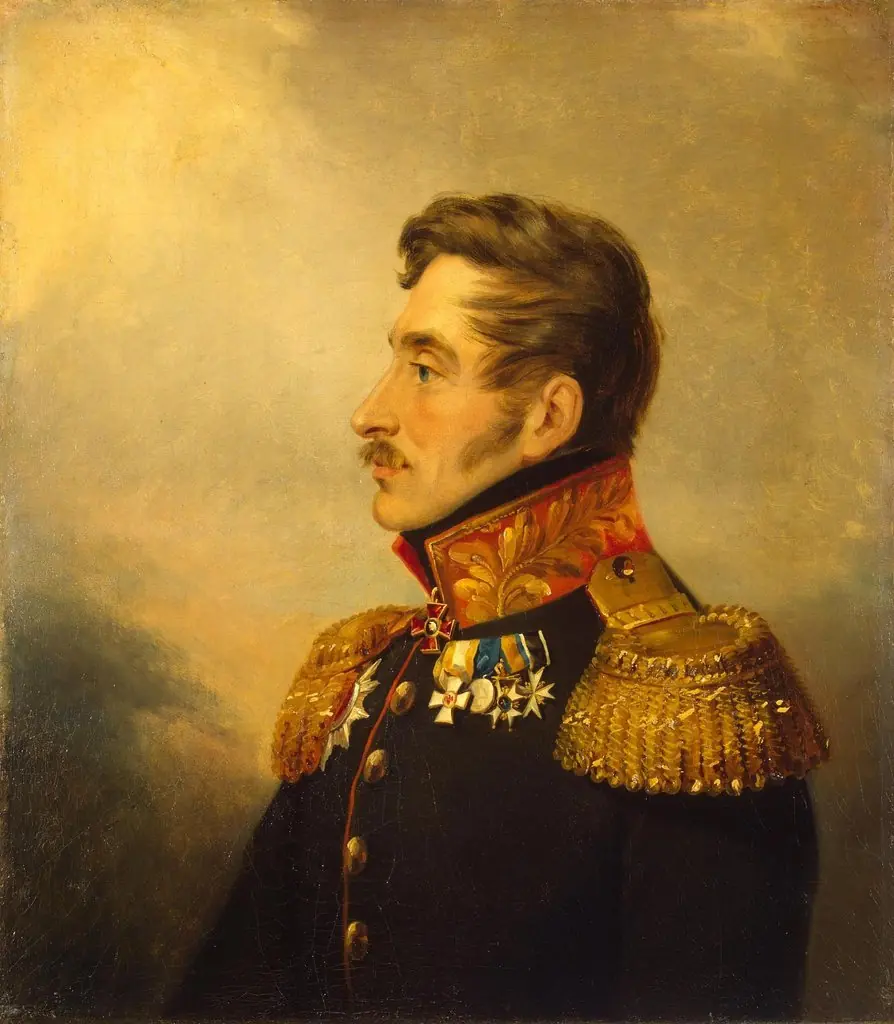 Portrait of Vasily P. Obolensky (1780-1834)
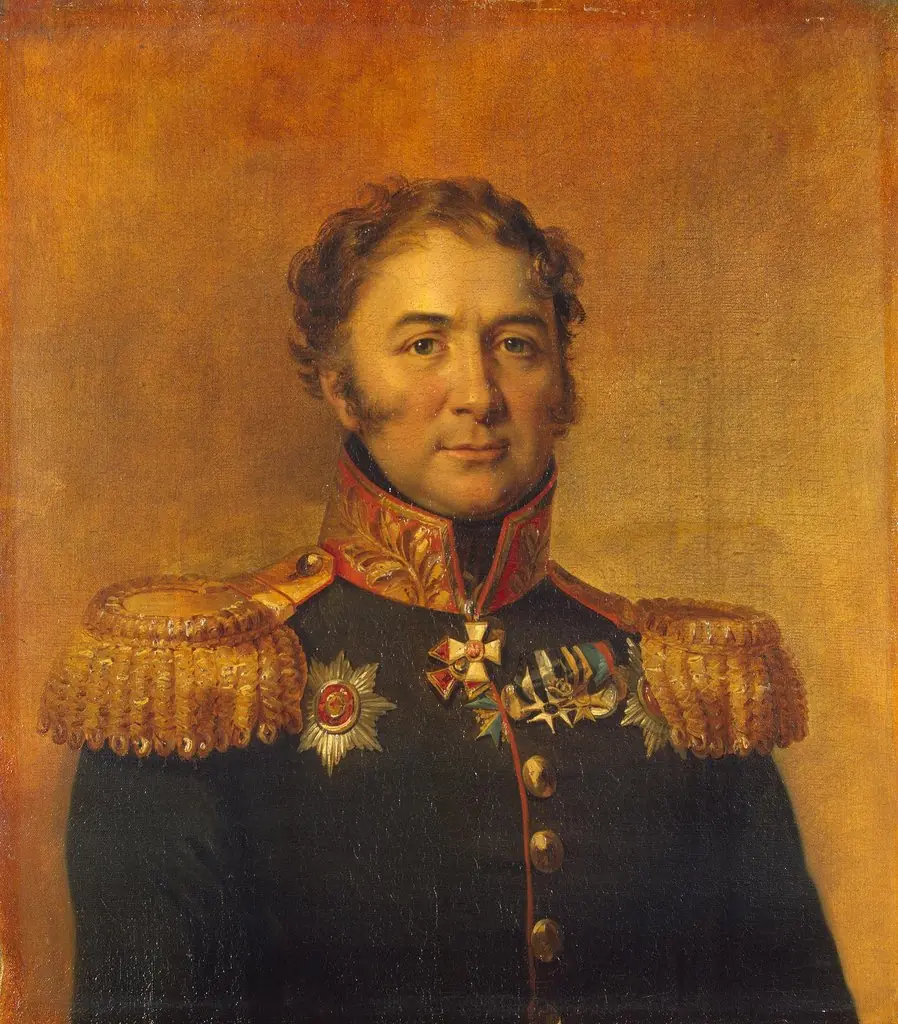 Portrait of Nikolai V. Dekhteryov (1775-1831)
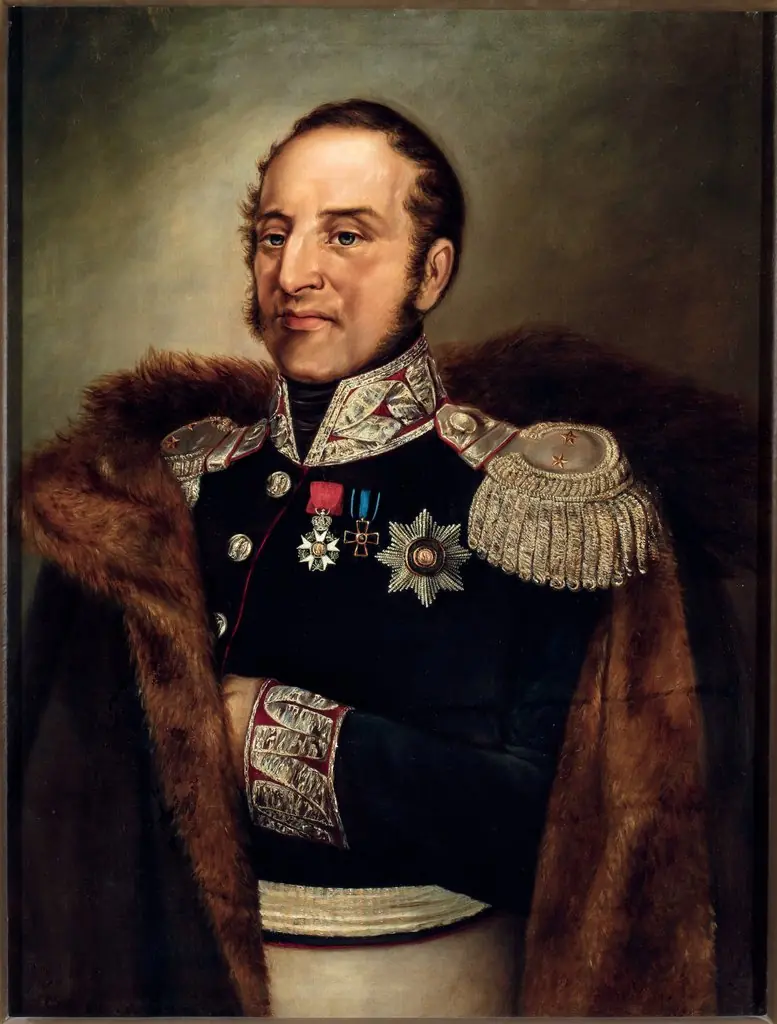 Portrait of general Tadeusz Tyszkiewicz (1774–1852)
 Portrait of Leonty L. Bennigsen (Levin) (1745-1826)