Artwork
Saint Francis of Assisi in la Porziuncola
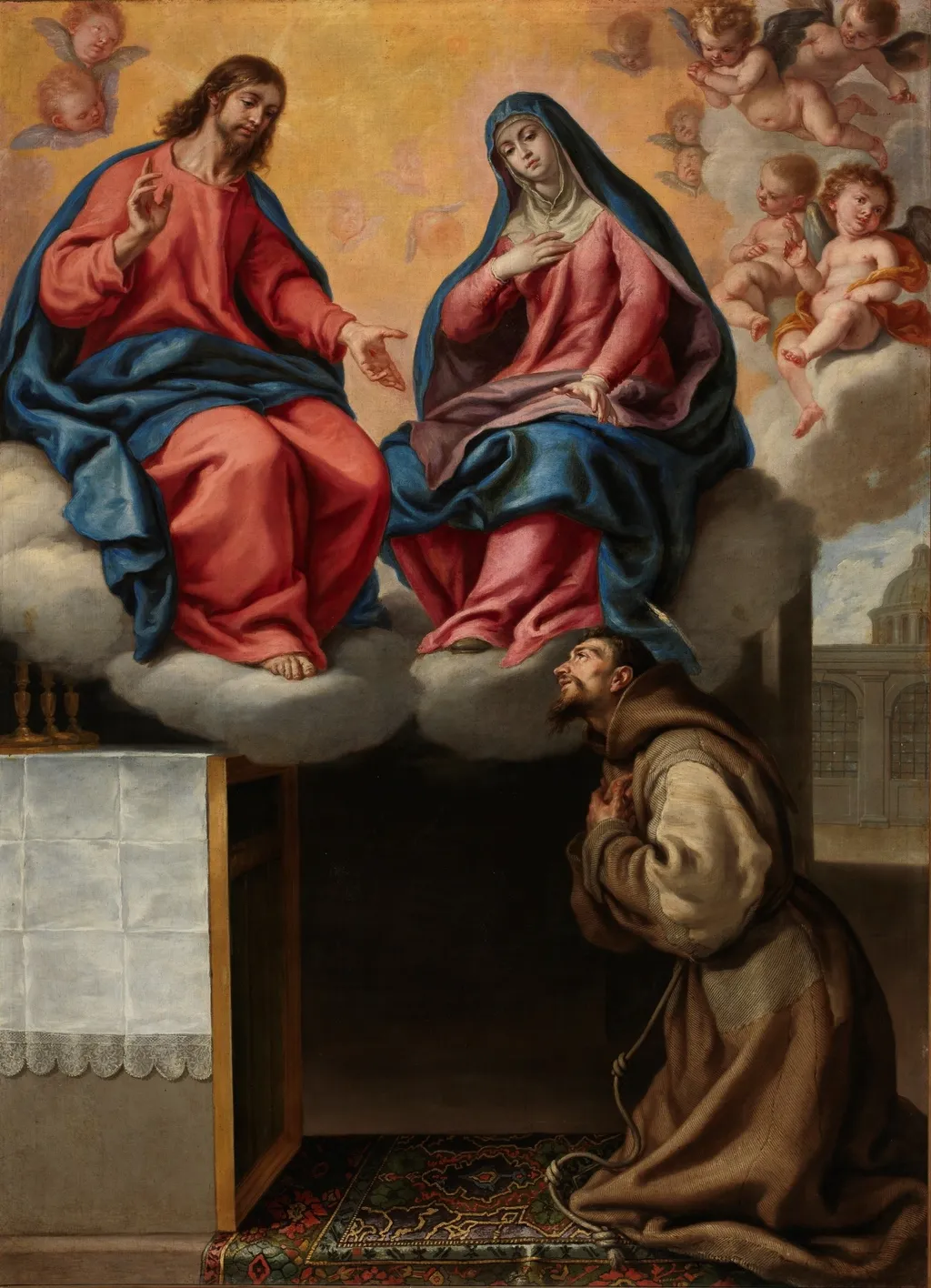
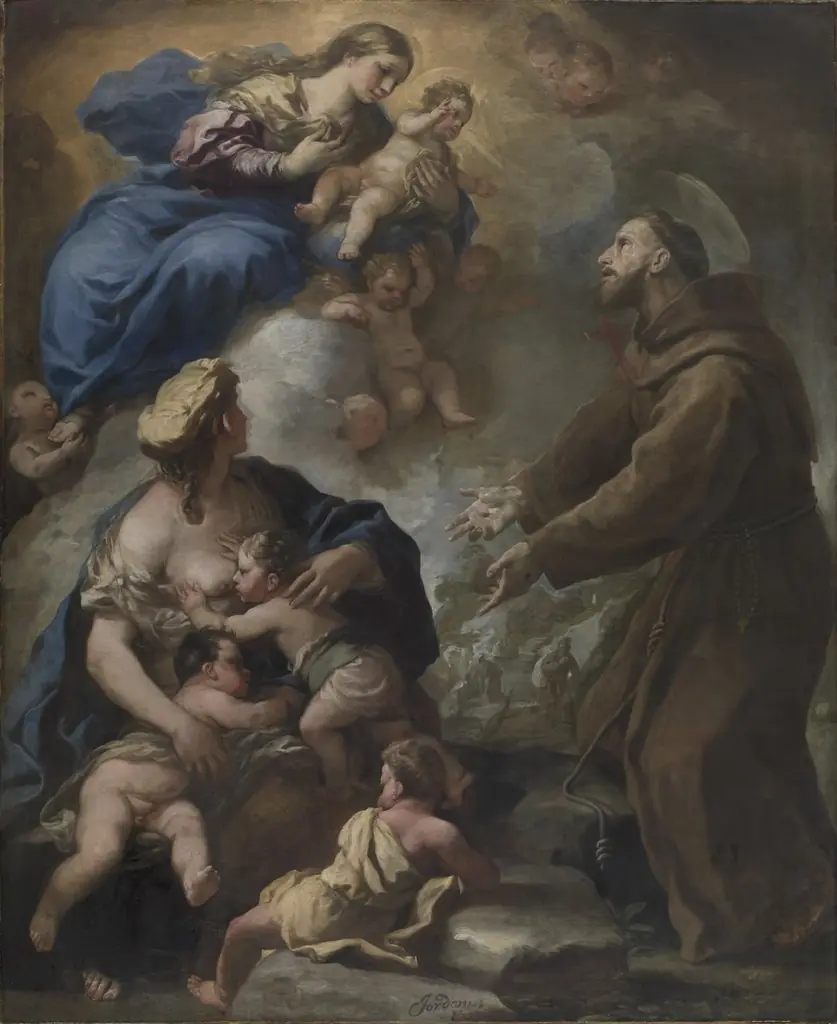
Saint Francis of Assisi in la Porziuncola is an oil painting by the Early Baroque Italian artist Felix Castello. It dates from 1646 and is held in the collection of the Museo del Prado.
About this work
Overview
Painted in 1646 by Felix Castello, this oil work depicts Saint Francis of Assisi in prayer within the Porziuncola chapel.
Painted in 1646 by Felix Castello, this oil work depicts Saint Francis of Assisi in prayer within the Porziuncola chapel. The scene is rendered with quiet solemnity, emphasizing spiritual encounter over dramatic action. The painting resides in the Museo del Prado, Madrid, where it remains a quiet example of 17th-century Spanish religious art, notable for its restrained composition and atmospheric lighting.
Subject & Meaning
The painting illustrates Saint Francis receiving a vision of the Virgin Mary and Christ Child, who appear above him in celestial stillness. Their gentle gestures suggest a silent exchange, reinforcing the theme of divine grace bestowed upon the saint. The bundle he holds may reference his vow of poverty. Surrounding cherubs and the modest chapel in the background underscore the sacred intimacy of the moment, avoiding grandeur in favor of humility.
Technique & Style
Castello employs soft chiaroscuro to model forms with subtle gradations of light, creating a hazy, otherworldly atmosphere. The figures are rendered with delicate brushwork, their robes blending into the luminous sky. The background architecture is rendered with minimal detail, directing focus to the central group. The palette is muted, dominated by earth tones and pale blues, enhancing the contemplative mood without theatrical contrast.
History & Provenance
Commissioned during Castello’s active period in Madrid, the painting entered the Spanish royal collection before being transferred to the Museo del Prado. Its documented provenance traces back to the 17th century, with no evidence of major alterations. It has remained in institutional care since the 19th century, preserving its original condition and composition without significant restoration.
Context
Created during the height of Counter-Reformation devotion in Spain, the painting reflects the era’s emphasis on personal piety and mystical experience. While Italian Baroque art favored dynamism, Castello’s approach aligns with Spanish quietism—favoring introspection over spectacle. The Porziuncola, a site of deep Franciscan significance, was a common subject in devotional imagery, often used to inspire humility and spiritual renewal.
Legacy
Though not widely reproduced or celebrated in popular discourse, the painting exemplifies the understated religious sensibility of Spanish Baroque painting. It contributes to the broader understanding of how devotion was visually articulated beyond grand altarpieces. Its preservation in the Prado ensures continued study of regional interpretations of Franciscan spirituality in early modern Europe.
Own this work as a print
Artist & collection

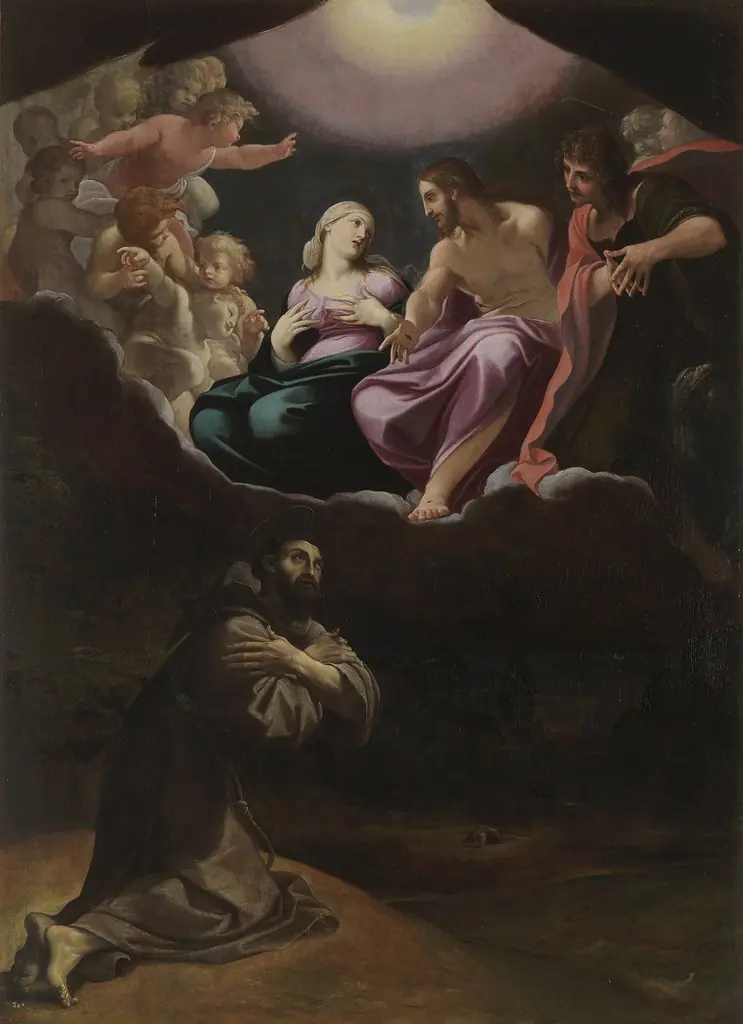
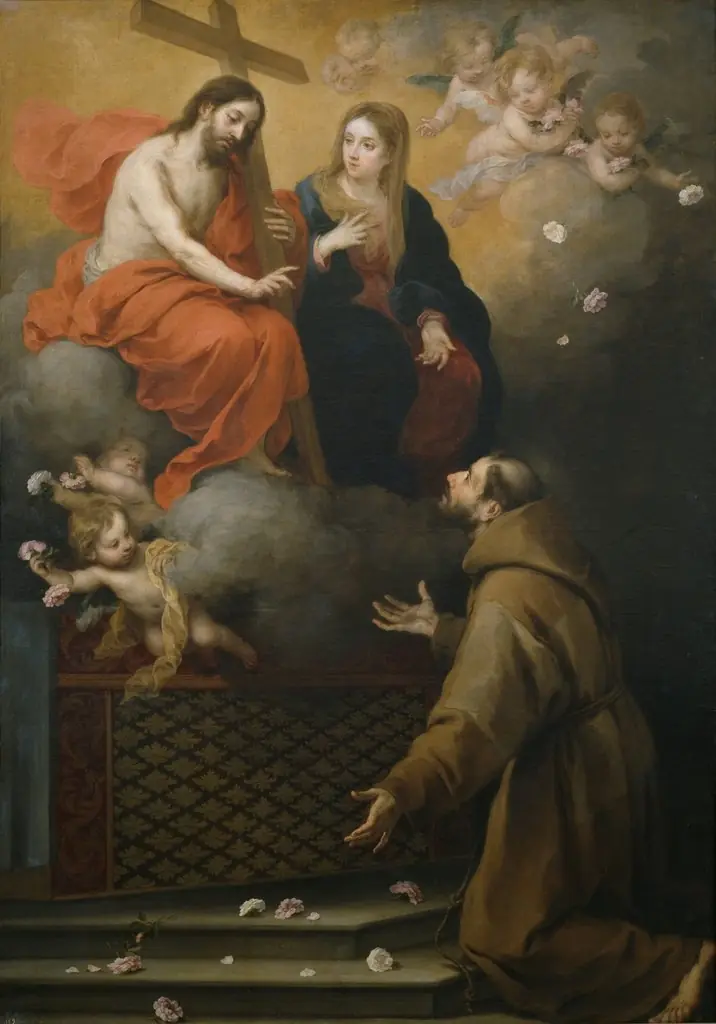 The Vision of Saint Francis in the Portiuncula
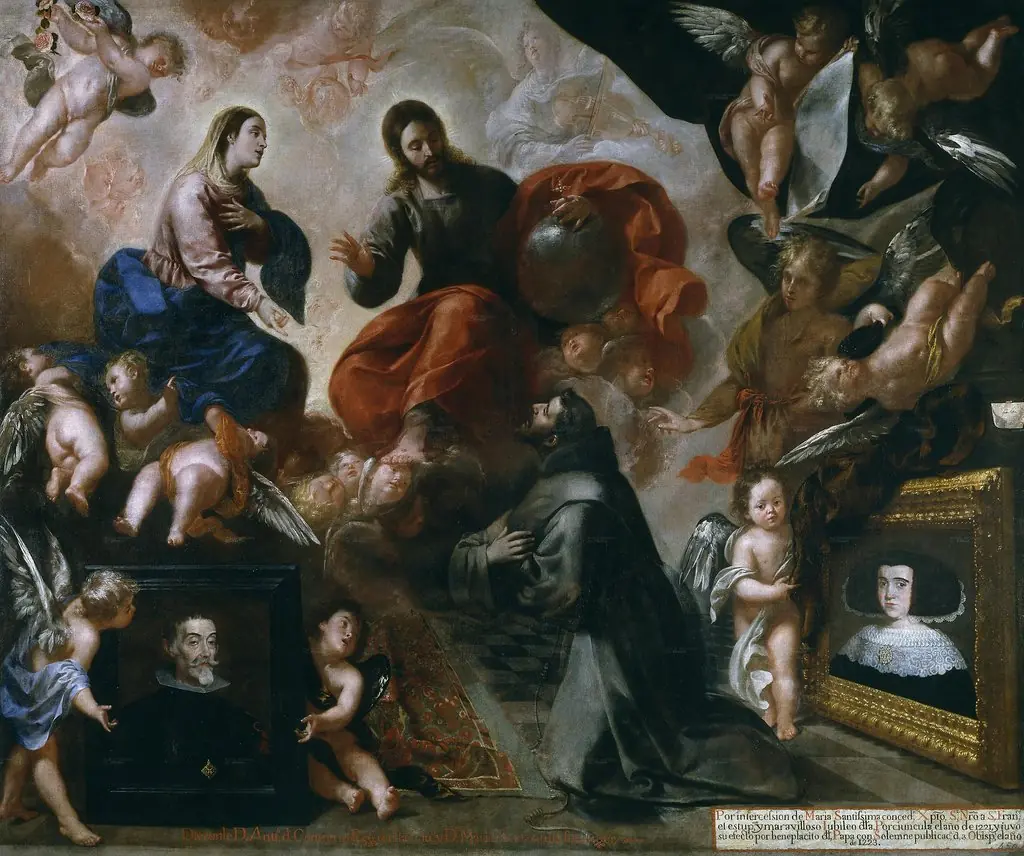
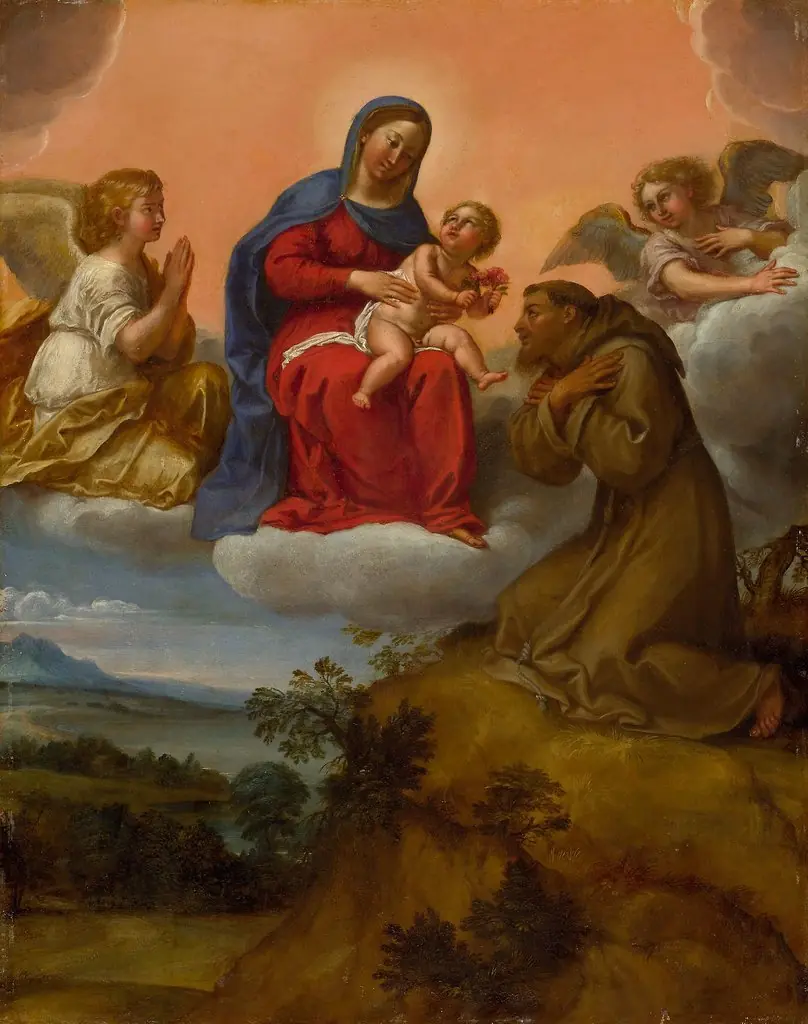 Virgin and Child Adored by Saint Francis
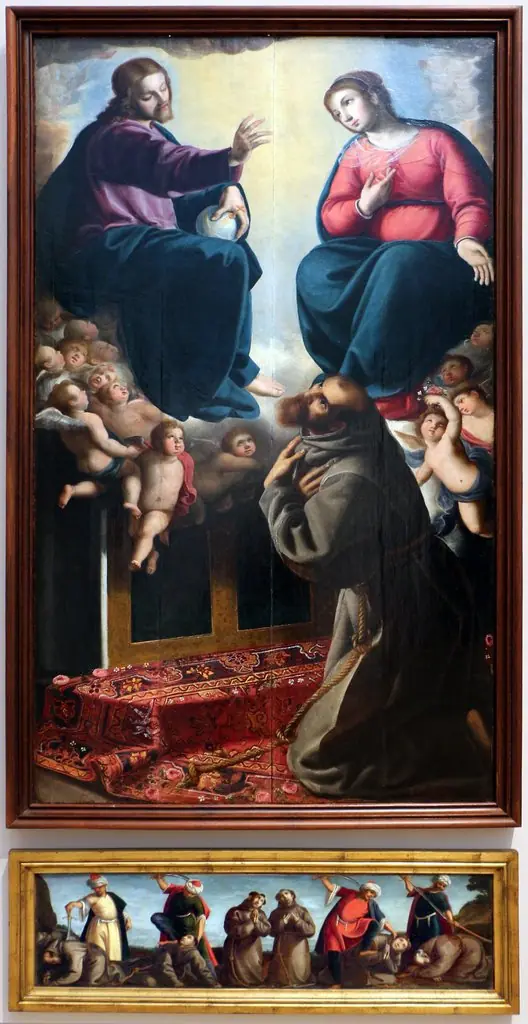 Visão de São Francisco de Assis e os Sete Mártires de Marrocos
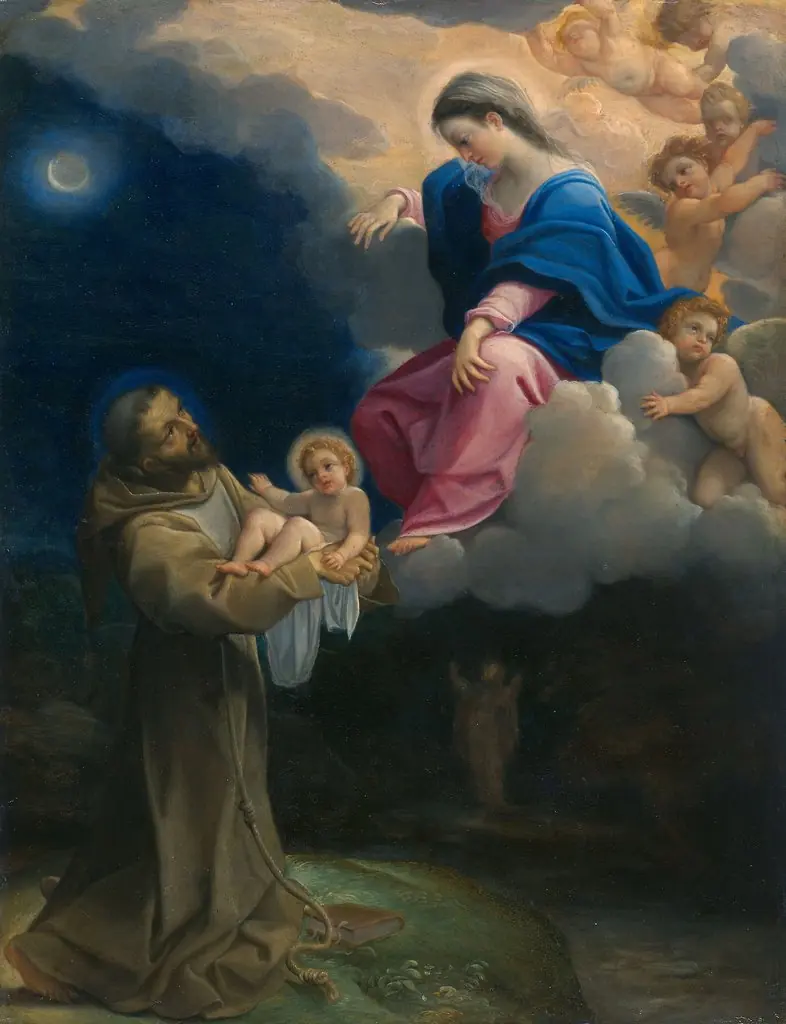 The Vision of Saint Francis
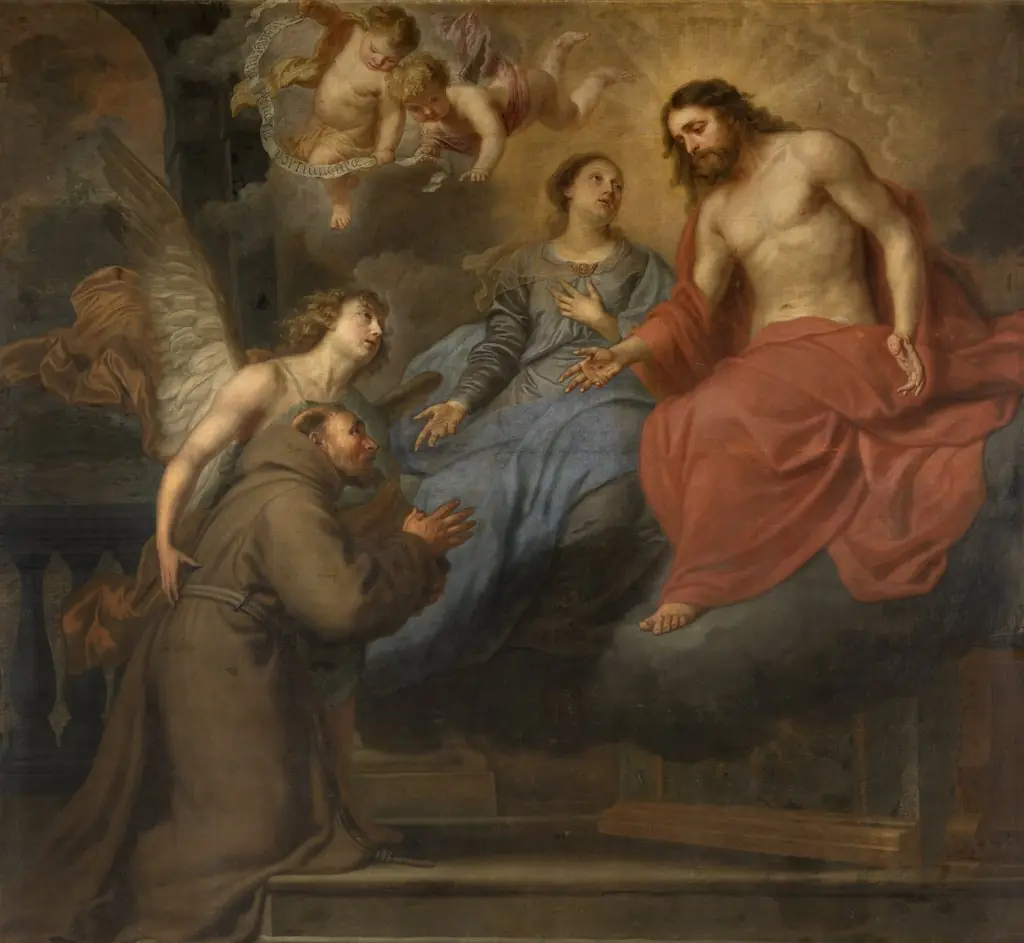 Portiuncula
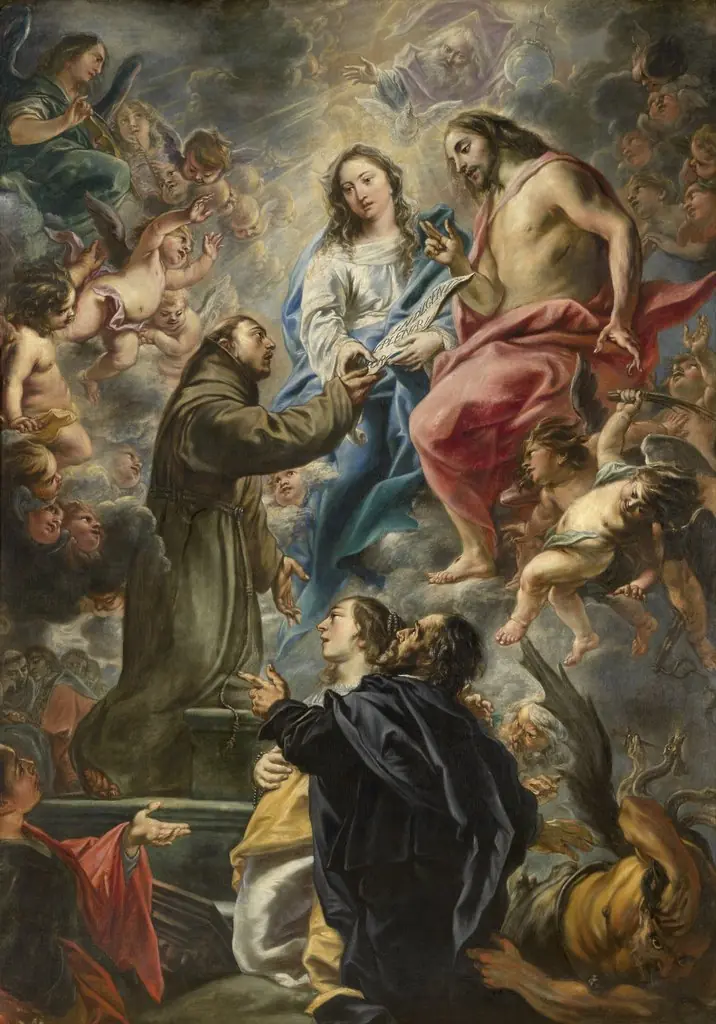 Portiuncula
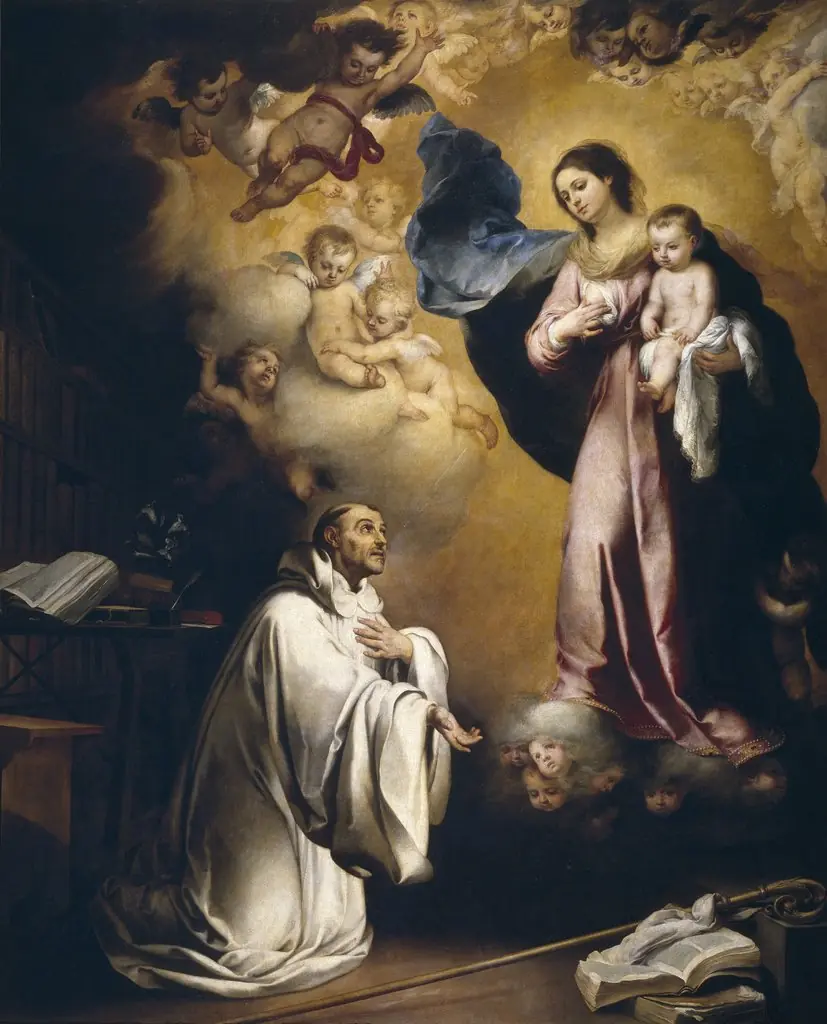 The Apparition of the Virgin to Saint Bernard
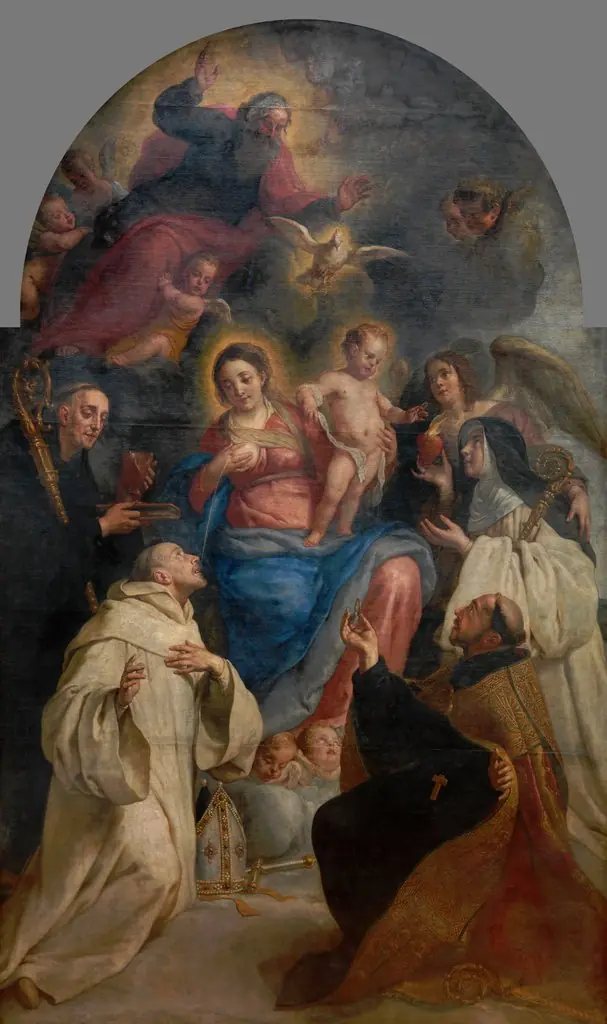 Lactatio of Saint Bernard of Clairvaux
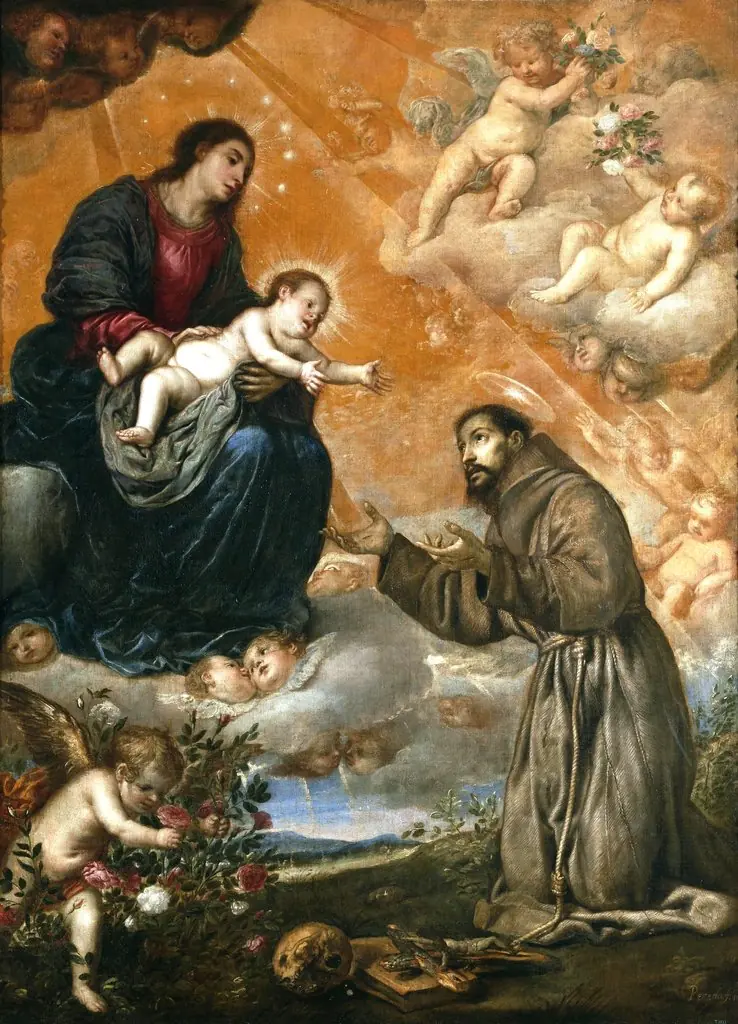
 The Virgin and Child Appearing to Saint Francis of Assisi