Artwork
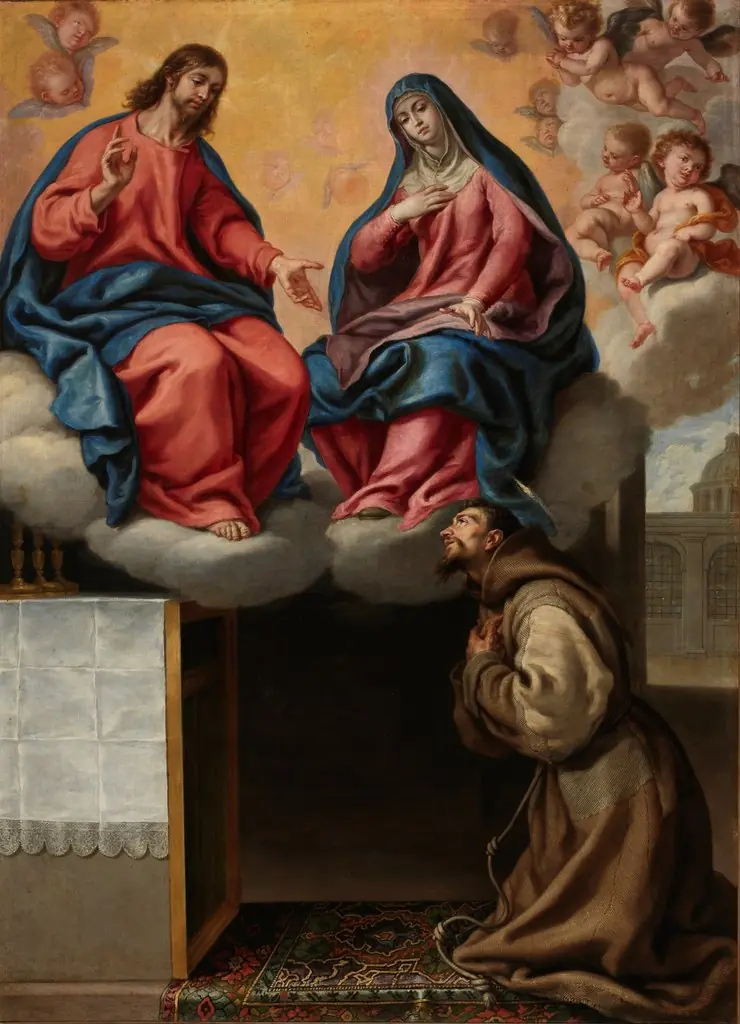
Saint Francis of Assisi in the Porziuncola with the Donors Antonio Contreras and María Amezquita
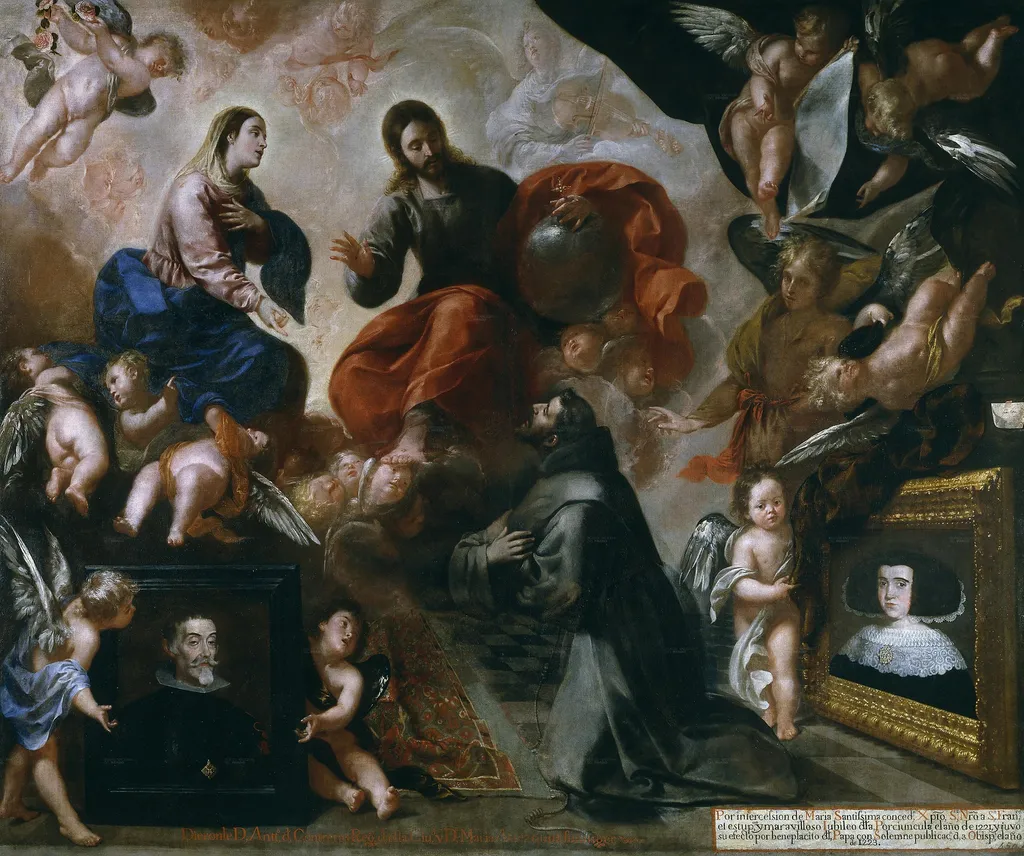
Saint Francis of Assisi in the Porziuncola with the Donors Antonio Contreras and María Amezquita is an oil painting by the Early Baroque Italian artist Francisco Caro. It dates from 1659 and is held in the collection of the Museo del Prado.
About this work
Overview
Francisco Caro’s 1659 oil on canvas, titled *Saint Francis of Assisi in the Porziuncola with the Donors Antonio Contreras and María Amezquita*, is part of the Prado Museum’s collection. The work presents a crowded devotional scene centered on a kneeling monk, surrounded by figures that include the two donors and a host of cherubic attendants, all rendered in a palette dominated by muted reds and blues.
Subject & Meaning
The composition focuses on Saint Francis of Assisi within the Porziuncola, the small chapel associated with his early ministry.
The composition focuses on Saint Francis of Assisi within the Porziuncola, the small chapel associated with his early ministry. A bearded, robed figure points upward, suggesting divine guidance, while the kneeling monk appears deep in prayer. The inclusion of Antonio Contreras and María Amezquita, shown in contemporary dress, underscores the practice of patronage and personal devotion, linking earthly benefactors to the saint’s intercession.
Technique & Style
Caro employs a balanced chiaroscuro, using contrasts of light and shadow to model the figures and give depth to the crowded space. The brushwork is smooth in the drapery, while the cherubs are rendered with finer, more delicate strokes, creating a sense of movement. The overall color scheme is bright yet restrained, allowing the reds and blues of the garments to stand out without overwhelming the scene.
History & Provenance
Completed in 1659, the painting entered the Spanish royal collection before being transferred to the Museo del Prado, where it remains on display. The presence of the donors’ portraits indicates that the work was likely commissioned by Antonio Contreras and María Amezquita as a personal act of piety, a common practice among 17th‑century patrons.
Context
Caro’s work reflects the Counter‑Reformation emphasis on clear, emotionally resonant religious imagery. By placing the donors alongside Saint Francis, the painting reinforces the notion that lay devotion could be mediated through the saints. The inclusion of numerous cherubs, some playing instruments, aligns with Baroque conventions that used celestial music to symbolize heavenly approval of earthly faith.
Own this work as a print
Artist & collection

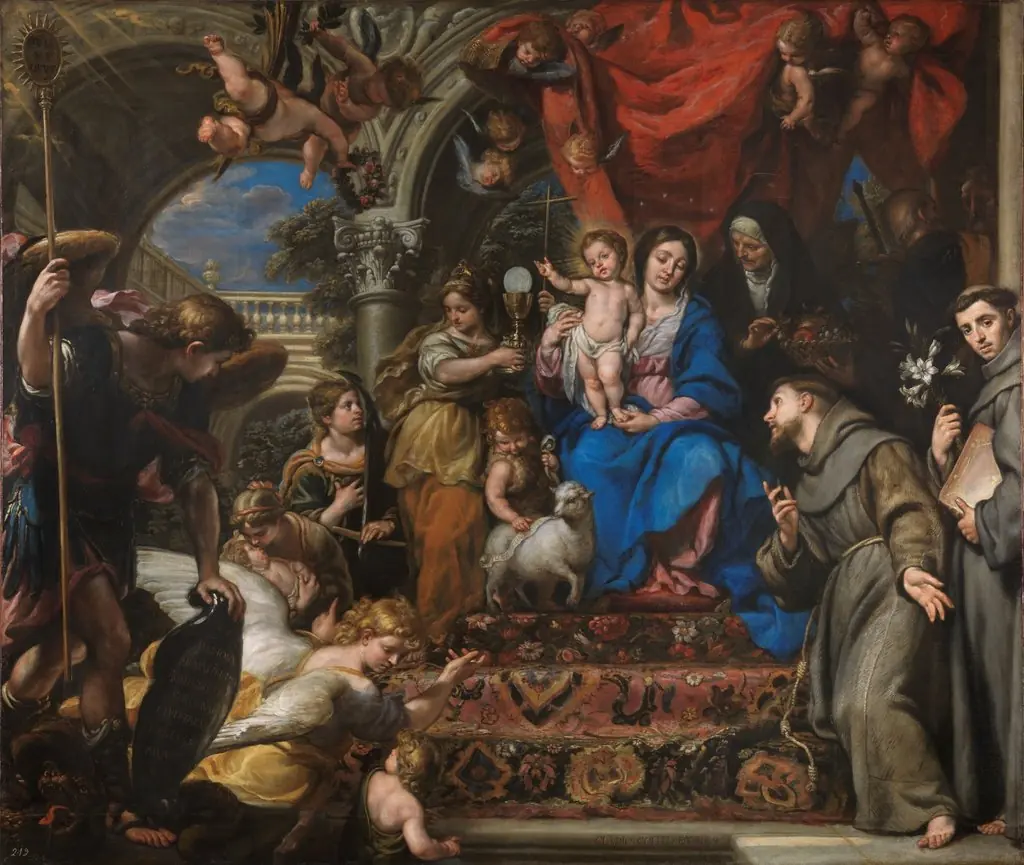 The Virgin and Child between the Theological Virtues and Saints
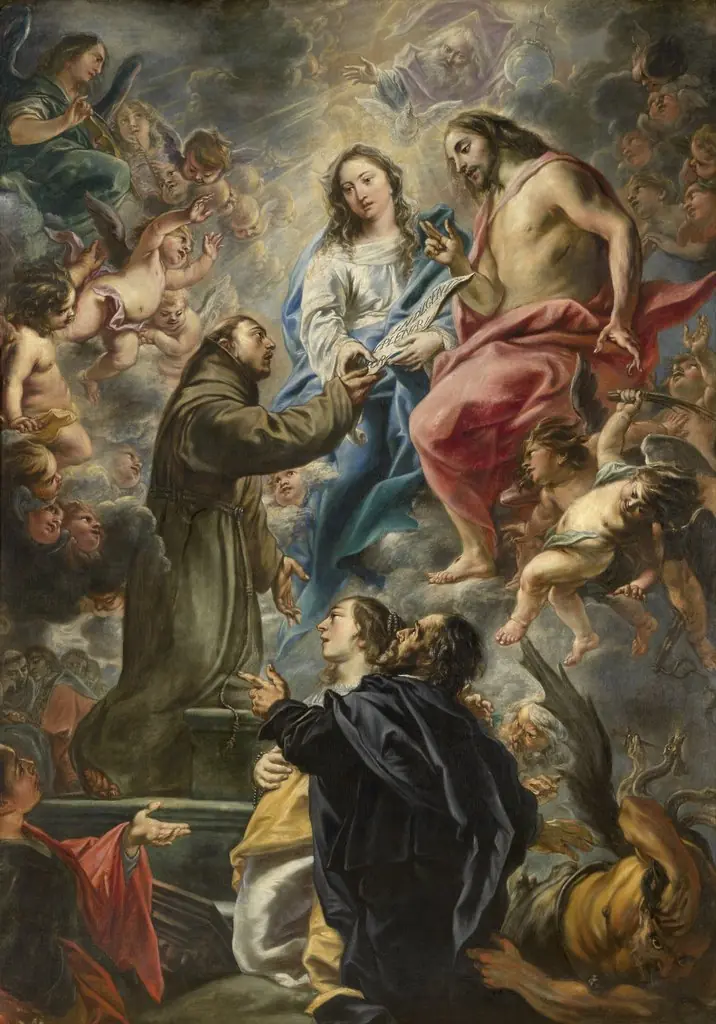 Portiuncula
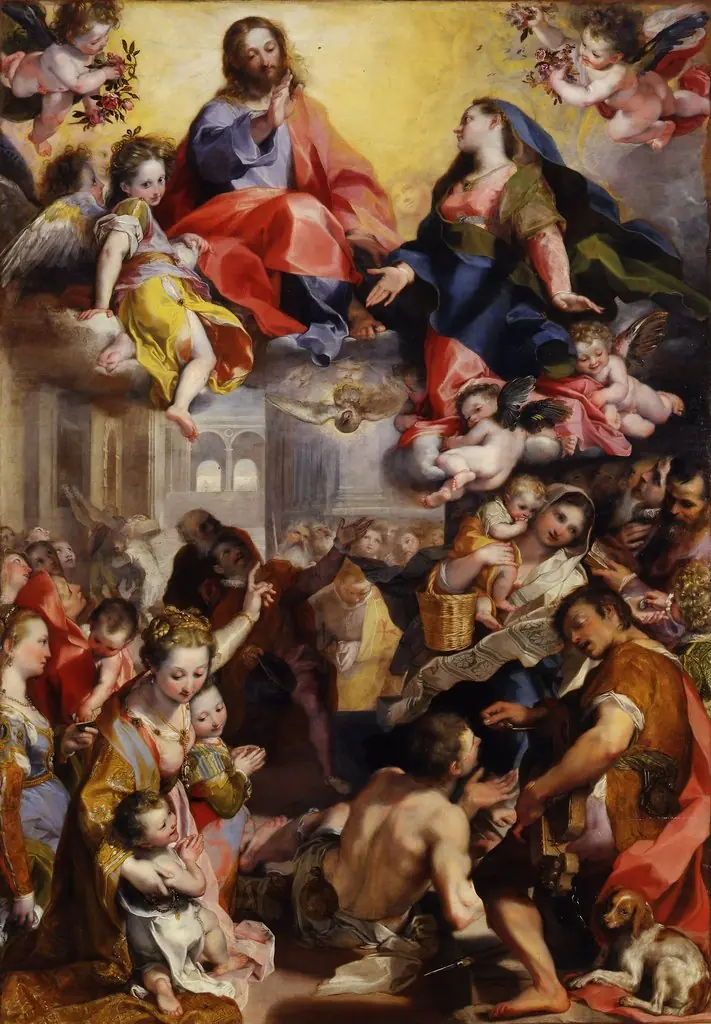 Madonna of the people
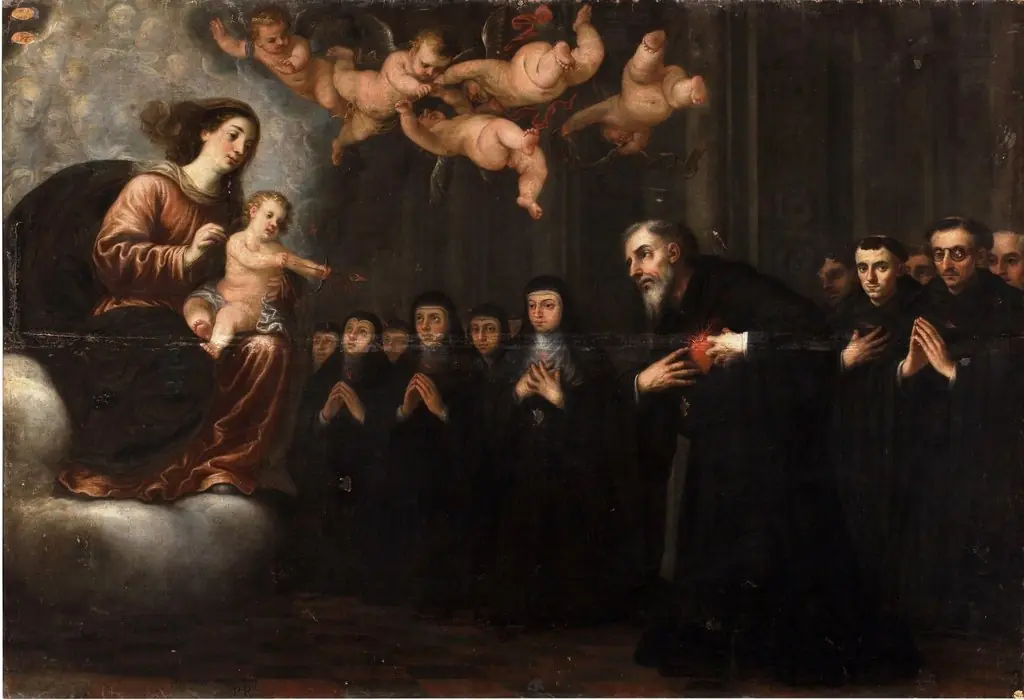 La Virgen y el Niño transverberando el corazón a San Agustín ante la comunidad de agustinos
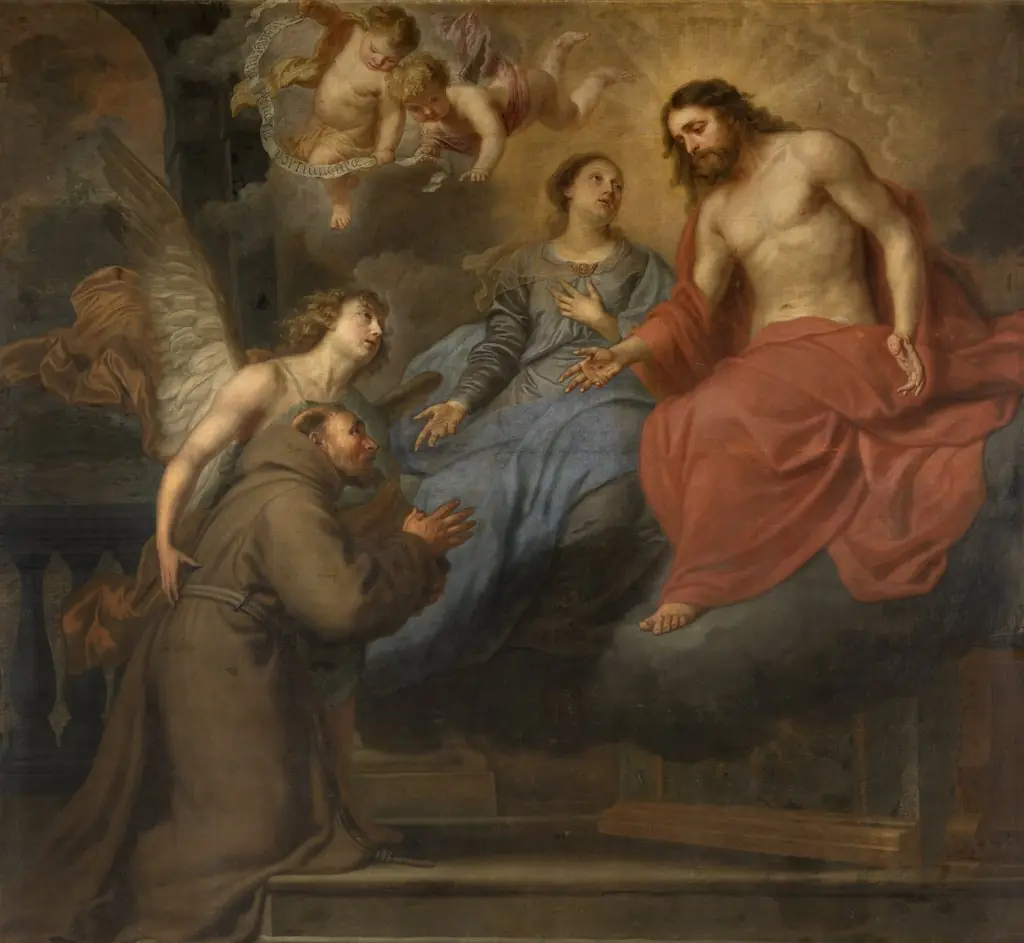 Portiuncula
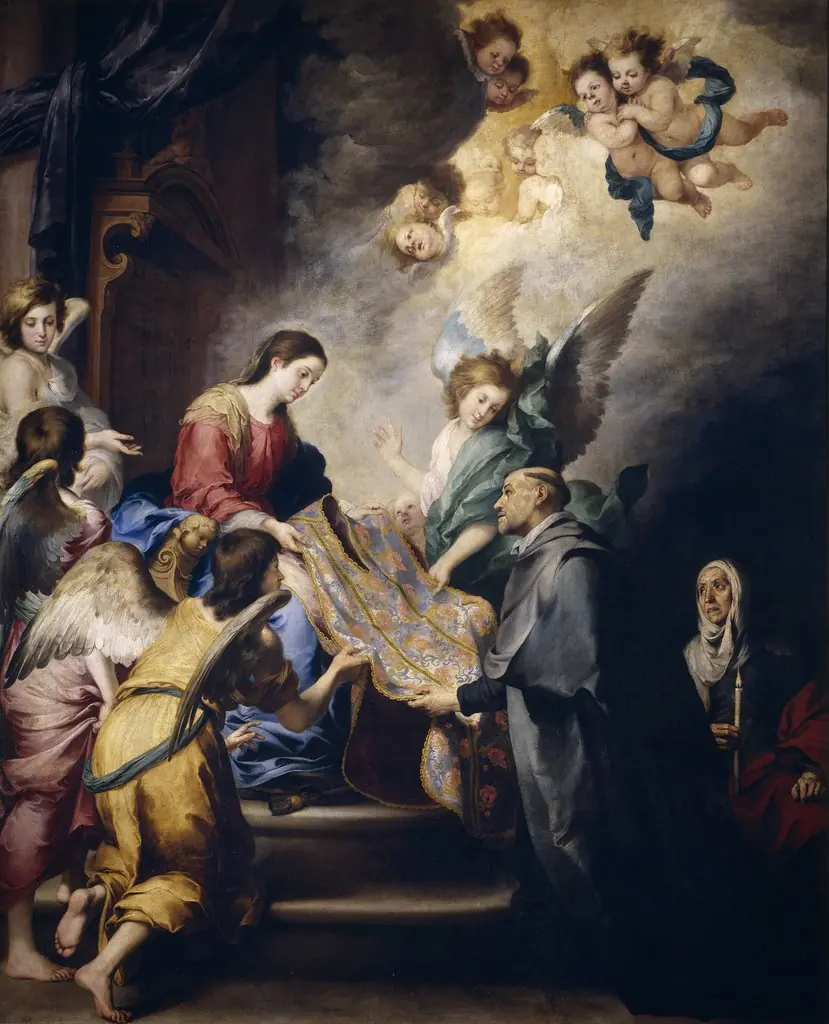 The Apparition of the Virgin to Saint Ildefonso
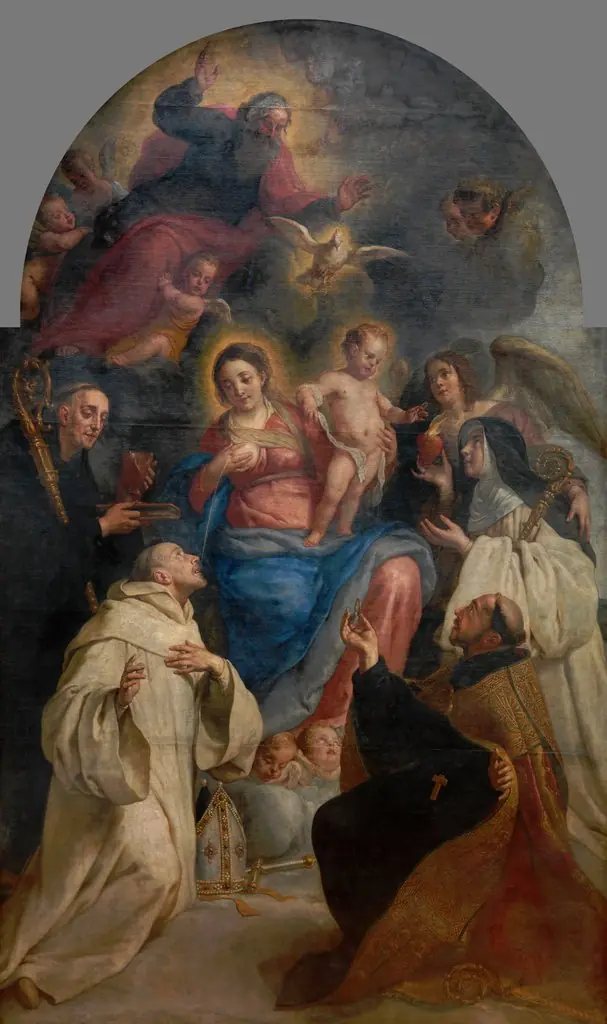 Lactatio of Saint Bernard of Clairvaux
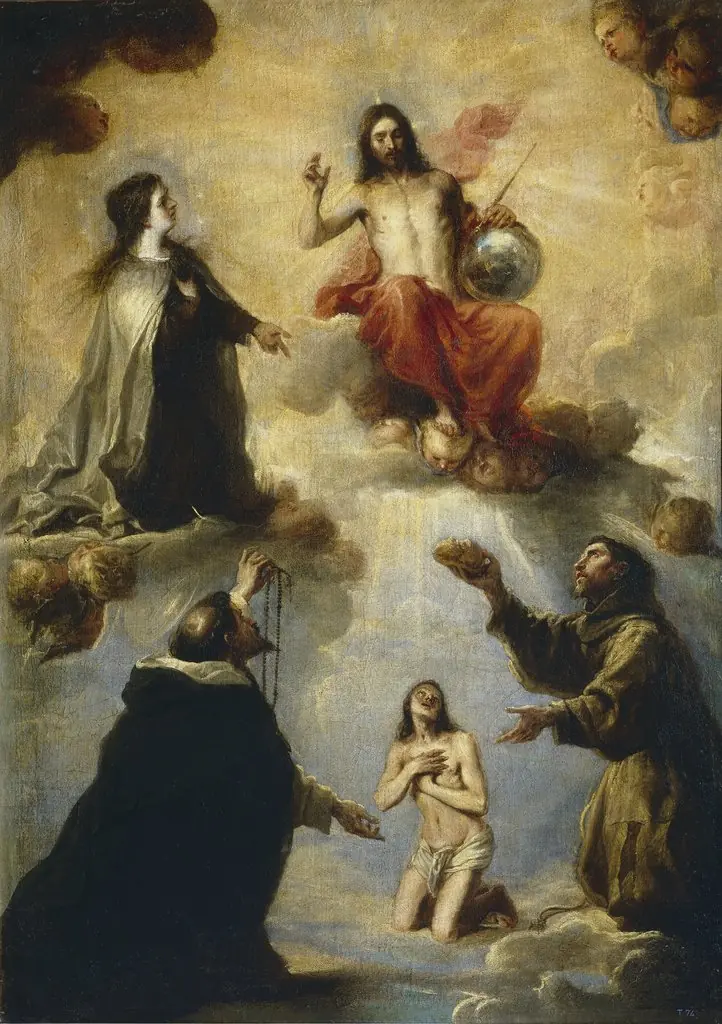 The Judgement of a Soul
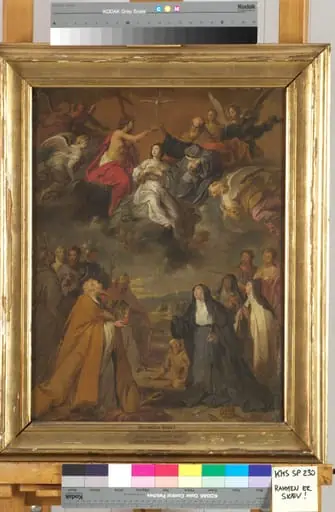 The Coronation of the Virgin
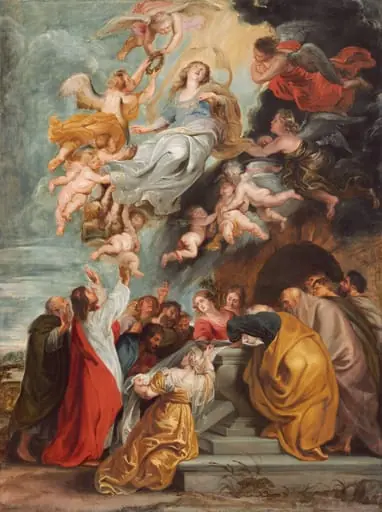 The Assumption of the Virgin
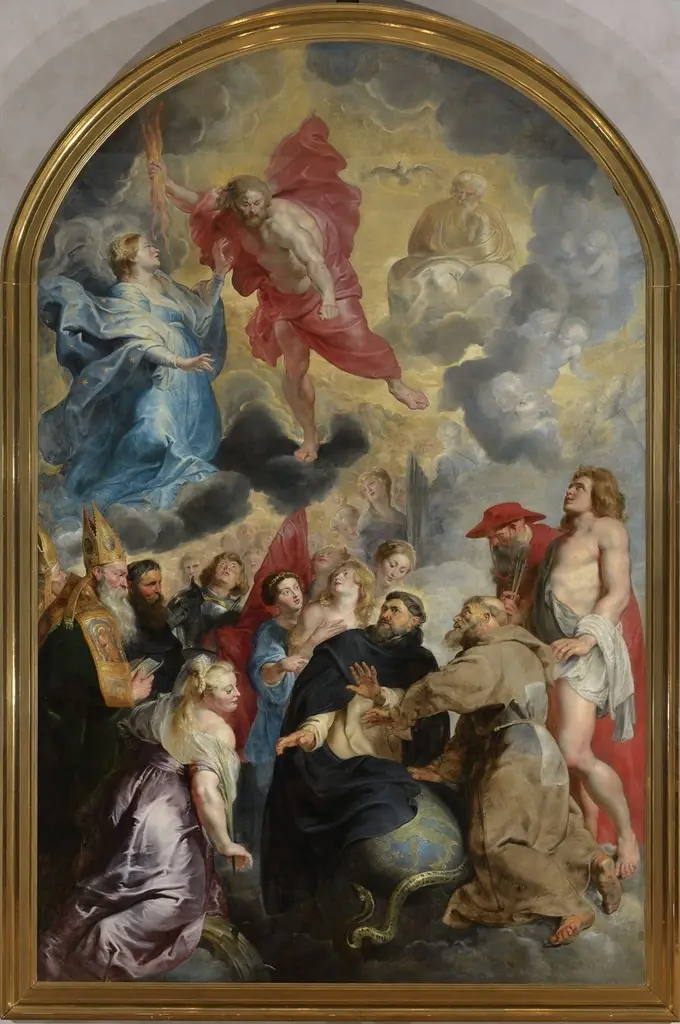 Saint Dominic and Saint Francis Protecting the World from the Wrath of Christ
 Saint Francis of Assisi in la Porziuncola