Artwork
Portrait of a woman in an armchair
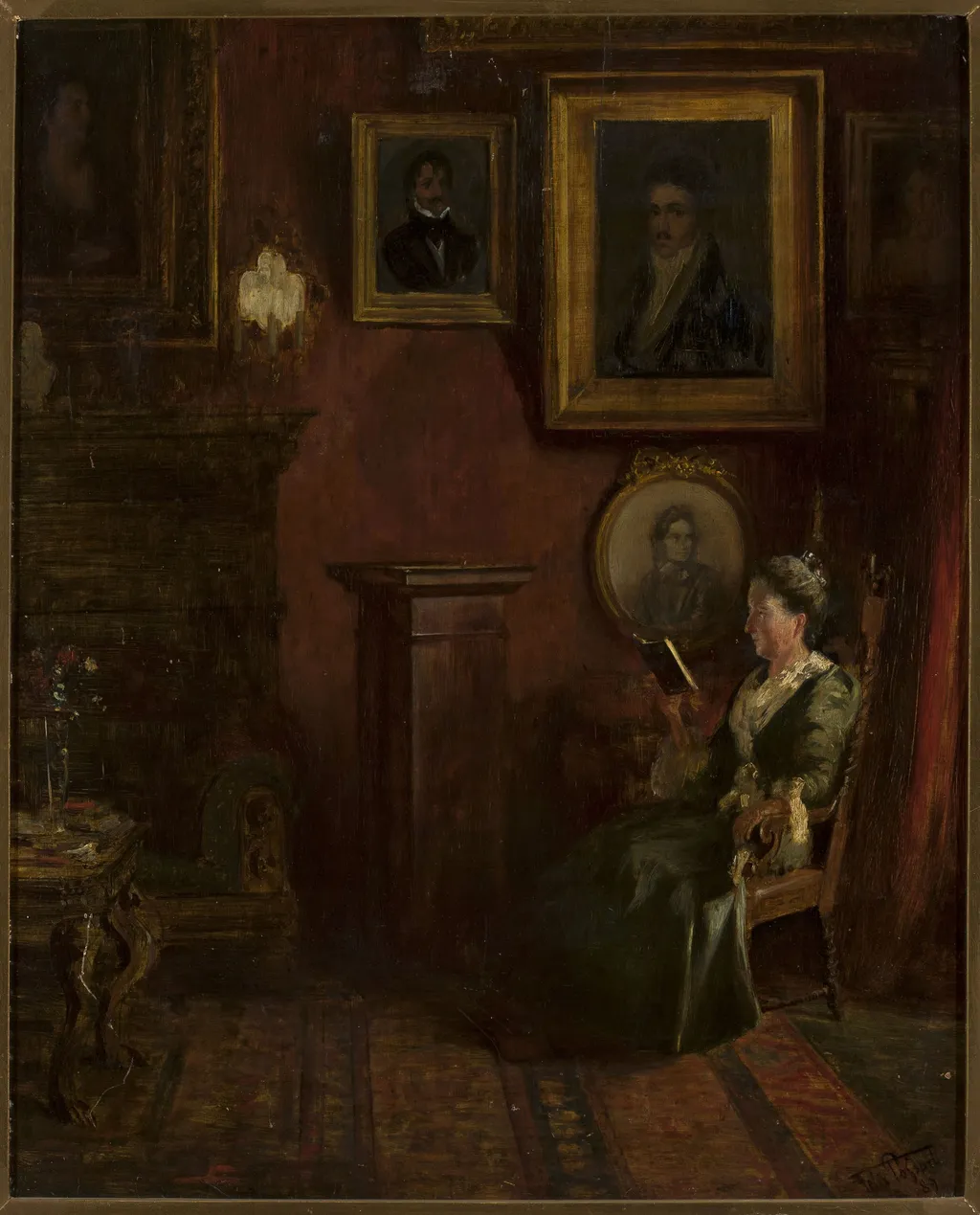
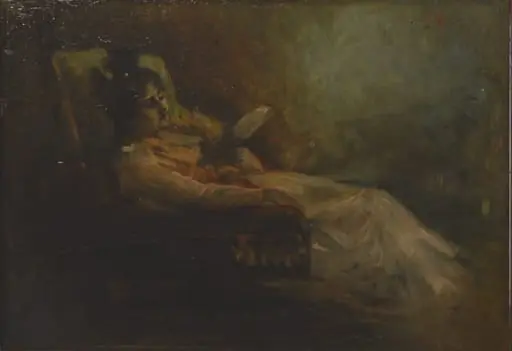
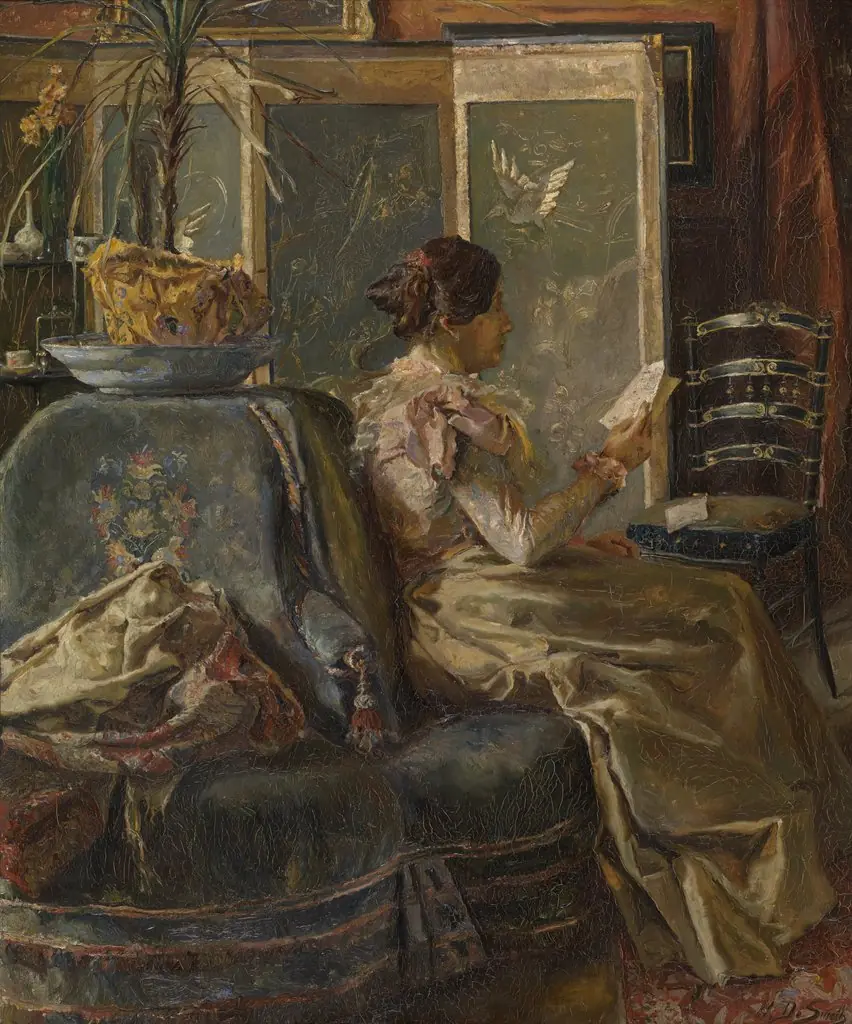
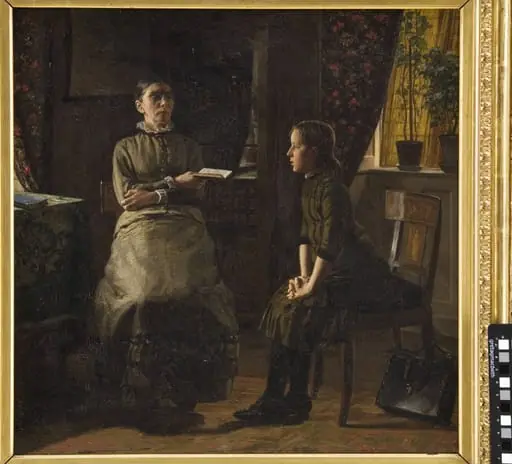
Portrait of a woman in an armchair is an oil painting by the Impressionist artist Felix Possart. It dates from 1895 and is held in the collection of the National Museum in Warsaw.
About this work
Overview
Painted in 1895 by Felix Possart, this oil portrait depicts a woman seated in a wooden armchair within a modest interior. The work is part of the collection at the National Museum in Warsaw. Its quiet composition and restrained palette reflect a late 19th-century interest in intimate domestic moments, rendered with careful attention to texture and atmosphere rather than dramatic gesture.
Subject & Meaning
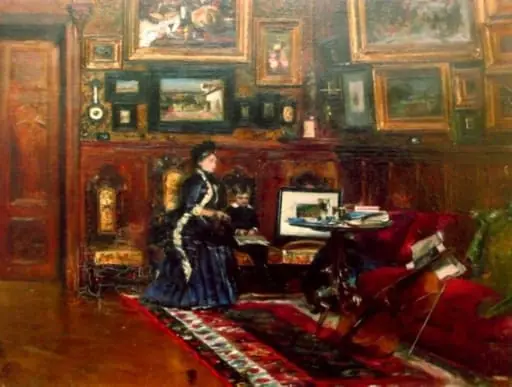
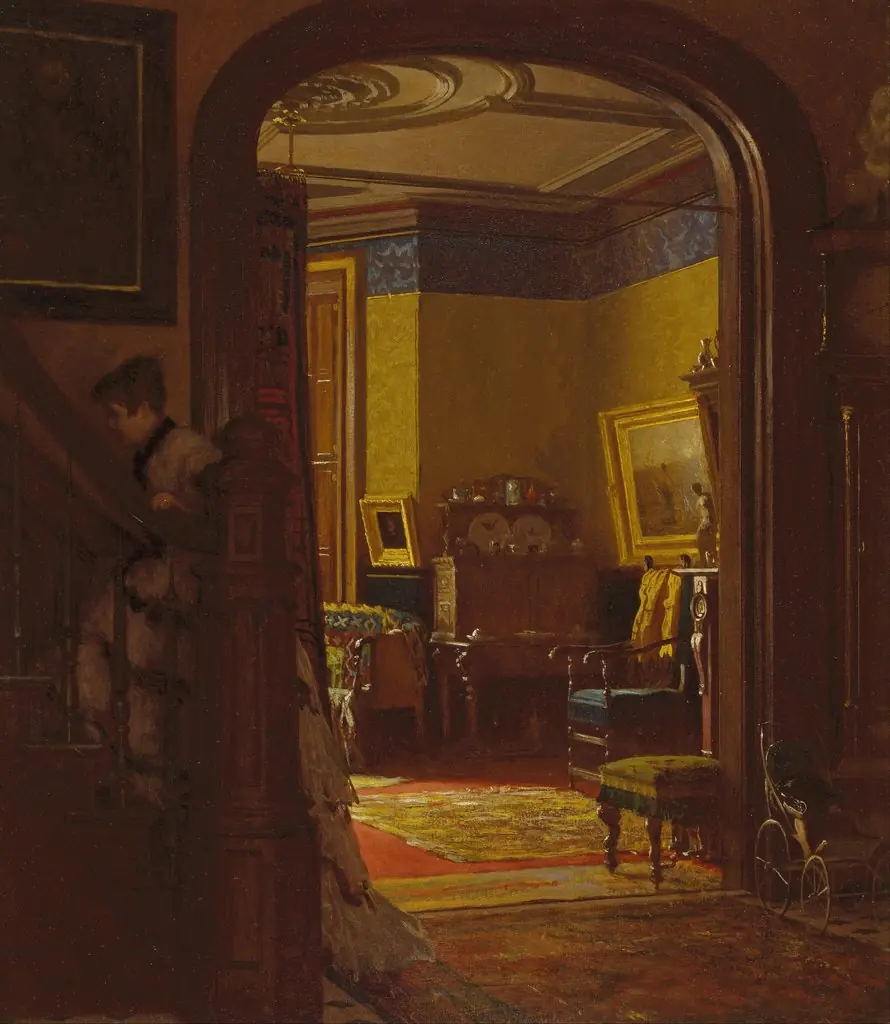
The surrounding shelves and framed portraits imply a personal, lived-in space, reinforcing themes of domesticity and intellectual quietude.
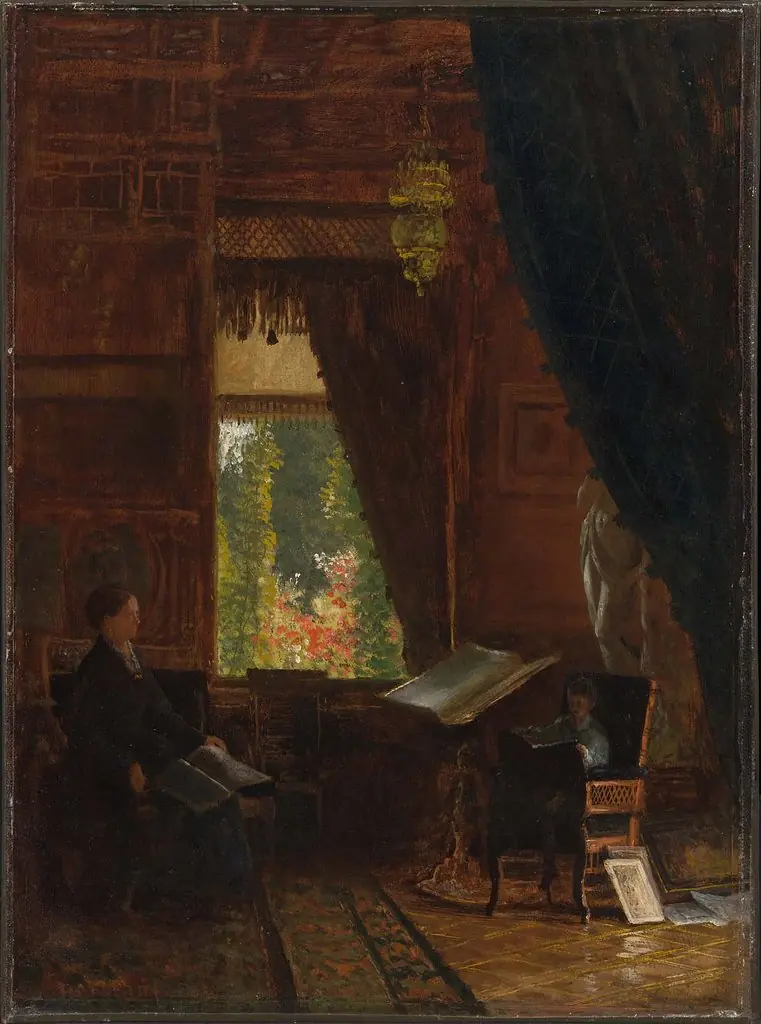
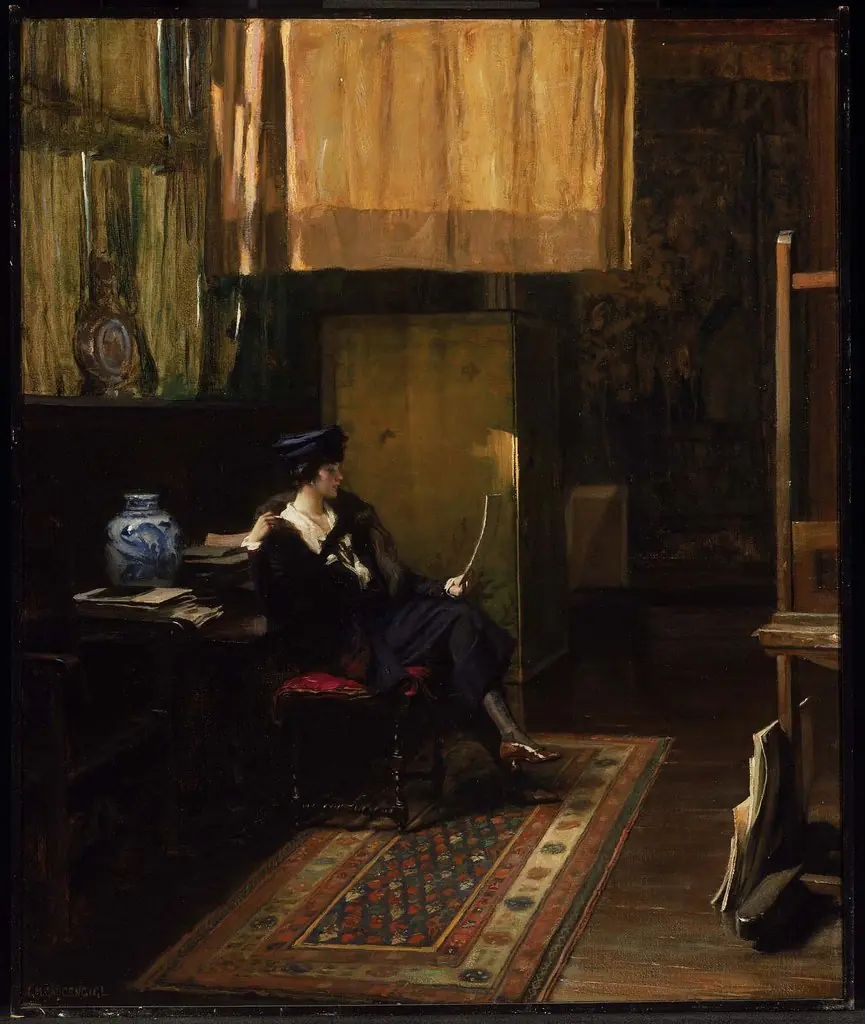
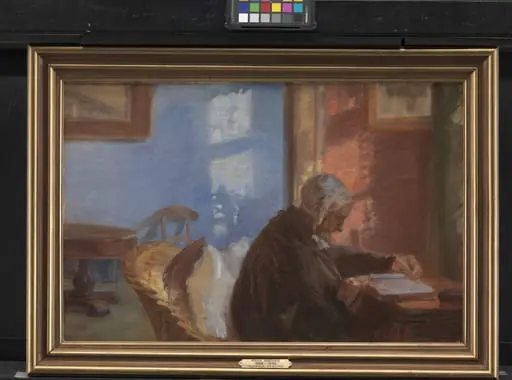
The woman, absorbed in a small book or card, conveys a sense of private contemplation. Her stillness and focused gaze suggest an inward moment, perhaps reading or reflecting. The surrounding shelves and framed portraits imply a personal, lived-in space, reinforcing themes of domesticity and intellectual quietude. The scene avoids narrative drama, instead inviting quiet observation of a solitary, ordinary act.
Technique & Style
Possart employs soft, diffused lighting to model form and draw attention to the woman’s face and hands. The dark wood of the chair and wall creates a deep backdrop, enhancing the luminosity of her features. Brushwork is precise yet unobtrusive, with subtle gradations in tone to suggest fabric, paper, and wood grain. The composition is balanced and intimate, avoiding theatricality in favor of restrained realism.
History & Provenance
The painting has remained in the collection of the National Museum in Warsaw since its acquisition shortly after completion. There is no documented record of prior ownership or exhibition beyond its inclusion in the museum’s holdings. Its preservation suggests it was valued by contemporary collectors for its sensitivity and technical control, though it never entered broader public discourse.
Context
Created during a period when European portraiture increasingly turned toward psychological nuance and domestic settings, the work aligns with trends seen in the work of artists like Anders Zorn and John Singer Sargent. Unlike grand official portraits, this piece reflects a growing interest in the private lives of individuals, particularly women, within the comfort of their homes.
Legacy
Though not widely reproduced or studied, the painting endures as an example of late 19th-century Polish portraiture that prioritizes quiet observation over spectacle. It contributes to a quieter canon of domestic scenes that emphasize mood and materiality, offering insight into the aesthetic values of its time without seeking public acclaim.
Artist & collection