Artwork
Fridolin and Two Workmen by the Forge
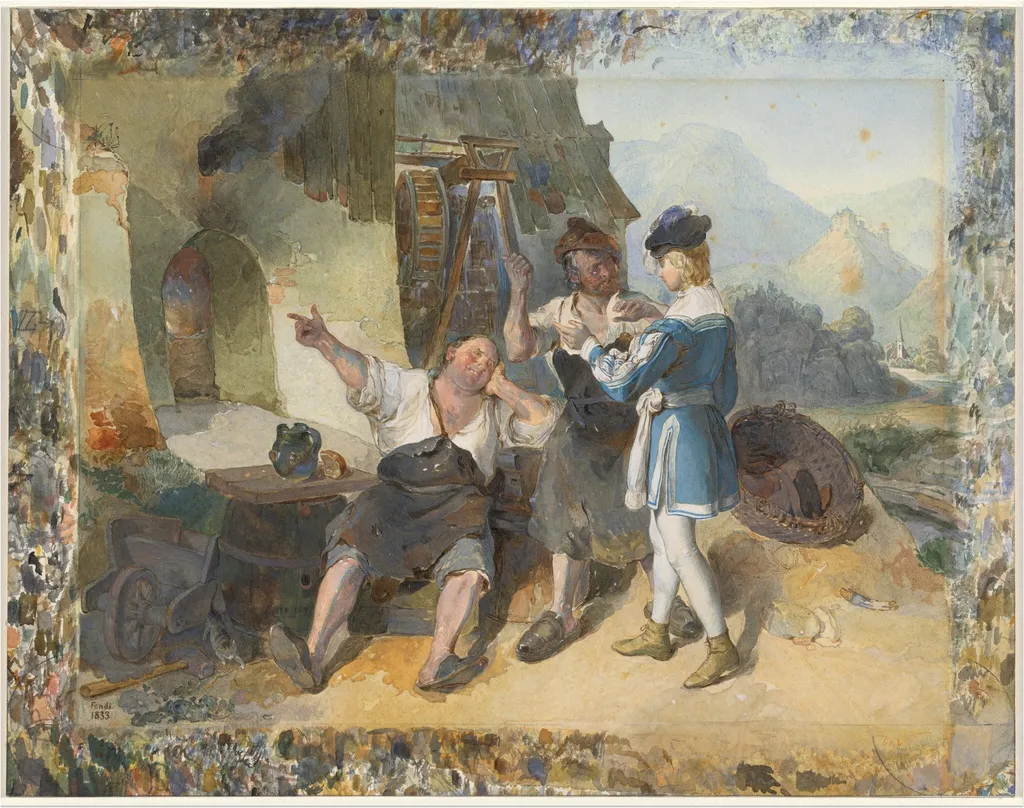
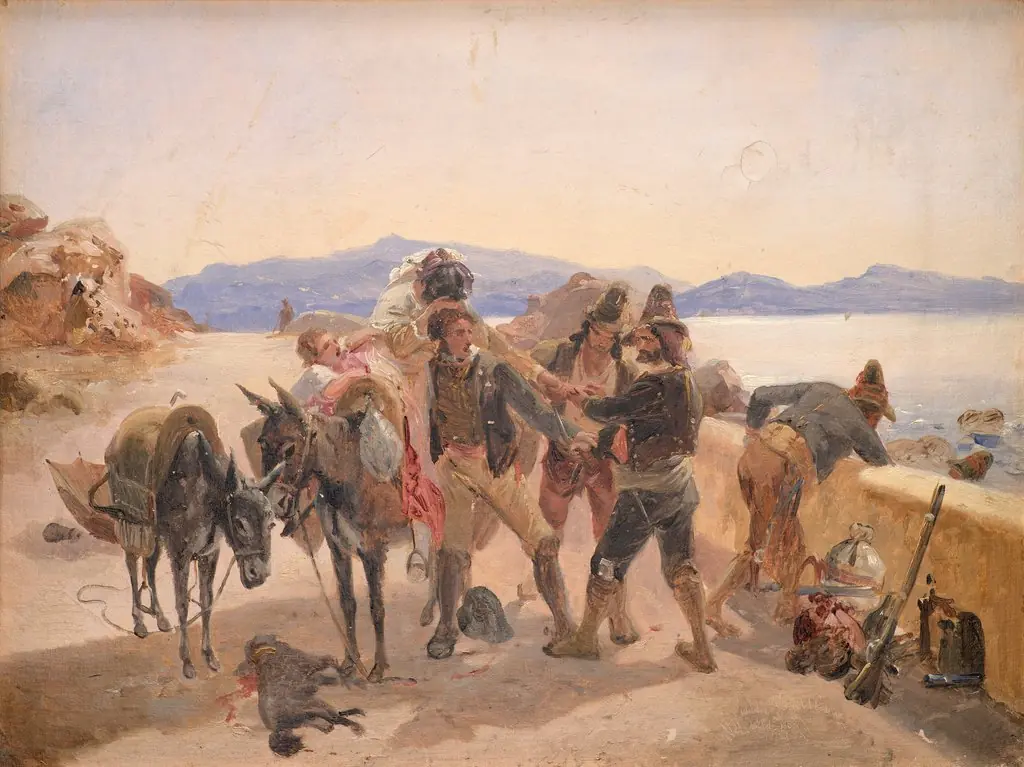
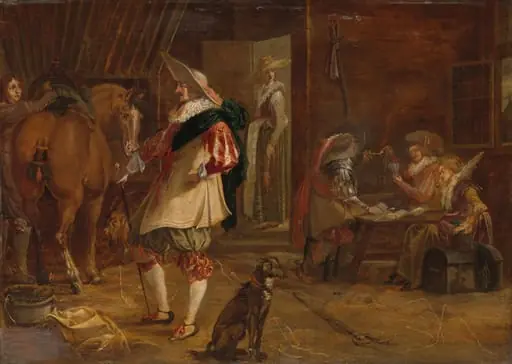
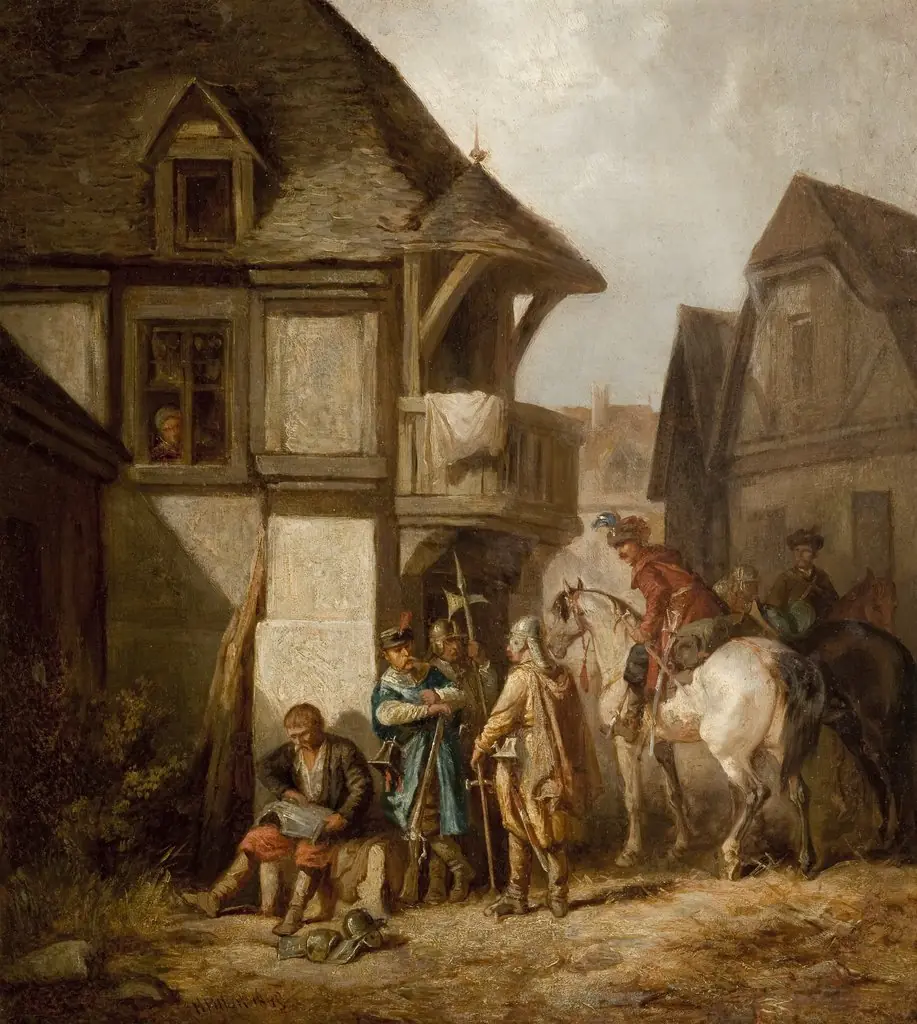
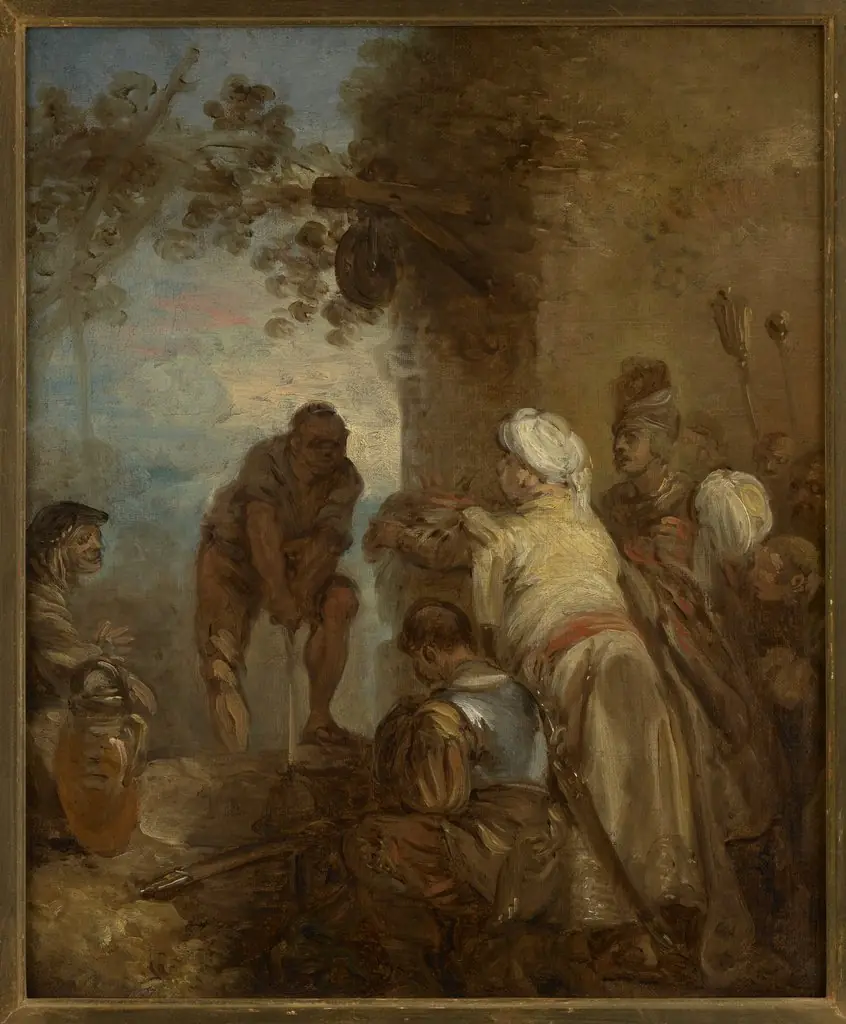
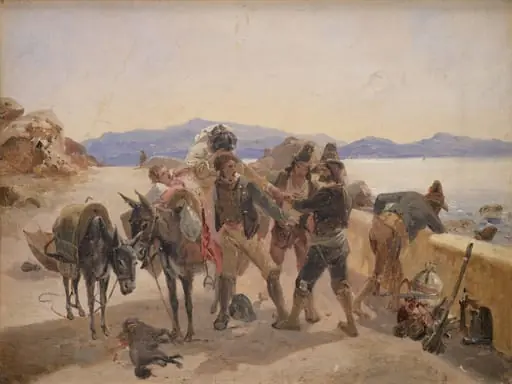
Fridolin and Two Workmen by the Forge is a gouache drawing by the Romanticist artist Peter Fendi. It dates from 1833 and is held in the collection of the National Gallery of Art.
About this work
Overview
Created in 1833, *Fridolin and Two Workmen by the Forge* is a drawing by Austrian court painter Peter Fendi. Executed in watercolor and gouache over a graphite sketch on laid paper, the work measures a modest size and belongs to the Biedermeier period, a time when artists favoured intimate, domestic scenes rendered with restrained realism.
Subject & Meaning
The composition presents three men gathered beside a blacksmith’s forge on a rocky shore. A seated figure leans back with his mouth open, a second figure points upward, and a third, dressed in blue and white, holds a small object while observing the seated man. A half‑concealed boat and a barrel complete the setting, suggesting a moment of everyday labour and quiet interaction.
Technique & Style
Fendi began with a graphite underdrawing, then applied layers of watercolor and opaque gouache. The brushwork is intentionally loose, giving the image a sketch‑like immediacy, while the palette of earthy browns, muted blues, soft whites and a touch of green creates a subdued atmosphere. The glazing of transparent washes builds depth without sacrificing the work’s overall softness.
History & Provenance
As a leading figure of the Biedermeier movement, Fendi produced numerous genre scenes for the Viennese court. This drawing, dated 1833, reflects his typical approach to depicting ordinary life with refined detail. It entered public collections in the early twentieth century, passing through several European museums before being acquired by its present institution.
Artist & collection
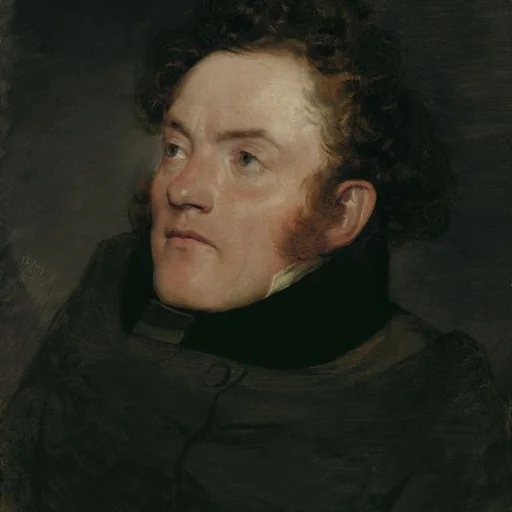
Artist
Peter Fendi (4 September 1796 – 28 August 1842) was an Austrian court painter, portrait and genre painter, engraver, and lithographer. He was one of the leading artists of the Biedermeier period.