Artwork
Apollo
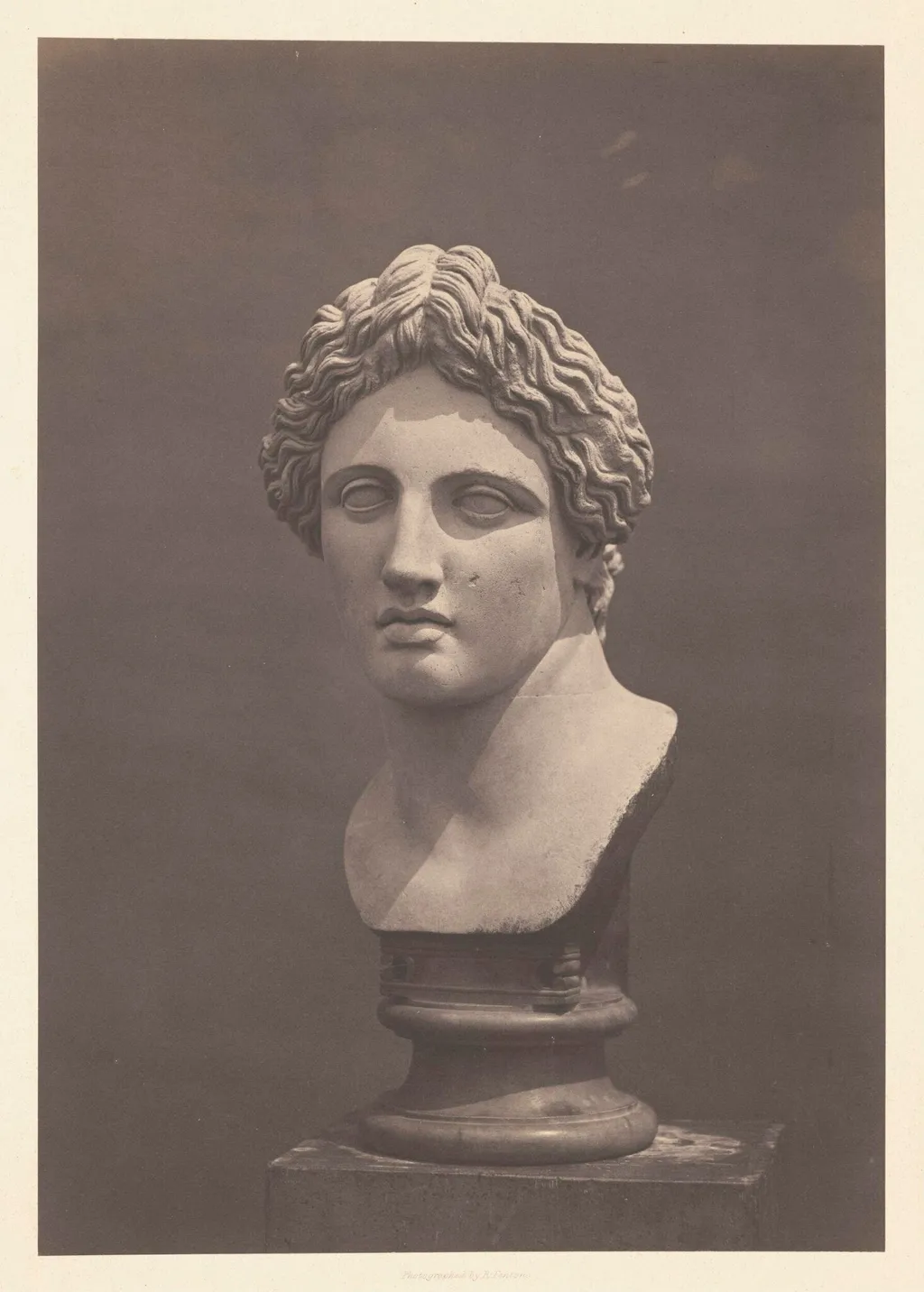
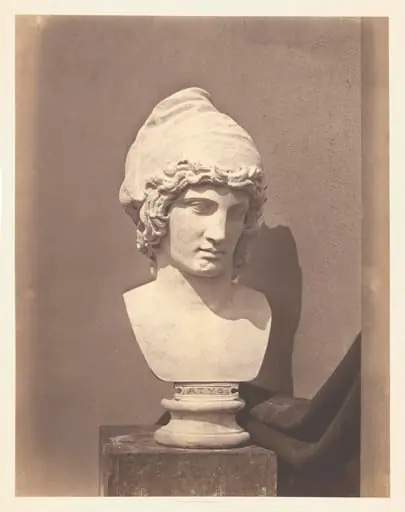
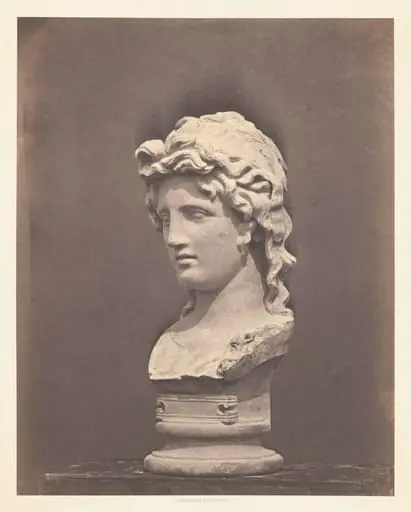
Apollo is a photographic photography by the Impressionist artist Roger Fenton. It dates from 1855 and is held in the collection of the Victoria and Albert Museum.
About this work
This photo was taken in 1855, showing how artists used early photography to capture sculptures.
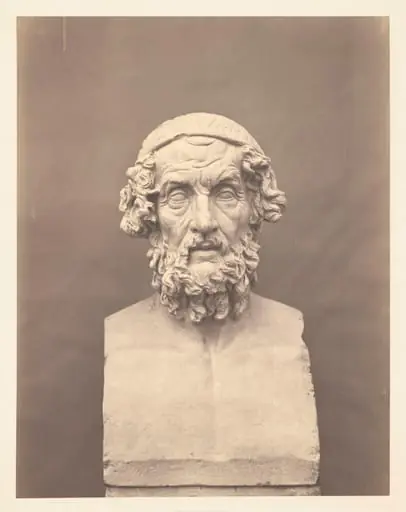
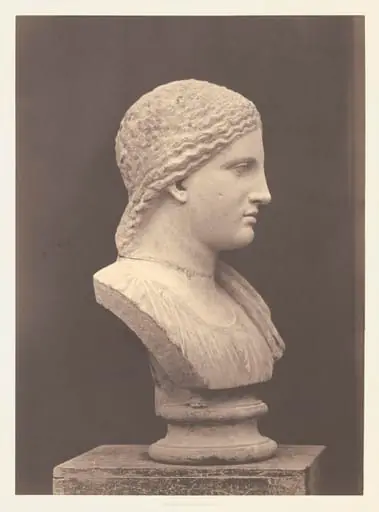
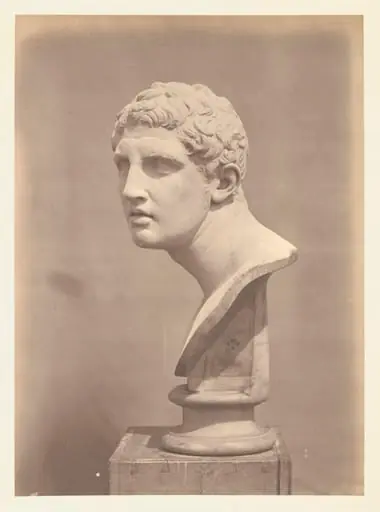
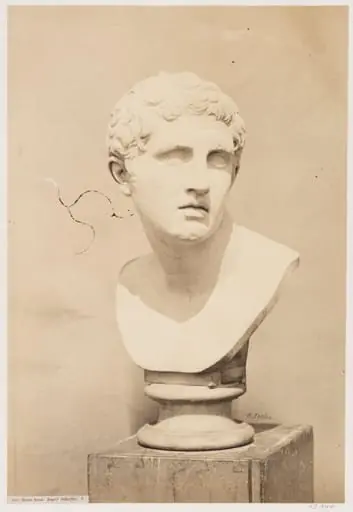
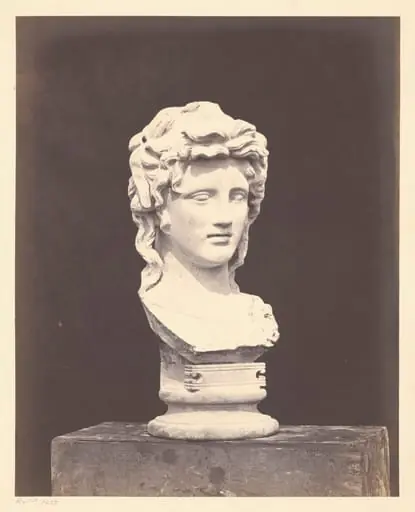
This is a black-and-white photo of a stone bust. The head is smooth, with wavy hair carved neatly around the forehead. The face has a calm expression, and the neck is cleanly broken just below the chin.
This photo was taken in 1855, showing how artists used early photography to capture sculptures. The bust looks like a copy of an ancient Greek style, but it’s actually a modern work.
Check out the Victoria and Albert Museum to see more sculptures like this in person.
Overview
This black-and-white photograph, dated 1855 and attributed to Roger Fenton, depicts a stone bust of a man with neatly carved wavy hair and a calm expression. The bust's neck is cleanly broken off just below the chin.
Subject & Meaning
The subject is a modern sculpture in the style of ancient Greek busts, featuring a serene male figure with wavy hair framing the forehead. The calm facial expression is characteristic of classical influences.
Technique & Style
Captured through early photographic techniques, the image showcases Fenton's ability to render sculptural detail in monochrome. The photograph's composition focuses attention on the bust, placed atop a box, highlighting its form.
History & Provenance
Attributed to Roger Fenton, 1855, this photograph demonstrates the early use of photography to document and appreciate sculpture, potentially indicating the bust's presence in a collection or studio at the time.
Context
The photograph reflects the Victorian era's interest in classical antiquity and the emerging role of photography in art documentation, distinct from its use in portraiture or landscape.
Artist & collection