Artwork
Head of Bacchante
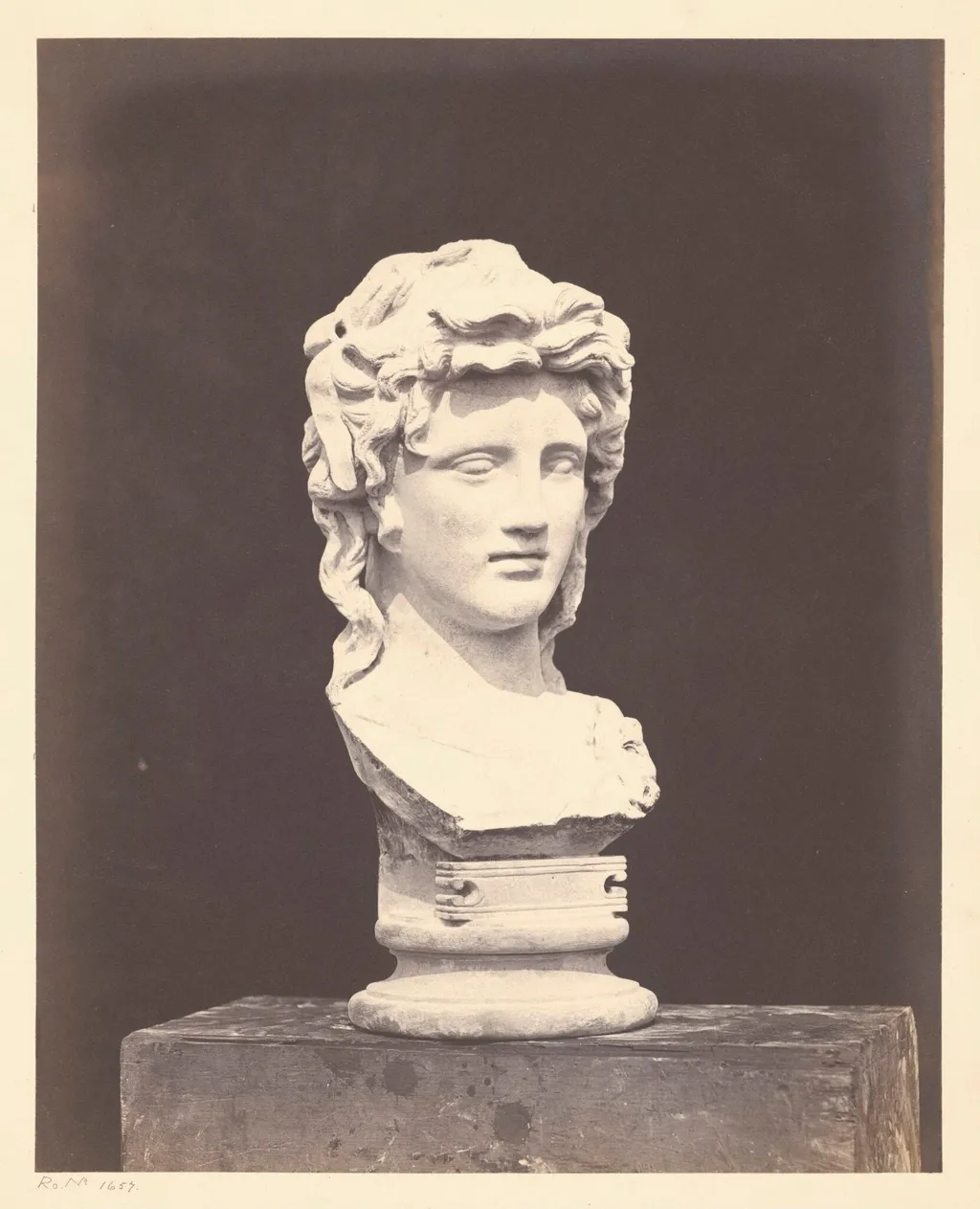
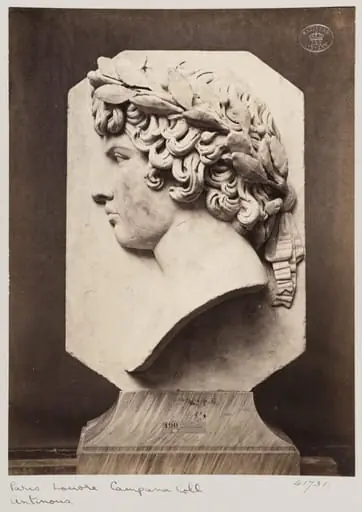
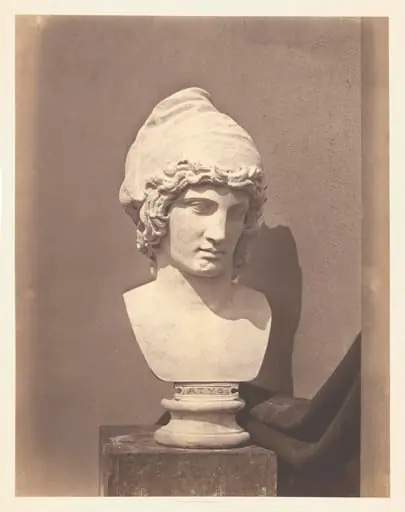
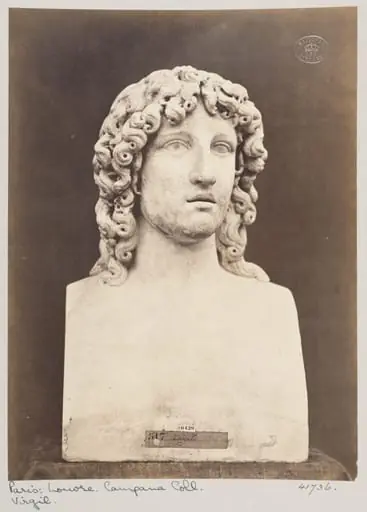
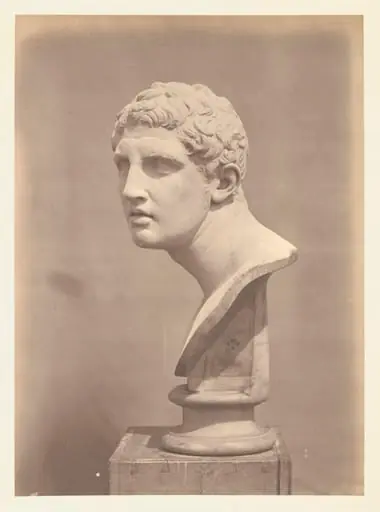
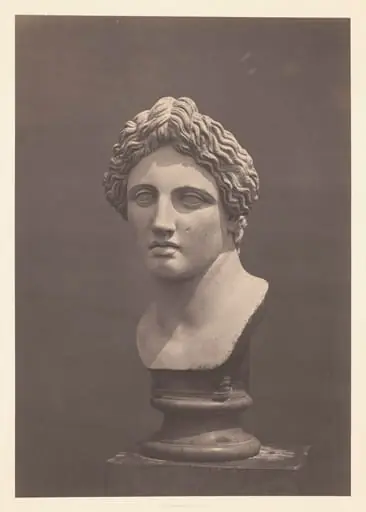
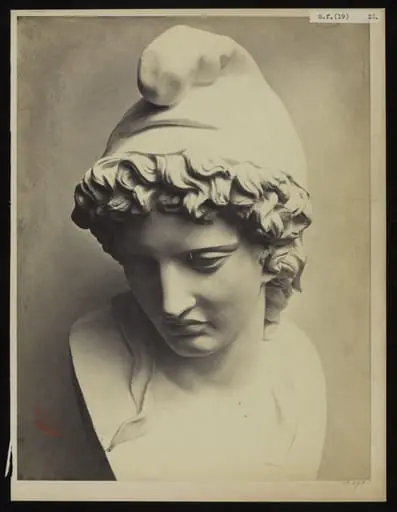
Head of Bacchante is a photographic photography by the Impressionist artist Roger Fenton. It dates from 1855 and is held in the collection of the Victoria and Albert Museum. The black‑and‑white photograph presents a marble sculpture of a woman's head.
About this work
Overview
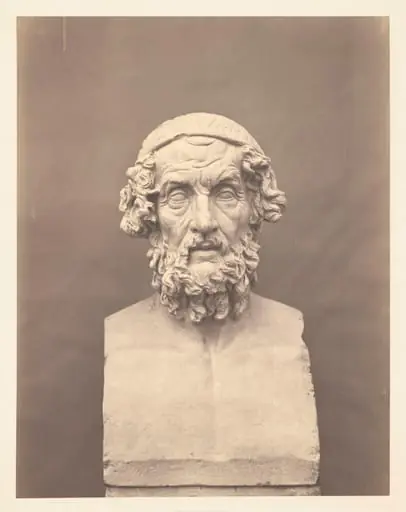
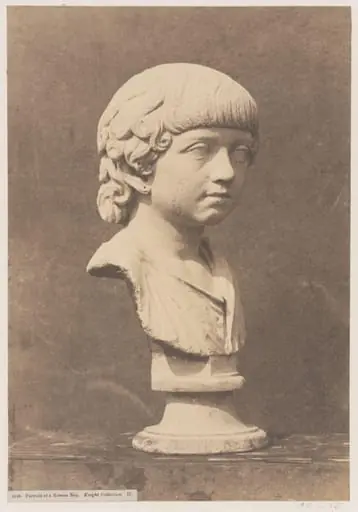
The black‑and‑white photograph presents a marble sculpture of a woman's head. The figure displays curled hair gathered behind the neck and a tranquil expression, with the gaze directed downward. The bust rests on a modest base that is only partially visible, emphasizing the sculpted visage as the central element of the composition.
Subject & Meaning
The work captures a contemplative female figure, her serene demeanor suggested by the softened features and lowered eyes. The curled hair and smooth contours convey a classical ideal of beauty, inviting viewers to consider themes of introspection and timeless elegance within the sculptural tradition.
Technique & Style
Captured in monochrome, the photograph highlights the contrast between light and shadow on the marble surface, revealing subtle modeling of the facial planes. The use of chiaroscuro‑like lighting accentuates the three‑dimensional quality of the stone, while the shallow depth of field isolates the bust from its surroundings.
History & Provenance
The image is attributed to Roger Fenton, a 19th‑century British photographer noted for his landscape and portrait work. Though primarily recognized for his documentation of the Crimean War, Fenton also produced studio studies of artworks, employing the photographic processes of his era to document sculptural forms.
Context
During the Victorian period, photography began to serve as a means of recording and disseminating images of classical sculpture, aligning with contemporary interests in antiquity and the arts. Fenton’s photograph reflects this trend, offering a reproducible view of a marble bust that could be studied beyond the museum setting.
Legacy
The photograph stands as an early example of using the camera to document three‑dimensional art, influencing later practices in art photography and archival documentation. Its clear rendering of form and light continues to inform discussions of how photographic technique can translate sculptural qualities onto a two‑dimensional medium.
Artist & collection