Artwork
Seven Areas from Salzburg and Berchtesgaden. Arranged according to the seven days of the week, connected by two allegorical sheets
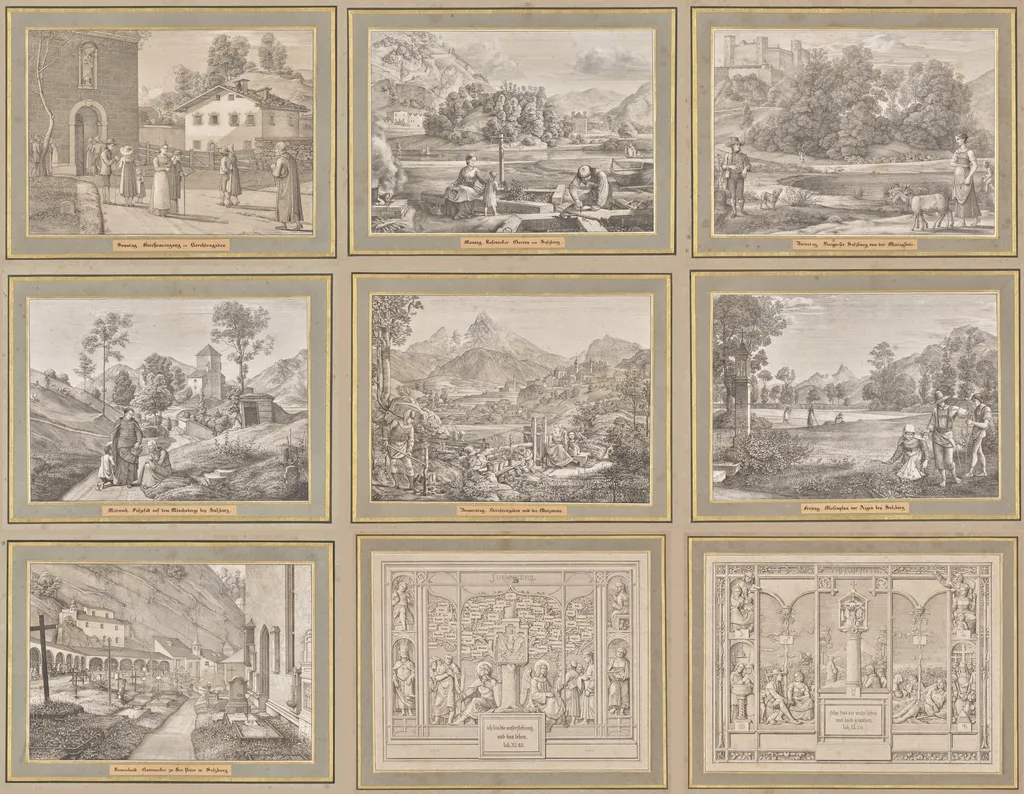
Seven Areas from Salzburg and Berchtesgaden. Arranged according to the seven days of the week, connected by two allegorical sheets is a print by the Romanticist artist Ferdinand Olivier. It dates from 1820 and is held in the collection of the Cleveland Museum of Art.
About this work
Overview
Seven Areas from Salzburg and Berchtesgaden is a print by Ferdinand Olivier, dated 1820, featuring nine interconnected landscape scenes arranged in a 3x3 grid, now part of The Cleveland Museum of Art's collection.
Subject & Meaning
The print allegorically represents the seven days of the week, supplemented by two additional allegorical sheets. Scenes depict serene countryside views with rolling hills, trees, buildings, and occasional figures, evoking a sense of harmony between nature and human presence.
Technique & Style
Rendered in a range of colors from soft pastels to deep earth tones, the work showcases meticulous detail in its natural landscapes, characteristic of the Romantic movement's emphasis on emotional resonance and natural beauty.
History & Provenance
Created in 1820 by Ferdinand Olivier, the print is currently housed at The Cleveland Museum of Art, though specific acquisition details are not provided here.
Context
This work exemplifies the Romantic era's artistic values, prioritizing the aesthetic and emotional impact of natural landscapes over strict realism.
Artist & collection

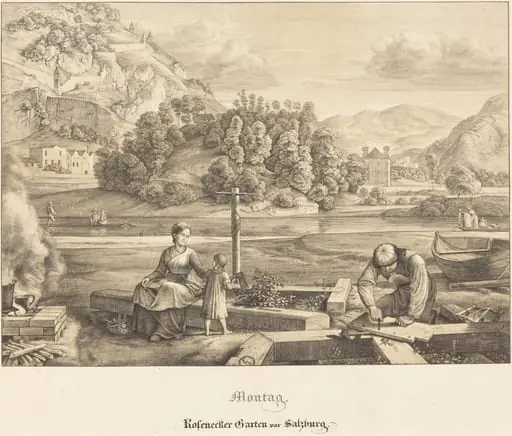 Montag - Rosenecker Garten vor Salzburg (Monday - Rosenecker Garden near Salzburg)
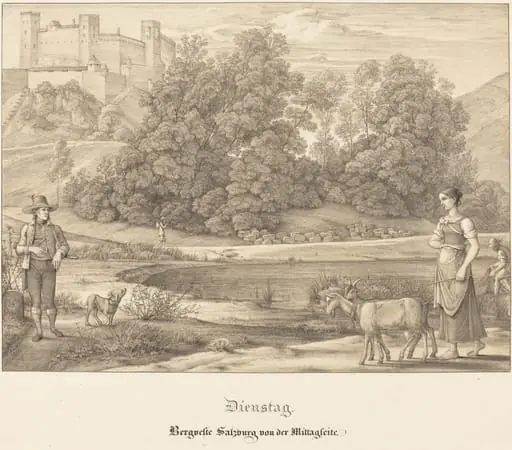 Dienstag - Bergveste Salzburg vor der Mittagseit (Tuesday - The Castle of Salzburg from the Noontime Side)
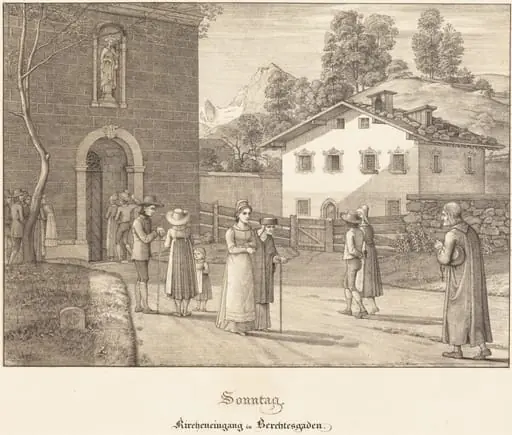 Sonntag - Kircheneingang in Berchtesgaden (Sunday - Going to Church near Berchtesgaden)
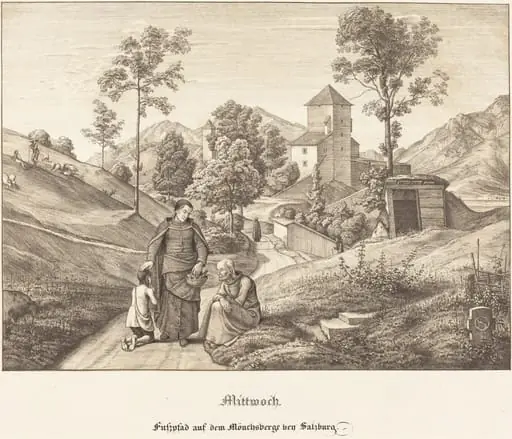 Mittwoch - Fusspfad auf dem Mönchsberge bey Salzburg (Wednesday - Footpath on the Mönchsberge near Salzburg)
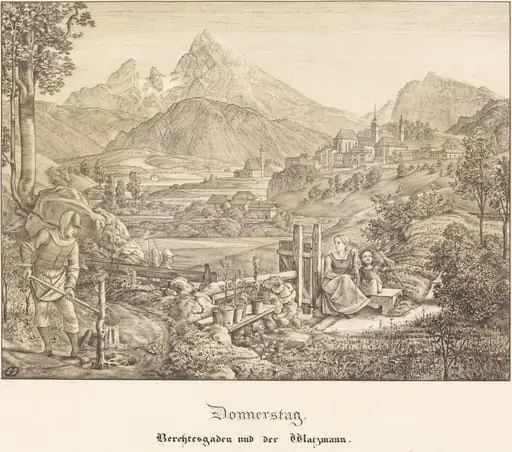 Donnerstag - Berchtesgaden und der Watzmann (Thursday - Berchtesgaden and the Watzmann Mountain)
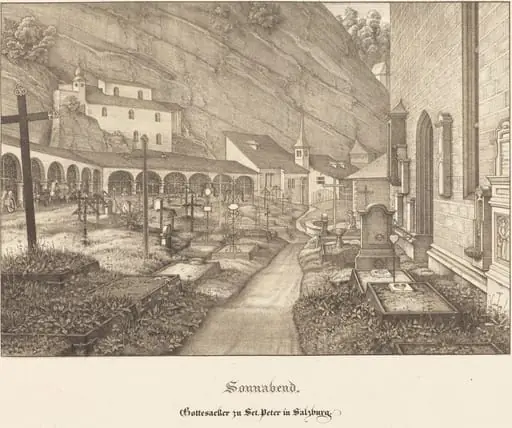 Sonnabend - Gottesacker zu St. Peter in Salzburg (Saturday - Graveyard of St. Peter's in Salzburg)
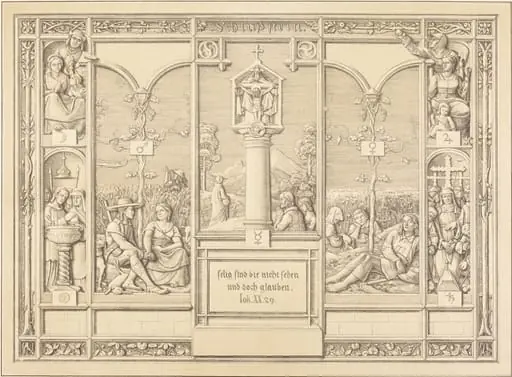 Tailpiece: Selig sind die nicht sehen und doch glauben (Blessed are those who do not
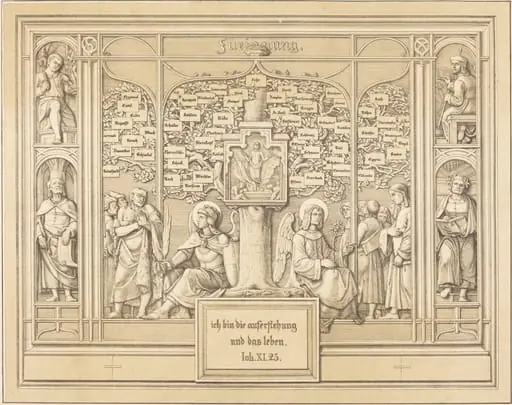 Dedication: Ich bin die Auferstehung und das Leben (I am the resurrection and the life)
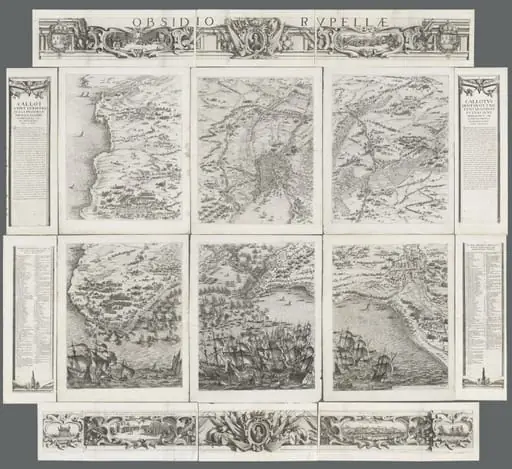 The Siege of La Rochelle
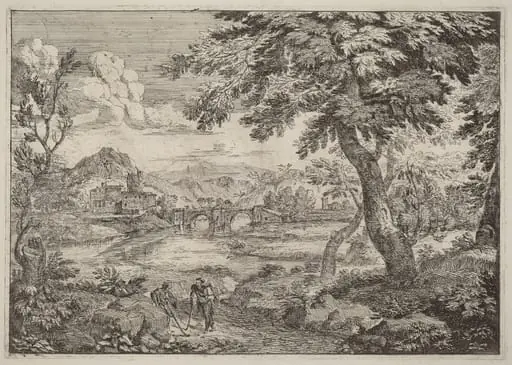 Double Arched Bridge
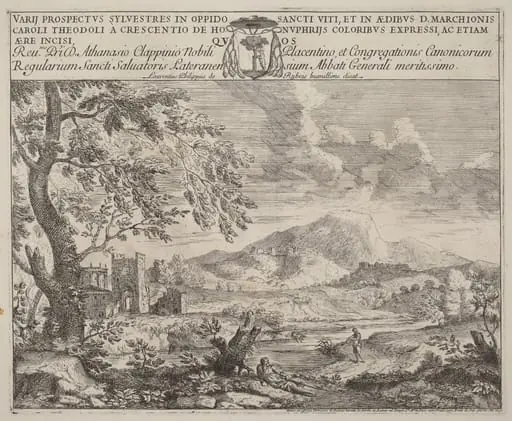 The Flutist
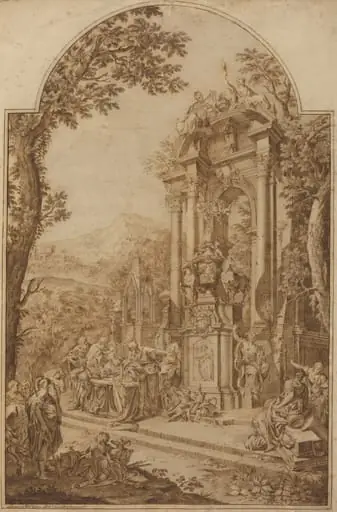 Monument to William Chancellor Cowper
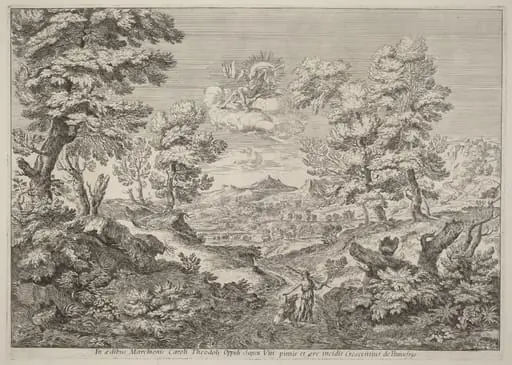 Apollo and a Nymph Leading a Lion
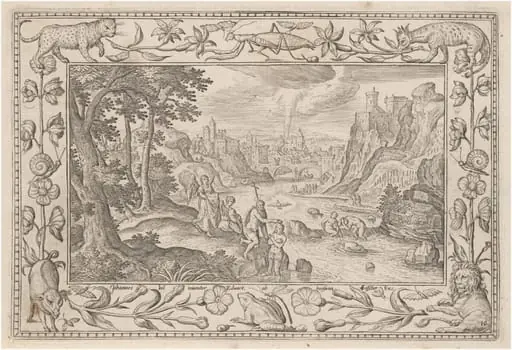 The Baptism of Christ
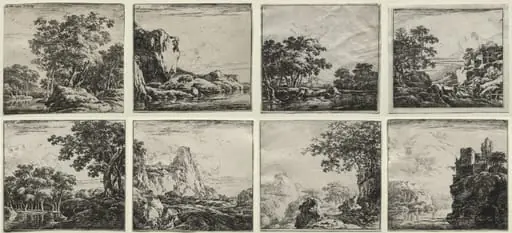 Etchings by Herman Naiwincx
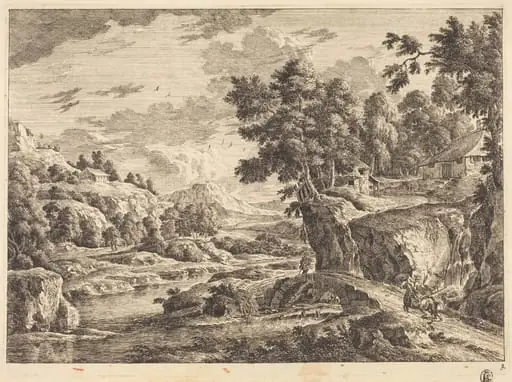 Landscape with a Bridge and Three Farm Buildings
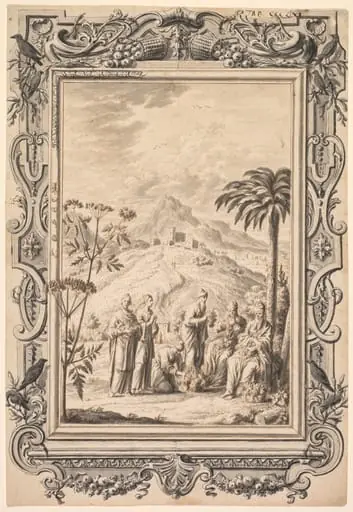 Illustration and Border Design for Kupfer-Bibel (Copper Bible)
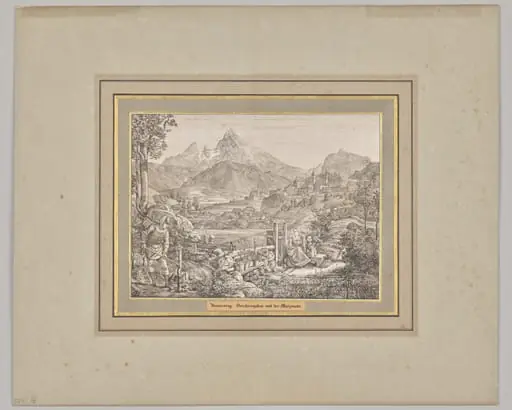 Thursday. Berchtesgaden and the Watzmann