Artwork
Illustration and Border Design for Kupfer-Bibel (Copper Bible)
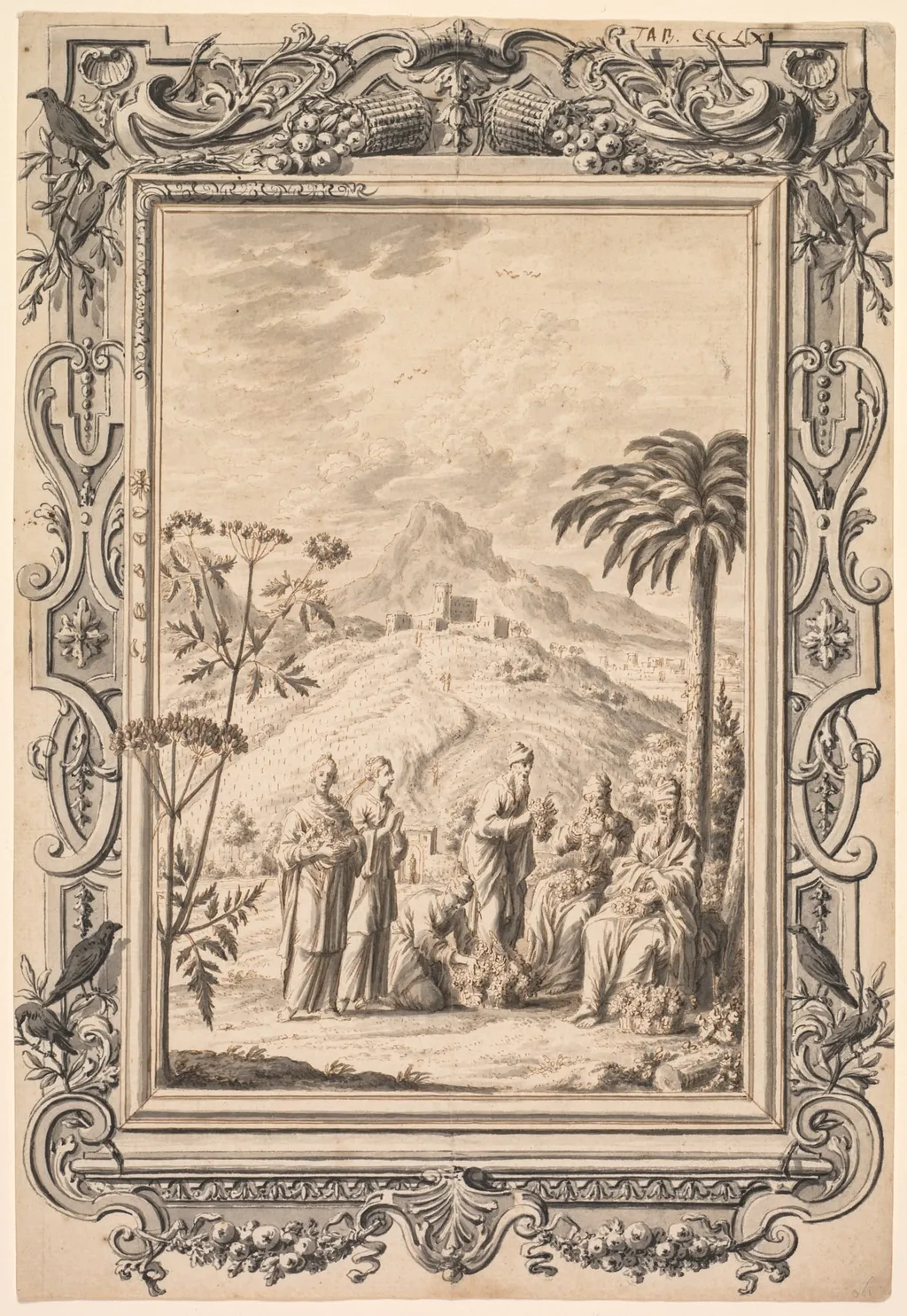
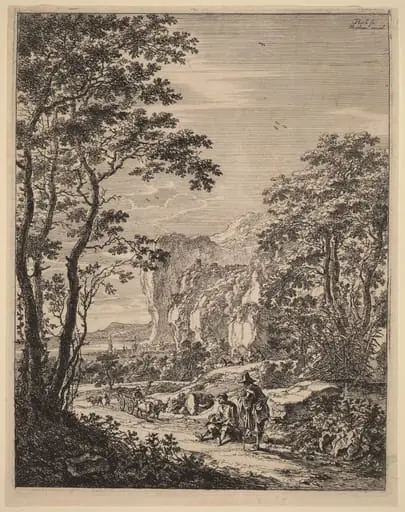
Illustration and Border Design for Kupfer-Bibel (Copper Bible) is a drawing by the Baroque artist Johan Melchior Füssli. It dates from 1730 and is held in the collection of the Cleveland Museum of Art.
About this work
Overview
Created around 1730 by Swiss artist Johan Melchior Füssli, this drawing serves as an illustration and decorative border for the Kupfer‑Bibel, a copper‑plate Bible. The work is part of the Cleveland Museum of Art’s collection and exemplifies the intricate ornamental designs that accompanied early‑modern printed texts.
Subject & Meaning
The central vignette depicts a small group of figures in an imagined garden set against a gentle hill. The figures, dressed in period costume, are positioned near cultivated plants and a solitary palm tree, while a distant castle crowns the horizon, suggesting a harmonious blend of nature, architecture, and human activity.
Technique & Style
Füssli employed fine pen work to render both the interior scene and the surrounding frame. The border is densely populated with miniature motifs—birds, vines, flowers, and fruit—arranged in a symmetrical, baroque rhythm that emphasizes decorative richness and the tactile quality of the copper‑plate medium.
History & Provenance
The drawing was produced as a preparatory design for the Kupfer‑Bibel, an early 18th‑century illustrated Bible printed on copper plates. It entered the Cleveland Museum of Art’s holdings through acquisition in the mid‑20th century, where it remains a representative example of Swiss book illustration from the period.
Context
Füssli’s work reflects the broader baroque aesthetic that favored elaborate ornamentation and dynamic compositions in religious publications. The integration of narrative illustration with an ornate border illustrates the period’s aim to enhance devotional texts with visual splendor, aligning spiritual content with artistic grandeur.
Artist & collection

 The Judgment of Paris
 Capriccio of Antique Ruins with Men Gazing at a Classical Orator
 Monument to William Chancellor Cowper
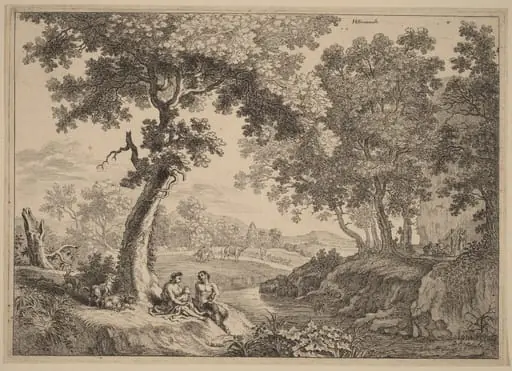 Satyr Family Seated under a Tree
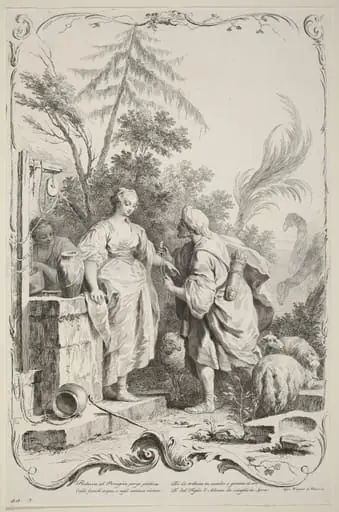 Rebecca at the Well
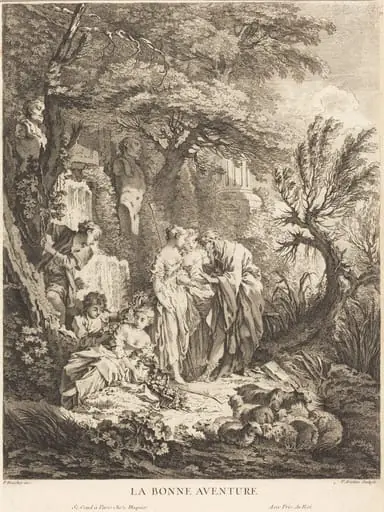 La Bonne Aventure
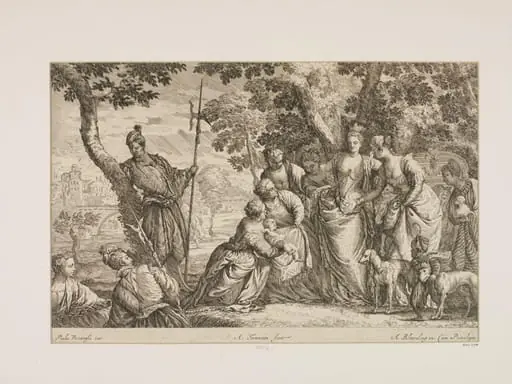 Infant Moses
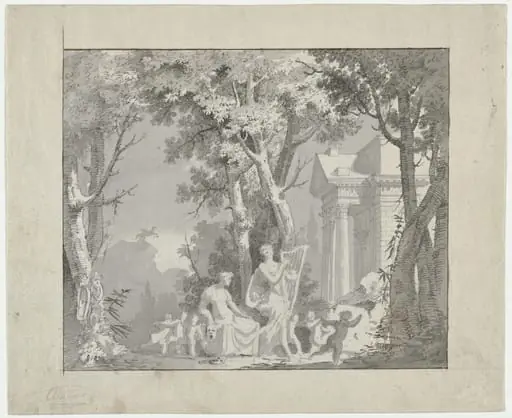 Classical Scene
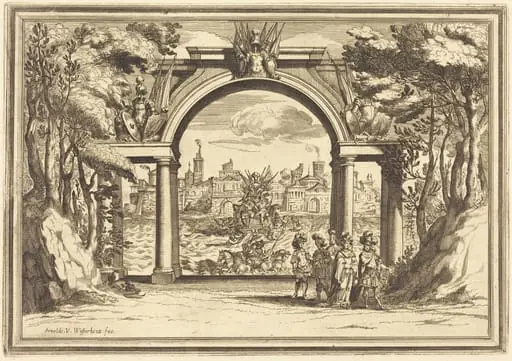 Il Greco in Troia: Plate 1
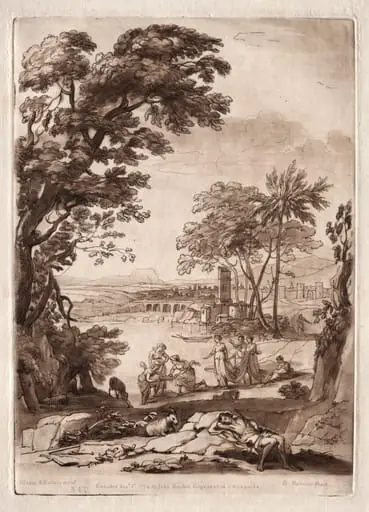 Liber Veritatis: No. 47, A River Scene with the Finding of Moses
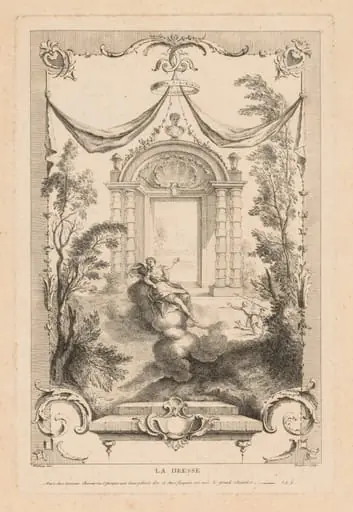 The Goddess, Diana on the Clouds
 The Ox-Cart: View between Ancona and Sinigaglia