Artwork
Thursday. Berchtesgaden and the Watzmann
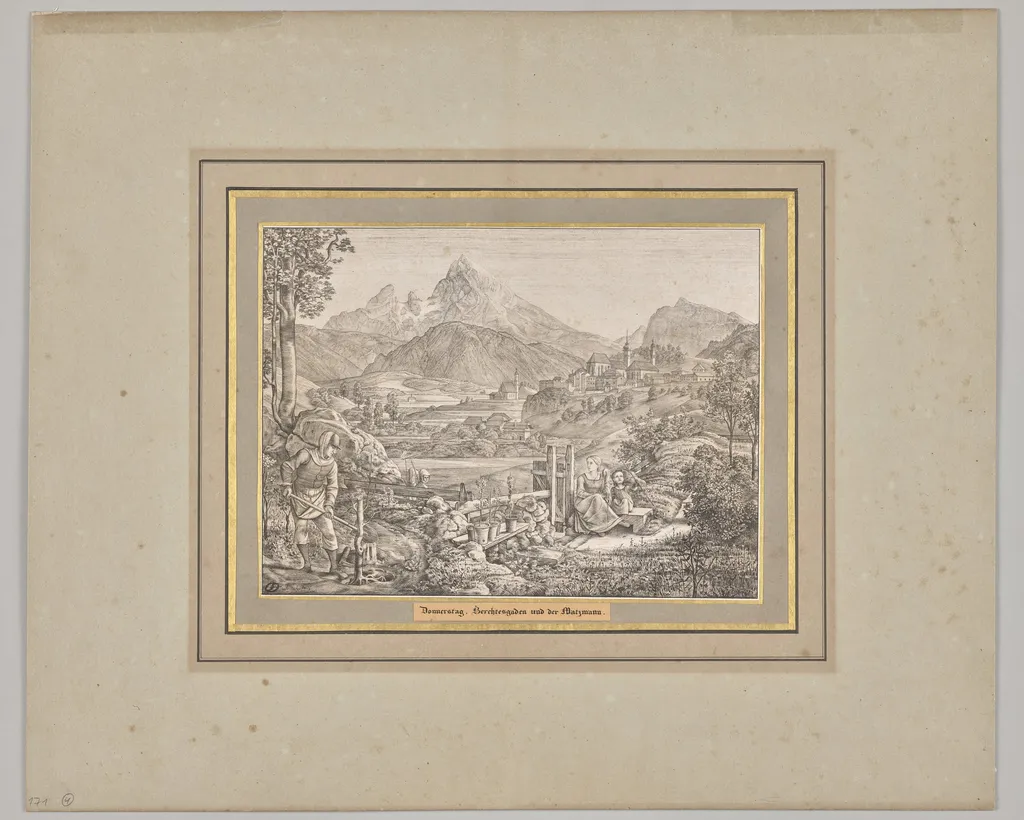
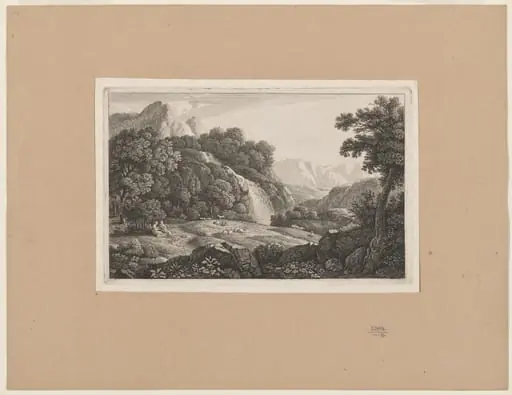
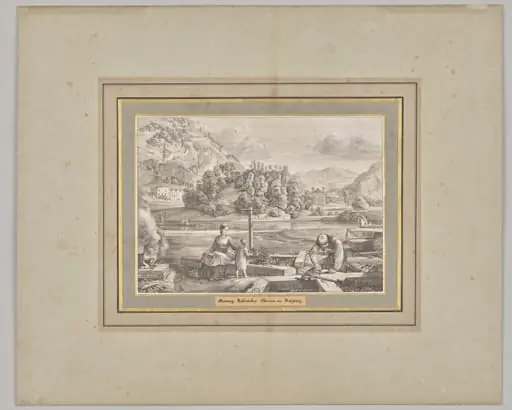
Thursday. Berchtesgaden and the Watzmann is a print by the Romanticist artist Ferdinand Olivier. It dates from 1820 and is held in the collection of the Cleveland Museum of Art.
About this work
Overview
Ferdinand Olivier’s print, dated 1820, depicts a tranquil Alpine settlement with the towering Watzmann peak looming behind the village. A solitary figure in period attire leans on a walking stick on the left, while a woman and child sit near a fence on the right, a dog resting nearby. The composition balances the calm of daily life with the imposing presence of the surrounding landscape.
Subject & Meaning
The image captures a moment of everyday existence in Berchtesgaden, a Bavarian town at the foot of the Watzmann. By placing ordinary figures against a dramatic mountain backdrop, the work reflects the Romantic interest in the relationship between humanity and the sublime forces of nature, hinting at both comfort and the underlying vulnerability of life in a rugged environment.
Technique & Style
Executed as a print, Olivier employs fine line work and subtle tonal gradations to render both the delicate details of the figures and the rugged texture of the mountain. The treatment of light and shadow, along with a restrained palette, aligns the piece with early 19th‑century Romantic aesthetics, emphasizing atmospheric mood over strict realism.
History & Provenance
Created in 1820, the print entered the collection of the Cleveland Museum of Art, where it remains on view. Its acquisition reflects the museum’s broader interest in early German Romantic prints, providing insight into the period’s visual culture and the dissemination of Alpine imagery across Europe.
Artist & collection

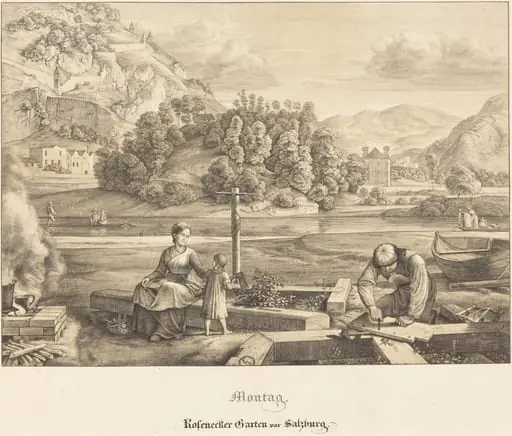 Montag - Rosenecker Garten vor Salzburg (Monday - Rosenecker Garden near Salzburg)
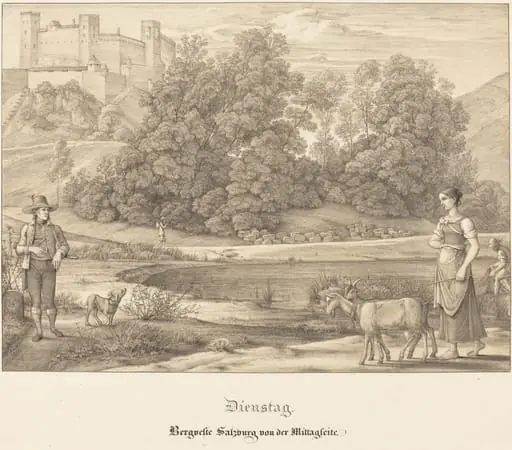 Dienstag - Bergveste Salzburg vor der Mittagseit (Tuesday - The Castle of Salzburg from the Noontime Side)
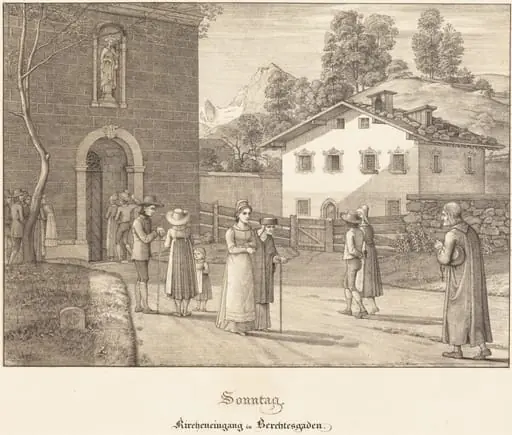 Sonntag - Kircheneingang in Berchtesgaden (Sunday - Going to Church near Berchtesgaden)
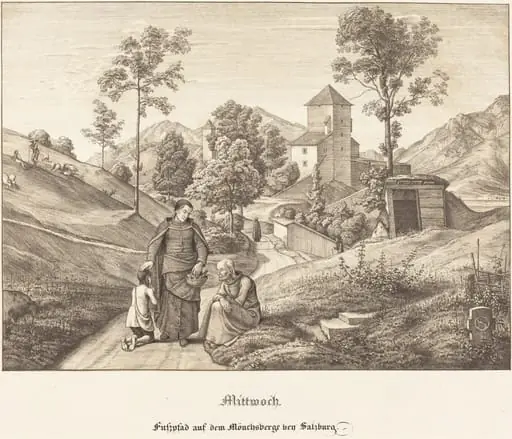 Mittwoch - Fusspfad auf dem Mönchsberge bey Salzburg (Wednesday - Footpath on the Mönchsberge near Salzburg)
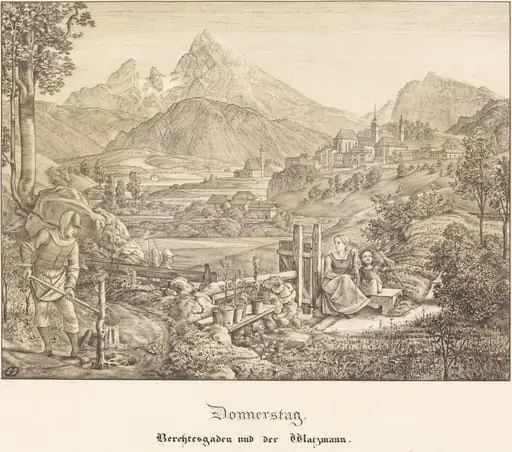 Donnerstag - Berchtesgaden und der Watzmann (Thursday - Berchtesgaden and the Watzmann Mountain)
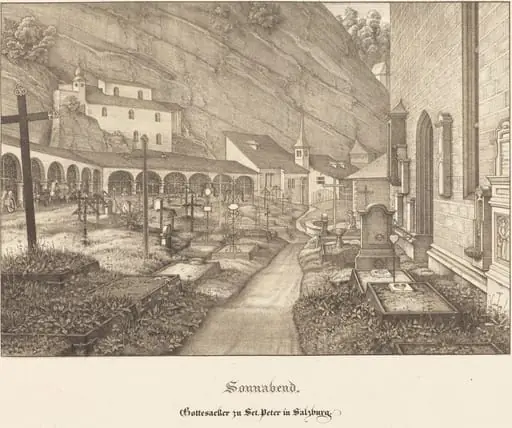 Sonnabend - Gottesacker zu St. Peter in Salzburg (Saturday - Graveyard of St. Peter's in Salzburg)
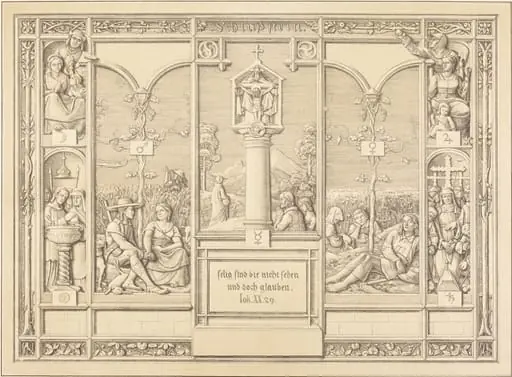 Tailpiece: Selig sind die nicht sehen und doch glauben (Blessed are those who do not
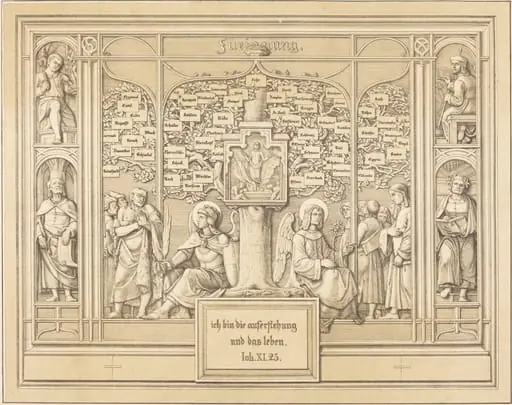 Dedication: Ich bin die Auferstehung und das Leben (I am the resurrection and the life)