Artwork
Sf. Ieronim
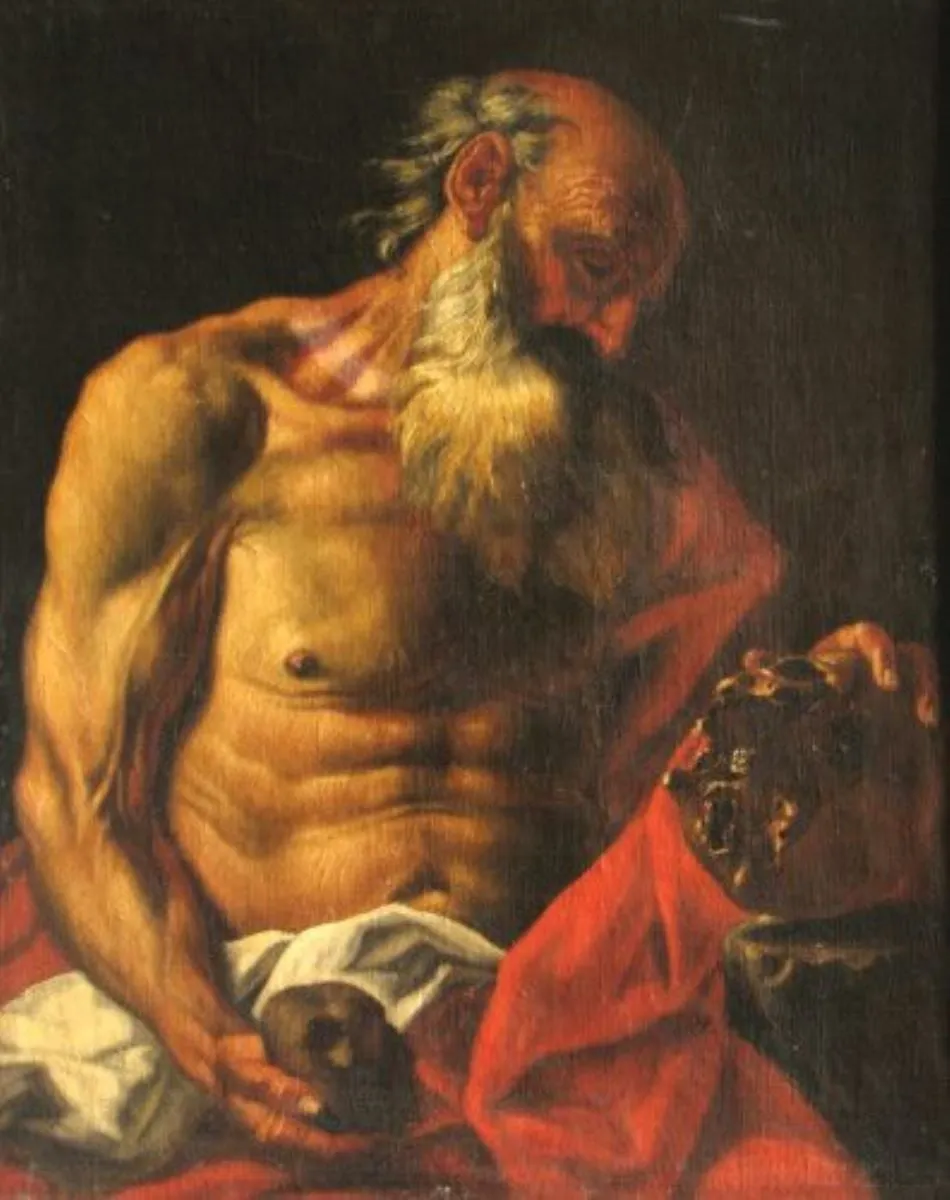
Sf. Ieronim is an unspecified painting by the Baroque artist Enrico Fiammingo. It dates from 1650 and is held in the collection of the Brukenthal National Museum.
About this work
Overview
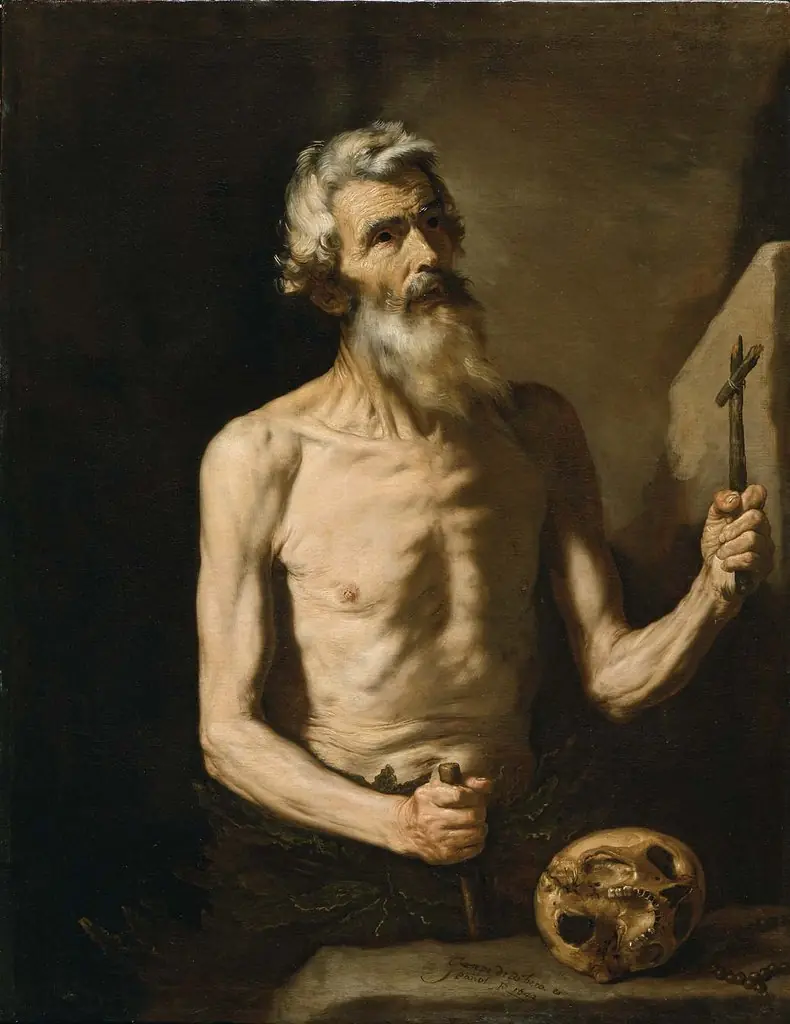
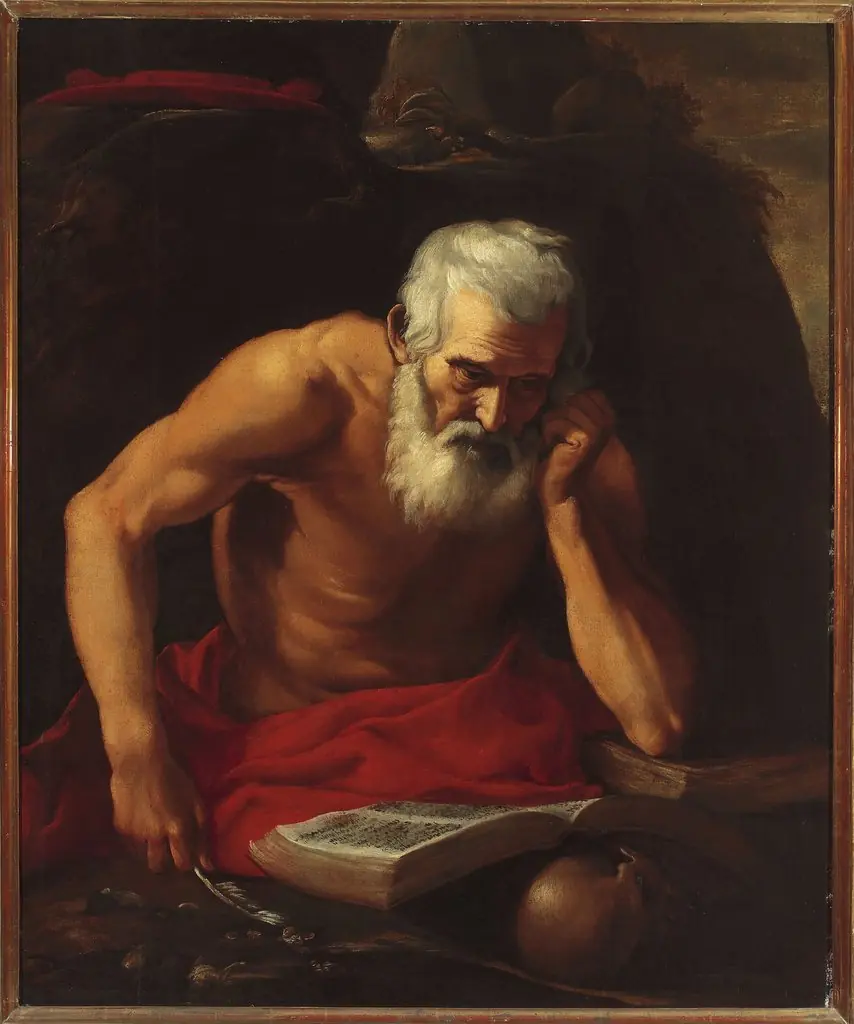
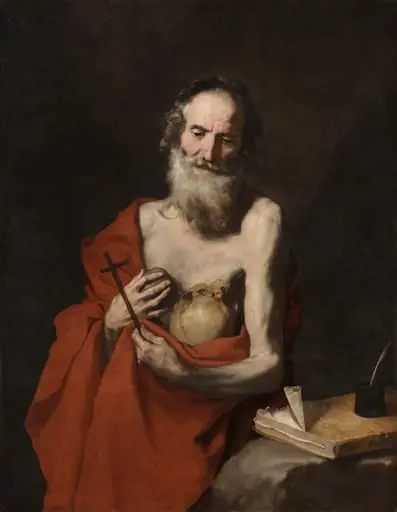
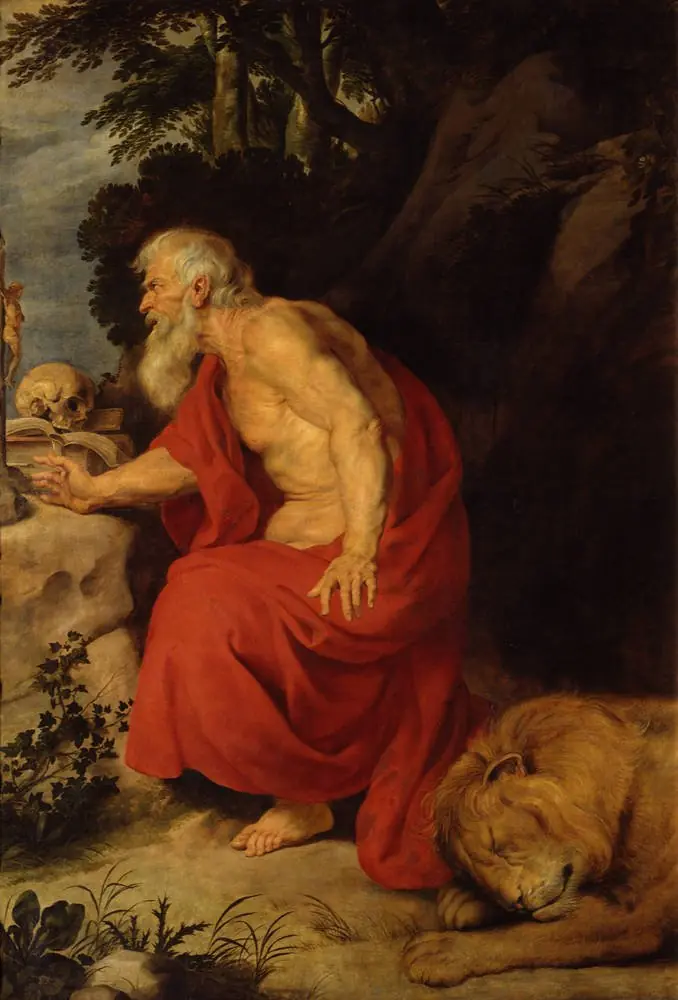
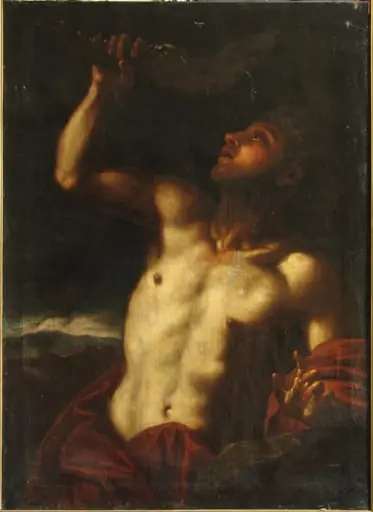
Enrico Fiammingo’s 1650 canvas entitled *Sf. Ieronim* portrays a solitary, unclothed figure with a flowing white beard and disheveled hair. The man is seated, clutching a stone object in one hand and a piece of cloth in the other, his torso illuminated against a dark backdrop. The composition centers on the contrast between the warm flesh tones and the surrounding shadows.
Subject & Meaning
The work depicts a hermit‑like figure, likely a saint or ascetic, suggested by his bare state and the humble objects he holds. The stone may symbolize steadfastness or penitence, while the cloth could reference modesty or a monastic habit. The intense focus on the individual’s physicality invites contemplation of spiritual endurance through bodily sacrifice.
Technique & Style
Fiammingo employs chiaroscuro, using stark light and deep shadow to model the figure’s musculature and convey three‑dimensional form. Warm, golden hues on the skin are set against a nearly black background, heightening the dramatic effect. The red fabric draped across the lap provides a vivid accent that punctuates the otherwise muted palette.
History & Provenance
Created in the mid‑seventeenth century, *Sf. Ieronim* reflects the Baroque interest in dramatic lighting and emotive subjects. While specific ownership records are limited, the painting is attributed to Fiammingo, an artist active in the Italian regions during this period, and it remains part of a private collection that has preserved its original condition.
Artist & collection

Artist
Hendrick de Somer (1602–c.1655) was a Flemish painter who spent most of his life and career in Italy. He was mainly active in Naples.