Artwork
Bacchus and Ariadne
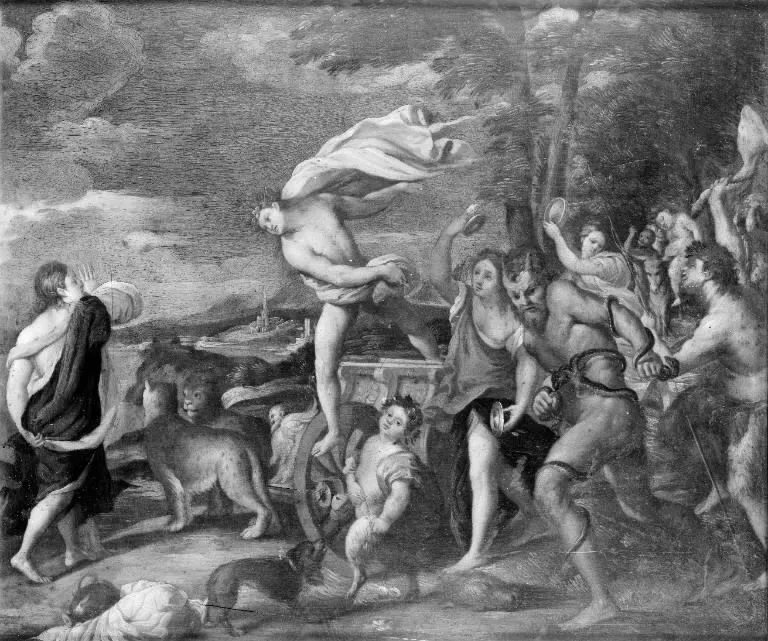
Bacchus and Ariadne is an unspecified painting by Filippo Lauri. It dates from 1668 and is held in the collection of the Statens Museum for Kunst.
About this work
Overview
Filippo Lauri’s oil painting Bacchus and Ariadne, dated around 1668, belongs to the Baroque period’s fascination with classical myths. The work is part of the collection of Denmark’s National Gallery, Statens Museum for Kunst, and presents a dynamic, crowded tableau that captures a moment of mythic drama.
Subject & Meaning
The central figure, a nude male deity, is identified as Bacchus, the Roman god of wine and revelry. He is shown grasping a cloth and standing atop a chest, while a woman clings to him—Ariadne, the Cretan princess abandoned by Theseus and later rescued by Bacchus. Their interaction suggests the moment of divine union, surrounded by other onlookers who convey the chaos of the encounter.
Technique & Style
Lauri employs vigorous brushwork and a rich palette typical of mid‑seventeenth‑century Italian painting. The composition is crowded, with figures overlapping in a spiral movement that draws the eye toward the central god. Light falls on the nude form, highlighting musculature, while the surrounding characters and animals are rendered in looser detail, enhancing the sense of immediacy.
History & Provenance
Created circa 1668, the canvas entered the Statens Museum for Kunst’s holdings in the early twentieth century, though earlier ownership records are sparse. Its presence in a national collection underscores the continued interest in Baroque mythological subjects beyond Italy.
Context
Baroque artists often used mythological narratives to explore themes of transformation and divine intervention. In this work, the stormy sky and distant ship echo the turbulent emotions associated with Ariadne’s abandonment and subsequent rescue, while the inclusion of a dog and cat adds a domestic, almost genre‑like element to the otherwise epic scene.
Legacy
While not as widely reproduced as other Bacchic scenes, Lauri’s Bacchus and Ariadne illustrates the period’s skill in combining narrative complexity with dramatic visual effects, offering scholars a clear example of how Italian painters adapted classical tales for a seventeenth‑century audience.
Artist & collection

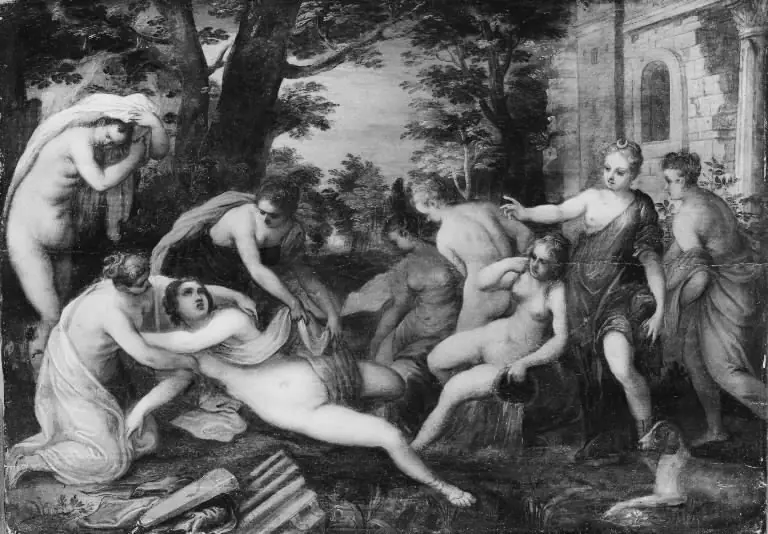 Callisto in Diana's Bath
 Callisto in Diana's Bath
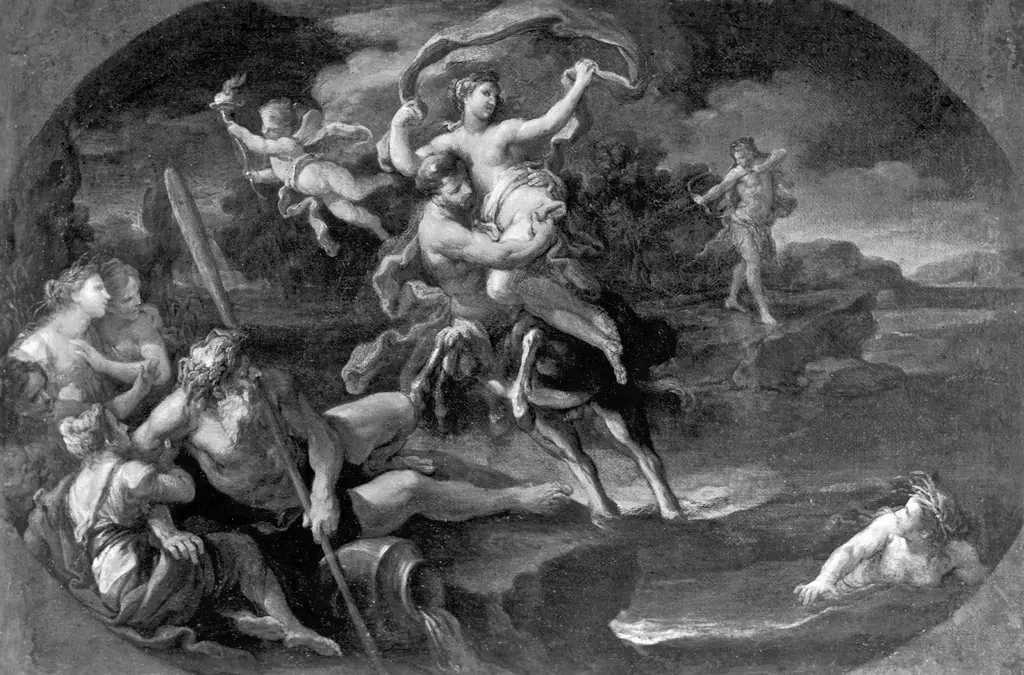 The Abduction of Deianira
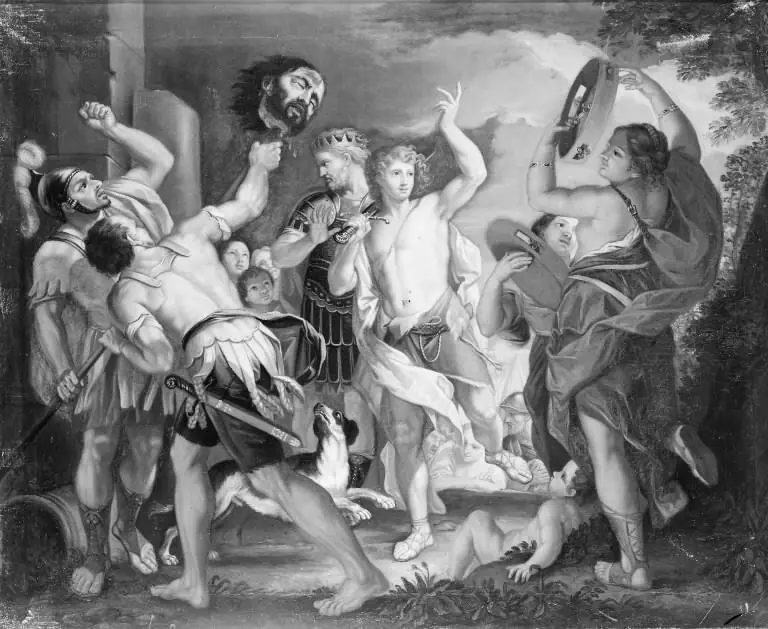 David med Goliats sværd på skulderen. Andre med hans hoved på en stage
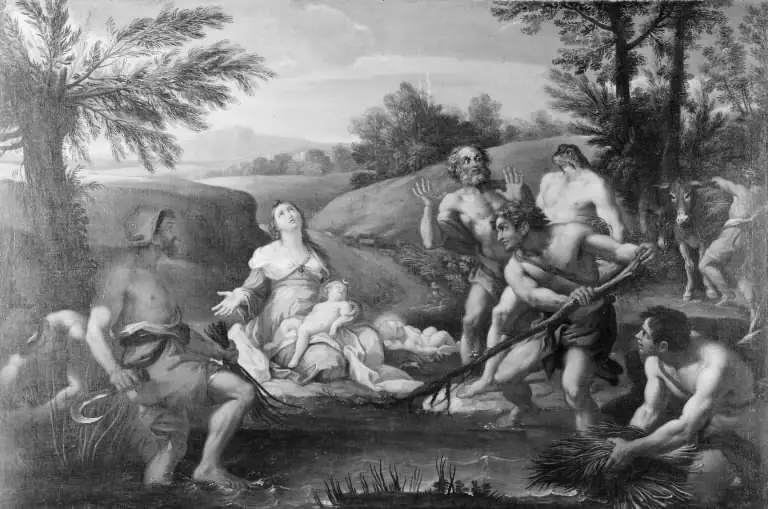 Latona forvandler Licias hyrder til frøer. Motiv fra Ovids "Metamorfoser", VI sang
 Latona forvandler Licias hyrder til frøer. Motiv fra Ovids "Metamorfoser", VI sang
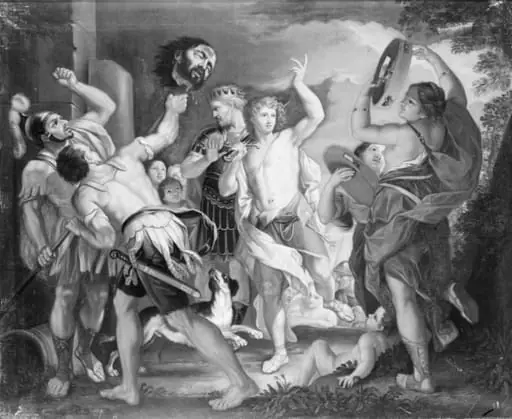 David med Goliats sværd på skulderen. Andre med hans hoved på en stage
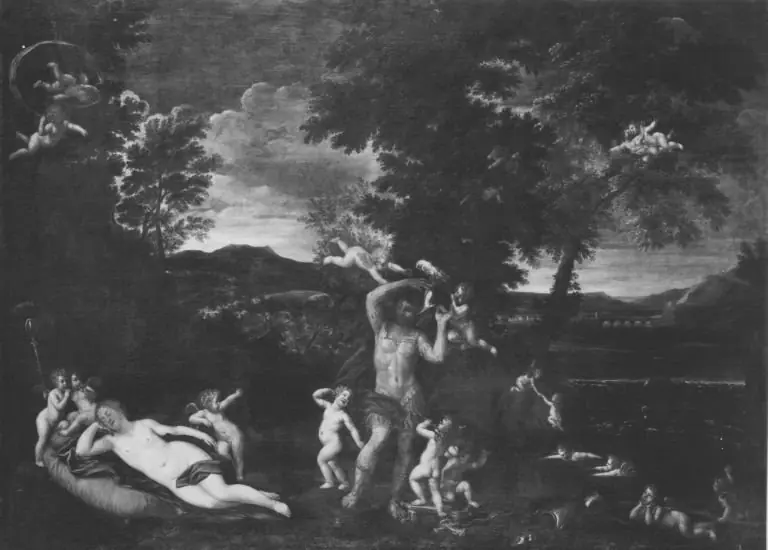 Venus, von Mars belauscht
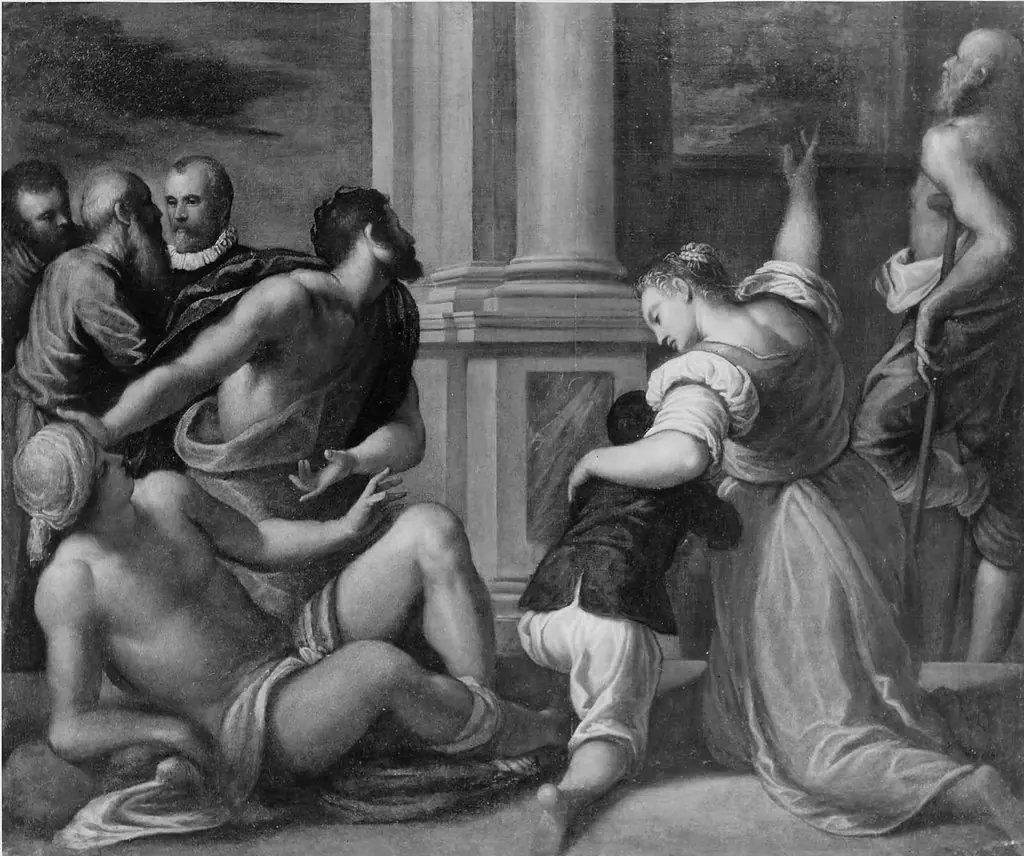 Healing in the Temple
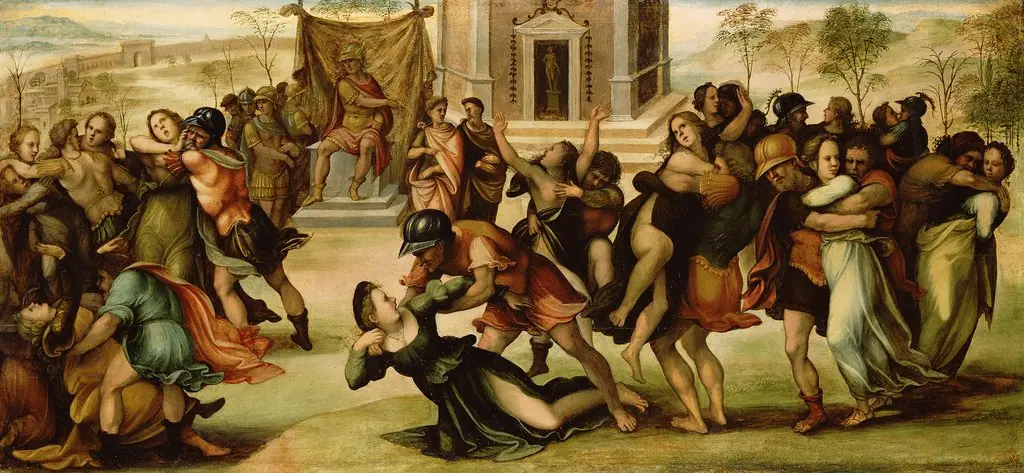 Rape of the Sabines
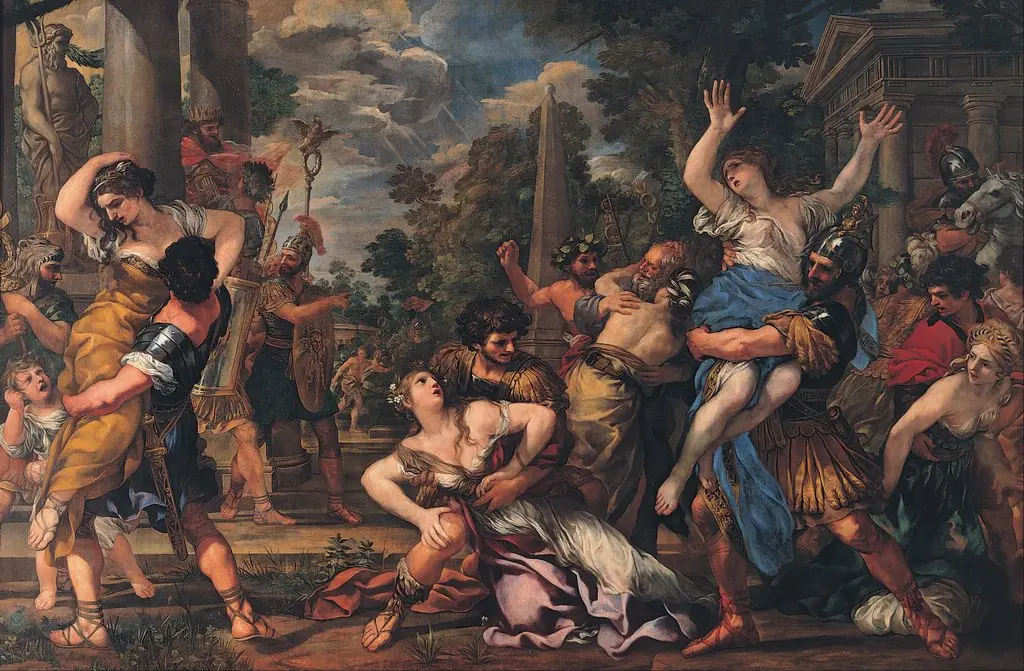 Rape of the Sabines
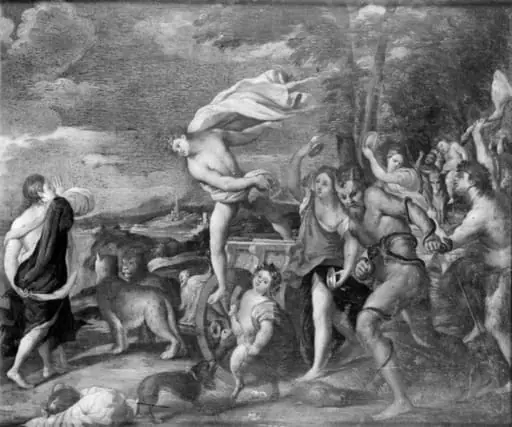 Bacchus and Ariadne