Artwork
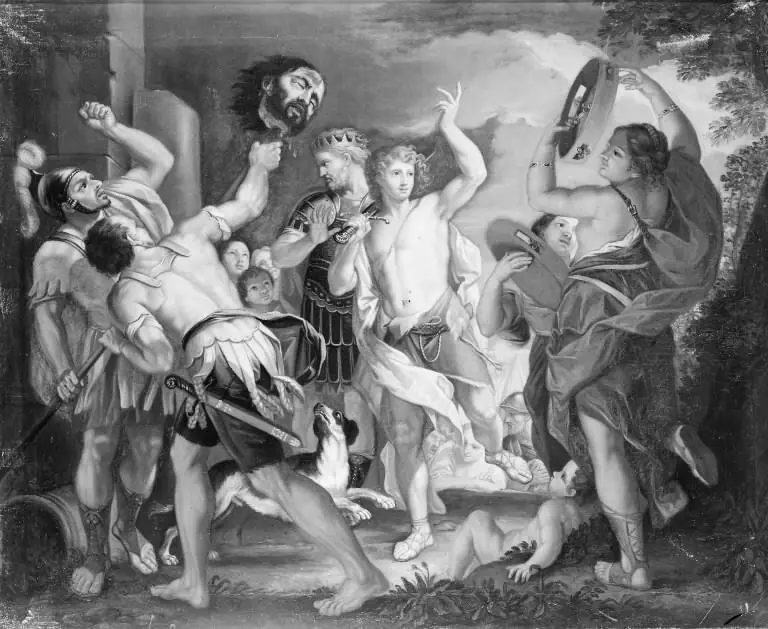
David med Goliats sværd på skulderen. Andre med hans hoved på en stage
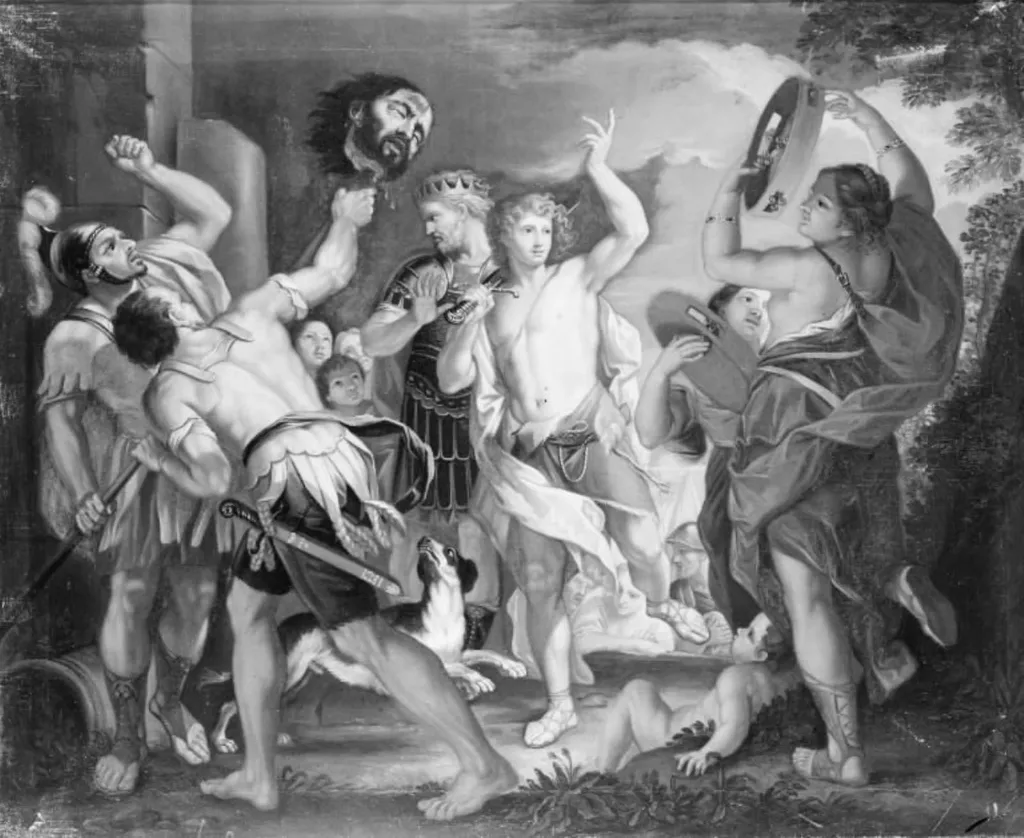
David med Goliats sværd på skulderen. Andre med hans hoved på en stage is a photography by the Baroque artist Unknown. It dates from 1715 and is held in the collection of the Statens Museum for Kunst. Painted in 1715 by 689_person, this work depicts a biblical narrative rendered in a theatrical, group-oriented composition.
About this work
Overview
Surrounding figures include a woman with a tambourine and a dog, suggesting a communal moment of recognition or celebration.
Painted in 1715 by 689_person, this work depicts a biblical narrative rendered in a theatrical, group-oriented composition. It shows a central figure bearing a sword across his shoulder, accompanied by another holding a severed head. Surrounding figures include a woman with a tambourine and a dog, suggesting a communal moment of recognition or celebration. The scene unfolds beneath a cloudy sky amid trees, with lighting emphasizing emotional gravity.
Subject & Meaning
The imagery references the story of David and Goliath, with the central figure identified as David after his victory. The presence of the severed head and the sword signifies triumph over a formidable foe. The gathered onlookers, including a musician and a dog, imply a ritualistic or communal response to the event, blending biblical symbolism with a sense of earthly ceremony rather than divine revelation.
Technique & Style
The artist employs chiaroscuro to model the figures with strong contrasts of light and shadow, enhancing their three-dimensionality and emotional intensity. The composition is deliberately dynamic, with figures arranged in a loose arc that directs attention to the central pair. Brushwork is controlled yet expressive, particularly in the rendering of fabric and facial expressions, contributing to a sense of narrative immediacy.
History & Provenance
The painting has been held since its creation by the Museum of Ethnography, suggesting its initial reception may have been tied to anthropological or colonial-era interests in biblical iconography as cultural artifact. Its presence in this institution, rather than a religious or fine arts collection, implies a historical framing that prioritized ethnographic context over theological interpretation.
Context
Created in early 18th-century Europe, the work reflects a period when biblical stories remained popular subjects across secular and religious art. The inclusion of everyday elements—a dog, a tambourine—hints at a local or folk interpretation of the tale, possibly influenced by regional performance traditions or popular prints that blended sacred narrative with contemporary life.
Legacy
Though not widely reproduced or studied in mainstream art history, the painting offers insight into how biblical themes were localized and visually adapted beyond canonical representations. Its preservation in an ethnographic museum underscores a historical tendency to categorize religious imagery as cultural expression rather than theological statement, shaping its scholarly reception.
Artist & collection

 Domestic Scene
 Giacomo and Cardinal Marco, investing Andrea, Abbot of San Zeno, with his Benefice
 The Nymph of Fontainebleau
 Portrait of a Woman
 Madonna and Child with Saints in the Enclosed Garden
 Venus and Minerva
 Family Group of Four on Sofa
 Wall painting from Room H of the Villa of P. Fannius Synistor at Boscoreale
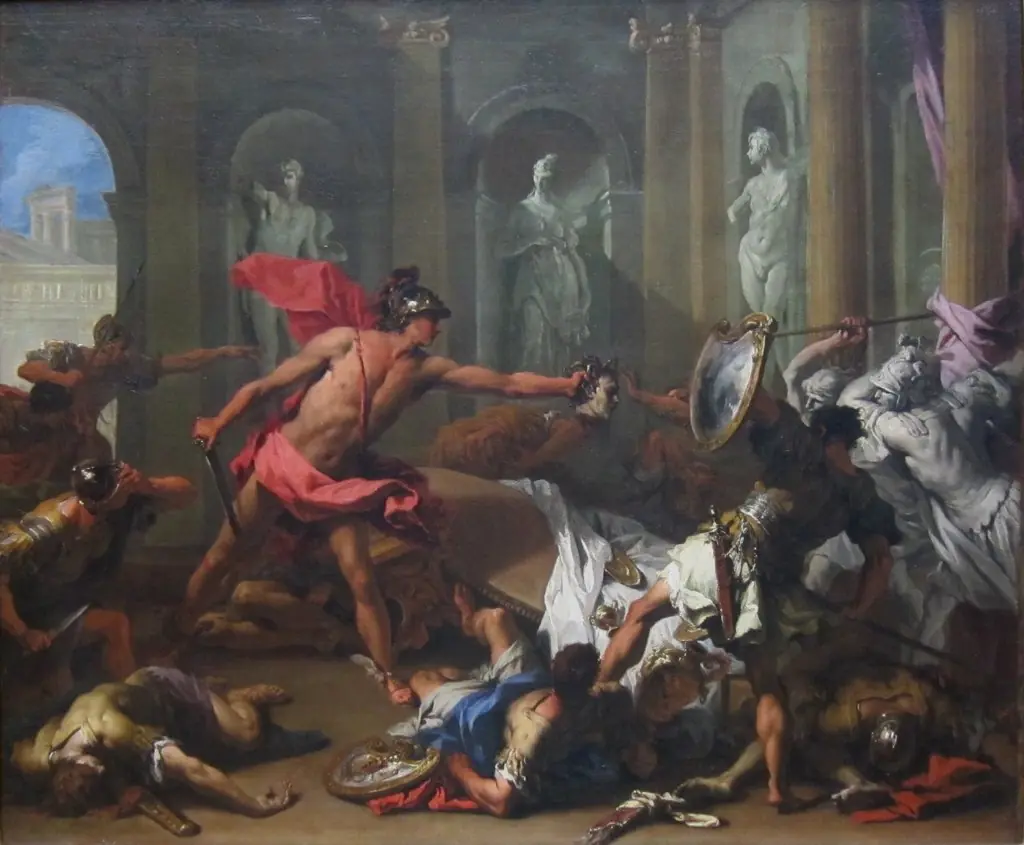 Perseo affronta Fineo con la testa di Medusa
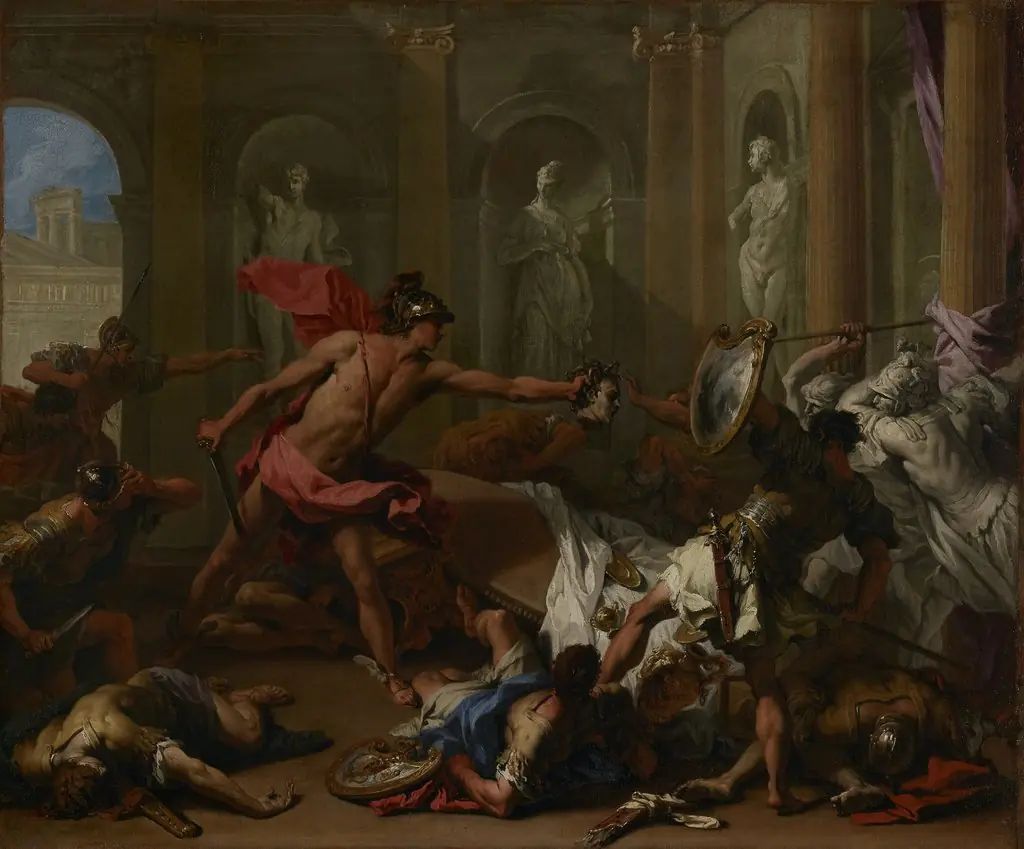 Perseus Confronting Phineus with the Head of Medusa
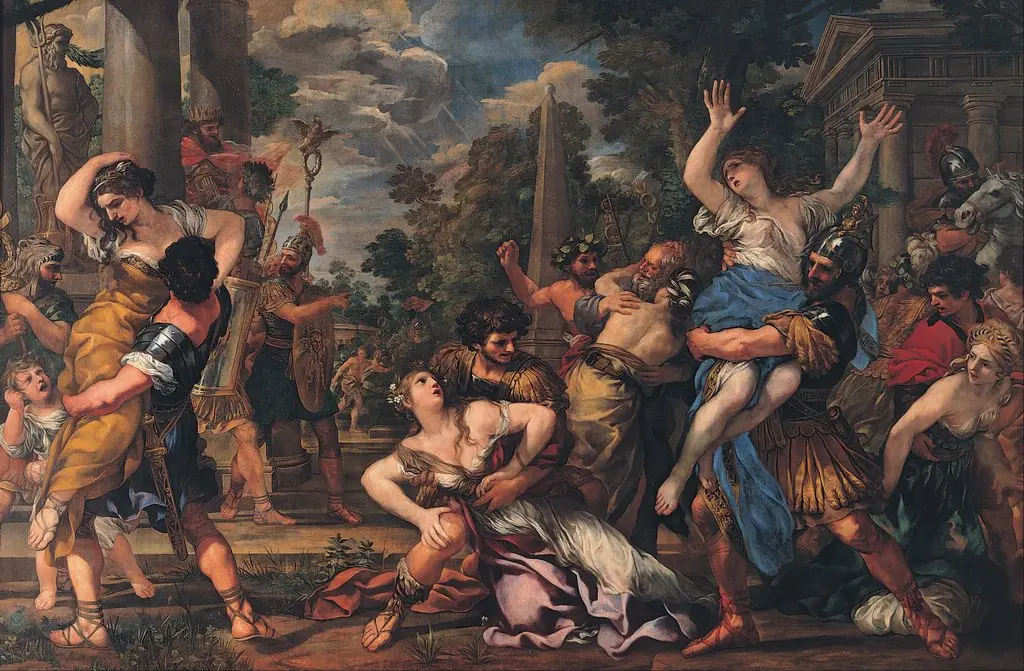 Rape of the Sabines
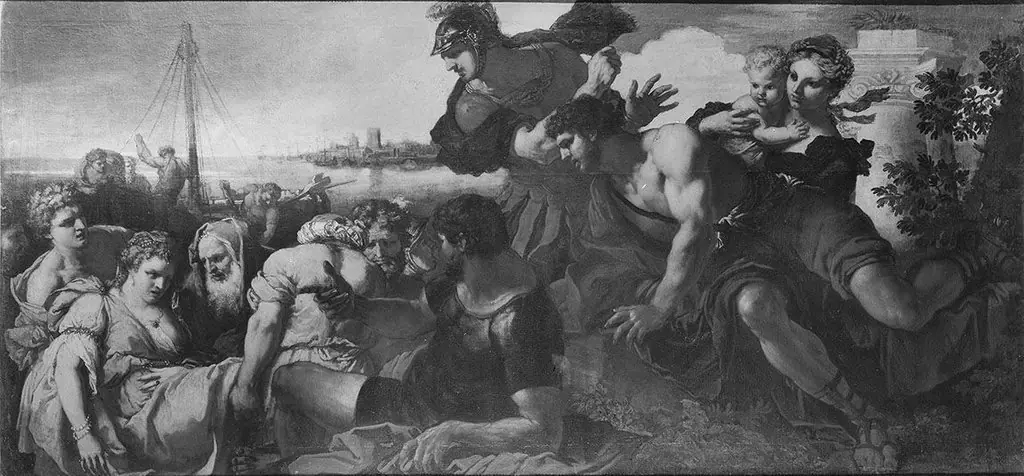 The Rescue of Agrippina, Mother of Nero
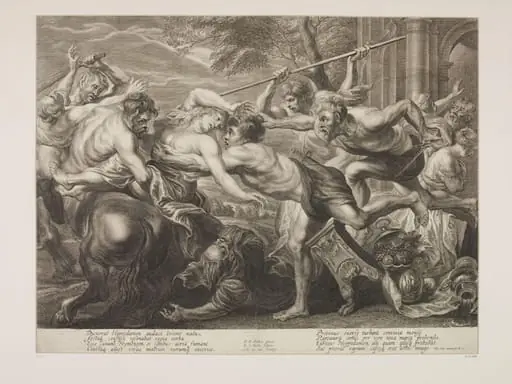 The Rape of Hippodamia
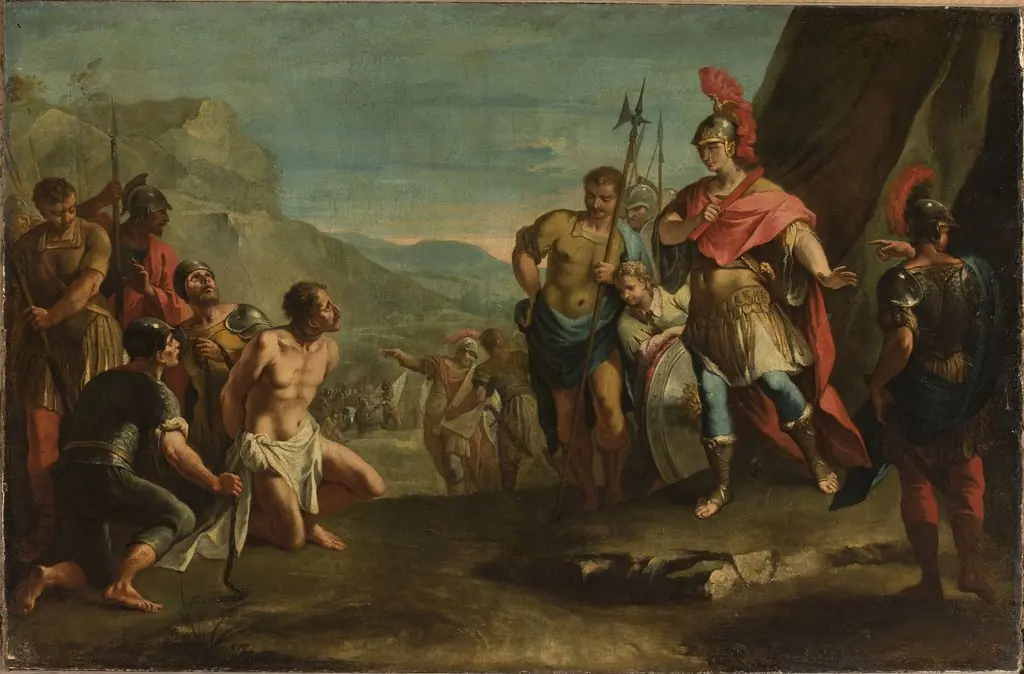 Killer of Darius before Alexander (King Porus and Alexander the Great)
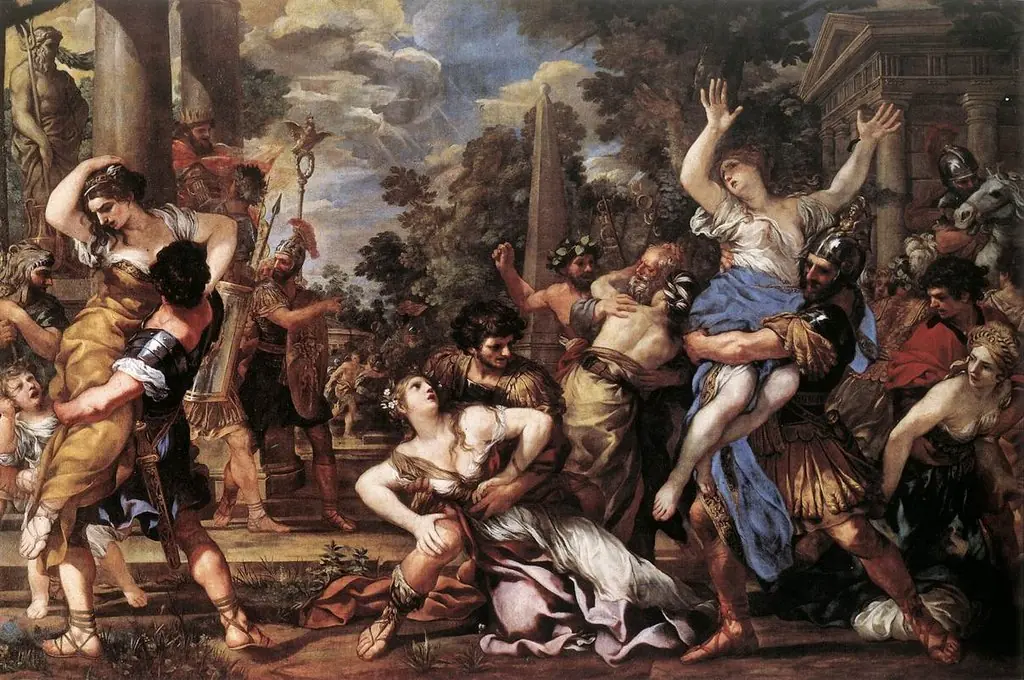 Rape of the Sabine Women
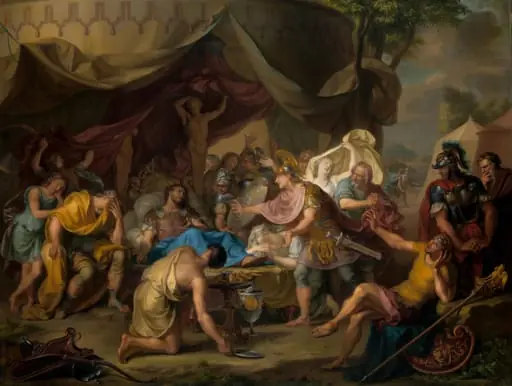 Het sterfbed van Epaminondas
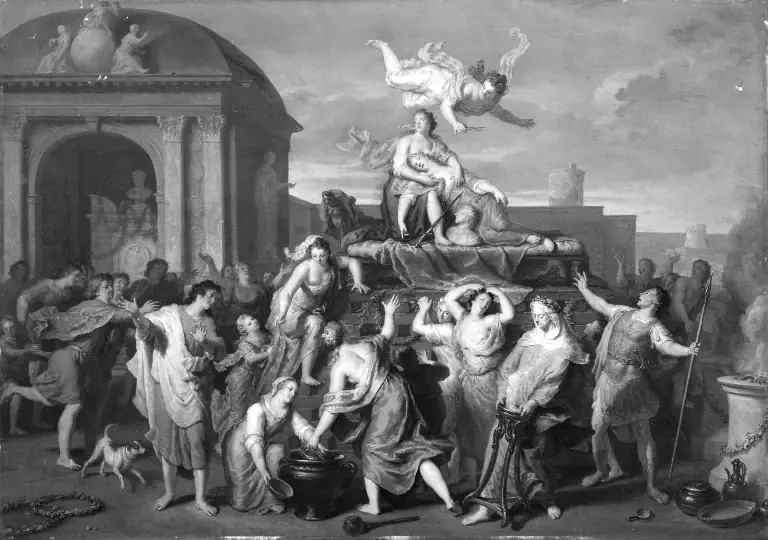 Death of Dido
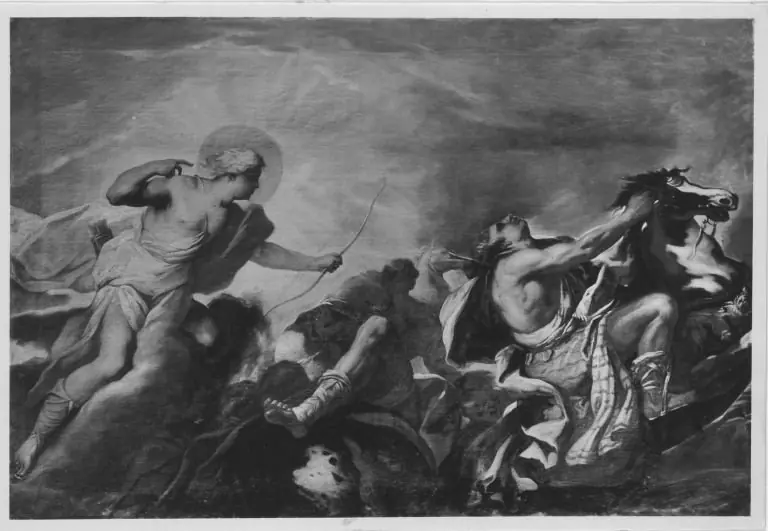 Apollo tötet die Kinder der Niobe
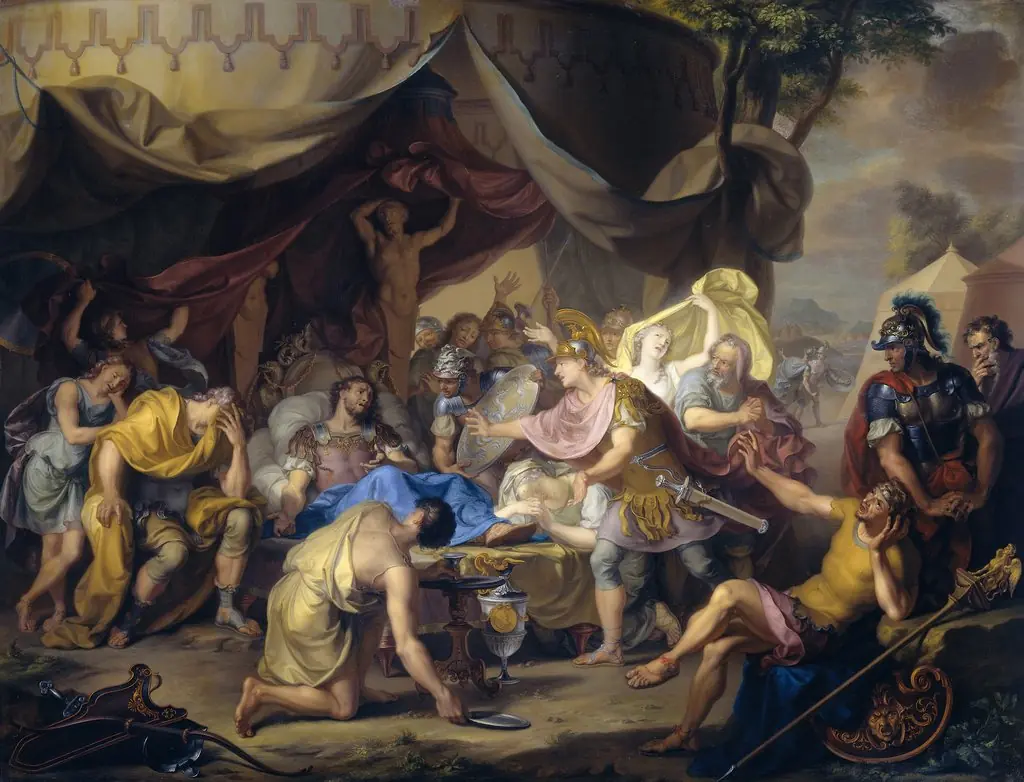 The Death of Epaminondas
 David med Goliats sværd på skulderen. Andre med hans hoved på en stage