Artwork
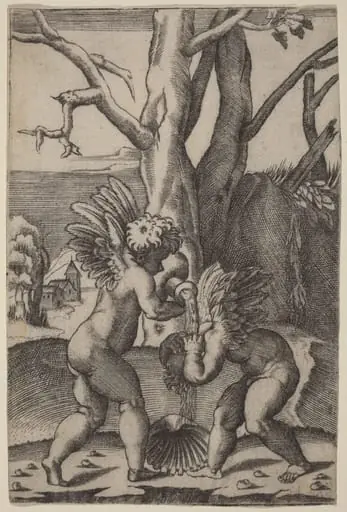
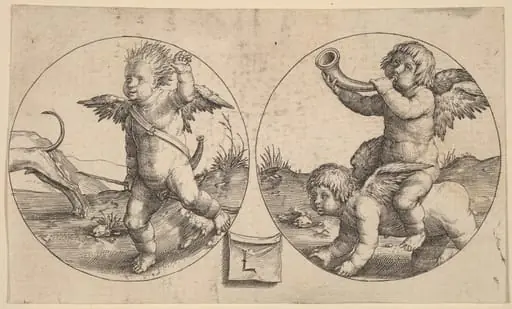
Cupid carrying a fowl accompanied by a dog, and another cupid playing a trumpet
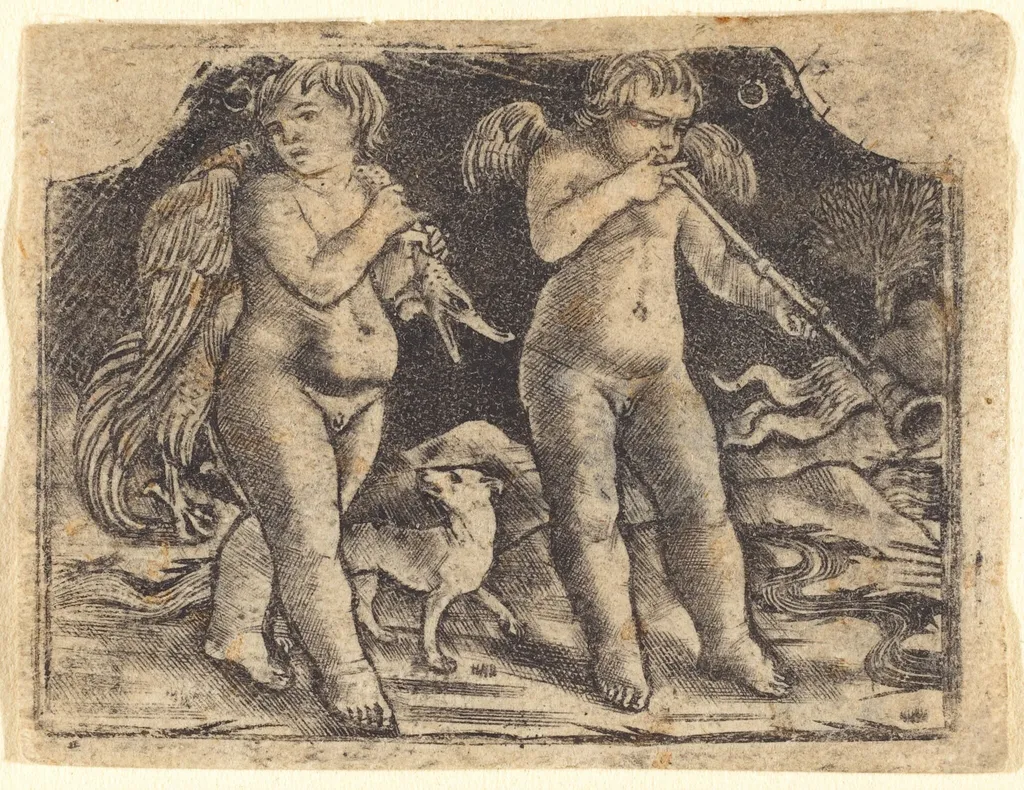
Cupid carrying a fowl accompanied by a dog, and another cupid playing a trumpet is an ink print by the Renaissance artist Maso Finiguerra. It dates from 1450 and is held in the collection of the National Gallery of Art.
About this work
Overview
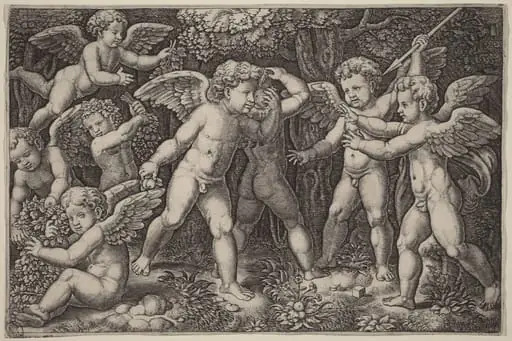
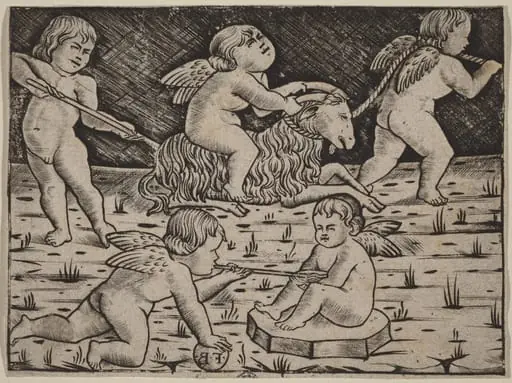
Created around 1450, this niello print by the Florentine artist Maso Finiguerra portrays a playful mythological scene. Two cherubic figures, or putti, are shown alongside a small dog; one holds a dead bird while the other inflates a trumpet. The work exemplifies early Renaissance interest in classical motifs rendered for a market of private collectors.
Subject & Meaning
The composition features a pair of cupids engaged in contrasting actions: one carries a fowl, a symbol that can allude to the fleeting nature of desire, while the other produces music with a trumpet, suggesting the celebratory or persuasive power of love. The accompanying dog adds a domestic, lively element to the otherwise allegorical tableau.
Technique & Style
Finiguerra employed the niello method, in which a dark alloy is forced into incised lines on metal, producing deep black tones and crisp outlines. This technique enhances the graphic clarity of the figures and the texture of the dog’s fur, allowing the subtle play of light and shadow to suggest volume within a flat surface.
History & Provenance
The print was intended for circulation among collectors, reflecting the growing demand for reproducible artworks in the mid‑15th century. As a metal‑based engraving, it could be replicated more readily than a painted work, facilitating the spread of Finiguerra’s designs beyond his immediate workshop.
Context
During the mid‑1400s, Florentine artists increasingly turned to classical mythology for subject matter, integrating it with contemporary decorative arts. Finiguerra’s choice of putti, a common motif in Renaissance ornament, aligns the piece with broader trends in courtly and domestic decoration.
Legacy
The work illustrates an early example of how printmaking contributed to the diffusion of Renaissance visual culture. By combining technical innovation with popular mythological themes, Finiguerra’s engraving helped establish the print as a viable medium for artistic expression and collection.
Artist & collection